Posted on Leave a comment

Meme Coin News: SHIB Price Eyes Rally as Burn Rate Soars 790% in One Day – Livebitcoinnews

We participate in marketing programs, our editorial content is not influenced by any commissions. To find out more, please visit our Term and Conditions page.

Shiba Inu trades at $0.00000858 as the SHIB burn rate jumps 790% in 24 hours with over 61.5 million tokens destroyed.
 
Shiba Inu (SHIB) recorded a 3% price gain in the past 24 hours, trading around $0.00005881. 
This movement follows a 790% surge in its daily token burn rate, where over 61.5 million SHIB were removed from circulation. With growing market activity and technical indicators showing mild bullish behavior, traders are watching closely for a potential breakout.
In the last 24 hours, the Shiba Inu network burned over 61.5 million tokens, a 790% rise compared to the previous day. This reduction in circulating supply has led to increased attention from investors and traders.
Burn activity over the past seven days also increased by over 67%, with nearly 99 million SHIB destroyed.
HOURLY SHIB UPDATE$SHIB Price: $0.00000853 (1hr -0.15% ▼ | 24hr 1.23% ▲ )
Market Cap: $5,029,447,524 (1.26% ▲)
Total Supply: 589,246,218,118,409
TOKENS BURNT
Past 24Hrs: 61,535,702 (792.56% ▲)
Past 7 Days: 99,009,715 (67.02% ▲)
— Shibburn (@shibburn) November 27, 2025

Shiba Inu’s market capitalization grew by 1.26%, reaching approximately $5.03 billion. This increase occurred as the token maintained steady support and gained from broader market growth. The weekly burn trend shows that more tokens are being removed regularly, contributing to a tighter supply.
SHIB’s total supply still remains large, at over 589.2 trillion tokens. However, consistent burn activity may support the bullish outlook, especially if accompanied by strong buying volume in the near term.
At the time of writing, SHIB is trading at $0.00005881, approaching key resistance between $0.00005890 and $0.00005900. This range has acted as a resistance zone throughout November, but current price movement shows growing interest from buyers near this level.
Support remains steady at $0.00005850, where earlier price declines were held.
A break above $0.00005900 could push SHIB toward $0.00005950, and possibly test $0.00006000, if backed by strong volume. Traders are watching closely for a move beyond this resistance band.
If the price moves below $0.00005850, the next support area is seen near $0.00005800, which previously served as a base during earlier corrections. These levels will be key to watch for short-term market direction.
Related Reading: Shiba Inu Price Analysis: Could SHIB Rally 110% if Resistance Breaks?
Technical indicators show mild upward pressure as the MACD line is positioned above the signal line. The histogram bars are still green, though they have weakened slightly. This indicates that buying momentum is present, though not yet strong.
The Relative Strength Index (RSI) reads 59, which shows neutral momentum with a mild bullish bias. This suggests that SHIB is not overbought and has room to rise if buyers maintain pressure.
Traders continue to watch for volume confirmation before a clear breakout occurs. A sustained move above resistance would likely support a short-term rally if burn rates remain elevated.
LiveBitcoinNews is a leading online platform dedicated to providing the latest news and insights about Bitcoin and the broader cryptocurrency market. It offers timely updates on market trends, regulatory developments, technological advancements, and expert analyses, catering to both seasoned investors and newcomers in the digital currency space. The site features a variety of content, including articles, guides, interviews, and opinion pieces, making it a comprehensive resource for anyone interested in staying informed about the rapidly evolving world of cryptocurrencies.
Contact us: support@livebitcoinnews.com
© Copyright – Livebitcoinnews.com


source

Posted on Leave a comment

HBAR & XLM in the spotlight, will ISO 20022 standard trigger price spikes? – Pintu

Jakarta, Pintu News – Interest in cryptocurrencies compatible with the ISO 20022 standard is back on the rise after CoinMarketCap released a special category for assets such as Ripple , Hedera , and Stellar .
This global messaging standard is now being adopted by international banks and payment networks, fueling speculation that compatible digital assets could benefit from institutional integration. However, despite the hype, the price charts of HBAR and XLM show significant downside risks amid the bearish sentiment of the crypto market.
ISO 20022 is a global financial messaging standard used for the exchange of payment data between banks around the world. The standard does not certify cryptocurrencies, but it does specify a data format that makes it easier for certain assets to be integrated into modern payment infrastructure. Therefore, cryptos that have endorsed the ISO 20022 message structure are seen as better prepared for wider institutional adoption.
CoinMarketCap now includes the category “ISO 20022 Coins,” which includes Ripple (XRP), Hedera (HBAR), and Stellar (XLM), three assets that focus on cross-border transfers and financial efficiency.
A number of tokens in this category recorded brief gains after the list was released, fueled by speculators hoping that large institutions will accelerate the integration of blockchain-based payment systems. However, these gains have not been strong enough to reverse the bearish trend that has pressured the market in recent months.
The price of Hedera (HBAR) has been moving down for almost a full year, following a downward pattern below the diagonal resistance line since the January cycle peak at $0.40 or about Rp6,616.
After a series of progressively lower peaks, selling pressure increased sharply in July 2025, indicating a breakdown point that reinforced the negative sentiment. Now, HBAR is again testing the critical horizontal support area at $0.135 or about IDR2,234, a zone that is considered to be decisive for the next direction of movement.
If HBAR fails to defend this area, the chart shows not much of a price support structure below it, opening up the opportunity for a drop towards $0.065 or about Rp1,074.
This drop is equivalent to a correction of more than 55% from the current price, making the area a very important resistance point for buyers. The momentum indicators are also yet to signal a recovery, with the RSI below 50 and the MACD moving negative. Both indicators confirm the strong bearish pressure.
Read also: 1 Pi Network (PI) Price in Indonesia Today (11/26/25)
Stellar (XLM) showed a very similar movement pattern to HBAR, reinforcing concerns that other ISO 20022 cryptos are also facing the same risk. XLM price accelerated the decline after the rejection at the descending resistance line, which triggered a sharper correction. On the weekly chart, XLM has broken the horizontal support area of $0.235 or about IDR3,887, a level that was previously an important support in recent months.
Like HBAR, XLM’s technical indicators show strong bearish tendencies. The RSI is below the neutral level, while the MACD is in a negative area with no signs of reversal.
If XLM closes the weekly candle below this area, the market expects a further decline towards $0.135 or IDR2,234, which equates to a potential correction of around 45%. This confirms that the ISO 20022 hype alone is not enough to change XLM’s trend direction.
Also read: Gold Jewelry Price Today, Wednesday, November 26, 2025
HBAR and XLM are now at a critical juncture that could determine the direction of their movement in the long term. Although investor attention has increased thanks to CoinMarketCap’s new category, technical conditions still indicate a great risk of breakdown. If key support areas don’t hold, the market could see a continued decline despite the buzz around the institutional integration narrative.
At the same time, the ISO 20022 category sparked discussions regarding which assets are most ready for future banking adoption. Ripple (XRP), which leads the category, remains in the limelight due to its focus on global payments and institutional partnerships. However, the fate of HBAR and XLM will be largely determined by the ability of buyers to sustain long-term technical levels.
The ISO 20022 crypto trend is back in the news after CoinMarketCap released a special category highlighting XRP, HBAR, and XLM. However, while the institutional adoption narrative is strengthening, the charts of HBAR and XLM are showing great risk of breakdown from long-term support areas.
The price response in the next few weeks will determine whether the ISO 20022 hype is able to drive a recovery or if it accelerates the ongoing bearish trend.
ISO 20022 crypto is a digital asset that is compatible with the global financial message formats that banks use, making it easy to integrate into modern payment systems.
Hedera (HBAR) and Stellar (XLM) are designed for cross-border value transfer, so they have a structure that corresponds to the ISO 20022 messaging format.
HBAR is testing support around $0.135 or IDR2,234, which is the deciding point whether the price will rebound or breakdown.
XLM has broken the support of $0.235 or Rp3,887, and the RSI and MACD indicators show strong bearish momentum.
Currently, the hype is not enough, as the technical conditions of HBAR and XLM still show more dominant downward pressure.
That’s the latest information about crypto. Follow us on Google News to get the latest crypto news about crypto projects and blockchain technology. Also, learn crypto from scratch with complete discussion through Pintu Academy and stay up-to-date with the latest crypto market such as bitcoin price today, xrp coin price today, dogecoin and other crypto asset prices through Pintu Market.
Enjoy an easy and secure crypto trading experience by downloading Pintu crypto app via Google Play Store or App Store now. Also, get a web trading experience with various advanced trading tools such as pro charting, various types of order types, and portfolio tracker only at Pintu Pro.
*Disclaimer
This content aims to enrich readers’ information. Pintu collects this information from various relevant sources and is not influenced by outside parties. Note that an asset’s past performance does not determine its projected future performance. Trading crypto carries high risk and volatility, always do your own research and use cold hard cash before investing. All activities of buying and selling bitcoin and other crypto asset investments are the responsibility of the reader.
Reference

source

Posted on Leave a comment

Japan’s FSA and Crypto: What is Happening? – OneSafe

Japan’s Financial Services Agency (FSA) is rolling out a new set of regulations that could shake up the landscape of cryptocurrency transactions in the country. The main goal? To enhance the security and stability of the cryptocurrency market. So, what does this mean? Well, exchanges will now be required to maintain liability reserves to cover losses stemming from hacks or operational failures. This is a significant shift from the previous model, which relied heavily on cold-wallet storage as the main safety net.
The proposed changes, which are set to be submitted in 2026, will require exchanges to hold reserves proportional to their trading volumes. This aligns with the practices of traditional securities firms. In other words, the previous loophole that allowed exchanges to sidestep reserve requirements by using cold-wallet storage is going to be a thing of the past. Furthermore, the FSA is setting up specific protocols for recovering assets during bankruptcy, appointing administrators to manage the distribution of customer funds. This move aims to create a more predictable and secure environment for cryptocurrency transactions, but it also raises questions about how effective it will be in practice.
But it’s not all sunshine and rainbows. For decentralized finance (DeFi) projects, the new regulations might spell trouble. The FSA’s stringent registration and licensing requirements could be a nightmare for platforms like Bitcoin Munari, which thrive on decentralization. The focus on centralized entities leaves little room for projects that don’t have a clear authority or structure, making compliance with Anti-Money Laundering (AML) and Counter-Terrorist Financing (CFT) standards nearly impossible.
Furthermore, the need for rigorous user verification processes clashes with the pseudonymous nature of many DeFi platforms. Users who prioritize privacy and ease of use might be put off. On top of that, tighter custody and asset management rules could limit operational flexibility. DeFi projects may need to pivot quickly to adjust to this new landscape, and it’s hard to say if they can.
Crypto exchanges in Japan aren’t exactly off the hook either. They face a pile of challenges under the FSA’s new rules. The registration and licensing process can be long and expensive—think up to six months or more. Smaller exchanges are likely to feel the pinch of compliance costs, especially considering the hefty documentation now required. This could create a barrier for new players trying to enter the market.
User verification and transaction monitoring are also major hurdles. The FSA is insisting on stringent user verification processes, which can be both technically challenging and resource-heavy. This requirement could lead to a less user-friendly experience, which might not sit well with customers who value the anonymity that cryptocurrencies offer.
Lastly, the focus on custody and asset management means increased scrutiny on how exchanges manage users’ virtual assets. This could stifle innovation and competition at a time when the market is rapidly evolving.
Interestingly, increased regulatory scrutiny can also be a catalyst for innovation. Clearer frameworks can reduce uncertainty and allow for new business models to emerge under defined principles. For example, the SEC’s Project Crypto in the U.S. is designed to modernize securities laws for blockchain markets, emphasizing an innovation-first approach. This could encourage firms to bolster internal compliance and seek the appropriate licenses, which could ultimately lead to responsible innovation.
As regulatory bodies like the FSA emphasize consumer protection and transparency, projects that can provide verifiable documentation and maintain consistent economic structures will likely attract risk-averse investors. This push towards structured financial safeguards could pave the way for new products and services that meet regulatory expectations.
European SMEs that are crypto-friendly also stand to benefit from Japan’s evolving regulatory landscape. The clear legal status of cryptocurrencies, along with stringent exchange requirements, creates a secure environment for these businesses to expand their services and attract Japanese investors. By establishing compliant operations or partnerships in Japan, European SMEs can tap into a growing market while building trust with clients and partners.
Moreover, the emphasis on compliance and transparency can serve as a model for SMEs looking to operate in other regulated markets. Adhering to Japan’s standards could position them as credible players in the global crypto landscape. And let’s not forget the potential for a more favorable tax regime in Japan, which could help SMEs optimize their investment strategies and reduce tax burdens in the region.
In the end, while Japan’s FSA regulations pose challenges for decentralized finance projects and crypto exchanges, they also create opportunities for innovation and strategic partnerships. As the regulatory landscape continues to evolve, businesses that can adapt will be in a better position to thrive in the ever-changing world of cryptocurrency.

Get started with Crypto effortlessly. OneSafe brings together your crypto and banking needs in one simple, powerful platform.
Discover how ME ID transforms digital identity into a valuable asset, promoting financial inclusion and user sovereignty in the Web3 ecosystem.
Freelancers can navigate Bitcoin payments safely with insights on security, tax implications, and strategies to manage volatility effectively.
Cardano's inclusion in T. Rowe Price's ETF signals a shift in institutional crypto investment, enhancing multi-asset adoption and opportunities for fintech in Asia.
Begin your journey with OneSafe today. Quick, effortless, and secure, our streamlined process ensures your account is set up and ready to go, hassle-free

source

Posted on Leave a comment

Upbit Suffers $36M Solana Hot-Wallet Hack – NFT Plazas

Upbit Suffers $36M Solana Hot-Wallet Hack
APRO (AT) to Binance HODLer Airdrops
SHIB Price Prediction in 2025, 2026 – 2030 and Beyond
Coinbase Debuts MON Sale as Monad Finalizes Major Airdrop
Market Crash: Record Bitcoin & Ethereum ETF Outflows
Leverage Hits Record in Q3 2025, Still ‘Healthier’ Than 2021 – 2022
Solana ETFs Position SOL as a Yield-Bearing Asset
JPMorgan Sets $94K Floor, Holds $170K Bitcoin Target
Allora (ALLO) to Binance HODLer Airdrops
ZEC Tops $12 Billion Market Cap, Privacy Prevails?
What Is Solana? Understanding the Fastest Growing Blockchain
What Is Ethereum? A Complete Beginner’s Guide to Blockchain
What Is Bitcoin? Is Bitcoin a Good Investment in 2025?
Best NFTs to Buy 2025: Top NFT Collections to Watch
Top 15 Most Expensive NFTs Ever Sold (2025 Edition)
How to Sell Your NFT the Right Way in 2025
What is Allora (ALLO)? Decentralized Intelligence Redefining AI
How to Buy NFTs the Right Way in 2025
Best NFT Marketplaces of 2025: Top Platforms Reviewed
What is Sapien (SAPIEN)? Future of Decentralized AI Data
Binance Review 2025: Is It Legit and Safe? Binance Pros & Cons
MEXC Review 2025: Is It a Safe & Legit Crypto Exchange?
22 Best Crypto Signals Telegram Channels for Trading in 2025
Bitget Review: Is Bitget Safe and Legit for Crypto Trading?
OKX Review 2025: Pros, Cons, Fees and Key Features Explained
Crypto.com Review 2025: Security, Fees, Features, and More
Gate.io Review 2025: Is it Safe and Legit for Crypto Trading?
MEXC Referral Code 2025: “mexc-NFTP” ($10,000 Bonus & 50% OFF Fees)
Binance Referral Code 2025: “BINANCENFTP” (100 USDT Sign-up Bonus)
OKX Referral Code 2025: “98973395” (10,000 USDT Sign-up Bonus)
BingX Referral Code 2025: “WYMSQVR5” (6,000+ USDT Welcome Bonus)
Bitget Referral Code 2025: “NFTPlazas1” ($6,200 USDT Sign-up Bonus)
Bybit Referral Code 2025: “NFTP” (30,050+ USDT Welcome Bonus)
Crypto.com Referral Code 2025: “nftevening” (1 BTC Worth Welcome Bonus)
Coinbase Referral Code 2025: Steps to Earn $200 in BTC Welcome Bonus
KuCoin Referral Code 2025: “NFTPLAZAS” (11,000 USDT Welcome Bonus)
Gate.io Referral Code October 2025: “VLEWAV0NVQ” (10,000 USDT Sign Up Bonus)
WEEX Referral Code 2025: “cglw” (30,000 USDT Sign Up Bonus)
By
Key Takeaways
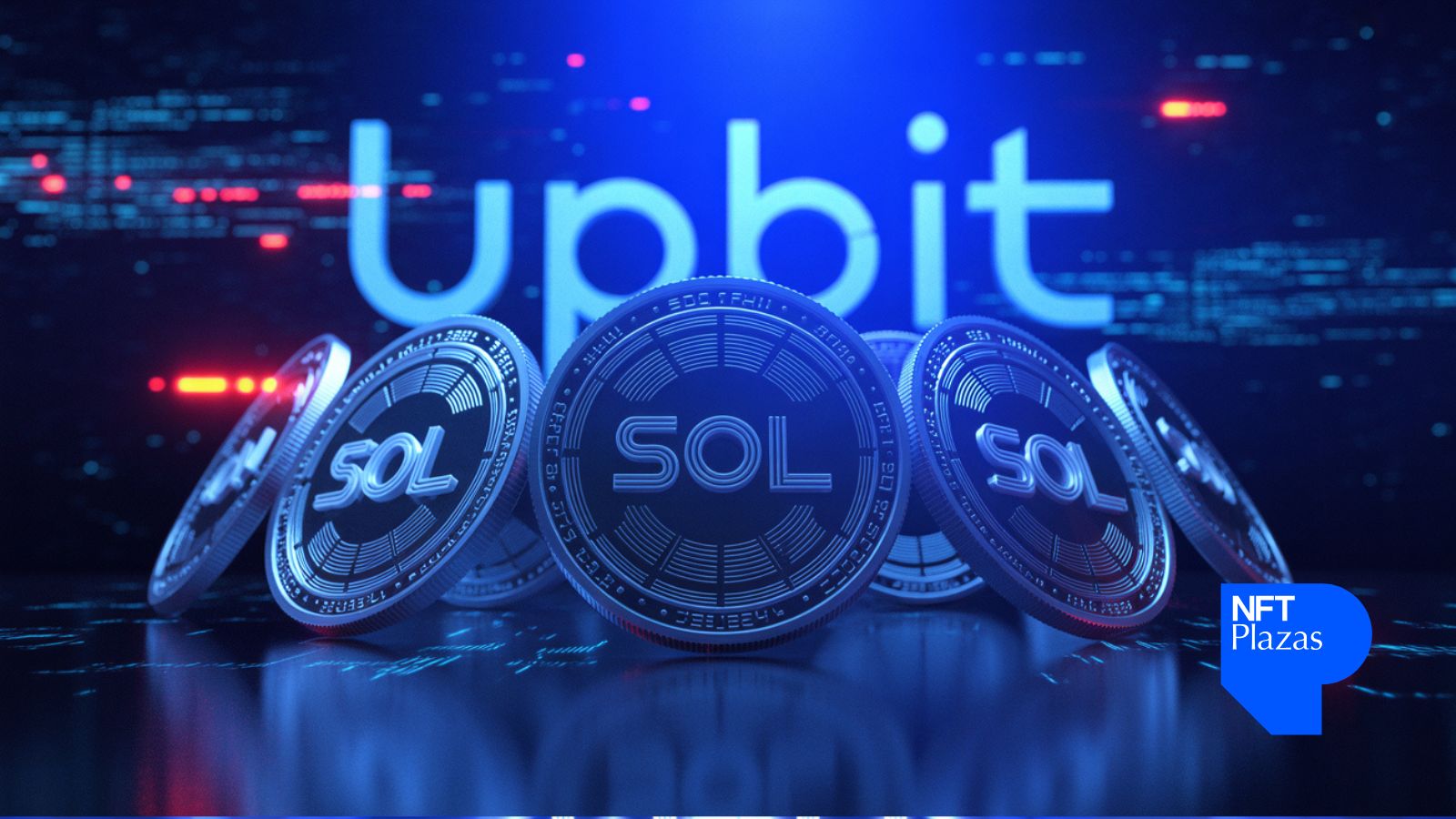
South Korea’s largest crypto exchange, Upbit, confirmed that roughly 54 billion KRW (36-38 million USD) in assets were withdrawn without authorization from a Solana-connected hot wallet.
Deposits and withdrawals have been paused while the exchange rebuilds wallet infrastructure. Upbit says all customer funds will be fully compensated from company reserves.
Upbit is investigating a major security incident after tens of millions of dollars in Solana-based tokens were drained from one of its hot wallets. The exchange has halted all transfers and launched a forensic review, marking one of the largest Korean exchange breaches in recent years.
Upbit disclosed that an attacker managed to access a Solana hot wallet and move funds across a wide mix of tokens before the exchange could react. On-chain data shows dozens of assets were swept into an unidentified address, including SOL, BONK, JUP, RAY, PYTH, RNDR, USDC, and several smaller ecosystem tokens.
Learn more: NFTPlazas Explains: A Completed Guide about Solana
The withdrawals were executed within a tight window, a pattern security analysts say is common in Solana-related breaches because of the network’s fast finality. Once a private key is compromised, an attacker can move through token balances quickly, leaving little room for defensive intervention.
Upbit moved quickly after detecting the breach, freezing all deposits and withdrawals while it worked to contain the damage. The exchange said customer balances were unaffected and that losses from the compromised wallet will be covered using corporate funds. That message helped calm nerves in the Korean market, where Upbit dominates local trading activity and plays a central role in liquidity.
Work behind the scenes has intensified. Upbit’s security team is rotating keys, deploying new wallets and isolating infrastructure connected to the breached address. The exchange is also coordinating with Solana developers and outside forensic firms to track the attacker’s movements and prevent the stolen assets from reaching other trading platforms.
The Solana blockchain itself was not affected, but the incident has revived a long-running debate around hot-wallet safety on high-throughput networks. Exchanges maintain limited hot-wallet balances for operational liquidity, but Solana’s fast settlement leaves little time to block unauthorized transfers once a key is compromised.
This is not unfamiliar territory for Upbit. After its 2019 hack, the exchange shifted most of its holdings into cold storage. Even so, the latest breach shows that keeping a minimal hot-wallet footprint does not eliminate exposure if access credentials are compromised.South Korean regulators, who have tightened oversight under the Virtual Asset User Protection Act, are expected to review the incident closely.
Market reaction to the breach was limited, with traders citing Upbit’s swift disclosure and its commitment to absorb the loss as key factors stabilizing local liquidity. Korean trading pairs held steady while investigators continued to track movements from the compromised wallet.
The incident has renewed scrutiny of centralized exchanges’ dependence on hot wallets, particularly on high-speed networks such as Solana, where unauthorized transfers can be executed before security systems detect them. Analysts said the combination of rapid settlement and online wallet exposure remains a structural vulnerability for the industry.
Trade Solana and Claim Bonus on MEXC
Upbit aims to restore deposit and withdrawal services only after its new wallet infrastructure passes security audits. The exchange is expected to publish a full breakdown of the incident once investigators complete their work, a report that regulators and industry operators will be watching closely.
The breach highlights ongoing operational risks at the custodial layer, even when the underlying blockchain remains secure. With Solana’s trading share rising, exchanges are likely to face closer scrutiny over how they manage real-time liquidity and protect wallets that must remain online.
Disclaimer
NFTPlazas provides trusted news and insights on Web3. The views expressed on this site do not constitute investment advice. Before making any high-risk investments in cryptocurrency or digital assets, please conduct your own thorough research. All transfers and transactions are carried out at your own risk, and any resulting losses are solely your responsibility. NFTPlazas does not endorse the buying or selling of cryptocurrencies or digital assets and is not a licensed investment advisor. Please also note that NFTPlazas may participate in affiliate marketing programs.
Learn
Learn
Learn
Exchange
Exchange
Referral Code
News
Referral Code
Learn
Analysis
Exchange
Analysis
NFTPlazas is a trusted source for news and insights on Web3. We simplify complex blockchain topics into clear, insightful stories that keep our global community informed and inspired.

source

Posted on Leave a comment

Managing Bitcoin Payroll: Strategies for SMEs Amidst Volatility – OneSafe

Bitcoin is in a crucial stage of its journey, and right now, it’s a double-edged sword for small and medium enterprises (SMEs) wanting to use cryptocurrency in their operations. As the market settles around certain price levels, knowing how to deal with Bitcoin’s ups and downs becomes key. In this post, I’ll break down the current situation with Bitcoin, the legal hurdles SMEs face, and some strategies for adopting crypto payroll solutions that can help streamline operations while reducing risks.
We’re seeing Bitcoin in a bit of a tight spot. Analysts are pointing to a possible settling around the $94K-$95K mark, which is crucial for deciding where the market heads next. Selling pressure seems to have eased up a bit, and there’s still some spot demand out there, suggesting that if this price range holds up, we could see a shift in trends.
Institutional investors are playing a bigger role in the crypto market these days, and they’re helping to stabilize things a bit. This shift towards mainstream crypto banking is essential for SMEs thinking about including Bitcoin in their finances, as it might offer a more reliable atmosphere for crypto transactions.
SMEs in Europe are running into some major roadblocks when it comes to integrating Bitcoin into their operations, mostly because of the tangled web of regulations. The EU’s Markets in Crypto-Assets Regulation (MiCA) has created a standard framework across all member states, but the rapid changes in compliance requirements mean that smaller companies have to keep adjusting.
Financial limitations add another layer of complexity since SMEs often don’t have the funds or resources that larger businesses do. This inequality makes it tough for smaller companies to stockpile Bitcoin while keeping their operations afloat. And let’s not forget the new accounting standards, which require fair value reporting for crypto assets, adding more uncertainty to how Bitcoin holdings should be valued and reported.
Bitcoin’s volatility has a significant impact on how quickly SMEs are adopting crypto payroll solutions. The promise of quick, borderless payments and lower transaction fees still attracts interest, but the significant price fluctuations make it hard for companies to commit to crypto-based payroll systems.
To tackle these issues, many SMEs are now looking towards stablecoin payroll solutions, like USDC or USDT. Stablecoins provide the benefits of blockchain technology—speed, transparency, and cross-border efficiency—without the accompanying price risks, making them a better fit for payroll needs. This shift is part of a larger trend in the industry, as firms aim to balance innovation with stability.
So how can crypto-friendly SMEs effectively manage the risks that come with Bitcoin’s price swings in their payroll systems? There are several strategies to consider:
Stablecoin Payroll: Paying salaries in stablecoins can help avoid the wild price swings of Bitcoin, providing predictable and fair compensation for employees. This approach enhances employee satisfaction and simplifies financial planning.
Hedging Strategies: SMEs can use financial tools to monitor Bitcoin price risks and automate conversions to fiat currency during high volatility. This proactive approach allows businesses to adjust cash flow projections and budget variances to reflect Bitcoin’s higher volatility.
Dedicated Wallets: Using self-custodial wallets dedicated solely to payroll funds prevents mixing with operational or investment funds, reducing risks of frozen assets and simplifying reconciliation.
Clear Payment Policies: Employment agreements should clearly state the cryptocurrency used, payment schedules, and how exchange rates and conversion risks are handled. This clarity helps avoid confusion and legal issues.
Crypto Payroll Software: Platforms that offer features such as bulk payments, compliance automation, and real-time tracking can help SMEs manage operational and compliance risks effectively.
Bitcoin’s volatility is changing the landscape for SME payroll, acting as both a driver and a hindrance to the adoption of crypto payroll solutions. While the technology is appealing, the current market conditions are pushing many firms toward stablecoins or hybrid models that lessen risk. As volatility remains and regulatory clarity improves, the future of crypto payroll adoption will hinge on how well SMEs can merge innovation with stability and compliance. Implementing these strategies will put SMEs in a good spot for growth in a more crypto-friendly market, allowing them to take advantage of cryptocurrency’s benefits while also managing its risks.

Get started with Crypto effortlessly. OneSafe brings together your crypto and banking needs in one simple, powerful platform.
Explore the rise of presale investments in cryptocurrency as a viable alternative to traditional options, comparing them with established coins like Dogecoin.
Bitcoin's volatility presents challenges and opportunities for SMEs. Discover strategies for managing risks and adopting crypto payroll solutions effectively.
Interpol's designation of crypto scams as a transnational threat highlights the need for businesses and individuals to adopt protective strategies against fraud.
Begin your journey with OneSafe today. Quick, effortless, and secure, our streamlined process ensures your account is set up and ready to go, hassle-free

source

Posted on Leave a comment

Stellar News 2025: Holds $0.26 After Strong Intraday Uptrend as Daily Charts Warn of Persistent Macro Weakness – Brave New Coin

Best Crypto Presales
Stellar price is trading near $0.26, up 2.09% over the past 24 hours, as the asset extends its intraday recovery despite broader higher-time-frame weakness.
The market has shown renewed short-term bullish structure, but long-term technical indicators still point to caution as momentum remains fragile.
From the 22nd onward, the coin shifted from a mild downtrend into a well-defined intraday uptrend, climbing from the $0.22 region toward $0.26. The structure of higher highs and higher lows signals that buyers have regained control following the earlier selloff. This trend is further supported by sustained dip-buying interest, with recent candles closing near the upper end of the range, reflecting strong short-term demand.
XLM Breaks Out of Short-Term Downtrend and Forms Clear Intraday Uptrend
Source: Open Interest
The recovery momentum was most pronounced during the rally into the 24th, where bullish pressure intensified and confirmed the intraday breakout. While the broader macro trend remains uncertain, the recent price behavior shows clear tactical strength and improving market sentiment in the lower timeframes.
Aggregated open interest rose sharply during the breakout, particularly during the strong upward push on the 24th. This OI expansion, paired with rising price signals, fresh long positions entering the market, rather than short liquidations. Such alignment between growing interest and advancing price typically reflects trend confirmation and strengthening conviction among traders.
However, after OI peaked near the top of the range, it began to cool off while price stabilized around $0.26. This pattern indicates profit-taking or controlled de-leveraging, rather than aggressive short selling. As long as price holds above the key breakout region between $0.24 and $0.245, the intraday uptrend remains intact. A failure to defend this zone would suggest that the long build-up is unwinding more decisively.
According to BraveNewCoin, the coin is currently priced at $0.26 with a market cap of $8.33 billion and a 24-hour volume of $208.5 million. The circulating supply stands at 32.31 billion tokens, placing the crypto at Rank 24 globally.
The modest 2% daily gain aligns with its recent intraday recovery, though the asset still trades well below the multi-month resistance zone near $0.30. While short-term sentiment is improving, long-term structure remains under pressure.
From a higher-time-frame perspective, XLM remains stuck in a broader downtrend. The daily chart shows a consistent pattern of lower highs and lower lows, and every attempted bounce toward the $0.30 resistance has faded quickly. Despite the recent intraday push, the overall trend remains controlled by sellers.
Daily Chart Still Shows Macro Downtrend Despite Intraday Strength
Source: TradingView
The MACD sits at –0.0131, below the signal line at –0.0126. Although the histogram is neutral, momentum remains firmly in negative territory. This suggests that while selling pressure has slowed, buyers have not yet generated a convincing trend reversal.
The Chaikin Money Flow (CMF) at –0.08 indicates mild capital outflow and minimal accumulation. Even with the intraday strength, there is no clear sign of sustained buying interest on the daily chart.
BNC AdvertisingBrave New Coin reaches 1M+ engaged crypto enthusiasts a month through our website, podcast, newsletters, and YouTube. Get your brand in front of key decision-makers and early adopters before 2025 ends. Lock in current rates now—limited November & December slots remaining! Find out more today!
28 Nov 2025
28 Nov 2025
28 Nov 2025
|28 Nov 2025|News|
|28 Nov 2025|News|
|28 Nov 2025|News|
|28 Nov 2025|News|
|28 Nov 2025|News|
Auckland / Melbourne / London / New York / Tokyo
A Techemy company
PO Box 90497, Victoria St West, Auckland Central, 1010, New Zealand.
© 2025 Brave New Coin. All Rights Reserved.
Sponsored

source

Posted on Leave a comment

Kraken’s NFT Marketplace Shutdown: What It Means and How It Matters to Us in India – getmoneyrich

GETMONEYRICH
The world of cryptocurrency and blockchain often sees rapid shifts. The latest move comes from Kraken, one of the largest cryptocurrency exchanges, which has decided to shut down its non-fungible…
The world of cryptocurrency and blockchain often sees rapid shifts. The latest move comes from Kraken, one of the largest cryptocurrency exchanges, which has decided to shut down its non-fungible token (NFT) marketplace. This decision, effective February 2025, is a strategic move to reallocate resources to new projects. Let’s break this down, understand its relevance to India, and explore the insights it offers.
Kraken launched its NFT marketplace in late 2022.
Back then, it had ambitions to democratize access to digital collectibles. However, despite initial enthusiasm, the NFT market faced significant challenges. NFT trading volumes have been stagnant, with no substantial recovery since April 2024.
As of November 27, 2024, Kraken transitioned its NFT marketplace to a withdrawal-only mode. It allow users three months to withdraw their assets. By February 27, 2025, the marketplace will close completely.
The company cited resource prioritization as the primary reason for this decision. In a statement, Kraken emphasized its focus on developing new, unannounced products. These could include innovations in areas like stablecoins or institutional services.
Despite its setbacks in the NFT space, Kraken has been actively expanding its portfolio. Earlier this year, it participated in launching a stablecoin project and acquired TradeStation Crypto to strengthen its regulatory presence in the U.S.
This closure also aligns with broader uncertainties in the NFT ecosystem.
Regulatory scrutiny, such as OpenSea’s recent encounter with the U.S. Securities and Exchange Commission (SEC), has added to the challenges.
These developments indicate that Kraken’s decision may not solely be about internal priorities but also a reflection of market and regulatory realities.
Crypto enthusiasts often look to global trends to gauge the direction of blockchain and digital assets.
Kraken’s decision to exit the NFT space is significant because it highlights key challenges faced by the sector.
These challenges are also relevant to Indian investors and developers.
The NFT hype was global, including in India, where platforms like WazirX NFT Marketplace attracted creators and collectors.
However, the stagnation in global trading volumes shows that the NFT market is still maturing.
For Indian investors, this is a reminder to approach NFTs cautiously. NFT enthusiats must focus on the NFT’s utility and long-term value rather than speculative gains.
The regulatory uncertainty Kraken and OpenSea face in the US mirrors the ambiguity in India’s stance on crypto.
While India has imposed a 30% tax on crypto gains, NFTs remain in a grey area.
Investors and businesses should stay prepared for similar regulatory hurdles. As India’s policymakers will closely observe global developments, NFT may not remain outside the tax net for long.
Kraken’s shift from NFTs to other projects tell us about volatile nature of blockchain innovation.
In India, where blockchain is still evolving, this serves as a cue to explore applications beyond NFTs.
What does it mean? It means, one must also explore avenaues like decentralized finance (DeFi), stablecoins, and blockchain-based supply chains.
Kraken’s NFT marketplace shutdown isn’t just about reallocating resources, it reveals broader trends in the crypto and blockchain ecosystem.
Here’s are my inferences after reading this news:
The NFT boom of 2021 was driven by speculation and a frenzy for digital collectibles.
However, the subsequent decline in trading volumes suggests that many NFTs lacked intrinsic value.
Kraken’s exit reinforces the importance of building sustainable use cases for NFTs, such as in gaming, real estate, or intellectual property.
For beginners, this means treating NFTs as part of a speculative, high-risk market until they demonstrate consistent, real-world utility.
Kraken’s focus on stablecoins and institutional services signals a preference for stable, scalable growth over speculative ventures.
For Indian crypto businesses, this is a valuable lesson. Sustainable success lies in aligning innovation with market demand and regulatory compliance.
I see Kraken’s move as a necessary recalibration.
The NFT market is still nascent, with plenty of room to mature. While the hype has subsided, this phase allows the industry to refocus on meaningful applications.
For we people in India, the key takeaway is to stay curious but cautious.
Blockchain and NFTs hold immense potential, but they’re still not a profitable business model.
Whether you’re exploring NFTs, cryptocurrencies (bitcoin), or other blockchain applications, remember that this is a fast-evolving space and businesses built on this technology are still testing the profit potential of this business model.
If you found this article useful, please share it with fellow investors or leave your thoughts in the comments below!
Have a happy investing.
Manish Choudhary (Mani) is a mechanical engineer-turned-financial blogger who founded GetMoneyRich.com to help individuals on their journey to financial independence. With over 16+ years as a Project Manager, he brings a disciplined and analytical approach to finance and investing.
As a full-time value investor and the co-creator of the Stock Engine web application, Manish leverages his real-world experience and expertise to create insightful content and tools that empower his readers. Read more about Mani.
Read Building Financial Literacy The Kiyosaki & Dave Ramsey’s Way…
Read What Jio or Airtel Can Do to Offer StarLink-Type Satellite Internet Services in India
Read Rent vs buy house decision explained with an Online calculator
Read How To Build A Crore Portfolio From Salary Income [Online Calculator]
Read India’s Economic Outlook: A Commentary on S&P Global Affirmed Rating BBB-/A-3′
Read The US Dollar’s Dominance – Will It Now Fade Away?
Your email address will not be published. Required fields are marked


stock engine 336x280 subscribe ad
© 2025 GETMONEYRICH | Manish Choudhary (Mani) – Mechanical Engineering Graduate | NSE-Certified in Financial Modelling & Valuation and Advanced Equity Research | About Me

source