
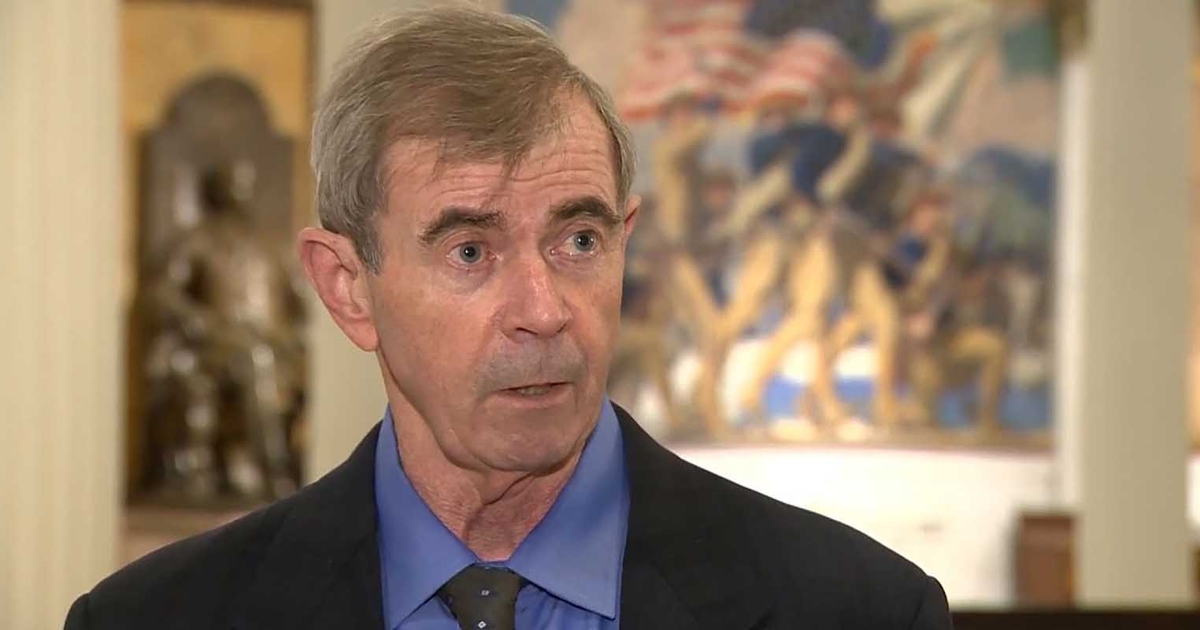
In a letter to senators, Massachusetts Secretary of the Commonwealth William Galvin requested that Congress modify certain aspects of the proposed bill. At the same time, regulatory experts argued that the legislation would make it “easier” for scam artists.
October 9, 2025
State securities regulators are sounding the alarm about legislation that could upend the country’s digital asset market structure rules.
In a letter to U.S. Sens. Tim Scott (R-S.C.), Elizabeth Warren (D-Mass.) and Ed Markey (D-Mass.), Massachusetts Commonwealth Secretary William Galvin claimed that if passed, the bill would be “a recipe of disaster for millions of savers” that would reach “financial assets far beyond crypto.”
Galvin’s letter focused on the Responsible Financial Innovation Act of 2025, which would modify the regulatory framework for digital assets between the Securities and Exchange Commission and the Commodity Futures Trading Commission.
U.S. Sen. Cynthia Lummis (R-Wyo.) first introduced the legislation in 2022, but with Republicans holding both houses of Congress and the White House, passage is closer than ever. Additionally, in July, the House of Representatives passed the Clarity Act, its version of a revised regulatory framework for digital assets. Senate Republicans unveiled their draft legislation for the Responsible Financial Innovation Act in September.
In his letter, Galvin argues that RIFA is “unacceptable in its expansive impact on the treatment of ‘real world assets’” at the state level, and urged Congress to modify certain sections of the bill “to preserve state anti-fraud authority.”
Compliance Experts Warn Shutdown Could Trip Up New RIA Registrations
According to Galvin, one section would preempt state authority “over a wide range of high-risk securities, including abusive penny stocks and microcap stocks,” while another section is a “misplaced effort” to scale back the oversight of “tokenized ‘real world assets’ including real estate and other contractual rights.”
The new rule would designate the CFTC and SEC as the entities enacting rules affecting operations that Galvin’s office has overseen for decades.
“A mere passing reference … to a study of potential ‘fraud and false claims’ is insufficient, and the lack of state involvement is unacceptable,” the letter read.
Additionally, in a separate letter signed by 28 academic leaders in securities and financial regulation, the North American Securities Administrators Association urged Congress to oppose parts of the legislation that would undermine regulators’ ability to combat fraud.
Particularly, signers targeted Section 105, which would “redefine the investment contract” test federal and state regulators often relied on to protect investors against “new and emerging fraud,” including pig butchering, Ponzi schemes, promissory note frauds, real estate swindles and fraudulent oil and gas offerings.
Florida Former Advisor Pleads Guilty to Scamming Firms, Clients and Feds
“Given the epidemic of fraud being perpetrated against American investors, especially older investors, Congress should not be pursuing policies that will make it easier for scam artists to get away with their crimes and harder for law enforcement and regulators to act,” the letter read.
Ben Edwards, a professor at the William S. Boyd School of Law at the University of Nevada, Las Vegas, was one of the signees. He told WealthManagement.com that it was “dangerous to meddle” with the investment contract test, as it helps capture misconduct that might otherwise escape the scope of securities laws.
“One of the risks you face is that if you limit the test or otherwise inhibit the ability of state securities regulators to go after bad behavior, it can make it easier for fraudsters and scammers to escape accountability,” he said.
Earlier this year, state securities regulators urged federal lawmakers not to exclude the states from crypto enforcement, with a letter to senators from NASAA President Leslie Van Buskirk claiming that it would be a “decision with net-negative, significant consequences for Americans.”
In an interview with WealthManagement.com, Alabama Securities Commission Director Amanda Senn stated that without “clear authority” for states to pursue crypto-related fraud, investors within the states “will have no recourse” when it comes to pursuing justice, with many cases likely going unscrutinized due to the sheer volume of schemes.
Aligning With FINRA in the Crypto Age
“These are our friends and family,” she said. “They’re people in our communities, and nobody wants to be helpless when it comes to helping a victim of fraud or crime.”
Patrick Donachie
Senior Reporter, WealthManagement.com
Patrick Donachie is a senior reporter for WealthManagement.com, covering federal and state regulation, litigation and M&A deals in financial services. Patrick was born in Staten Island, and now lives in Brooklyn, N.Y.
You May Also Like
Trusts & Estates for Advisors
Oct 2, 2025
Content Spotlight
Navigate today’s complex financial landscape with our comprehensive 2025 Midyear Outlook.
Sponsored Content
Understanding Crypto ‘Large Caps’ And How They Fit in Portfolios
Sponsored Content
5 Things You Need to Know About Charitable Planning Before The End of The Year
Sponsored Content
How to Benefit from New Hampshire’s Trust Laws
Sponsored Content
Growing on Purpose: Playbooks from Top-Performing Advisory Firms
Transforming Advisor Innovation
A guide to the companies, individuals and organizations who are bringing new innovations to market that make a real difference to the daily activities of financial advisors.
Copyright © 2025 Informa Connect Limited. Registered in England & Wales with number 01835199, registered office 5 Howick Place, London, SW1P 1WG.