
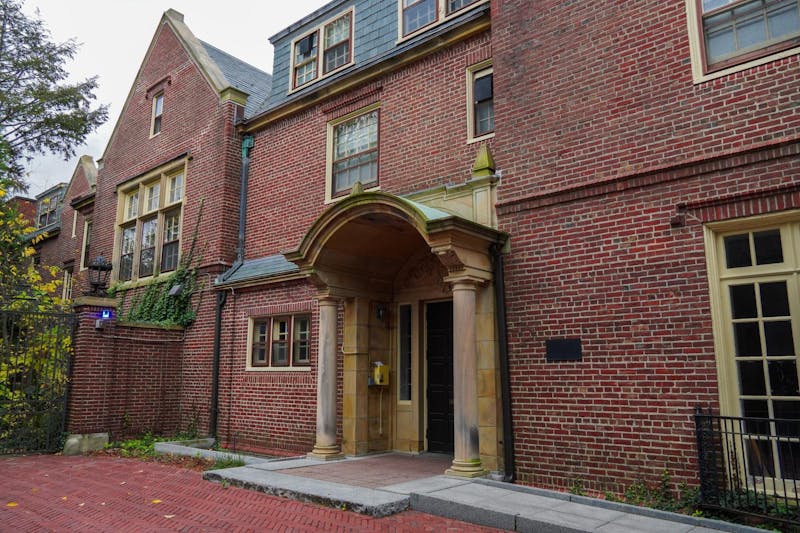
The University will no longer permit residential theme or program house leaders to select their residents, according to a copy of the slides obtained by The Herald from an attendee at a Tuesday meeting with the Office of Residential Life.
Residents of theme and program houses — including those tailored to students of specific races, genders and other identities — will now be selected through a “randomized lottery,” with those not selected being moved through to the general selection lottery.
These changes will not affect Greek Houses or those interested in the Substance-Free or Recovery Community.
This comes after the University entered into an agreement with the Trump administration that requires Brown to “cease any provision of benefits or advantages to individuals on the basis of protected characteristics in any school, component, division, department, foundation, association or element within the entire Brown University system.”
It also requires the University to submit a report to the federal government attesting it “has acted responsibly” to ensure programs do not promote “unlawful” diversity, equity and inclusion initiatives.
Current program houses include La Casita, Harambee House, House of Ninnoug and Brown Women’s Collective, among others. These program houses “foster a sense of community by bringing people of common interests to a common living environment,” according to ResLife.
Theme houses include Wellness Residential Experience at Sternlicht Commons as well sustainability, civic engagement and interfaith residential experiences at the Brook Street Residence Halls.
Sevilla Montoya ’27, co-president of Brown Women’s Collective, who attended today’s meeting, said ResLife’s changes were very unexpected.
“Everyone was pretty shocked and really caught off guard,” Montoya said. “It really takes away the sense of community within program houses, and the process that’s been there for a really long time.”
The University and ResLife did not immediately respond to a request for comment.
Prior to the policy change, students in the Latine-focused houses, La Casita, said the affinity-based housing served as a space where students of similar backgrounds could connect with one another.
“Sometimes you don’t want to have to constantly be validating yourself and having to explain those complexities and political tensions. Sometimes you just want to be understood,” Gabriela Picazo ’28, a current member of La Casita, said before the ResLife meeting.
“Providing our members with a place to do what they need to do and not feel judged for it is probably one of the best things that we can do in these times,” co-president Daniel Brambilia-Diaz ’27 said.
This is a developing story. Check back for updates.
Sophia Wotman is a University news editor covering activism and affinity & identity. She is a senior from Long Island, New York concentrating in political science with a focus on women’s rights. She is a jazz trumpet player, and often performs on campus and around Providence.
The Brown Daily Herald, Inc. is a financially independent, nonprofit media organization with more than 250 students working across our journalism, business and web divisions.