Posted on Leave a comment

Global Inflation Pushes Investors to Crypto: A Digital Haven Amidst Economic Uncertainty – FinancialContent

As global inflation surged from late 2020 and intensified through 2021 and 2022, a significant shift in investor sentiment began to take hold. Faced with the erosion of purchasing power in traditional fiat currencies and the devaluation of conventional investments, a growing number of individuals and institutions turned their gaze towards the nascent, yet increasingly influential, world of cryptocurrencies. This migration was fueled by the compelling narrative of digital assets, particularly Bitcoin, as a “digital gold”—a decentralized, fixed-supply alternative immune to the inflationary pressures wrought by extensive money printing and expansionary monetary policies from central banks worldwide.
This pivot towards crypto represents a profound re-evaluation of investment strategies in an era of economic uncertainty. While initially driven by retail investors seeking refuge, the trend has evolved to include substantial institutional adoption, with major players like MicroStrategy (NASDAQ: MSTR) and BlackRock (NYSE: BLK) publicly endorsing and integrating digital assets into their portfolios. As of October 16, 2025, the perception of cryptocurrencies as a consistent inflation hedge remains a nuanced topic, debated amidst their inherent volatility and increasing correlation with traditional markets. Nevertheless, their role as a viable alternative asset class continues to solidify, reshaping the future of global finance.
The period of escalating inflation coincided with some of cryptocurrency’s most dramatic market movements. In 2021, propelled by the inflation hedge narrative and growing institutional interest, Bitcoin (BTC) achieved an all-time high of $64,895 on April 14, 2021. Companies like MicroStrategy (NASDAQ: MSTR) began adding Bitcoin to their balance sheets in August 2020, a trend that accelerated with endorsements from prominent financial figures and a Fidelity Investments survey in September 2021 revealing that 52% of institutional investors held Bitcoin or other cryptocurrencies. JPMorgan Chase (NYSE: JPM) even suggested institutional investors viewed Bitcoin as a “better inflation hedge than gold.”
However, the efficacy of Bitcoin as a direct, short-term inflation hedge faced scrutiny in late 2021 and 2022. Despite US inflation hitting 7% in December 2021 and peaking at 9% later, Bitcoin experienced significant volatility, including sharp declines. During the 2021 CPI surge to 9%, Bitcoin notably fell over 35%, indicating a decoupling from the direct inflation-hedging performance many had anticipated. Its price movements increasingly showed correlation with broader stock market indexes, suggesting that as central banks hiked interest rates to combat inflation, crypto markets often mirrored the downturns in traditional finance.
A significant turning point came in January 2024 with the approval of spot Bitcoin ETFs in the US. This regulatory milestone bridged the gap between crypto and traditional finance, attracting a new wave of cautious institutional investors. By September 2025, institutional ETF inflows surged to an impressive $118 billion, underscoring the growing mainstream acceptance and demand for accessible crypto investment vehicles. While Bitcoin’s volatility in 2024 remained higher than gold and the S&P 500, its overall volatility has halved since 2021, positioning it closer to commodities like crude oil than the hyper-volatile altcoins. This maturing market behavior suggests a gradual integration into diversified investment portfolios.
Looking ahead to late 2025, signals from the Federal Reserve about a potential transition from “fighting inflation” to “supporting growth” and nearing the end of quantitative tightening are keenly watched. Such shifts could inject renewed liquidity into the market, potentially ushering in a new bull phase for cryptocurrencies. Beyond Bitcoin, other cryptocurrencies like Solana (SOL) and XRP have shown significant outperformance, driven by real-world use cases. The emergence of stablecoins, when paired with high-yield platforms, and new instruments like tokenized real-world assets and decentralized finance (DeFi) protocols, are also offering alternative tools for capital preservation and growth in the evolving economic landscape.
The crypto community’s response to global inflation has been a dynamic blend of steadfast conviction and evolving perspectives. Throughout the inflationary period from late 2020 to late 2025, the narrative of Bitcoin as “digital gold” – a decentralized, fixed-supply asset immune to fiat currency debasement – remained a powerful driving force. This sentiment was particularly pronounced in economies grappling with high inflation and currency instability, such as Venezuela, Argentina, and Turkey, where cryptocurrency adoption surged as citizens sought alternative stores of value. However, while the long-term vision of Bitcoin as an inflation hedge persists, its short-term volatility and increasing correlation with traditional equities have led to a more nuanced view, with some analysts considering it a “high-beta asset” rather than a stable anchor against immediate CPI fluctuations.
Social media platforms like X (formerly Twitter) and Reddit have been instrumental in shaping and reflecting this sentiment. Discussions frequently revolved around Bitcoin’s resilience during economic uncertainty, with spikes in activity often correlating with significant price movements. For instance, a surge in Bitcoin’s price during the U.S. government shutdown in October 2025 was widely interpreted as a testament to its role as a hedge against traditional financial instability, sparking widespread positive sentiment online. Crypto influencers played a crucial role in amplifying these narratives. Figures like BitMEX co-founder Arthur Hayes vocally advocated for Bitcoin as a superior safe-haven asset over gold in an inflationary era, emphasizing its independence from national financial controls. Even anecdotal mentions, such as Eric Trump’s public acknowledgment of the Trump family’s crypto holdings, contributed to reinforcing the asset class’s perceived worthiness for wealth diversification.
The inflation-driven adoption trend has had profound and varied effects across the broader crypto ecosystem, including Decentralized Finance (DeFi), Non-Fungible Tokens (NFTs), and Web3 projects. DeFi protocols experienced periods of recovery and increased liquidity as investors sought alternative yields and hedging mechanisms against traditional financial instability. Tokenized Money Market Funds emerged as a bridge between traditional finance and decentralized applications, while stablecoins continued their robust growth, particularly in emerging markets, serving as crucial tools for remittances and cross-border payments amidst macroeconomic instability. The NFT market, after its initial speculative boom and bust, evolved towards greater real-world utility by 2025, with applications in art, gaming, supply chain, and digital identity gaining traction, moving beyond pure speculation. Meanwhile, the Web3 ecosystem saw significant technological advancements focused on scalability, cost-efficiency, and user experience. Projects centered on decentralized digital identity, asset tokenization, and new payment models thrived, with advancements like Ethereum’s Proof-of-Stake upgrade and Layer-2 solutions for Bitcoin enhancing the efficiency and sustainability of the decentralized internet, further driven by grassroots adoption in regions like India, Nigeria, and Vietnam.
As of October 16, 2025, the cryptocurrency market stands at a pivotal juncture, continuously adapting to global economic shifts, particularly the lingering effects of inflation. In the short term (late 2025 – early 2026), crypto remains highly sensitive to macroeconomic indicators. Higher-than-expected inflation readings, such as the 2.9% core PCE in August 2025 leading to “Red September,” can trigger risk-off sentiment and price declines. Conversely, moderating inflation and anticipated interest rate cuts by central banks, especially the U.S. Federal Reserve’s signals about shifting from “fighting inflation” to “supporting growth,” could inject liquidity and fuel rallies, particularly for altcoins. While Bitcoin has historically shown correlation with high-risk tech stocks, recent data from Q3 2025 suggests a potential decoupling from the S&P 500, indicating its price movements might increasingly be driven by internal crypto market dynamics. Geopolitical uncertainties, like newly announced tariffs, also introduce risks of supply chain disruptions and accelerated inflation, prompting investors to seek traditional safe havens and potentially impacting crypto negatively in the immediate term.
Looking at the long term (beyond 2026), Bitcoin’s role is evolving from a pure “inflation hedge” to a “monetary alternative” and a key component of diversified inflation strategies. Its inherent scarcity (fixed supply of 21 million coins) and decentralized nature remain fundamental arguments for its appeal as protection against currency debasement. The accelerating institutional adoption, facilitated by regulated products like spot Bitcoin and Ethereum ETFs, is a significant long-term driver, bringing substantial capital inflows and potentially reducing volatility over time. Clear and consistent regulatory frameworks are crucial for fostering investor confidence and enabling further mainstream integration. Favorable policies, potentially easing restrictions on alternative assets in retirement plans or the passing of acts like the Stablecoin Act, could significantly bolster market stability and innovation.
Several potential catalysts could significantly boost the crypto market. Continued substantial inflows into spot ETFs will undoubtedly attract more institutional capital. A moderation of inflation leading to central bank interest rate cuts would inject liquidity, favoring riskier assets like cryptocurrencies. Technological advancements enhancing scalability, security, and real-world utility, especially in Real-World Asset (RWA) tokenization and DeFi protocols, can drive mass adoption beyond speculative investment. Furthermore, persistent geopolitical instability and a weakening U.S. dollar could enhance crypto’s appeal as a safe haven, while Bitcoin’s halving cycles (the most recent in 2024) are historically associated with price appreciation due to supply shock.
For crypto projects, strategic considerations include prioritizing compliance, developing real-world utility, enhancing scalability and security, designing sustainable tokenomics, and improving interoperability. For investors, diversification, robust risk management (e.g., Dollar-Cost Averaging), monitoring macroeconomic indicators, and adopting a long-term perspective are paramount. Utilizing regulated products like spot ETFs can provide safer exposure. Possible scenarios range from a sustained decoupling of Bitcoin from traditional markets, cementing its “digital gold” status, to a bull market extension if inflation moderates, potentially seeing Bitcoin reach $125,000-$130,000 by Q4 2025 or even higher in 2026. Conversely, continued high inflation could lead to sustained volatility and corrections. Accelerated mass adoption in crisis-stricken regions and Bitcoin’s long-term consolidation as a multi-decade store of value remain strong possibilities.
The global inflationary environment, particularly evident since late 2020, has undeniably propelled cryptocurrencies into the mainstream investment dialogue, positioning them as a compelling, albeit volatile, alternative to traditional assets. While the immediate efficacy of Bitcoin as a short-term inflation hedge remains a subject of debate due to its price volatility and increasing correlation with broader financial markets, its fundamental properties—scarcity, decentralization, and resistance to censorship—continue to underpin its long-term appeal as a store of value and a hedge against monetary debasement. The surge in institutional adoption, exemplified by the success of spot Bitcoin ETFs and the growing interest from major financial players, signifies a maturing market and a strategic shift towards portfolio diversification.
For crypto investors and enthusiasts, the key takeaway is the increasing importance of a diversified approach and a long-term perspective. While short-term price movements will continue to be influenced by macroeconomic data, central bank policies, and geopolitical events, the underlying trend of digital assets integrating into the global financial fabric is robust. Monitoring critical metrics such as inflation rates, interest rate decisions, and institutional capital flows into regulated crypto products will be crucial. The evolving regulatory landscape, particularly in major economies, will also play a significant role in shaping market stability and investor confidence.
Ultimately, the journey of cryptocurrencies from niche digital curiosities to significant alternative assets has been accelerated by the forces of global inflation. As of October 16, 2025, the market is poised for continued evolution, with technological advancements, increasing utility in DeFi and Web3, and a growing understanding of their role in a diversified portfolio. The question is no longer if crypto will be part of the future financial system, but how deeply integrated it will become, offering a compelling narrative for those seeking to preserve and grow wealth in an ever-changing economic landscape.
This article is for informational purposes only and does not constitute financial or investment advice. Cryptocurrency investments carry significant risk.

source

Posted on Leave a comment

Ripple News Today: XRP Price Prediction From Top Analysts As Remittix Trends At The Top In October – livebitcoinnews.com

We participate in marketing programs, our editorial content is not influenced by any commissions. To find out more, please visit our Term and Conditions page.

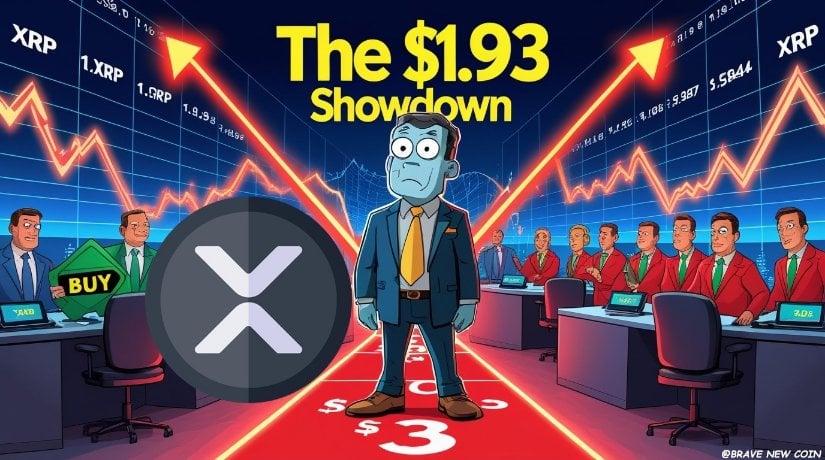
Ripple’s native token XRP is holding firm near $2.5005, posting a 1.99% gain over the past 24 hours despite ongoing turbulence across global markets. The modest rebound comes as traders weigh renewed United States and China trade concerns and a potential escalation in tariffs that could pressure risk assets. 
Analysts are adjusting their short-term outlooks, saying Ripple’s growing institutional relevance could keep XRP positioned for stability heading into the final quarter of the year, while emerging PayFi leader Remittix (RTX) continues to gain traction among investors seeking practical crypto utility and steady adoption momentum.
Source: TradingView 
XRP stayed between $2.45 and $2.55 after last week’s drop. If the price goes above $2.60, it could rise toward $2.75. Traders are still cautious. Ripple keeps adding more payment routes, and the steady transaction count shows people continue to use the network. 
Analysts view the current range as consolidation before a possible recovery if market liquidity improves later in the year.
While XRP continues to dominate traditional payment rails, Remittix (RTX) has begun to capture serious attention in the PayFi space. The project already supports instant crypto-to-fiat transfers across more than 30 countries, cutting out exchange fees and settling payments in real time through its live wallet beta. 
Despite recent market swings, Remittix has remained steady, with over $27.4 million raised, more than 678 million tokens sold, and CertiK verification completed. Many investors believe these achievements demonstrate both reliability and genuine adoption.
Listings on BitMart and LBank, together with a 15% daily USDT referral reward, have helped accelerate adoption. Analysts highlight that Remittix’s focus on genuine utility and secure infrastructure offers investors a credible hedge as they shift toward blockchain solutions with real-world applications.
Key Highlights of Remittix:
XRP’s rebound and Remittix’s steady rise are drawing attention as markets stabilize this October. XRP continues to strengthen its position in institutional crypto payments, while Remittix advances PayFi through transparent systems and real-world financial tools.
Their progress highlights how utility-focused projects are driving renewed confidence and direction in the crypto market.
Discover the future of PayFi with Remittix by checking out their project here:
Website: https://remittix.io/ 
Socials: https://linktr.ee/remittix 
$250K Giveaway: https://gleam.io/competitions/nz84L-250000-remittix-giveaway
Disclaimer: This is a paid post and should not be treated as news/advice. LiveBitcoinNews is not responsible for any loss or damage resulting from the content, products, or services referenced in this press release.
LiveBitcoinNews is a leading online platform dedicated to providing the latest news and insights about Bitcoin and the broader cryptocurrency market. It offers timely updates on market trends, regulatory developments, technological advancements, and expert analyses, catering to both seasoned investors and newcomers in the digital currency space. The site features a variety of content, including articles, guides, interviews, and opinion pieces, making it a comprehensive resource for anyone interested in staying informed about the rapidly evolving world of cryptocurrencies.
Contact us: support@livebitcoinnews.com
© Copyright – Livebitcoinnews.com

source

Posted on Leave a comment

$759K jackpot-winning Cash 5 lottery ticket sold in Lancaster County – fox43.com

DENVER, Pa. — A Pennsylvania Lottery Cash 5 with Quick Cash ticket that won a jackpot of more than $759,000 was sold at a Turkey Hill store in Lancaster County, the Lottery announced Thursday.
The ticket, sold before Wednesday night’s drawing, matched the five winning numbers (11-24-32-38-42) to earn the $759,176 prize. It was sold at a Turkey Hill location on Denver Road in East Cocalico Township, the Lottery said.
To play Cash 5, players select five numbers from 1-43. A winning ticket must match all five numbers to win the Cash 5 jackpot, but those who match two, three, or four winning numbers earn lower prizes. 
Every $2 play includes the main Cash 5 game Evening Drawing numbers and one Quick Cash game. When any of your numbers match any winning number in the same Quick Cash game, you win the prize shown for that game. Each Quick Cash game offers a chance to instantly win $2 or $6. The chances of winning a Quick Cash game are separate from the chances of winning the main Cash 5 game.
Winners can be identified only after prizes are claimed and tickets validated. A main Cash 5 game prize must be claimed within one year of the drawing date. Any prizes won on any Quick Cash game must be claimed within one year of the purchase date. Anyone holding a jackpot-winning Cash 5 with Quick Cash ticket should contact the nearest Lottery office for further instructions or call 1-800-692-7481.
More than 14,900 other Cash 5 with Quick Cash tickets also won prizes in the drawing. 
Players should check every ticket, every time, and claim lower-tier prizes at a Lottery retailer.
To stream FOX43 on your phone, you need the FOX43 app.
Next up in 5
Example video title will go here for this video
Next up in 5
Example video title will go here for this video

In Other News

source

Posted on Leave a comment

Wanted man considered armed, dangerous – WNEM

FLINT, Mich. (WNEM) – Crime Stoppers is offering a reward for tips for information that leads to a 20-year-old man’s arrest.
Isaiah Timothy Maggitt is wanted for homicide in the first degree, concealed carry weapon and felony firearm.
Crime Stoppers said Maggitt is considered armed and dangerous.
He is 5/10” and 152 pounds.
A cash reward up to $1,000 is being offered for tips that lead to his arrest.
Submit an anonymous tip to Crime Stoppers by calling 1-800-422-JAIL.
Subscribe to the TV5 newsletter and receive the latest local news and weather straight to your email every day.
Copyright 2025 WNEM. All rights reserved.

source

Posted on Leave a comment

Stocks rise, boosted by the AI trade and solid earnings: Live updates – CNBC

  1. Stocks rise, boosted by the AI trade and solid earnings: Live updates  CNBC
  2. Stock market today: Dow, S&P 500, Nasdaq rise as TSMC’s stellar earnings eclipse trade-war jitters  Yahoo Finance
  3. US Stocks Rise as Strong Earnings Steal Spotlight From Trade War  Bloomberg.com
  4. Stock Market Today: Dow Rises As Nvidia Chipmaker TSMC Jumps On Earnings (Live Coverage)  Investor’s Business Daily
  5. Chip stocks rise after TSMC’s rosy outlook on strong AI demand  Reuters

source

Posted on Leave a comment

Jonathan Taylor player props odds, tips and betting trends for Week 7 | Colts vs. Chargers – Colts Wire

Before Jonathan Taylor and his teammates take the field Sunday at 4:05 p.m. ET on CBS, there will be numerous player prop bets available. Taylor and the Indianapolis Colts (5-1) take the field against the Los Angeles Chargers (4-2) in a Week 7 matchup at SoFi Stadium.
National Football League odds courtesy of BetMGM. Odds updated Thursday at 10:07 a.m. ET. For a full list of sports betting odds, access USA TODAY Sports Betting Scores Odds Hub.
Our team of savvy editors independently handpicks all recommendations. If you purchase through our links, the USA Today Network may earn a commission. Prices were accurate at the time of publication but may change.
Gambling involves risk. Please only gamble with funds that you can comfortably afford to lose.  While we do our utmost to offer good advice and information we cannot be held responsible for any loss that may be incurred as a result of gambling.  We do our best to make sure all the information that we provide on this site is correct. However, from time to time mistakes will be made and we will not be held liable. Please check any stats or information if you are unsure how accurate they are. No guarantees are made with regards to results or financial gain. All forms of betting carry financial risk and it is up to the individual to make bets with or without the assistance of information provided on this site and we cannot be held responsible for any loss that may be incurred as a result of following the betting tips provided on this site.  Past performances do not guarantee success in the future and betting odds fluctuate from one minute to the next. The material contained on this site is intended to inform, entertain and educate the reader and in no way represents an inducement to gamble legally or illegally or any sort of professional advice.
Gannett may earn revenue from sports betting operators for audience referrals to betting services. Sports betting operators have no influence over nor are any such revenues in any way dependent on or linked to the newsrooms or news coverage. Terms apply, see operator site for Terms and Conditions. If you or someone you know has a gambling problem, help is available. Call the National Council on Problem Gambling 24/7 at 1-800-GAMBLER (NJ, OH), 1-800-522-4700 (CO), 1-800-BETS-OFF (IA), 1-800-9-WITH-IT (IN). Must be 21 or older to gamble. Sports betting and gambling are not legal in all locations. Be sure to comply with laws applicable where you reside. It is your sole responsibility to act in accordance with your local laws.

source

Posted on Leave a comment

Seven tips to help you hit the ground running as a first-time BYUI student – BYU-Idaho Scroll

Select Page
by Bradley Salmond | Oct 16, 2025 | BYU-Idaho, Latest News, Student Guides | 0 comments
According to BYU-Idaho’s Newsroom, approximately 5,500 first-time freshmen entered the BYUI campus in this semester alone.
If you’re one of the new freshmen still trying to find their way around campus (or if you’ve been here awhile), here are some tips that will help you hit the ground running as a first-time college student.

Todd Kelson has been teaching biology at BYU-Idaho for 28 years. He talked about the importance of learning what success looks like in the classroom.
“I want [students] to … have confidence in getting a job that will support them and their family,” said Kelson. “I’m hoping that by having success here, they will recognize it, so when they get into a future career, they’ll know what success looks like and feels like.”
Kelson highlighted finding success in college and shared a deeper look into what success looks like.
“I always emphasize to my students, success does not mean that you’re getting an A in the class,” Kelson said. ”There’s people like me that got a B average or a little bit higher in college, and then go on to be very successful later, because they learned how to think. And that is what’s important, learning how to think.” 
Kelson described the difference between learning what to think and how to think. Learning how to think is critical because you take that thinking with you outside of school.
“All of my classes so far have kind of worked together, and they’ve overlapped,” said Ryan Larsen, a biochemistry major. “And those connections can matter to life. I mean, I had a full-blown conversation in this cafeteria over biology and how it affected how we see things and how we do things, and personally, I would say that’s the point of loving what you’re studying, right? If you actually do, you’ll think of it outside of school, not just in school.”
Larsen described how he has learned the value of learning how to think as he has begun to make connections across classrooms and even outside of school.
“I feel like one of the secrets I’ve had when it comes to having success in school comes down to a student-teacher relationship,” said Nathan Seegmiller, a psychology major.  
Seegmiller said that he meets with his professors as soon as possible. He learns about their expectations and shares his goals with them, so they can help him throughout the course. 
“And then another thing is where you choose to sit,” Seegmiller said. “You can’t always sit at the front of the class; sometimes it’s full, and that’s okay. But you can still interact with the class. Even if you’re not physically a front seat student, mentally be a front seat student.” 
Seegmiller said that you can still raise your hand to ask questions and meet with the teacher after class. This will show them that you’re a front-seat student even if you’re sitting at the back.  
According to Larsen, it’s okay to be vulnerable and acknowledge what you don’t know.
“You can be comfortable with being imperfect. It is a part of nature.” Larsen said.   
“I feel like sometimes students wait for a teacher to tell them, ‘This is what you need to do to study for the test.’ Some students wait for somebody else to form a study group.” Kelson said.  
Kelson said that successful students don’t wait for other people; they take the initiative.  
“So I think that those self-driven students are the ones who will do well, because they know what they want and they’re willing to put in the time to get there,” Kelson said.
There’s a lot to balance when you start the college experience. These are just a couple of tips to get you started, so that instead of feeling like you’re floundering, you can hit the ground running.
Welcome to Rexburg.
Your email address will not be published. Required fields are marked


Oct 15, 2025
Oct 14, 2025
Oct 14, 2025
Oct 14, 2025
activities Art Basketball BYU BYU-I BYU-Idaho BYU Cougars BYUI campus Christmas city council Community Courts Crime Dance Devo devotional education faith features General Conference History hockey IBC Idaho Idaho Falls Idaho Politics Jesus Christ mental health Music outdoor politics Religion Rexburg Rexburg Activities sports Spud Kings students The Church of Jesus Christ of Latter-day Saints Things to do in Rexburg
BYU-Idaho Scroll displays advertisements but is not responsible for their content or claims. Ad revenue supports our operations and helps keep our content accessible.
I-Comm Student Media is an academic program tied to the Communication Department of BYU-Idaho, and is committed to representing BYU-Idaho and its parent institution, The Church of Jesus Christ of Latter-day Saints. 

source