Posted on Leave a comment

Supreme Court weighs whether to gut key provision of landmark Voting Rights Act – NBC News

Profile
news Alerts
There are no new alerts at this time
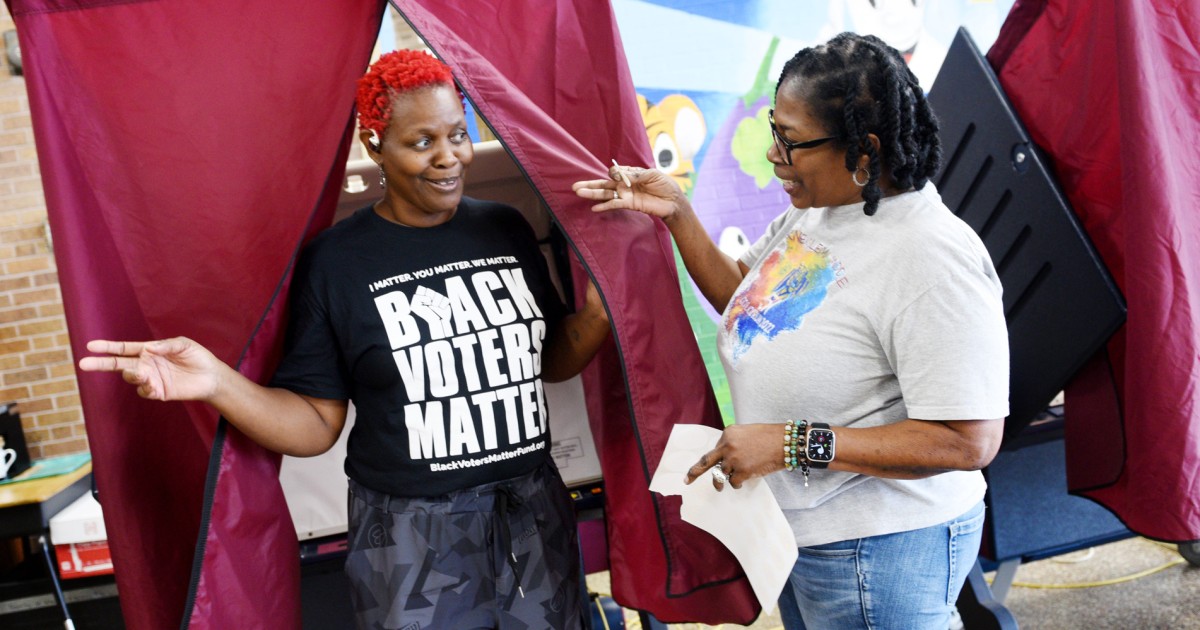
WASHINGTON — The conservative-majority Supreme Court on Wednesday considered whether to eviscerate a key provision of the landmark Voting Rights Act in a congressional redistricting case from Louisiana.
The justices, who expanded the scope of the case over the summer, heard oral arguments on whether states can ever consider race in drawing new districts while seeking to comply with Section 2 of the 1965 law, which was enacted against a backdrop of historic racial discrimination to protect minority voters.
The long-running dispute concerns the congressional map that Louisiana was required to redraw last year after being sued under the Voting Rights Act to ensure that there were two majority-Black districts. The original map only had one such district in a state where a third of the population is Black.
The Supreme Court originally heard the case earlier this year on a narrower set of legal issues but, in a rare move, it asked in June for the parties to reargue it. The court then raised the stakes by asking the lawyers to focus on a larger constitutional issue.
Now, the justices are deciding whether drawing a map to ensure there are majority-Black districts violates the Constitution’s 14th and 15th amendments, which were both enacted after the Civil War to ensure equal rights for former slaves, including the right to vote.
Conservatives argue that both constitutional amendments prohibit consideration of race at any time. The Supreme Court has previously embraced this “colorblind” interpretation of the Constitution, most notably in its 2023 ruling that ended the consideration of race in college admissions.
Louisiana, which initially defended its new map, has switched sides and joined a group of self-identified “non-African-American” voters who sued to block it on constitutional grounds. The Trump administration also backs the state’s new position.
The map is being defended by civil rights groups that challenged the original map.
The Voting Rights Act has long been a target of conservative legal attacks, with the Supreme Court weakening it in two major rulings in 2013 and 2021.
But two years ago, the court surprisingly reaffirmed the requirement that race be used to redraw districts when necessary to comply with the law in a different congressional redistricting case from Alabama.
The ruling was 5-4, with two conservatives, Chief Justice John Roberts and Justice Brett Kavanaugh, joining the court’s three liberals in the majority. Kavanaugh, however, expressed reservations about the long-term future of Section 2.
A broad ruling in Louisiana’s favor would reduce the need for states to draw legislative districts composed largely of minority groups and would likely lead to a reduction in the number of minority lawmakers in Congress and state legislatures.
A quick ruling could give Louisiana and other states time to draw new districts ahead of the 2026 midterm elections. With Black voters often voting Democratic, such a move could benefit Republicans.
Lawrence Hurley is a senior Supreme Court reporter for NBC News.
© 2025 NBCUniversal Media, LLC

source

Posted on Leave a comment

Bitcoin at the brink: Key resistance test and broader market signals – KITCO

BUY/SELL GOLD & SILVER
All Metal Quotes
Featuring views and opinions written by market professionals, not staff journalists.

Bitcoin Technical Analysis

Despite a narrow daily close within the TBO Cloud, Bitcoin has held its 4-hour TBO support and is showing a rising RSI, indicating growing momentum. Short-term volume on the daily chart has outperformed its moving average since the 5th, underscoring institutional participation.
Traders are watching for a classic bump-and-run breakout above overhead resistance. While no bearish signals have printed on the 4-hour yet, the emergence of bearish divergences or TBO Close Longs could occur if price challenges resistance again today.

Ethereum Positioning and Dominance Metrics

Ethereum recovered strongly from the 0.786 Fib level, retreating only to $3,900 on its latest pullback and already tagging its daily TBO Fast line—something Bitcoin has yet to achieve. ETH still requires roughly an 8% advance to breach near-term resistance.
In dominance metrics, ETH/BTC remains in bearish consolidation within the daily TBO Cloud but has recovered from Friday’s liquidation. Combined stablecoin dominance at 6.76% above the cloud suggests capital is sitting on the sidelines; we anticipate this figure will descend toward 5% over the next month, coinciding with a new Bitcoin all-time high.
Market Capitalization and Pair Reversals

The total market cap excluding Bitcoin, Ethereum and stablecoins is signaling a potential altcoin resurgence, with a fourth TBO Close Short emerging on the 4-hour chart. Likewise, OTHERS/BTC printed a second TBO Close Short, suggesting broader market cap may outperform Bitcoin in the near term.
On pair charts, SOL/ETH has printed three 4-hour TBO Close Shorts even after a bearish break below the daily cloud; a return into cloud territory and above resistance would confirm a shift in dominance toward SOL.
TradFi and Macroeconomic Overview

Fed Chairman Powell’s dovish pivot toward QE has buoyed S&P futures, DJI, and NDX, while the DXY remains in bullish consolidation inside its daily TBO Cloud despite a 4-hour TBO Close Long hinting at near-term weakness. The U.S.–China tariff skirmish has spooked NVDA, and Tesla’s daily chart registered a bearish divergence cluster, though the VIX’s drop below 20 and a rebound in the Nikkei suggest risk sentiment is stabilizing.
Commodities: Oil and Gold

WTI crude has broken down toward its daily TBO support, signaling potential volatility if a bounce does not materialize. In contrast, Gold continues its advance, now trading above $4,200, reinforcing its safe-haven demand amid macro uncertainty.
Altcoin Highlights

Among altcoins, BNB’s second daily bearish divergence contrasts with sustained volume inflows, while SOL registers a 4-hour TBO Close Short beneath resistance. TRX, XLM and AVAX display bullish divergences on the 4-hour timeframe, whereas AAVE, ALGO, CRV and LDO have printed recent TBO Close Shorts. TAO and PENGU show bearish RSI and volume signals, while KAS, SEI, INJ, PUMP, ZORA, ZEN and XPL exhibit various bullish reversal indicators.
Overall, altcoins are forming mixed setups, but a decisive Bitcoin breakout above resistance would likely catalyze a broader market advance.
Learn my strategies and the tools I use every day by visiting The Complete Cryptocurrency Investor by Mastering Assets.
Download Kitco on GooglePlayKitco on AppStore
We appreciate your feedback
|
Your Privacy Choices
privacy opt out icon
© 2025 Kitco Metals Inc.

source

Posted on Leave a comment

Pi Network Mainnet Update: Pi Coin Price Prediction After Protocol 23 Upgrade Explained – TradingView

After months of decline, Pi Coin is fighting to stay afloat, currently hovering around $0.2368, with daily trading volumes slipping below $30 million. Once hailed as a revolutionary community-driven project boasting a market cap exceeding $17 billion, Pi has now shed nearly 90% of its value. All eyes are now on the upcoming Protocol 23 upgrade, which many believe could serve as the catalyst Pi needs to regain its footing.
Pi Coin Price Hits New All-Time Low
The Pi Network’s price slump stems primarily from weak demand and minimal on-chain activity. Community members on X have expressed growing dissatisfaction, accusing the team of slow progress, centralized control, and unfulfilled promises. One supporter bluntly stated:
“Demand is extremely down, and the on-chain usage of Pi is poor.”
Bearish sentiment has intensified, with some traders warning that Pi could tumble to $0.10 if decisive action is not taken soon. Low liquidity and a lack of developer transparency have added pressure, leaving investors anxiously awaiting signs of revival.
Pi Network Mainnet Upgrade
The upcoming Protocol 23 upgrade could mark a major turning point for the Pi ecosystem. Currently in testing, the upgrade is expected to go live on the mainnet by late Q4 2025 or early Q1 2026. 
According to Pi community expert Dr. Altcoin, the upgrade, aligned with Stellar Core v23.0.1, aims to enhance scalability, efficiency, and security.
Dr. Altcoin emphasized: “The Pi Core Team takes a slow but right approach, prioritizing precision and reliability over rushed execution.”
The update will also introduce Decentralized Finance (DeFi) features, including a Decentralized Exchange (DEX) and an Automated Market Maker (AMM). Users will be able to trade tokens, create liquidity pools, and test DeFi functionalities in a secure testnet environment before the mainnet rollout.
Despite optimism surrounding the technical upgrades, experts like Dr. Altcoin caution that technical improvements alone won’t resolve Pi’s liquidity crisis. He urges the Pi Core Team to consider measures such as token buybacks or coin burns to strengthen Pi’s tokenomics and restore investor confidence. Without these actions, he warned:
“The network’s price recovery may remain out of reach.”
Signs of Potential Recovery in Pi Coin Price
There are still some encouraging signs. The next token unlock is expected to release fewer coins under 120 million Pi, which could reduce selling pressure. Additionally, 2.5 million Pi tokens have recently been moved off exchanges into self-custody wallets, suggesting that holders may be preparing for the long term.
The Relative Strength Index (RSI) for Pi has also dropped to 24, indicating the token is oversold and could be due for a short-term rebound. If the Protocol 23 upgrade delivers on its promises, Pi may finally gain the momentum needed to climb out of its slump.
FAQs
Protocol 23, based on Stellar Core v23.0.1, launches late Q4 2025 or early 2026, adding DeFi tools like a DEX and AMM to boost scalability, security, and trading efficiency.
Oversold RSI at 24 signals a bounce; smaller token unlocks under 120M Pi cut selling pressure, plus 2.5M Pi moved to self-custody hint at holder confidence.
Pi’s at a bargain but risky—watch for upgrade success and team actions on tokenomics. If DeFi sparks real usage, it could rebound; otherwise, brace for more volatility.
Select market data provided by ICE Data Services. Select reference data provided by FactSet. Copyright © 2025 FactSet Research Systems Inc.Copyright © 2025, American Bankers Association. CUSIP Database provided by FactSet Research Systems Inc. All rights reserved. SEC fillings and other documents provided by Quartr.© 2025 TradingView, Inc.

source

Posted on Leave a comment

‘Bitcoin Jesus’ to pay nearly $50M to settle tax-evasion case, feds say – MLive.com

An investor known as “Bitcoin Jesus” has agreed struck a deal with the U.S. government.
Roger Ver, an early bitcoin investor, will pay nearly $50 million in back taxes, penalties, and interest stemming from his willful failure to properly report his bitcoin holdings on tax returns, the U.S. Department of Justice announced Tuesday.
In return officials have dismiss the indictment against Ver, who expatriated from the United States to St. Kitts and Nevis in 2014.
“We are pleased that Mr. Ver has taken responsibility for his past misconduct and satisfied his obligations to the American public,” said Associate Deputy Attorney General Ketan D. Bhirud.
“This resolution sends a clear message: whether you deal in dollars or digital assets, you must file accurate tax returns and pay what you owe.”
Ver began acquiring bitcoins in 2011 and quickly become an avid promoter of cryptocurrency. Due to his net worth upon expatriation, Ver was required to file certain related tax returns and to pay taxes on the capital gains on his world-wide assets, including his bitcoins.
In the agreement, Ver admitted that when he filed these returns in May 2016, he did not report all his bitcoins and pay the required capital gains tax on their constructive sale.
Ver admitted that his failure to report capital gains from all these bitcoins caused a loss to the United States of $16,864,105.
He also admitted he owed the maximum penalty available under 26 U.S.C. § 6663 of more than $12 million, as well as interest on the taxes and penalties.
“Mr. Ver is accepting responsibility for his actions and has agreed to pay a substantial penalty,” said Acting United States Attorney Bill Essayli of the Central District of California. “Every person, whether you’re a millionaire or not, is required by law to pay taxes and we will not hesitate to hold anyone accountable.”
“No matter how sophisticated the technology or the asset, IRS-CI will continue to follow the money, ensure compliance, and protect the integrity of our tax system,” Kareem Carter, Executive Special Agent in Charge, added.
The Cyber Crimes Unit of IRS Criminal Investigation’s Washington, D.C. Field Office investigated the case.
Assistant Chief Matthew J. Kluge and Trial Attorney Peter J. Anthony of the Tax Division, and Assistant U.S. Attorney James. C. Hughes of the Central District of California prosecuted the case.
If you purchase a product or register for an account through a link on our site, we may receive compensation. By using this site, you consent to our User Agreement and agree that your clicks, interactions, and personal information may be collected, recorded, and/or stored by us and social media and other third-party partners in accordance with our Privacy Policy.
Use of and/or registration on any portion of this site constitutes acceptance of our User Agreement, (updated 8/1/2024) and acknowledgement of our Privacy Policy, and Your Privacy Choices and Rights (updated 10/1/2025).
© 2025 Advance Local Media LLC. All rights reserved (About Us).
The material on this site may not be reproduced, distributed, transmitted, cached or otherwise used, except with the prior written permission of Advance Local.
Community Rules apply to all content you upload or otherwise submit to this site.
YouTube's privacy policy is available here and YouTube's terms of service is available here.
Ad Choices iconAd Choices

source

Posted on Leave a comment

Analysts Promise Green Uptober for Crypto as Snorter Token Presale Ends in 5 Days – Brave New Coin

Analysts are pointing to the quick recovery of the crypto market as a sign that October will still be a healthy month for altcoins as historical data suggests, making it the ideal time to check out $SNORT.
KEY POINTS:
➡️ The crypto market has climbed back up to $3.8T after dropping to $3.65T
➡️ Analysts say that October 10’s flash crash is a result of structural approaches to risk
➡️ It’s still expected that October will be a healthy month for altcoins
➡️ Snorter Token is well placed to capitalize on a new wave of altcoin buys this uptober
It’s understandable if you’re shaky on crypto after the October 10 flash crash, but analysts are saying that fear is unfounded in the long term. While Trump’s China tariff announcement caused a 10% drop in the value of $BTC and market-wide liquidations, the crypto market has recovered shockingly quickly.
Crypto podcaster Scott Melker pointed out that the market retraction wasn’t down to an event that threatened crypto’s core foundations, such as the China mining ban, FTX’s bankruptcy, or retail investors turning away from ICOs.
While excessive leverage in crypto has caused a market retraction, the case for a healthy Uptober remains in play. After dropping to $3.65T, the overall market cap for crypto has spiked back up to $3.8T and seems to be trending upwards again.
Graph showing the crypto market cap as of 15th of October
Gold has rallied to around $4.2k for a new ATH, which usually precedes rotation into Bitcoin. Alongside the Fed’s rate cuts, it’s expected that long-term investment in crypto will serve as a hedge against the weakened value of the USD.
However, trading in a healthy altcoin market still has its own issues. Making a profit trading altcoins requires quick reflexes and a keen understanding of market factors – or a secret weapon. That’s why we’re looking at Snorter Bot.
It’s built to keep up with the fast-moving, high-stakes meme coin market by presenting you with the freshest market intelligence directly to your phone, as well as the ability to trade instantly at the push of a button. Read on and we’ll explain why Snorter Bot could make your uptober a profitable one.
Snorter Token ($SNORT) is the official token of Snorter Bot, a trading bot that helps you snipe the best-performing coins on blockchains like Solana using a Telegram-based app.
It’s tricky to keep track of the meme coin market – new tokens are popping all the time, and by the time you’ve had a chance to vet one, the initial liquidity could be gobbled up by whales and bots. That’s where Snorter is leveling the playing field.
It automatically scans DeXs for upcoming altcoins and alerts you to the best performing ones so you can decide whether or not to trade them. Snorter speeds up the vetting process as well. Each token goes through a honeypot detection engine, which flags known rug pull indicators (with an 85% success rate in beta testing).
Simply select the coin you wish to trade and establish a buy or sell order with your desired price point. Snorter executes the trade on your behalf, so you won’t need to keep checking the charts to see whether it’s the right time to sell.
Snorter will support the Solana network on launch, as well as Ethereum, BNB, Polygon, and Base after launch.
Snorter Bot competitors.
Snorter’s features are already pretty impressive, but the real power comes from $SNORT. It unlocks the daily cap, allowing you to make unlimited trades, while also reducing the fees you pay on each trade to just 0.85%. Holding $SNORT allows you to make more trades, and each one is more profitable.
That’s not all. $SNORT also unlocks copy trading for Snorter Bot. Essentially, the bot mirrors the trades of another wallet you nominate. If you’ve identified one that has a winning strategy, Snorter uses a high-speed RPC node to execute the exact same trades as quickly as possible.
The Snorter presale is about to close, but if you’re quick, you can still grab $SNORT at a low price of only $0.1079. In another five days, the presale will close, and you’ll have to buy $SNORT at market price. However, if you buy now, you can also lock in some last-minute staking rewards of up to 108% per annum.
Get in on $SNORT’s presale before it closes.
Always conduct your own research before investing and invest only what you’re prepared to lose. This article is not financial advice.
Disclaimer: This content has been supplied by a third party contributor. Brave New Coin does not endorse or promote any products or services mentioned herein. Readers are encouraged to conduct independent research before making any financial decisions. The information provided is for informational and educational purposes only and should not be interpreted as investment advice.
BNC AdvertisingBrave New Coin reaches 500,000+ engaged crypto enthusiasts a month through our website, podcast, newsletters, and YouTube. Get your brand in front of key decision-makers and early adopters. Don’t wait – Secure your spot and drive real impact in Q3 & Q4. Find out more today!
16 Oct 2025
16 Oct 2025
16 Oct 2025
|16 Oct 2025|Partners|
|15 Oct 2025|News|
|15 Oct 2025|News|
|15 Oct 2025|News|
|15 Oct 2025|News|
Auckland / Melbourne / London / New York / Tokyo
A Techemy company
PO Box 90497, Victoria St West, Auckland Central, 1010, New Zealand.
© 2025 Brave New Coin. All Rights Reserved.

source

Posted on Leave a comment

Pi Network News: Failed Transactions Cause Setbacks for Long-Awaited Upgrade – TradingView

The Pi Network’s major blockchain upgrade, Protocol 23, is taking longer than expected. Developers have reported a growing number of failed transactions and network issues on the Testnet, which has slowed progress.
Timeline for Completion
The first phase of the upgrade, Testnet1, is still being worked on. Because of the current pace and repeated transaction errors, it may take about another month to finish this stage. Once it is stable, the upgrade will move to Testnet2 and later to the Mainnet, where real transactions will take place.
Given the current speed of the Protocol 23 upgrade on the Testnet and the number of failed transactions being recorded, it will likely take about another month to complete the Testnet blockchain upgrade. Once successfully completed, the upgrade will move to Testnet2, followed by… pic.twitter.com/0sD0ck5lFT
This delay has shifted the overall timeline. The full upgrade is now expected to be ready by the end of this year or in the first quarter of 2026. Developers say it is better to fix these issues now rather than rush into the Mainnet and risk bigger problems later.
Features of Protocol 23
Protocol 23 is an important step for Pi Network. It aims to make the system faster, safer, and more compliant with global regulations. The upgrade will include built-in KYC verification, better scalability through Stellar Protocol alignment, Linux node support, and Rust-based smart contracts for secure app development.
Community Reaction
The Pi community has mixed feelings about the delay. Some users are frustrated by the slower progress, while others say it is necessary for the long-term success of the network. The Pi coin price has already dropped sharply this year, adding more pressure on the project.
Pi Coin has faced a bearish few months. Its price has fallen sharply to $0.2145, a staggering 92.82% decline from its peak. Despite this downturn, upcoming developments such as the Pi Hackathon and the Protocol 23 upgrade could reverse the same.
FAQs
The Protocol 23 upgrade is delayed due to technical issues on the Testnet. Developers are fixing transaction failures, and the full rollout is now expected by late 2025 or early 2026.
Protocol 23 will introduce built-in KYC, improved speed and security, support for Linux nodes, and Rust-based smart contracts to enable secure decentralized applications.
While the Pi coin price has been bearish, future predictions hinge on the successful launch of Protocol 23 and ecosystem growth from events like the Pi Hackathon.
Select market data provided by ICE Data Services. Select reference data provided by FactSet. Copyright © 2025 FactSet Research Systems Inc.Copyright © 2025, American Bankers Association. CUSIP Database provided by FactSet Research Systems Inc. All rights reserved. SEC fillings and other documents provided by Quartr.© 2025 TradingView, Inc.

source

Posted on Leave a comment

Three to Know with Levi Libson: Safety tips for protests – The Columbia Chronicle

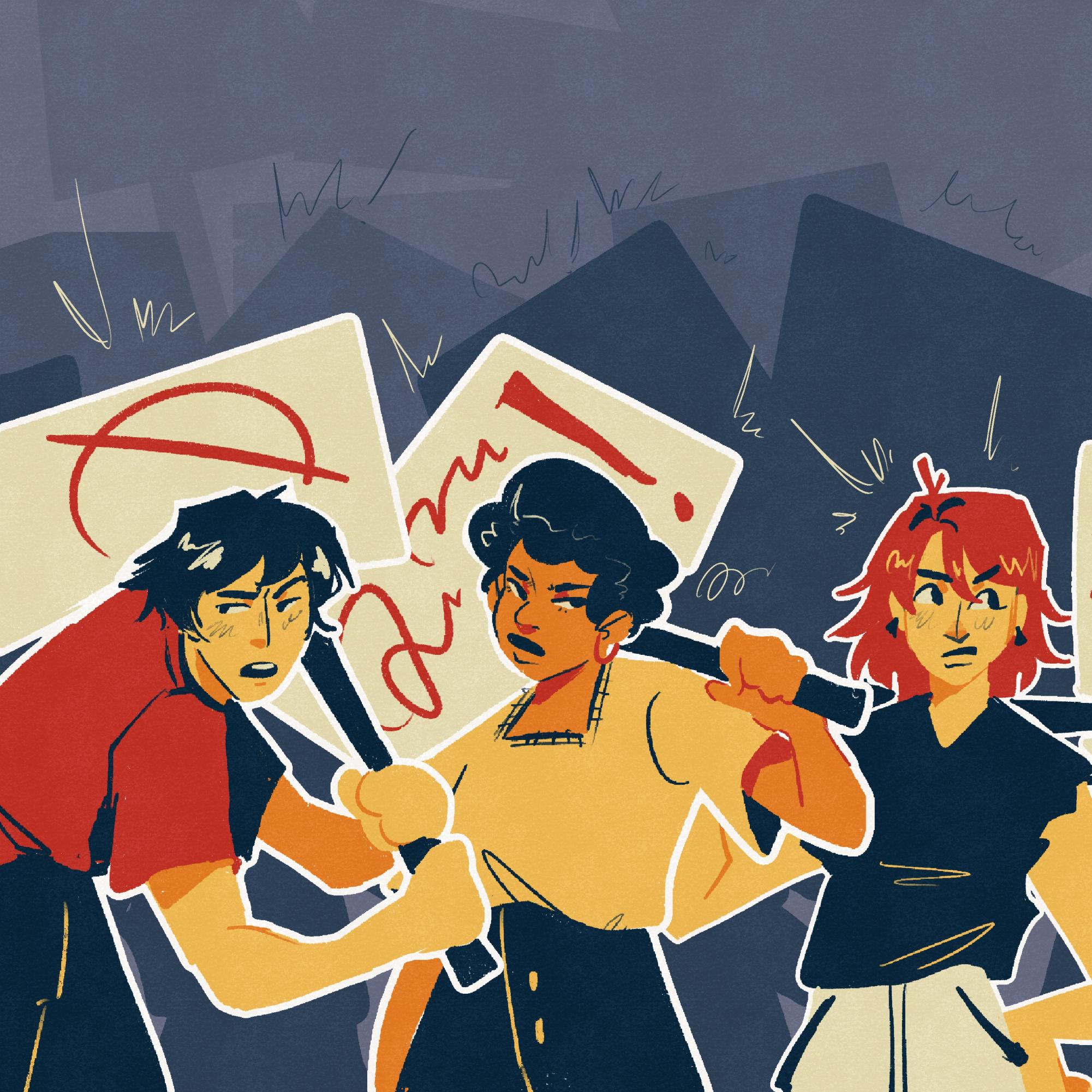
The right to free speech and assembly is protected under the constitution, but it is important to plan ahead and prepare for any potential issues. Here are three things to know if you plan on engaging in protests.
0:06: Welcome to Three to Know with the Columbia Chronicle, your go to source for the top three things every Columbia College student, faculty and staff member needs to know.  
0:14: I’m your host, Levi Libson. 
0:16: Peaceful protest can be an important aspect of free speech and advocation. 
0:21: In the right context and environment, it can push voices extremely far. 
0:25: That being said, understanding the dos and don’ts of protest is extremely important. 
0:29: Today I will be going over three tips for peaceful protest for anyone wanting to engage. 
0:35: Our first tip: dressing for the weather. 
0:37: Protests can be long lasting, so dressing comfortably makes a huge difference.  
0:41: For example, sturdy shoes, layered clothing and a backpack for essentials is necessary, especially in the Windy City. 
0:48: Wearing anything quote unquote fancy will not be beneficial to you. 
0:52: Oh, and another thing, try and avoid wearing anything that can get caught or pulled like long necklaces or scarves. 
0:58: Additionally, it’s not entirely a bad idea to bring a small first aid kit or even write any emergency contact information down. 
1:05: Another common safety piece of attire are masks. 
1:08: These can be important not just for health, but also anonymity. 
1:11: While peaceful protest is ideal and always the best form of protest, large congregations of people can quickly become chaotic. 
1:18: Just one more reason of importance for topic number two: knowing your rights. 
1:23: While peaceful protest falls under our protection of free speech, understanding the regulations you can easily break means understanding the potentiality for demonstration to go south. 
1:32: What I mean by this is that you can easily involuntarily break rules which can quickly cause negative enforcement. 
1:37: For instance, within Chicago, it’s legal to peacefully protest without a permit just as long as you aren’t obstructing traffic and are sticking mostly to sidewalks and streets. 
1:46: However, the second any real sound amplification or a larger group of people are introduced, suddenly you might just need a permit. 
1:53: While a lot of these regulations are somewhat left to interpretation by enforcement, reading the fine lines on these rules for what you can and can’t do makes a huge difference. 
2:01: So, here are some important notes. 
2:04: One: you must obey lawful orders from officers. 
2:07: Two: you have the right to assemble peacefully, although be aware that you may not trespass, obstruct the public or engage in mob action. 
2:15: Three: you do not need to answer questions, however, if an officer suspects you of a crime or is in the act of detaining you, you should answer with your name and date of birth. 
2:23: Oftentimes, officers will deem it necessary to arrest you for the sake of investigation if you do not supply your name. 
2:29: And lastly, to repeat on a previously touched upon note, your First Amendment rights do not apply to private property, so make sure you are in a public space. 
2:38: My final tip: stick to the old familiar buddy system. 
2:42: Protesting is a lot safer and more manageable when you go with a friend or two. 
2:46: Make sure to have an initial place of meeting in case you get separated and keep checking in with each other during the event. 
2:51: Texting can be great, however, in large groups of people, it’s important to remember that signals can get spotty. As such, keep your eyes open and aware of your surroundings. 
2:59: If the energy starts to shift and feel more intense, leaving might be the safer option. 
3:04: Trust your gut and remember it’s all about being smart. 
3:07: Once a protest is over, take time to decompress, talk with friends and build that battery back up again. 
3:12: Protesting is a powerful, yet draining act. 
3:15: There’s no shame in needing downtime afterward. 
3:18: Subscribe to our newsletters on our website, columbiachronicle.com. 
3:22: Be sure to also check out chronversations for weekly campus highlights. 
3:26: I’m Levi Libson
3:28: Thanks for listening. 
 
Copy edited by Matt Brady

source

Posted on Leave a comment

$26 XRP Price Target Remains Technically Valid, Says Expert – TradingView

The XRP monthly chart remains structurally constructive despite last week’s sharp pullback, according to independent technician Charting Guy (@ChartingGuy), who argues the asset is “NOT bearish in the slightest.” His latest one-month XRP/USD chart on Bitstamp, captured Oct. 14, shows price defending a major Fibonacci support cluster while repeatedly probing resistance at the prior all-time high.
XRP Bull Run To $26 Still Possible?
On the current monthly candle, XRP is trading at $2.4477 with 17 days and 10 hours left in the period after printing an open at $2.8467, high at $3.1037, and low at $1.5800, down 14.0% month-to-date. The rejection zone is precise: a horizontal line marks the 1.000 Fibonacci retracement at $3.3170, which aligns with the 2018 cycle peak and has capped the last several tops in 2025. Just below, the chart includes a 0.888 retracement band (approximately $2.96) that has acted as near-term resistance during this three-month range between roughly $2.10–$3.30.
Under price, confluence is building at the former breakout shelf from the 2021 surge. A lime-green box highlights the $1.60–$1.80 area, overlapping directly with the 0.786 retracement at $1.6125 and the top of the 2021 congestion. This band caught last week’s deep wick to $1.58 and, in prior months, has served as a staging area for rebounds. The next staircase of support below is marked by the 0.702 at $1.2149, the 0.618 at $0.9153, and the 0.500 at $0.6149, delineating a clear hierarchy should the market see further volatility.
The bullish extension framework in Charting Guy’s layout is unambiguous. Above the all-time high at $3.3170, the chart plots successive Fibonacci expansion targets at 1.272 = $8.2961, 1.414 = $13.3894, and 1.618 = $26.6304. Those levels map a classic measured-move pathway for a trend continuation once price achieves a decisive, high-timeframe close through the prior peak. In other words, the cycle roadmap remains intact so long as the monthly structure continues to hold above the 0.786 stack and eventually flips the ATH into support.
Market Structure Remains Supportive
The analyst couples that chart with a broader market read. “So many [are] caught up in day-to-day price action,” he posted on X, adding that TOTAL2, TOTAL3, and top altcoins (ETH, XRP, SOL) each “have ONE more key fib to get over… their prior ATH. Once that happens with strength, altseason really gets going. BTC.D tanks & shitcoins finally catch a bid.” In his XRP view, that “one more key fib” is the $3.3170 threshold.
Technically, the setup is binary and well-defined on the monthly timeframe: continued defense of $1.60–$1.80 keeps the uptrend’s higher-low structure intact, while a sustained break and close above $3.3170 would confirm the next leg toward the extension grid at $8.30, $13.39, and—at the cycle’s ambitious outer bound—the 1.618 marker near $26.63. For now, XRP remains range-bound beneath ATH but supported by the same zone that powered its last breakout, exactly as Charting Guy’s chart depicts.
At press time, XRP traded at $2.4655.
Select market data provided by ICE Data Services. Select reference data provided by FactSet. Copyright © 2025 FactSet Research Systems Inc.Copyright © 2025, American Bankers Association. CUSIP Database provided by FactSet Research Systems Inc. All rights reserved. SEC fillings and other documents provided by Quartr.© 2025 TradingView, Inc.

source