

This Changes Everything For Pi Crypto: Updated Pi Price Prediction For Q4 2025 99Bitcoins
source
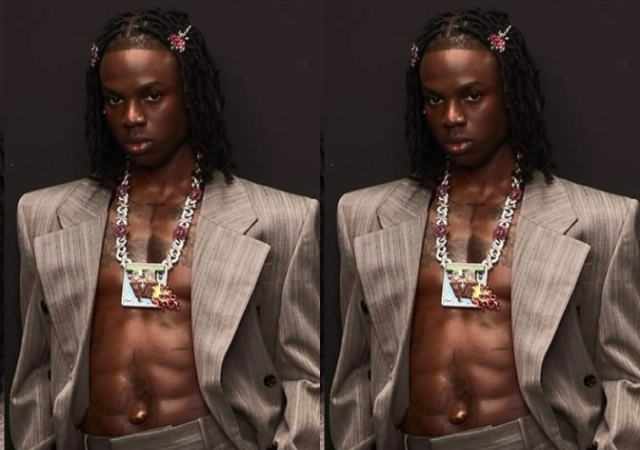
Nigerian music star Rema, whose real name is Divine Ikubor, created a stir on social media with his latest photos showing off a new hairstyle.
The Afrobeats artist, who had cut off his dreadlocks, was seen with a fresh look in studio images.
In 2020, Rema gained attention when he chopped off his dreadlocks to support the #EndSARS protests in Nigeria.
He shared photos of his new hairstyle on Twitter, saying, “Dreads don’t mean I’m a criminal #EndSARS.”
In the latest trending photos on Elon Musk’s X platform, Rema was spotted in a Bottega outfit for the UK publication, Dazed.
What caught people’s attention was his use of decorative hairpins in his dreadlocks and a tilted pose that had an effeminate touch.
Among those who saw the singer’s new look was Nollywood producer Stanley Ontop.
He posted pictures on Instagram and humorously questioned if the Ozeba hitmaker was secretly becoming the queen of Africa.
He wrote:
“Tongues wag, women and men faint as Rema turns herself into the Queen of Africa. Rema and Tana Dey compete. What’s the bending for🤷♂️ anyways? What do I know?”
See the post below:
A post shared by Ajemba Stanley Chibueze (@stanley_ontop)
See some comments below:
@loucis scater: “He wan collect princess of Afrobeat 4rm Ayra Star.”
@enemariaamodu: “WETIN DEY DO OUR ARTIST THIS DAYS.”
@ask_of_davila_fr: “Which kind posture be this but no be that one carry me come here… this song reminds me of when hookuup no pass isiewu and maintenance money 😂… now Dem don upgrade am to Lambo.. Iju uwa.”
@xmando3685: “😂😂😂😂 u dey find trouble ooo leave those princess alone oo.”
@ogbolor: “Last time, omahlay carry purse. Now Rema..smh…. feminising men is d thing now. Notin just happens, diz tins are planned.”
@blessing_nkiruka: “Osetigo….. proud of my gender… see how other genders are decamping rapidly….. who knows whose turn again in the name of the fashion icon …”
@rewueydb: “Flower boy??? Abeg oh, what’s going on with our muscled-up men?”
@chinyerepeter66: “Shey na agege ni 🤷 allegedly.”
@divinefavour_gift: “Na Tana win am 🏆 Tana has been into it for long.”
@minsamuelokogho: “Funny pictures though 😂😂😂😂😂😂😂😂the caption.”
@ywreydb: “Omo boy, you don dey give Gay Vibes…..that shitt ain’t cool bruh.”
@werhdn: Abeg you guys should relax! My guy wants to get his own Grammy. This is the only way. Or have you guys forgotten that your African giant wore see through top and high heels before collecting Grammy? Chill out! It’s Rema’s turn!
@maidned: “Ahhh see my friend brother younger sister….Remi na you be dat? Fine babe! Iy get one Bobo like dis when dey find you oh!”
Copyright © 2025 Gistlover Media. All Rights Reserved

Now
54
Sun
83
Mon
81
Emma Quinn
TOPICS:
CAPITAL REGION, NY (WRGB) — The fall season means plenty of time outside, whether it’s raking the leaves or heading to the pumpkin patch.
These outdoor activities can take a toll on our seniors, with the risk of falls even greater at this time of year.
Jocelyn Nackley, the Director of Rehabilitation at Onondaga Center for Rehabilitation and Nursing, joined the CBS6 Morning Show to talk about safety tips this autumn season.

© 2025 Coinspeaker LTD. ALL RIGHTS RESERVED.
Erik Voorhees highlights how crypto will be crucial to destroying greed on forex exchanges. He cited that the decentralized nature of DeFi is the specific solution.
ShapeShift CEO Erik Voorhees took to X this weekend to share his opinion on how cryptocurrency and the Decentralized Finance (DeFi) ecosystem could mark the end of foreign exchange greed. His post was in response to an experience that Hayden Adams had at an airport in Europe.
The entire conversation began with Uniswap Founder Hayden Adams sharing that he had recently visited an airport in Europe.
While he was there, he discovered that “spreads on euro/usd were 20%.” In his opinion, EUR/USD is the most liquid forex pair found anywhere around the globe. However, Adams suggested that the transaction fees were quite high.
Based on what he tagged “the absolute greed of tradfi,” which is unmatched, the crypto boss noted that DeFi is definitely out to replace it. Somewhat concurring with this stance, Erik Voorhees noted that greed is ever-present, whether one is dealing with traditional financial systems or blockchain.
Greed in tradfi is little different than greed in crypto
Greed is ever present… it's a derogatory term for profit maximizing, which all people engage in.
When you see a disparity such as this forex pair at the airport, it's not due to excess greed (indeed the greed of a… https://t.co/zJpgc93VVf
— Erik Voorhees (@ErikVoorhees) October 4, 2025
He explained that the kind of greed observed in TradFi is quite different from that seen in the crypto space. Voorhees believes that greed is only a derogatory term for profit-maximizing, a practice that every businessperson engages in.
He attributed the excess greed identified by Adams in the European airport to a case of inefficiencies caused by several factors, like the state of the market or regulatory constraints.
“It’s illegal for an app developer to offer frictionless forex trading on a mobile device, in which funds can be instantly paid, also from the phone to any vendor. It’s not in your hands because of regulations. Greed of the businessman takes the blame, but the culprit is the unseen folly of regulatory machinations,” the ShapeShift CEO explained.
The quest for control largely drives this entire scenario; however, with crypto’s decentralized nature, this is hardly the case.
The blockchain system runs on sophisticated technology that takes away control from an individual and transcends machination. Cryptocurrencies like Bitcoin (BTC), Ethereum (ETH), Solana (SOL), and many others are gradually becoming the choice of many institutional investors.
Disclaimer: Coinspeaker is committed to providing unbiased and transparent reporting. This article aims to deliver accurate and timely information but should not be taken as financial or investment advice. Since market conditions can change rapidly, we encourage you to verify information on your own and consult with a professional before making any decisions based on this content.
Benjamin Godfrey is a blockchain enthusiast and journalist who relishes writing about the real life applications of blockchain technology and innovations to drive general acceptance and worldwide integration of the emerging technology. His desire to educate people about cryptocurrencies inspires his contributions to renowned blockchain media and sites.
Godfrey Benjamin on X
October 4th, 2025
October 4th, 2025
October 4th, 2025
October 4th, 2025
This website provides educational content only. Cryptocurrency and investing involve significant risk, never invest more than you can afford to lose, and always do your own research or seek professional advice.
Content is intended for adults only. Gambling laws differ by country; please follow local regulations. By using this site, you agree to our terms.
We may include affiliate links, but these do not affect our ratings or recommendations.
Crypto promotions here are not authorized under the UK Financial Promotions Regime and are not intended for UK consumers.
Copyright © 2025 Coinspeaker LTD. All rights reserved.
Reproduction in whole or in part in any form or medium without express written permission of Coinspeaker LTD is prohibited.


Sikkim State Lottery Results Today – 4th October, 2025 – Sikkim Lottery Sambad Result Live Update The Sentinel – of this Land, for its People
source
As we head into Q4, you can feel the excitement in the air. And there’s a good reason. The final quarter of the year is almost always crypto’s best season – since 2015, Bitcoin’s average return in this quarter has been nearly 60%. It’s a pattern that holds up about eight times out of ten.
Why drives these year-end rallies? It’s usually a mix of factors. Institutional investors are making their final allocation decisions, while Bitcoin’s four-year halving cycle tends to align perfectly with the momentum of Q4. This year feels especially promising, as Bitcoin has just posted its best Q3 ever.
When Bitcoin runs, altcoins typically follow – and that’s when you see money start rotating into projects with higher upside potential. In these kinds of market conditions, everyone’s looking for opportunities to invest.
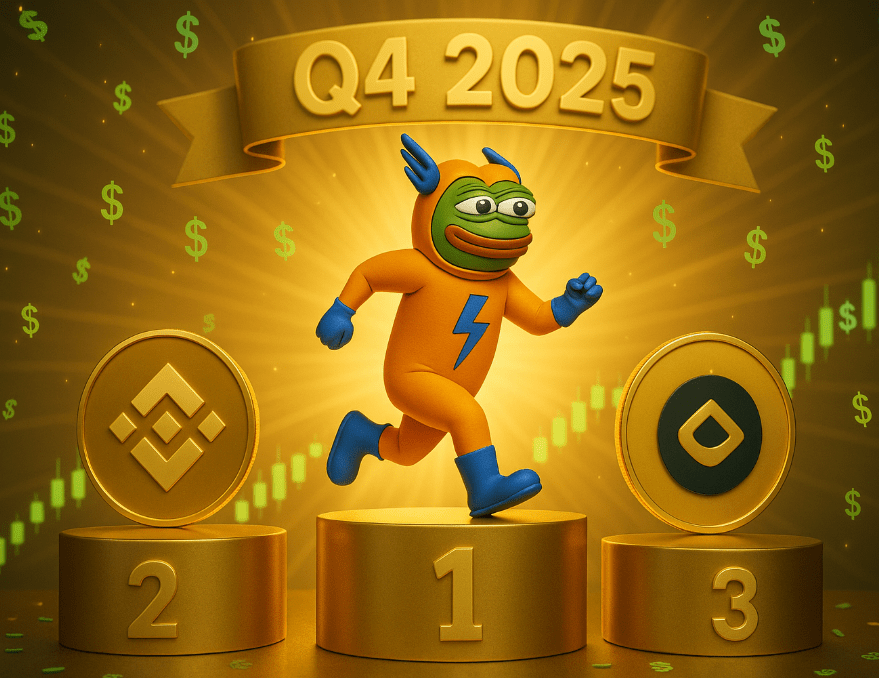
With that backdrop, we’re looking at three of the best cryptos to buy right now: a new Layer-2 called Bitcoin Hyper (HYPER), the established powerhouse BNB (BNB), and the decentralized trading protocol Hyperliquid (HYPE). Let’s get into what makes each one so exciting.
So, why all the buzz around Bitcoin Hyper? The pitch is simple, but it’s a big one: what if you could get Bitcoin’s security and Solana’s speed in one blockchain? Nothing like this has been done before.
Bitcoin Hyper is a Layer-2 network designed to make that happen. By using Solana’s tech stack, it’ll bring DeFi, NFTs, and meme coins to Bitcoin’s ecosystem – while everything still settles on Bitcoin’s base layer. If it works, it could unlock the chain’s full potential.
And this isn’t just some theoretical idea on paper. Investors are already throwing real money at it – the HYPER token presale has raised nearly $20 million, and you can currently buy tokens for just $0.013015 each.
Several prominent analysts have endorsed Bitcoin Hyper, including Crypto June, who said it’s the project “everyone’s watching.” Fellow analyst Alessandro De Crypto even called it the “best crypto launch of 2025.”
The ultimate goal? Unlock the idle part of BTC’s multi-trillion-dollar market cap and put it to work. If Bitcoin Hyper pulls that off, then getting in at the current presale price could be one of the smartest moves you make this year. Visit Bitcoin Hyper Presale.
Next up is BNB. It’s a name everyone knows, but it’s showing some real momentum lately, trading above the $1,000 level. The coin’s prospects really come down to two things: BNB is getting rarer, and the underlying blockchain is getting busier.
Firstly, BNB burns its own tokens every quarter, permanently removing them from circulation. It’s a similar idea to a company buying its own stock. They’ve already wiped out nearly a third of the BNB supply, which puts a serious squeeze on what’s left.
But a shrinking supply is only part of the story. The BNB Chain is seeing way more daily activity, and its Layer-2, opBNB, is becoming faster with continuous upgrades. So, you have fewer coins available when more people are using the network. That’s a powerful setup – and it makes BNB one of the best cryptos to buy in Q4.
Then there’s Hyperliquid, which has basically become the king of decentralized derivatives. It runs on its own custom-built blockchain, which is why it’s fast enough to compete with the big CEXs like Binance.
But the real selling point is its business model. Hyperliquid generates massive revenue from trading fees, and a big chunk of that revenue is automatically used to buy HYPE tokens off the market. It’s a simple equation: more trading volume equals more fees, which equals more buybacks.
The platform has even launched its own stablecoin (USDH), which is expected to attract even more traders and volume to Hyperliquid’s ecosystem. So, while HYPE is still sitting 16% below its September all-time high, that actually makes right now a solid entry point before the next rally.
Disclaimer: This media platform provides the content of this article on an “as-is” basis, without any warranties or representations of any kind, express or implied. We assume no responsibility for any inaccuracies, errors, or omissions. We do not assume any responsibility or liability for the accuracy, content, images, videos, licenses, completeness, legality, or reliability of the information presented herein. Any concerns, complaints, or copyright issues related to this article should be directed to the content provider mentioned above.
This is a Press Release provided by a third party who is responsible for the content. Please conduct your own research before taking any action based on the content.
The buzz in crypto circles is intense: Cardano price is under fresh scrutiny as speculators…

Bitcoin’s early rise remains the benchmark for crypto wealth creation. Early participants who acquired coins for under a dollar became millionaires as the asset surged past $100,000 in 2025. For many, replicating that scale of return has felt impossible in today’s more mature and regulated environment. Yet XRP Tundra’s presale is drawing comparisons with Bitcoin’s breakthrough moment — not in mining or trading, but in the sheer speed with which it is delivering life-changing gains to early buyers.
The presale has created a unique formula: vault-based staking for XRP, a dual-token structure with fixed launch multiples, and liquidity technology that protects value at market debut. Investors who once thought Bitcoin’s story could never be repeated are finding that Tundra offers a modern route to similar wealth outcomes.
XRP has been central to cross-border settlement for over a decade, but it has lacked one major feature: native staking. XRP Tundra fills this gap through Cryo Vaults, a system where holders lock tokens for seven, thirty, sixty, or ninety days. The longer the freeze, the higher the reward, with Frost Key NFTs amplifying yields to as much as 30% APY.
What makes the model powerful is its simplicity. XRP never leaves the Ledger, eliminating counterparty risk. Staking becomes accessible through direct interaction with vaults rather than complex DeFi protocols. While vaults are not live yet, presale allocations guarantee priority access, creating demand from investors eager to secure future yield.
Unlike Bitcoin’s single-asset rise, XRP Tundra’s wealth-creation engine lies in a two-token system spanning two blockchains. TUNDRA-S, on Solana, powers utility and yield functions across the ecosystem. TUNDRA-X, on the XRP Ledger, anchors governance and reserves, ensuring resilience and community oversight.
In Phase 5, participants purchase TUNDRA-S at $0.091, gain a 15% bonus, and receive free TUNDRA-X valued at $0.0455. At launch, those prices escalate dramatically: $2.50 for TUNDRA-S and $1.25 for TUNDRA-X. The fixed pricing embeds multiples into every presale allocation, echoing the life-changing gains once associated with Bitcoin’s climb but engineered in advance rather than left to chance.
One of Bitcoin’s advantages in its early years was the absence of trading bots and high-frequency speculation. New projects today rarely enjoy that luxury. To counter these risks, XRP Tundra has integrated Meteora’s DAMM V2 liquidity pools.
This system begins with high dynamic fees — often around 50% — that gradually taper to standard levels. The design makes early dumping unprofitable while channeling fees into Cryo Vault rewards. The exponential fee scheduler is particularly effective in deterring automated trading in the critical first hours. Features like position NFTs and permanent liquidity locks further ensure that TUNDRA-S maintains depth and stability. Instead of chaos at launch, investors encounter a fairer market with incentives tilted toward staking and holding.
Trust is another area where Tundra stands apart. The project’s contracts have been examined by Cyberscope, Solidproof, and Freshcoins. Team identity has also been confirmed through Vital Block KYC.
For investors, this combination of independent audits and public verification contrasts sharply with Bitcoin’s pseudonymous origins. While Bitcoin’s success relied on trust in the code alone, Tundra adds transparency and accountability to give participants confidence their capital is being deployed in a secure framework.
Coverage of the presale has accelerated as numbers grow. Independent analysts have highlighted the scale of early returns, while community groups compare it directly with Bitcoin’s formative years. On YouTube, Crypto Infinity profiled the mechanics of Tundra’s vaults and liquidity safeguards, framing it as a “second chance” for investors to achieve generational wealth.
For XRP holders, the project marks a turning point: assets once limited to appreciation alone now generate income and multiply in value. For the broader market, Tundra represents proof that historic wealth creation is not confined to the past but can be engineered responsibly under modern conditions.
XRP Tundra has transformed the presale model into a wealth-generation engine comparable to Bitcoin’s earliest chapter. Through vault staking, dual tokens, liquidity safeguards, and audited security, it has created millionaire outcomes in weeks rather than years. The presale’s rapid success demonstrates that Bitcoin’s story of transformative gains is no longer a once-in-a-lifetime event — it is happening again.
Disclaimer: This media platform provides the content of this article on an “as-is” basis, without any warranties or representations of any kind, express or implied. We assume no responsibility for any inaccuracies, errors, or omissions. We do not assume any responsibility or liability for the accuracy, content, images, videos, licenses, completeness, legality, or reliability of the information presented herein. Any concerns, complaints, or copyright issues related to this article should be directed to the content provider mentioned above.
This is a Press Release provided by a third party who is responsible for the content. Please conduct your own research before taking any action based on the content.
As we head into Q4, you can feel the excitement in the air. And there’s…

Date Sunday, October 5
Starts 6pm
Venue MetLife Stadium, New Jersey
TV Channel 5
The New York Jets host the Dallas Cowboys at MetLife Stadium on Sunday. The Jets (0-4) are still seeking their first win of the season while the Cowboys (1-2-1) are coming off a wild 40-40 tie against the Packers.
Over 47.5 points
2pts 10-11 general
The New York Jets are still winless after four games and that may well not change after they host the Dallas Cowboys on Sunday.
The Jets were awful against the Dolphins on Monday, committing 13 penalties for 101 yards and fumbling the ball away three times, and are facing stronger opposition this week.
Dallas are coming off a crazy 40-40 tie against Green Bay and another high-scoring encounter could be in the offing.
The Cowboys have been scoring and conceding plenty of points since trading away their best defensive player, Micah Parsons, and quarterback Dak Prescott has already clocked up 1,119 passing yards and six touchdowns.
Dallas have scored 114 points in four games while the Jets have given up at least 27 in each of their four contests. The Cowboys are without their star wide receiver CeeDee Lamb due to injury, but George Pickens has stepped up in his absence and has caught four TD passes in the last three games.
Jets quarterback Justin Fields is playing better than expected despite the lack of wins, while wide receiver Garrett Wilson has caught 16 passes in the last two games alone. The Cowboys might go close to exceeding the total line on their own, but the Jets should also contribute.
Sign up with Paddy Power to bet on New York Jets vs Dallas Cowboys. Here are the latest odds for Sunday's game.
Odds correct at time of publishing
Want more top sports betting advice? Make sure you take a look at Racing Post Sport's tips for more of the latest picks from our experts.
More on the NFL:
WATCH NOW: The Punt Team | NFL Week 5 betting preview
The Jets host the Cowboys in NFL Week Five on Sunday, October 5.
The game is taking place at MetLife Stadium in New Jersey which has an artificial surface.
The Jets are 11-10 home underdogs with the Cowboys the 3-4 favourites. The handicap is set at 1.5 points.
Commercial notice: This article contains affiliate links. Offers are handpicked and come from operators our experts have first-hand experience of. Opening an account via one of these links will earn revenue for the Racing Post, which will be used to continue producing our award-winning coverage of horseracing and sports betting.
Published on inNFL tips
Last updated
Copyright © 2025 Spotlight Sports Group Limited or its licensors, all rights reserved
