Posted on Leave a comment

US Border Device Searches Surge: Privacy Tips with Burner Phones – WebProNews

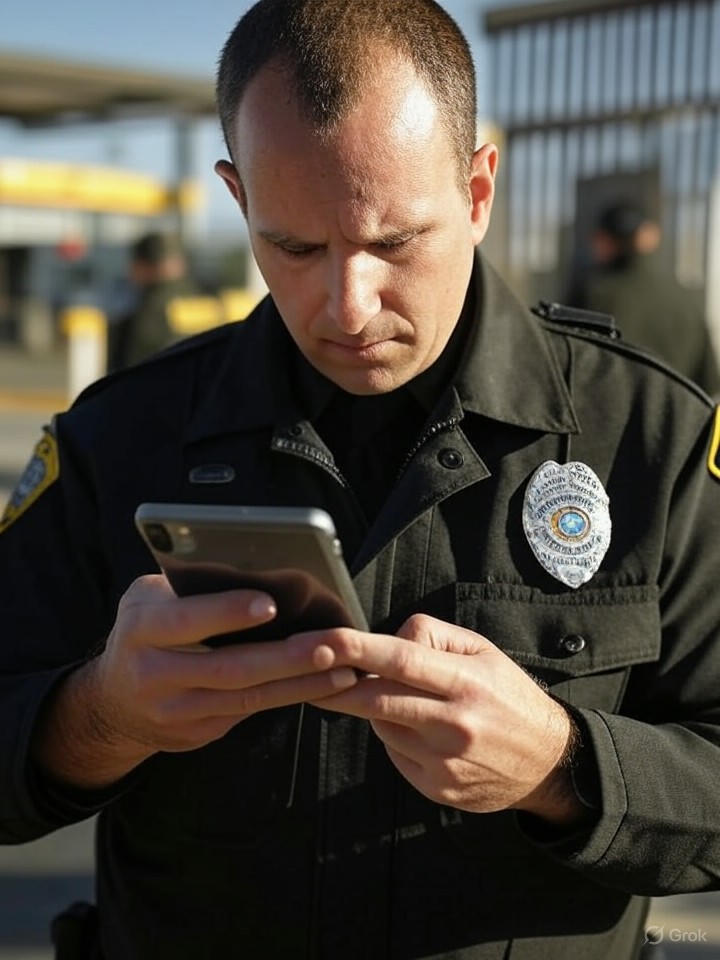
In an era where digital privacy is increasingly under siege, travelers crossing international borders face a growing risk: the scrutiny of their personal devices by customs officials. Recent data from U.S. Customs and Border Protection reveals a sharp uptick in electronic device searches, with agents examining nearly 46,000 phones and laptops in fiscal year 2023 alone—a fivefold increase over previous years. This surge underscores a broader trend where border agents, armed with broad legal authority, can demand access to your smartphone, potentially exposing sensitive emails, photos, and messages without a warrant.
At the heart of this issue is the legal framework that grants border agents exceptional powers. Unlike domestic law enforcement, which typically requires probable cause, customs officials operate under a “border search exception” to the Fourth Amendment. This allows them to inspect devices for evidence of contraband or threats to national security. Travelers, including U.S. citizens, may find themselves compelled to unlock their phones or risk detention, denial of entry, or even device seizure.
Understanding Border Search Authority
Experts from the Electronic Frontier Foundation emphasize that while agents can’t force you to provide passwords, refusing can lead to prolonged questioning or travel disruptions. For journalists and professionals handling confidential information, this poses acute risks, as unpublished notes or source communications could be compromised. The EFF’s guidelines recommend minimizing data on devices carried across borders, such as by using cloud storage accessible only after entry.
One practical strategy gaining traction is the use of a “burner” phone—a cheap, disposable device loaded only with essential travel apps and contacts. According to a recent article on MSN, sourced from CNET, this $50 investment can safeguard your primary smartphone’s privacy. By leaving your main phone at home or in a secure location, you present agents with a device containing minimal personal data, reducing the chance of invasive snooping.
Implementing Burner Phone Strategies
The burner approach isn’t foolproof but offers a low-tech shield. Prepaid phones, available at retailers like Walmart or Best Buy, can be activated with temporary SIM cards for international roaming. Load them with navigation apps, ride-sharing services, and emergency contacts, but avoid syncing sensitive accounts. As noted in a Guardian piece, travelers should also enable full-disk encryption on any device and use strong passcodes to add layers of protection.
For industry insiders, particularly in tech and media, integrating these tactics into travel protocols is essential. Companies are advising employees to use virtual private networks (VPNs) and encrypted messaging apps like Signal, even on burners. However, the HuffPost reports that device searches hit an all-time high, with agents sometimes copying data for later analysis, highlighting the need for proactive measures.
Broader Implications for Digital Rights
Beyond individual strategies, advocacy groups are pushing for reforms. The American Civil Liberties Union has challenged border search policies in court, arguing they infringe on free speech and privacy rights. Meanwhile, international travelers report similar experiences in countries like Canada and the UK, where device inspections are on the rise.
Ultimately, while a burner phone provides a pragmatic workaround, it points to deeper systemic issues in balancing security with civil liberties. As border technologies evolve—think AI-driven data analysis—travelers must stay vigilant, combining tech savvy with legal awareness to protect their digital lives. For now, that $50 burner might just be the smartest travel accessory in your arsenal.
Subscribe for Updates
The latest trends and updates in digital transformation for digital decision makers and leaders.
Help us improve our content by reporting any issues you find.
Get the free daily newsletter read by decision makers
Get our media kit
Deliver your marketing message directly to decision makers.

source

Posted on Leave a comment

Why Pi Network’s Coin Up Today – OKX

Looks like you're in the United States. Switch to the United States site for products available in your region.
Trading instruments
Powerful tools
“Tap to Earn” Pi network Pi coin has seen a jump of 5% hitting a three-week high price today, while trading volume surged to $65.2 million, up more than 30%. At a time when most cryptocurrencies are struggling to hold ground, Pi is standing out with strong momentum.
What’s driving this rally?
One of the key reasons behind the surge is new exchange support. Valour, a subsidiary of the London Stock Exchange-listed DeFi Technologies, launched eight new crypto-focused ETPs, including a Pi-focused product, Valour Pi (PI) Swedish Krona (SEK) ETP.
In addition, Pi Network secured a listing with Swapfone (BTCC), offering PI/USDS trading pairs on a regulated U.S. platform. Airdrop promotions linked to this listing added further excitement and liquidity.
The bullish sentiment…

source

Posted on Leave a comment

Cynthia Morgan Sends Strong Message to Jude Okoye – gistlover.com


Nigerian singer Cynthia Morgan has taken to social media to express her lingering disappointment with her former manager, Jude Okoye.
In a post shared via her Instagram story, the dancehall artist accused Jude of speaking negatively about her behind her back since 2016. She also revealed that despite multiple efforts to meet with him in person, he has allegedly avoided her.
Morgan made it clear that her disappointment in Jude is not new, but she also believes he is disappointed in himself which, according to her, is evident in his demeanor. “Your face is not polity,” she remarked, suggesting he can’t hide his guilt.
The singer went further to reflect on the consequences of past actions, stating that she has accepted her own downfall for “sowing in the flesh,” but maintained that Jude would also eventually face the consequences of his role, describing him as an “instrument” who withheld what was due through dishonesty.
“All you’ve done since 2016 is talk behind my back. All efforts to see you in person have been to no avail.
It is no news that I am disappointed in you, and I know you’re also disappointed in yourself; hence, your no-face policy.
But you see, you know I had to reap my own destruction for sowing in the flesh, and you, too, will reap yours for being an instrument and for holding back such earnings through dishonesty.
As we all know, God cannot be mocked”.

Copyright © 2025 Gistlover Media. All Rights Reserved

source

Posted on Leave a comment

AVAX One Leads the Charge in Crypto's Bold New Era – OneSafe

In a stunning metamorphosis within the cryptocurrency sector, AgriFORCE emerges anew as AVAX One, signaling a decisive foray into the dynamic world of blockchain finance. This rebranding is more than a cosmetic change; it marks a critical juncture for institutional investors eager to tap into the expansive horizons of decentralized finance (DeFi). With an impressive $550 million fundraising initiative currently underway and an ambitious target of raising over $700 million in AVAX tokens, AVAX One is set to solidify its role as a powerhouse in the Avalanche ecosystem.
As AVAX One takes this audacious leap forward, the global marketplace is experiencing a seismic shift toward blockchain investment strategies. Companies everywhere are adjusting their sails, recognizing the growing relevance of digital assets. This transformation encapsulated in the AVAX One rebranding, embodies a thorough reevaluation of institutional investment practices. The company’s treasury-backed model is not merely about amassing crypto assets; it aims to inject substantial capital into its ventures while enhancing governance functions and championing groundbreaking DeFi projects.
Central to this eye-catching rebranding is Hivemind Capital, a significant player in the crypto investment arena. Tasked with spearheading the funding campaign, Hivemind has rallied contributions from more than 50 institutional investors, notable names like the Digital Currency Group (DCG) and Kraken among them. This robust support underscores a resounding faith in AVAX One’s strategic direction and the Avalanche blockchain’s potential to redefine financial systems. This confidence becomes increasingly vital as AVAX One navigates the labyrinth of regulatory challenges while striving to establish itself as a leading force in digital asset accumulation.
While AVAX One garners attention, the Avalanche Foundation is concurrently pursuing its own ambitious vision, reportedly aiming to secure $1 billion to create two U.S. treasury firms focused on acquiring and managing AVAX tokens. This endeavor not only fortifies the network but also cements AVAX’s status as a cornerstone of institutional investment. The foundation’s tactical decision to launch dedicated treasury firms signals a purpose-driven approach aimed at ensuring the stability and growth of the Avalanche network, striving to carve out a competitive edge in the crowded crypto market.
However, as institutional players deepen their engagement in the crypto space, they must tread carefully through a landscape riddled with potential pitfalls. Experts raise alarms about the volatility inherent in large, centralized token holdings, warning that such a concentration may clash with the decentralized ethos that underpins DeFi. Although the institutional influx of AVAX tokens acts as a cushion against market fluctuations, it also brings to light pressing concerns around liquidity risks that could jeopardize smaller entities in the ever-evolving Web3 domain.
Looking ahead, AVAX One’s interaction with staking and governance will shape its trajectory. By amassing a significant portfolio of AVAX tokens, the company stands to wield considerable influence within the decentralized finance ecosystem, shaping operational norms for burgeoning crypto ventures. By developing a treasury management framework that deftly balances compliance and efficiency, AVAX One has the opportunity to pioneer innovative practices that smaller firms might emulate, establishing a comprehensive and sustainable strategy for navigating the complex world of crypto asset management.
The potential that AVAX holds is vast. Recent price developments hint at a remarkable 400% rally, piquing the interest of investors far and wide. With the Avalanche network undergoing technical advancements that have catapulted its market cap to over $12 billion, both current and prospective investors find themselves with a favorable outlook. As AVAX One and the Avalanche Foundation forge ahead, significant innovations loom on the horizon, illuminating the interconnected destinies of traditional finance and emergent digital currencies.
AVAX One’s rebranding and the Avalanche Foundation’s bold initiatives illustrate the rapid and dynamic evolution of the cryptocurrency landscape. This strategic pivot by institutional investors signals a transformative shift that compels established players and newcomers alike to reassess their roles in the blockchain domain. By navigating the inherent risks while embracing cutting-edge treasury strategies, entities like AVAX One are positioned to redefine how institutions engage with decentralized finance. This transformation stands as a testament to the potential reshaping of the financial landscape, showcasing the bright futures that dedicated crypto engagement can unlock.

Get started with Web3 Busineses effortlessly. OneSafe brings together your crypto and banking needs in one simple, powerful platform.
AVAX One ushers in a new chapter for crypto investment, with innovative strategies and $550 million fundraising targeting institutional investors in the DeFi landscape.
$ASTER token launch revolutionizes DeFi with explosive volume, innovative tokenomics, and cross-chain trading. Explore Aster's impact on future decentralized trading.
The CSRC advises Chinese brokerages to pause RWA tokenization in Hong Kong, highlighting regulatory challenges and growth potential in the digital asset market.
Begin your journey with OneSafe today. Quick, effortless, and secure, our streamlined process ensures your account is set up and ready to go, hassle-free

source

Posted on Leave a comment

$180 Billion XRP Faces Its Biggest Upgrade Yet With New Ripple DeFi Roadmap – TradingView

Ripple’s new roadmap makes it clear that XRP, already valued at $180 billion, is being promoted as an institutional DeFi asset at a time when the sector is demonstrating its true size: $161.8 billion is locked in protocols, $292.8 billion in stablecoins, $15.6 billion is traded daily on DEXes and there is $23 billion in perpetuals volume, according to DefiLlama. 
The message is clear: XRPL is evolving beyond payments to encompass the compliance, credit and tokenized markets, where billions are already changing hands daily.
1/ Institutional DeFi is here and the XRP Ledger has solidified its position as the trusted open source settlement layer for global institutions.
The next phase of the roadmap starts now. Explore it below and read the full blog for details 🧵⬇️ https://t.co/YLQ9Po8xMQ
Upgrades are now live, with on-chain proof of regulatory status, freeze controls for issuers and simulation tools for reducing errors. These features address regulators' concerns, contributing to the growth of XRPL's stablecoin, which recently surpassed $1 billion in a single month, and its position in the top 10 real-world asset chains, valued at $15.6 billion in DeFi. XRP's role as a settlement asset within this system continues to expand.DefiLlama">
The bigger shift will come with version 3.0. A protocol-level lending system will pool liquidity and issue loans natively under KYC/AML standards, creating cheaper institutional credit and direct yield opportunities. The Multi-Purpose Token standard, due in October, will allow bonds and structured products to be issued and traded directly on XRPL. 
Bottom line
These are not side experiments but are ways of pulling regulated money into markets where XRP is both the collateral and the liquidity rail.
Privacy is next. Zero-knowledge proofs are being developed to enable institutions to transact and collateralize positions without revealing details while still passing audits.
In a market where ETFs are pulling in inflows of $270 million in a single day and stablecoins are approaching $300 billion, Ripple’s plan signals that XRP is not just surviving but is being positioned to sit at the heart of the largest flows in digital finance.
Select market data provided by ICE Data Services. Select reference data provided by FactSet. Copyright © 2025 FactSet Research Systems Inc.Copyright © 2025, American Bankers Association. CUSIP Database provided by FactSet Research Systems Inc. All rights reserved. SEC fillings and other documents provided by Quartr.© 2025 TradingView, Inc.

source

Posted on Leave a comment

Ask the Pediatrician: School cell phone policies: Tips for families – The Union Democrat

Sunny. High 86F. Winds WSW at 5 to 10 mph..
A clear sky. Low 58F. Winds light and variable.
Updated: September 22, 2025 @ 9:37 am
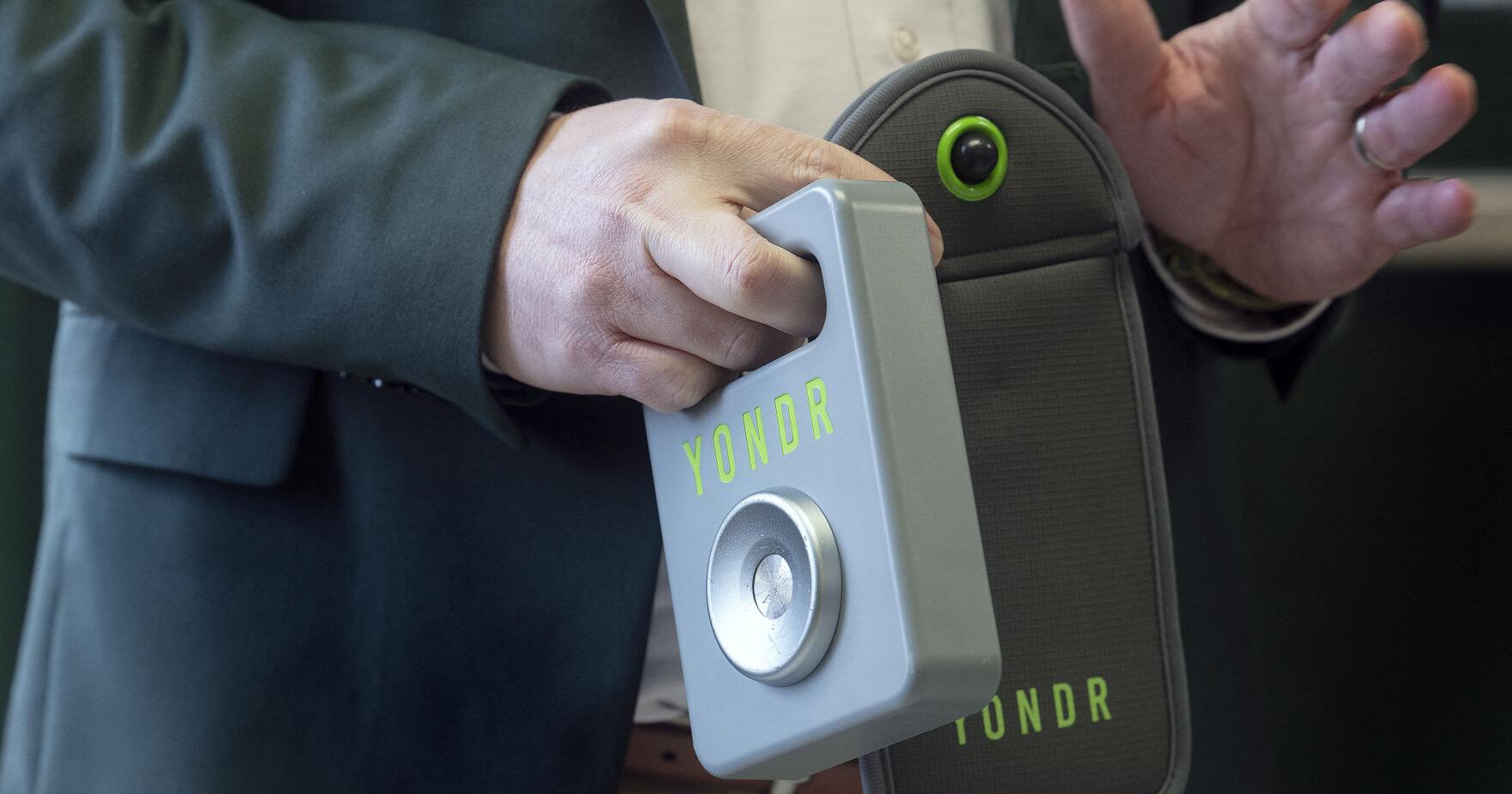
Mark Twain Middle School Principal Matthew Mough speaks during an interview about the school’s smartphone ban in Alexandria, Virginia, on March 6, 2025, while holding the locking YONDR pouch for cell phones and magnetic unlocking base kept by the school’s administrators. The phone ban at the School is among a wave of measures implemented around the US, and is part of a global movement replicated in Brazil, France and beyond. Mough admitted that enforcing the ban, and winning over students, has proved challenging. “The majority of kids who have phones don’t love it,” he said. “However, if you dig deeper with them in the conversation, they will acknowledge that it’s helped them remain focused.” (Jim Watson/AFP/Getty Images/TNS)

Mark Twain Middle School Principal Matthew Mough speaks during an interview about the school’s smartphone ban in Alexandria, Virginia, on March 6, 2025, while holding the locking YONDR pouch for cell phones and magnetic unlocking base kept by the school’s administrators. The phone ban at the School is among a wave of measures implemented around the US, and is part of a global movement replicated in Brazil, France and beyond. Mough admitted that enforcing the ban, and winning over students, has proved challenging. “The majority of kids who have phones don’t love it,” he said. “However, if you dig deeper with them in the conversation, they will acknowledge that it’s helped them remain focused.” (Jim Watson/AFP/Getty Images/TNS)
Does your child’s school have a new phone policy starting this year? Some schools now ask students to keep phones away “bell-to-bell,” from the start of classes through dismissal. Others use locking bags like the Yondr pouch to store phones during the day. Some only allow phones at lunch.
New school phone policies like these and more can mean some adjustments for both students and parents. Parents, especially, have said they feel worried about not being able to easily access their child at school if there’s an emergency. These changes will take some getting used to for everyone. Here are some first steps to help your children prepare for these changes.
Without thinking about it, many of us have our phones in our hands or pockets most of the day. Try setting times at home when everyone puts their phones out of reach and does other activities. These breaks from screens help kids of all ages adjust to being without their devices and focus more on what’s happening around them.
Easy times to start going phone-free are during car rides, meals or time outside. At bedtime, swap the phone for a book, journaling or another bedtime routine. As a parent, you can model this behavior by putting away your devices, too!
One way to help your teen or tween step away from their phones more is by showing them the benefits of phone-free time. Talk about time away from phones as an experiment that everyone will learn from. How does it feel to not have their phone within reach? Do they like the uninterrupted time being alone with their thoughts, or is it uncomfortable at first? How much have they gotten in the habit of following a feed rather than their own creativity? Pay attention to see if at-home conversations or homework become easier.
You can also utilize built-in phone settings that most phones and devices have to help manage screen time. Through digital well-being, screen time or family pairing settings, you can set downtime or do-not-disturb options. Instead of seeing it as a restriction on your family’s screen time, treat it as protecting activities that matter to you, where you want to be fully present. Remind your kids that tech companies don’t need (or deserve) to have access to us every waking minute of the day!
Check your phone settings together as a family and view your screen time amount or number of pickups. Are you surprised at how many times you also pick up your phone?
Middle and high school students often say they use their phones to relax or “reset” when school feels overwhelming. As a caregiver, validate the fact that it’s normal to feel that way at school sometimes. But also emphasize the importance of problem-solving with other coping strategies like taking deep breaths, using grounding exercises, asking to take a brief walk to get a drink of water and speaking with a school counselor. Parents and educators can work together to support students who are feeling stressed or overwhelmed by brainstorming plans for when students need to reset.
A major source of phone notifications during kids’ school days is—guess what? Parents! Although it’s convenient, and you may want to provide emotional support to a stressed child, kids learn how to be independent more easily when they have some space away from their parents each day. Batch your notifications until after school is over or write ideas down on a sticky note to talk about with your child later.
Did you know you can schedule texts to be delivered at specific times in the future? Type a text when convenient for you and select “Send Later” to deliver when convenient for them!
For unexpected issues like needing a pickup, illness or forgetting homework, use the school office phone line during the school day. Set an expectation that using the phone is fine before and after school. If you’re worried about communicating during emergencies, talk to the school and review the emergency communication plan. All schools should have a plan in place.
If your child or teen is getting a new phone, you can do them a favor by making it boring to begin with. This means starting out without social media, YouTube or games. These are the biggest distractions during school hours. You can set up the phone to require your permission for new downloads. This way, the phone is mostly a communication device, not a source of fun, and they won’t be as tempted to check it during the school day.
Some parents have expressed concern about phone rebounding, or increased use for extended time periods, after their kids get their phones back at the end of the day. Talk with your children about how it feels to be away from their phone during school hours and how they can still use their phone mindfully while also ensuring tasks that need completed like homework are prioritized.
Change is hard, so treat mistakes as a growth opportunity. Take the time to review and discuss your school’s phone policy with your child. Go over what the consequences will be if kids violate their school policy, and how you will work together to help your child succeed.
____
Jenny Radesky, MD, FAAP, is Co-Medical Director of the American Academy of Pediatrics (AAP) Center of Excellence on Social Media and Youth Mental Health and the David G. Dickinson Collegiate Professor of Pediatrics at the University of Michigan Medical School, where she directs the Division of Developmental Behavioral Pediatrics. Dr. Radesky authored the AAP policy statements Media and Young Minds and Digital Advertising to Children. She is editor of the developmental behavioral pediatrics textbook Encounters With Children, 5th Edition, and sits on the Board of Children Youth and Families at the National Academy of Science. You can follow her on Instagram@jennyradeskymd.
Megan Moreno, MD, MPH, MSEd, FAAP, is Co-Medical Director of the AAP Center of Excellence on Social Media and Youth Mental Health and a Professor of Pediatrics and Affiliate Professor of Educational Psychology at the University of Wisconsin-Madison. She is the academic chief for the Division of General Pediatrics and Adolescent Medicine and serves as Vice Chair of Academic Affairs for the Department of Pediatrics. Dr. Moreno is passionate about helping teens through the challenges around balancing relationships, influences, and experiences, and to consider ways in which technology may provide new venues for education and support. You can follow her team on social media at@SMAHRTeam.
©2025 Tribune Content Agency, LLC. 
Sorry, there are no recent results for popular videos.
Sorry, there are no recent results for popular commented articles.
Your browser is out of date and potentially vulnerable to security risks.
We recommend switching to one of the following browsers:

source