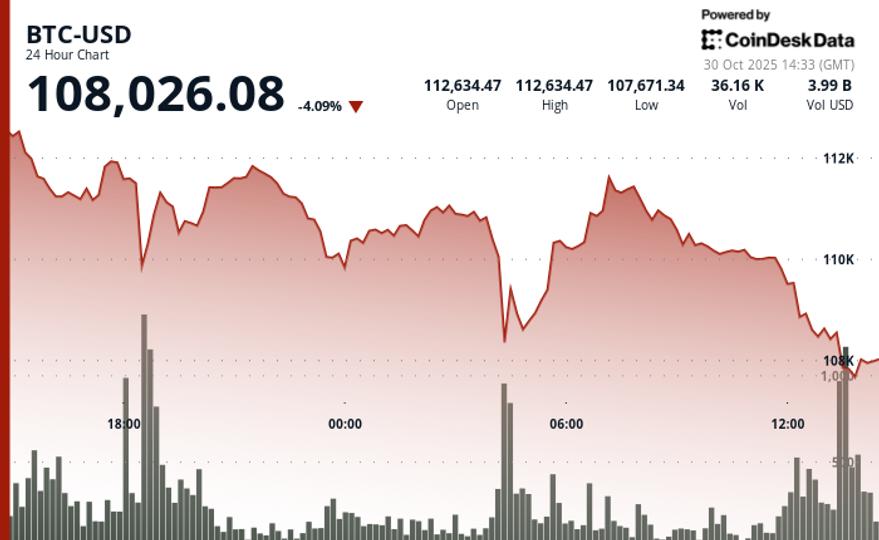
BlockchainFX Becomes the Best Crypto Presale of Q4 2025 as Pepenode and Coldware Struggle to Match Its $10.4M Surge BlockchainReporter
source
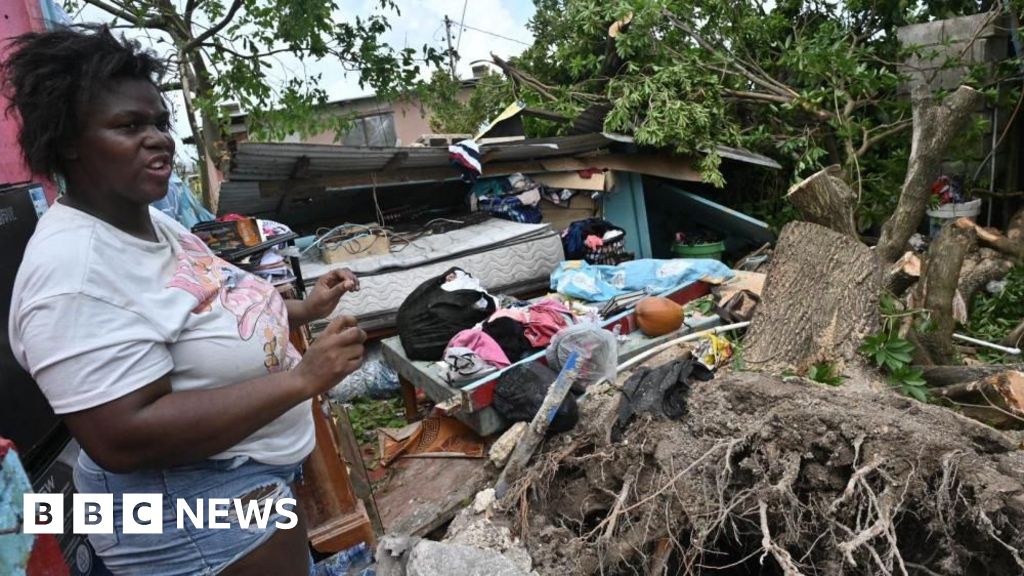
The scale of devastation left by Hurricane Melissa is becoming clear after the record-setting storm tore through Jamaica, Haiti and Cuba, leaving at least 34 people dead.
Although downgraded from a category five to a category two storm, Melissa gathered speed as it swept through the Bahamas on Thursday and is expected to make landfall in Bermuda later.
The strongest storm to strike the Caribbean island in modern history, the hurricane sustained winds of 298km/h (185 mph) at its peak – stronger than Hurricane Katrina, which devastated New Orleans in 2005, killing 1,392 people.
The US National Hurricane Centre (NHC) reported sustained winds of 165km/h at 12:00 GMT on Thursday.
It warned of possible coastal flooding as the storm accelerated north-eastward.
Authorities in the Bahamas have since lifted hurricane warnings for the central and southern islands, as well as for the Turks and Caicos.
The country's Minister of State for Disaster Risk Management, Leon Lundy, urged residents to remain vigilant, saying: "Even a weakened hurricane retains the capacity to bring serious devastation."
Nearly 1,500 people were evacuated from vulnerable areas in what officials described as one of the largest operations in Bahamian history.
While flooding has disrupted parts of the archipelago, the ministry of tourism said the majority of the country – including Nassau, Freeport, Eleuthera and the Abacos – remained largely unaffected and open to visitors.
Across the wider Caribbean, Melissa's powerful winds have torn apart homes and buildings, uprooted trees and left tens of thousands without power.
In Cuba, residents of the country's second-largest city Santiago de Cuba worked with machetes to clear streets buried in debris. President Miguel Díaz-Canel said the hurricane had caused "considerable damage" but did not provide a casualty figure.
In Jamaica, the impact was most severe in the southwestern parish of St Elizabeth, where knee-deep mud and washed-out bridges left towns such as Black River cut off. On the road west out of the capital Kingston we saw minimal damage – some structures torn down, trees strewn across roads and gardens.
But once we arrived in central Jamaica we started to see how severely the island had been hit. The town of Mandeville has been, for want of a better word, flattened. A petrol station lost its roof and most of its pumps.
Dana Malcolm of the Jamaica Observer described "very, very slow progress" along roads still blocked by landslides when reaching St Elizabeth. She told the BBC: "I was standing in what used to be main street yesterday and I was knee-deep in mud where the road should have been."
Kabien, who runs a beauty business in the Santa Cruz area of St Elizabeth, said she is staying in her house with the roof blown off and flooding because the public shelter is too dangerous.
She told the BBC on Thursday morning it was "extremely traumatic especially for the kids."
She continued: "We are still at home now. Even though it is flooded and has no roof. We don't have any options. I'm trying to clean up. The shelters aren't safe for my kids. The beddings are too close to random men. There aren't separate areas for kids, men, women and adults."
Communication across Jamaica has been all but severed, with power lines and mobile networks down in much of the southwest. Many families have spent days unable to contact relatives in the hardest-hit parishes.
In Black River, the New York Times reported, the relative of one victim walked 15 miles (24km) to the police station to report their loved one dead.
Desmond McKenzie, the minister of local government, shared the news that "amidst all this, a baby was safely delivered under emergency conditions. So there is… a baby Melissa".
Haiti, already mired in gang violence and humanitarian crisis, suffered at least 25 deaths – 10 of them children – largely due to flooding after days of relentless rain, despite the country avoiding a direct hit.
The storm is also responsible for at least eight deaths in Jamaica and one in the Dominican Republic, officials have said.
The NHC said floodwaters across the Bahamas were expected to subside by Thursday, though conditions in Cuba, Jamaica and Hispaniola would remain hazardous for several days.
Foreign Secretary Yvette Cooper says "many British nationals were there" during the hurrican's devastation.
Sam Johnson, from Bournemouth, last heard from his brother and niece in Jamaica before the hurricane.
The Bailiff of Jersey said he is deeply saddened to learn of the extensive damage in Jamaica.
Londoners with family in Jamaica await updates in the aftermath of the strongest storm to hit the island.
ShelterBox sending teams to help distribute emergency aid in Jamaica.
Copyright 2025 BBC. All rights reserved. The BBC is not responsible for the content of external sites. Read about our approach to external linking.
To stream 9NEWS on your phone, you need the 9NEWS app.
Next up in 5
Example video title will go here for this video
Next up in 5
Example video title will go here for this video

The open enrollment period is underway, when Arkansans and others across the U.S. select their health insurance options for the upcoming year.
The dates people can make their selections depend on who supplies their insurance. Medicare beneficiaries can make changes to their coverage now through Dec. 7 and enrollment for policies through the Affordable Care Act marketplace starts Nov. 1.
Dr. Rhonda Randall, chief medical officer and executive vice president of UnitedHealthcare Employer and Individual, said selections should not be based on cost alone.
“Understand your out-of-pocket costs; things like deductibles, co-pays and coinsurance,” Randall recommended. “Confirm that your physician is in the plan’s network and that your medications are covered. Look for opportunities to save money, like home delivery, for medications that you’re on regularly.”
She pointed out additional benefits could include mental and telehealth services, and dental, vision and hearing coverage. Most companies will hold open enrollment for their employees between now and the end of the year.
There are several people on social media making medical claims and advising people in areas they may not be trained in. Randall stressed it is important to avoid scams and misinformation.
“You want to make sure that you’re checking the source; that you’re getting your information from a credentialed medical professional or a reputable organization,” Randall advised. “Look to see if they’ve included links to research, and the evidence of the information that they’re giving you is accessible to you.”
In a recent survey, 43% of people said they regret a health decision they have made because of inaccurate information.

HARTSVILLE, SC (WMBF) – Lottery players in Hartsville really need to check their tickets.
According to the South Carolina Education Lottery, someone bought a $100,000 Powerball ticket from Lotto Palace II at 505 South Fifth St.
Officials said that the odds of matching four white ball numbers and the red Powerball number are one in 913,129.
Wednesday, Oct. 29:
Players have 180 days from the date of the drawing to claim their prizes.
Click here for more information.
Feel more informed, prepared, and connected with WMBF. For more free content like this, download our apps. Have feedback that can help us improve? Click here.
Copyright 2025 WMBF. All rights reserved.
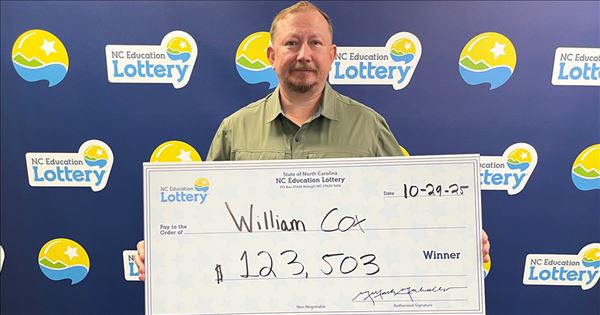
William Cox of Stedman likes playing his favorite digital instant game, The Lamp: Dark Arts, and it paid off for him on Friday with a $123,503 jackpot.
“The dark arts always draw me back,” he said.
Cox played for $5 and won the middle level “Cadabra” jackpot in The Lamp: Dark Arts, a digital instant game featuring a progressive jackpot that can be won at any time. The odds of that win are 1 in 6.4 million.
“I was like, ‘This is unbelievable,’” Cox recalled. “I’ve never won anything like this in my life.”
He claimed his prize Wednesday at lottery headquarters. After required federal and state tax withholdings, Cox took home $88,615.
“It was just the right place, right time,” Cox said.
He plans to use his winnings to pay bills and take a trip to Michigan to visit his grandchildren.
In The Lamp: Dark Arts, a player can play from 50 cents to $30. After Cox won the “Cadabra” jackpot, it restarted at $25,000 and has grown to over $31,000 as of Thursday morning.
Digital instant games are played exclusively online on the lottery’s website or on the NC Lottery Official Mobile App. Fifty-seven different games are available to play online now.
Click the link below to hear Cox discuss his big win.
0 COMMENTS
Login to leave a comment.
Where to Play
Contact Us
Videos
Business Opportunities
For Retailers
Help
Accessibility
Rules & Terms
Privacy
Disclaimer
Regulated Gaming


MUST BE 18 TO PLAY. Odds to win a prize and the top prize vary based on the game or promotion. See game or promotion pages for more detail.
Every effort has been made to ensure that the winning numbers posted on this website are accurate; however, no valid claim may be based on information contained herein. In the event of a discrepancy between the numbers posted on this website and the official winning numbers, the official winning numbers as certified by the Multi-State Lottery Association and/or the NCEL shall control. All materials on this Website are owned by or licensed to the NCEL. Materials on this Website may not be modified in any way or reproduced or publicly displayed, performed or distributed or otherwise used for any public or commercial purpose without the express written consent of the NCEL. Copyright © 2006-2025. The North Carolina Education Lottery. All rights reserved. Play Smart™ term is a service mark of the Illinois Lottery licensed to the NCEL.