Posted on Leave a comment

Bitcoin Price – BTC-USD Holds $111,600, JPMorgan Embraces Crypto Loans, and $120K Forecast – TradingNEWS

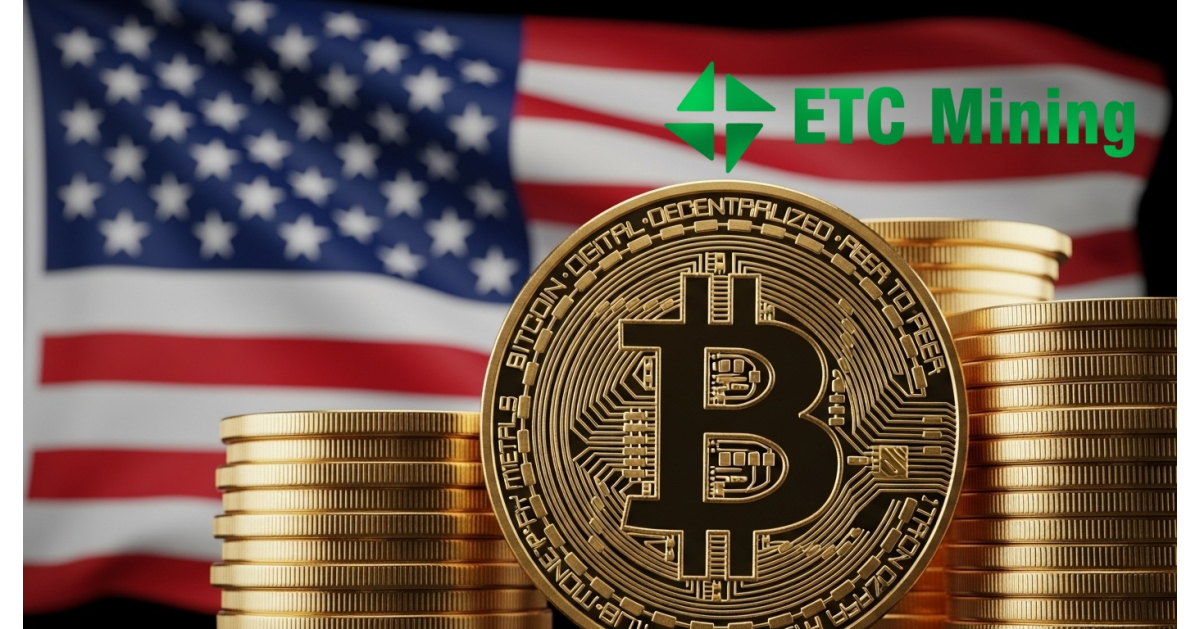
Bitcoin (BTC-USD) is trading around $111,600, stabilizing after a sharp correction from its $126,200 October peak. The pullback of over $15,000 washed out leveraged longs but left the uptrend intact, with the 200-day moving average at $108,200 acting as a solid base. The market is currently trapped between the 20-day EMA ($111,800) and 50-day EMA ($113,300), a compression pattern often preceding large directional moves.
A decisive breakout above $114,100 could launch a rally toward $116,000–$120,000, while a slip below $111,000 might test $109,700–$108,000. Trading volume has eased 21% to $40 billion, signaling market exhaustion after roughly $40.5 million in long liquidations, which effectively purged excess speculation.
Institutional demand is rebuilding momentum. U.S. Bitcoin ETFs registered $20 million in inflows this week, reversing September’s outflows and signaling renewed interest from large funds. Simultaneously, exchange balances continue to decline—$12 million in net withdrawals were recorded on October 25—showing that holders prefer self-custody over trading exposure.
A 1,000 BTC purchase by a major asset manager reinforced whale accumulation near $110,000, confirming this area as a critical support. With short-term holders’ cost basis at $113,100, reclaiming that line would flip near-term momentum bullish. Meanwhile, institutional gateways such as 401(k) Bitcoin access expected in 2025 could create a steady inflow pipeline from long-term retirement accounts.
Confidence in Bitcoin’s legitimacy surged after JPMorgan Chase announced it would accept Bitcoin and Ether as collateral for institutional loans by year-end. The initiative, operated through regulated custodians, effectively upgrades Bitcoin to a fully recognized financial instrument used in traditional secured lending.
Europe’s MiCA framework adds further credibility: Swiss platform Relai secured licensing approval to offer regulated Bitcoin investments and SEPA-based transfers, expanding institutional access across the continent. Together, these developments mark Bitcoin’s evolution from a speculative asset into a core component of modern financial infrastructure.
Macro conditions remain supportive. U.S. CPI rose 0.3% month-over-month, below the 0.4% forecast, bolstering expectations for imminent Federal Reserve rate cuts. Simultaneously, China’s M2 money supply hit record highs as Beijing’s stimulus measures ramped up, historically a catalyst for capital migration into crypto markets.
On-chain indicators such as the Short-Term Holders’ NUPL metric sit in a neutral zone, often preceding upside reversals. Sustained closes above $110,000 will confirm that the market has fully absorbed selling pressure and is preparing for the next leg higher.
Data from Coinglass confirm persistent withdrawals from centralized exchanges—$12 million on October 25 alone. Total exchange balances are at multi-year lows, a clear indicator of long-term holding behavior. Historically, such sustained outflows precede rallies as liquid supply tightens and even modest demand spikes push prices sharply upward.
This week’s $40 million long liquidation wave near $111,000 cleared over-leveraged traders following rejection at $114,000. Funding rates have since normalized, and open interest is gradually rebuilding. Ethereum (ETH-USD) saw even larger liquidations—$44 million—but similar stabilization afterward. The reset positions Bitcoin for a more sustainable advance, as structural leverage now aligns with spot demand rather than speculation.
The 20-day EMA ($110,300) recently crossed above the 50-day EMA ($110,200)—a bullish signal indicating building momentum. The RSI around 60 shows improving sentiment without reaching overbought levels. A series of spinning-top candles and a bullish engulfing pattern confirm accumulation. A close above $114,100 could trigger a push toward $117,000–$120,000, while falling below $111,000 may spark a temporary pullback toward $106,700.
Prediction markets on Polymarket show a 52% probability of Bitcoin ending the week between $110,000 and $112,000, and a 36% chance of $112,000–$114,000—signs that traders expect consolidation. This stands in contrast to deep-pocketed institutions quietly accumulating. Historically, this divergence between cautious retail behavior and strategic institutional buying marks the early phase of prolonged bull cycles
Beyond price action, Bitcoin’s ecosystem continues to evolve. Bitcoin Hyper ($HYPER), built on the Solana Virtual Machine, aims to combine Bitcoin’s settlement security with Solana-level speed. Its presale has already exceeded $24.7 million at $0.013165 per token, highlighting investor appetite for Bitcoin-based scalability. Such projects shift Bitcoin’s identity from a static store of value toward a programmable financial layer capable of hosting decentralized applications.
Major banks like Morgan Stanley and BNY Mellon are broadening crypto-custody and lending infrastructure, following JPMorgan’s lead. Allowing Bitcoin to serve as loan collateral introduces a feedback loop: as BTC’s value rises, borrowing power increases, deepening its integration within corporate balance sheets. This mirrors how gold transitioned from reserve asset to collateral benchmark—a role Bitcoin now appears poised to inherit.
Bitcoin’s structural setup remains decisively constructive. The correction from $126,000 to $108,000 resembles consolidation within a broader uptrend rather than the start of a bear phase. Support at $108,000 has held through multiple tests, and declining exchange reserves confirm investor conviction.
If Bitcoin closes above $113,500, the path opens toward $120,000–$125,000 before year-end. Stability within the $110,000–$112,000 corridor warrants patience, while a breakdown below $108,000 would call for short-term caution.
Verdict: Buy Bias above $113,500; Hold Neutral within range; Reassess only if $108,000 fails.
Bitcoin is advancing into a mature phase of adoption—where regulation, liquidity, and institutional finance converge to define its next major rally.
Enter your email to receive our newsletter

source

Posted on Leave a comment

Crypto.com to stop offering sports events contracts in Nevada after losing in federal court – CDC Gaming

The Nevada Gaming Control Board late Friday announced that Crypto.com, the prediction market operator locked in a legal battle with the state over sports events contracts, has agreed to stop taking the action in Nevada after Nov. 3.
Earlier this year, Crypto.com sought a preliminary injunction to enjoin the Board from enforcing Nevada law against its sports events contracts. On October 14, U.S. District Judge Andrew P. Gordon denied that motion, which Crypto.com intends to appeal. In April, Gordon issued a preliminary injunction in favor of Kalshi before the case was fully briefed and legal experts are expecting that to be denied
In the meantime, the Board has confirmed that after November 3 and until the resolution of its appeal, Crypto.com will not be offering sports event contracts to Nevada residents, Dreitzer said in a notice.
“That means Crypto.com will no longer hold open positions in sports event contracts for Nevada residents and will not permit new contracts to be opened,” Dreitzer said. “As licensees are probably aware, the Board has been working diligently to uphold its charge to protect the safety, morals, good order, and general welfare of the inhabitants of the state, to foster the stability and success of gaming, and to preserve the competitive economy and policies of free competition of the state of Nevada.”
In the notice, Dreitzer said that while the Board continues to seek legal avenues to protect gaming and foster a competitive economy, it is re-affirming and re-issuing the guidance it issued to licensees two weeks ago regarding event contracts offered in Nevada and other states.
“The Board considers sports event contracts, or certain other events contracts, to constitute a wagering activity under (state law),” Dreitzeer said. “Wagering occurs whether the contract is listed on an exchange regulated by the Commodity Futures Trading Commission or elsewhere. Examples of event contracts that the Board specifically considers to be wagering subject to its jurisdiction include event contracts based on the outcome or partial outcome of any sporting or athletic event or other selected events such as the World Series of Poker, the Oscars, esports, and political elections.”
Dreitzer said offerings for sports and other events contracts may be conducted in Nevada only if the offering entity possesses a non-restricted gaming license with sports pool approval in the state and meets the other requirements for sports wagering, including, without limitation, wagering accounts and sports book systems.
“If a Nevada licensee chooses to offer sports and other event contracts in Nevada or decides to partner with other entities offering sports and other event contracts in the state, the Board will consider these developments as it evaluates the suitability of the entity to maintain a Nevada gaming license,” Dreitzer said. “Moreover, if a licensee offers sports and other event contracts in another state without complying with the other state’s restrictions, prohibitions, or licensing regime, partners with another entity that engages in such activities, or acts in violation of a compacted tribal right, the licensee may be subject to discipline under the Gaming Control Act.”
Engaging in unlawful sports wagering in another state or entering into a business relationship with another entity offering unlawful sports wagering in another state “may call into question the good character and integrity” of the licensee, Dreitzer said.
“The Board reminds licensees to be mindful of their obligations to maintain suitability and comply with all applicable laws in all jurisdictions where they operate,” Dreitzer said.
Please fill out the form to send a message to the CDC Gaming Reports team. Alternatively, you can send an email to the address on the footer of each page.
Clicky
© 2025 CDC Gaming

source

Posted on Leave a comment

Vultisig Wallet Poised for Crypto Revolution with Landmark Kraken Listing – FinancialContent

San Francisco, CA – October 25, 2025 – The cryptocurrency world is buzzing with anticipation as Vultisig Wallet, an innovative multi-chain self-custody solution, prepares for its highly anticipated listing on the Kraken Exchange (Kraken) on October 28, 2025. This pivotal moment marks a significant milestone for Vultisig, signaling its emergence as a formidable player in the digital asset landscape and promising to reshape how users interact with and secure their crypto holdings. The listing of Vultisig’s native $VULT token is expected to bring increased liquidity and visibility, potentially driving a new wave of adoption for its advanced security features and integrated DeFi capabilities.
The upcoming public listing on a major centralized exchange like Kraken is not merely an event for Vultisig but a potential catalyst for broader industry shifts. By bringing institutional-grade security and a seamless user experience to the forefront, Vultisig aims to address critical pain points in the crypto ecosystem, particularly concerning asset security and cross-chain functionality. The market is keenly watching how this debut will impact the competitive landscape of crypto wallets and decentralized finance, with analysts and enthusiasts alike forecasting considerable growth and influence for the project.
Vultisig Wallet’s journey to prominence has been characterized by its commitment to innovation and security, spearheaded by the founder of THORChain. The project’s open-source ethos and community-driven development have fostered a robust and transparent platform. Over the past year, Vultisig has aggressively expanded its chain support, integrating networks such as Zcash, Mantle, Tron, and Dash, while significantly enhancing its stability and cross-chain swap functionalities. This rapid development underscores its ambition to become the go-to solution for diverse digital asset management needs.
At the core of Vultisig’s revolutionary approach are its advanced cryptographic techniques, specifically Threshold Signature Scheme (TSS) and Multi-Party Computation (MPC). These technologies fundamentally alter the traditional multi-signature model by distributing control through “vault shares” across multiple devices, effectively eliminating single points of failure and the perilous reliance on seed phrases. This sophisticated security framework is complemented by its extensive multi-chain and multi-platform support, covering over 30 blockchain networks including Bitcoin, Ethereum, Solana, and THORChain, and accessible across iOS, Android, Windows, Linux, and web platforms. The wallet also offers flexible security configurations, from single-device “Fast Vaults” to robust self-custodial options like 2-of-2, 2-of-3, and 3-of-4 setups.
The Kraken listing for the $VULT token is meticulously planned in three phases. A Whitelist Sale is slated for October 27, 2025, at 12 PM UTC, followed by the Public & CEX Listing, including Kraken, on October 28, 2025, at 12 PM UTC. An additional “Surprise Launch” is scheduled for October 29, 2025, designed to sustain market momentum. Trading for $VULT tokens will initially commence on the Ethereum mainnet via a Uniswap V3 liquidity pool. Kraken has already signaled its strong support by featuring Vultisig on its “Tokens Launching Soon” roadmap. The announcement has already generated significant buzz, propelling Vultisig to the #1 spot on Kaito’s Mindshare leaderboard, surpassing many established projects. This early market enthusiasm is further bolstered by backing from prominent investors such as Arca, Delphi, and Wintermute. Analysts are projecting an initial price range of $0.25–$0.35 for $VULT, with mid-term growth potential to $0.60–$0.80 and long-term targets exceeding $1, driven by expanding utility and institutional integrations.
The Kraken listing of Vultisig Wallet’s $VULT token is set to create distinct winners and losers across the cryptocurrency ecosystem, recalibrating market dynamics and competitive positioning.
Vultisig Wallet itself stands to be the primary beneficiary. The listing on Kraken (Kraken) will dramatically increase the visibility and accessibility of the $VULT token, attracting a broader investor base and enhancing its liquidity. This increased exposure is crucial for fostering wider adoption of the Vultisig Wallet, which in turn could drive up the value and utility of the $VULT token within its ecosystem. The project’s innovative security features and multi-chain capabilities are likely to appeal to both individual users and institutional clients, potentially leading to a surge in user acquisition and partnerships. The success of the listing will also validate its underlying technology and business model, attracting further development and investment.
Kraken Exchange (Kraken) also emerges as a significant winner. By listing a highly anticipated and technologically advanced project like Vultisig, Kraken reinforces its reputation as a forward-thinking exchange that supports innovation. The listing is expected to attract new users specifically interested in Vultisig, thereby increasing Kraken’s trading volume, user base, and overall market share. This strategic move can give Kraken a competitive edge against other major exchanges by offering access to cutting-edge projects before they become mainstream.
Conversely, traditional hardware wallet providers such as Ledger (Ledger) and Trezor (Trezor), along with software wallet giants like MetaMask (Ethereum Mainnet), could face increased competitive pressure. Vultisig’s elimination of seed phrases and its advanced MPC/TSS security model directly challenges the established security paradigms of these incumbent solutions. While hardware wallets offer robust offline security, Vultisig’s blend of institutional-grade security with enhanced user convenience and cross-platform accessibility might appeal to a segment of users seeking more flexible yet equally secure alternatives. Other centralized and decentralized exchanges that fail to list innovative projects or adapt to evolving security standards might also lose market share and relevance to platforms like Kraken that embrace new technologies.
Vultisig Wallet’s ascendancy and its Kraken listing are not isolated events; they signify a broader paradigm shift within the cryptocurrency industry, particularly concerning security, interoperability, and user empowerment. This event fits squarely into the growing trend of enhancing self-custody solutions and mitigating the risks associated with centralized points of failure.
The adoption of Threshold Signature Scheme (TSS) and Multi-Party Computation (MPC) by Vultisig represents a significant leap forward in cryptographic security. It moves beyond the limitations of traditional multi-signature schemes and the inherent vulnerabilities of seed phrases, offering a more robust and distributed control mechanism. This technological advancement could set a new industry standard for wallet security, compelling other wallet providers to explore and integrate similar cutting-edge cryptography to remain competitive. The emphasis on open-source development further promotes transparency and collaborative security enhancements across the industry.
The potential ripple effects extend to the entire DeFi landscape. Vultisig’s integrated DeFi functionality, including seamless cross-chain trading and the upcoming “Vultisig App Store” for secure on-chain automation, positions it as a central hub for decentralized finance activities. This could drive increased demand for multi-chain solutions and foster greater interoperability between disparate blockchain networks, thereby accelerating the growth and adoption of DeFi services. Competitors may be forced to enhance their own multi-chain capabilities and security protocols to match Vultisig’s offerings.
From a regulatory standpoint, Vultisig’s advanced security features and emphasis on self-custody could present both opportunities and challenges. Regulators are increasingly scrutinizing centralized entities and seeking ways to protect consumers. Vultisig’s model, by distributing control and reducing reliance on a single entity, might align with certain regulatory objectives aimed at decentralization and user control. However, the complexity of MPC/TSS solutions could also introduce new regulatory considerations regarding compliance and liability, especially as institutional adoption grows. Historically, significant exchange listings of innovative projects, such as early DeFi tokens or layer-1 solutions, have often acted as catalysts for wider market acceptance and technological progression, and Vultisig’s Kraken debut is poised to follow a similar trajectory.
The upcoming Kraken listing is merely the beginning of Vultisig Wallet’s next chapter, with both short-term and long-term implications that will shape its trajectory and influence the broader crypto market.
In the short term, market participants will closely monitor the initial price action of the $VULT token post-listing, particularly its performance on Uniswap V3 and Kraken (Kraken). A strong debut could attract further investor interest and accelerate user adoption. The immediate focus for Vultisig will be on solidifying its market position, enhancing user onboarding, and ensuring seamless functionality across its supported chains. Community engagement and developer activity around the open-source project will also be crucial indicators of its early success.
Looking further ahead, Vultisig’s long-term vision centers around the development and expansion of its “Vultisig App Store,” a self-custodial automation system designed to enable users to install modular applications within their wallets. This marketplace for plugins and AI agents could unlock unprecedented levels of secure on-chain automation and controlled fund access, transforming the wallet into a comprehensive operating system for Web3. Potential strategic pivots might involve forging deeper partnerships with DeFi protocols, institutional custodians, and enterprise blockchain solutions to integrate its advanced security framework more broadly.
Market opportunities will emerge from the growing demand for secure, user-friendly, and interoperable self-custody solutions. Vultisig is well-positioned to capitalize on this trend, especially as more institutional capital flows into the crypto space, requiring robust security infrastructure. However, challenges include intense competition from established wallet providers and other emerging security solutions, as well as navigating the evolving global regulatory landscape. Potential scenarios range from Vultisig becoming a dominant force in secure self-custody, setting new industry standards, to facing hurdles in scaling adoption or adapting to unforeseen technological shifts.
The imminent listing of Vultisig Wallet’s $VULT token on the Kraken Exchange represents a watershed moment for both the project and the wider cryptocurrency market. At its core, Vultisig offers a compelling solution to some of the crypto industry’s most persistent challenges: security vulnerabilities, complexity of multi-chain management, and the limitations of traditional self-custody methods. By leveraging Threshold Signature Scheme (TSS) and Multi-Party Computation (MPC), Vultisig is not just another wallet; it is a fundamental re-imagining of digital asset security, promising institutional-grade protection without compromising user experience.
Moving forward, the market will undoubtedly assess Vultisig’s performance based on several key metrics. Beyond the initial price movements of $VULT, investors and users should keenly observe the wallet’s adoption rates, the expansion of its “Vultisig App Store,” the breadth of its ecosystem partnerships, and its ability to continuously innovate in the face of evolving threats and technological advancements. Its success could catalyze a broader shift towards more secure, decentralized, and user-friendly self-custody solutions, ultimately fostering greater confidence and participation in the digital asset economy.
Vultisig’s journey is a testament to the relentless pursuit of innovation within the crypto space. Its unique blend of advanced cryptography, multi-chain support, and integrated DeFi functionalities positions it as a potential cornerstone for the future of Web3. The lasting impact of this event will be measured not just in token price appreciation, but in its capacity to redefine security standards, empower users with true ownership, and pave the way for a more accessible and resilient decentralized future. The coming months will be critical in determining whether Vultisig Wallet fulfills its promise as a transformative force, and all eyes will be on its performance and continued development.
This content is intended for informational purposes only and is not financial advice

source

Posted on Leave a comment

DC Lottery results: See winning numbers for Mega Millions, DC 2 on Oct. 24, 2025 – USA Today

Are you looking to win big? The DC Lottery offers several games to choose from if you think it’s your lucky day.
You can choose from national lottery games, like the Powerball and Mega Millions, or a variety of local games, like the DC 2, DC 3, DC 4 and DC 5.
While your odds of winning a big jackpot in the Powerball or Mega Millions are generally pretty slim (here’s how they compare to being struck by lightning or dealt a royal flush), other games offer better odds to win cash, albeit with lower prize amounts.
Here’s a look at Friday, Oct. 24, 2025 results for each game:
11-18-31-51-56, Mega Ball: 24
Check Mega Millions payouts and previous drawings here.
1:50PM: 6-7
7:50PM: 8-9
Check DC 2 payouts and previous drawings here.
1:50PM: 0-8-5
7:50PM: 4-2-2
11:30PM: 8-7-9
Check DC 3 payouts and previous drawings here.
1:50PM: 9-3-0-6
7:50PM: 1-1-2-2
11:30PM: 7-6-4-3
Check DC 4 payouts and previous drawings here.
1:50PM: 5-2-5-4-0
7:50PM: 2-1-7-0-1
Check DC 5 payouts and previous drawings here.
08-09-28-31-46, Lucky Ball: 06
Check Lucky For Life payouts and previous drawings here.
Feeling lucky? Explore the latest lottery news & results
Winning lottery numbers are sponsored by Jackpocket, the official digital lottery courier of the USA TODAY Network.
Tickets can be purchased in person at gas stations, convenience stores and grocery stores. Some airport terminals may also sell lottery tickets.
You can also order tickets online through Jackpocket, the official digital lottery courier of the USA TODAY Network, in these U.S. states and territories: Arizona, Arkansas, Colorado, Idaho, Maine, Massachusetts, Minnesota, Montana, Nebraska, New Hampshire, New Jersey, New York, Ohio, Oregon, Puerto Rico, Washington D.C., and West Virginia. The Jackpocket app allows you to pick your lottery game and numbers, place your order, see your ticket and collect your winnings all using your phone or home computer.
Jackpocket is the official digital lottery courier of the USA TODAY Network. Gannett may earn revenue for audience referrals to Jackpocket services. GAMBLING PROBLEM? CALL 1-800-GAMBLER, Call 877-8-HOPENY/text HOPENY (467369) (NY). 18+ (19+ in NE, 21+ in AZ). Physically present where Jackpocket operates. Jackpocket is not affiliated with any State Lottery. Eligibility Restrictions apply. Void where prohibited. Terms: jackpocket.com/tos.
This results page was generated automatically using information from TinBu and a template written and reviewed by a USA Today editor. You can send feedback using this form.

source

Posted on Leave a comment

Berry Releases Price Analysis and Forecast for BTC, ETH, XRP, and DOGE Amid Market Shifts – The National Law Review

26

<

div class=”sticky__sidebar”> New Articles

Berry
October 2025 — Cryptocurrency markets have shown mixed signals this week
CHICAGO, IL, UNITED STATES, October 25, 2025 /EINPresswire.com/ — Cryptocurrency markets have shown mixed signals this week,with Bitcoin (BTC) maintaining relative stability, Ethereum (ETH) experiencing moderate pullbacks despite elevated network activity, and Dogecoin (DOGE) seeing renewed trading momentum driven by community engagement.
Market analysts attribute the uptick in Dogecoin transactions to speculation around potential ecosystem integrations and meme-based applications. Bitcoin continues to attract institutional inflows, viewed by some investors as a hedge amid growing macroeconomic uncertainty. Meanwhile, Ethereum developers have announced significant progress in scalability upgrades, positioning the network for broader adoption in decentralized finance.
Berry: Bridging Blockchain Intelligence and User Engagement
As the digital economy becomes increasingly data-driven, platforms that integrate analytics, education, and user interaction are gaining relevance. Berry is one such emerging ecosystem, combining blockchain-focused learning tools, market insights, and engagement-based incentives.
Berry’s platform enables users to stay informed on blockchain developments and market trends. Through daily interaction—such as reading articles or exploring analytics—users may receive token-based rewards, designed to encourage consistent participation.
Real-Time Intelligence Across Major Assets
Bitcoin (BTC): Berry’s AI-powered models analyze on-chain activity and exchange data to identify institutional flows and sentiment shifts, offering users a clearer view of market dynamics.
Dogecoin (DOGE): A multi-source aggregation engine curates verified news and social sentiment data. Users can subscribe to specific keywords and receive real-time alerts on regulatory updates, token movements, and exchange activity.
Ethereum (ETH): Berry provides flexible charting tools across intraday, daily, and weekly intervals, integrating indicators such as MACD, RSI, and Bollinger Bands to support technical analysis.
Platform Features and User Tools
Berry.vip offers a $5 welcome bonus for newly registered users. Additional platform functionalities include:
• Unified News Feed: Real-time consolidation of global crypto news, price movements, and blockchain updates
• AI-Powered Alerts: Notifications for large transactions, unusual market behavior, and network anomalies
• Custom Watchlists: Personalized tracking of assets, funding rates, and volatility metrics
• Cross-Device Access: Seamless synchronization across desktop, mobile, and tablet environments
These features position Berry as a comprehensive resource for blockchain learners and market participants seeking timely, actionable insights.
Supporting Informed Participation in the Crypto Economy
Berry’s approach to blockchain education emphasizes interactive learning and sustained engagement. By providing users with tools to interpret market data and follow asset developments, the platform fosters informed decision-making in a rapidly evolving financial landscape.
As Bitcoin, Ethereum, and Dogecoin continue to shape the future of digital finance, platforms like Berry aim to equip users with the knowledge and resources needed to navigate emerging opportunities.
Official Website: https://berry.vip
Contact: info@berry.vip
Alice Rose
BERRY BLOCKCHAIN LTD
+ +44 7731 889915
email us here
Legal Disclaimer:
EIN Presswire provides this news content “as is” without warranty of any kind. We do not accept any responsibility or liability
for the accuracy, content, images, videos, licenses, completeness, legality, or reliability of the information contained in this
article. If you have any complaints or copyright issues related to this article, kindly contact the author above.

 
Sign Up for any (or all) of our 25+ Newsletters
 
You are responsible for reading, understanding, and agreeing to the National Law Review’s (NLR’s) and the National Law Forum LLC’s  Terms of Use and Privacy Policy before using the National Law Review website. The National Law Review is a free-to-use, no-log-in database of legal and business articles. The content and links on www.NatLawReview.com are intended for general information purposes only. Any legal analysis, legislative updates, or other content and links should not be construed as legal or professional advice or a substitute for such advice. No attorney-client or confidential relationship is formed by the transmission of information between you and the National Law Review website or any of the law firms, attorneys, or other professionals or organizations who include content on the National Law Review website. If you require legal or professional advice, kindly contact an attorney or other suitable professional advisor.  
Some states have laws and ethical rules regarding solicitation and advertisement practices by attorneys and/or other professionals. The National Law Review is not a law firm nor is www.NatLawReview.com  intended to be a referral service for attorneys and/or other professionals. The NLR does not wish, nor does it intend, to solicit the business of anyone or to refer anyone to an attorney or other professional.  NLR does not answer legal questions nor will we refer you to an attorney or other professional if you request such information from us. 
Under certain state laws, the following statements may be required on this website and we have included them in order to be in full compliance with these rules. The choice of a lawyer or other professional is an important decision and should not be based solely upon advertisements. Attorney Advertising Notice: Prior results do not guarantee a similar outcome. Statement in compliance with Texas Rules of Professional Conduct. Unless otherwise noted, attorneys are not certified by the Texas Board of Legal Specialization, nor can NLR attest to the accuracy of any notation of Legal Specialization or other Professional Credentials.
The National Law Review – National Law Forum LLC 2070 Green Bay Rd., Suite 178, Highland Park, IL 60035  Telephone  (708) 357-3317 or toll-free (877) 357-3317.  If you would like to contact us via email please click here.
Copyright ©2025 National Law Forum, LLC

source

Posted on Leave a comment

Community Governance and Crypto Strategies: JustLend DAO's Approach – OneSafe

I was diving into the world of DeFi and stumbled upon this interesting case with JustLend DAO. It got me thinking about how community governance is shaping financial strategies in DAOs. Their recent buyback and burn initiative is a prime example of how collective decisions can really impact token value and market dynamics. Let’s break it down a bit.
Community governance is all about giving DAO members the power to influence operations and financial strategies. It’s about transparency and accountability, allowing everyone to have a say in crucial decisions. There are some successful examples, like MakerDAO and Compound, that show how engaging the community can lead to innovative financial solutions and a stronger ecosystem.
Buyback and burn strategies are key in boosting token value in DeFi. JustLend DAO has a structured buyback and burn mechanism that’s funded by net income and USDD ecosystem revenue. This mechanism aims to reduce the circulating supply of its JST token. By taking tokens out of circulation, they create scarcity, which might drive up demand and price. The initial burn of 559 million JST (about 5.66% of total supply) is a significant move towards creating a deflationary model that serves the community’s interests.
Stablecoin payments, like USDC and USDT, are essential for DAO financial strategies. They provide a reliable transaction medium, allowing for instant stablecoin payments that increase liquidity and facilitate smooth operations. JustLend DAO’s integration of stablecoin business models aids in efficient treasury management, ensuring funds are available for buybacks and other strategic moves. This not only stabilizes the market but also builds trust with investors.
On the flip side, buyback and burn strategies can increase market volatility. High staking rates and deflationary mechanisms in ecosystems like TRON can create liquidity issues, complicating the buying or selling of tokens at stable prices. A sudden market sentiment shift or large-scale unstaking could lead to sharp price corrections. So, investors need to be cautious and understand the broader market implications of these token scarcity efforts.
Successful treasury management is crucial for DAOs. Best practices include clear financial reporting, using crypto treasury APIs for fund allocation, and involving the community in decision-making. By being proactive in treasury management, DAOs can handle market fluctuations better. This is especially vital for protocols like JustLend, which depend on community governance to steer financial strategies.
The connection between community governance and financial strategies in DAOs is crucial for DeFi’s future. JustLend DAO’s buyback and burn initiative showcases how community decisions can positively affect token value and market dynamics. As DeFi evolves, transparency, accountability, and community engagement will be more important than ever. Embracing these principles will help DAOs grow sustainably and adapt to a competitive market.
In essence, community governance shapes not just financial strategies but the overall health of the DeFi ecosystem. As we look to the future, merging innovative practices like stablecoin payments and effective treasury management will be key for the success of DAOs like JustLend.

Get started with Web3 transactions effortlessly. OneSafe brings together your crypto and banking needs in one simple, powerful platform.
JustLend DAO's buyback and burn strategy showcases how community governance enhances financial strategies, impacting TRON's market dynamics and sustainability.
Vultisig Wallet gains attention ahead of its Kraken exchange listing, showcasing innovative MPC technology and enhanced wallet security for cryptocurrencies.
Michael Selig's leadership at the CFTC could reshape crypto payroll compliance, balancing innovation with regulatory clarity for fintech startups.
Begin your journey with OneSafe today. Quick, effortless, and secure, our streamlined process ensures your account is set up and ready to go, hassle-free

source