CME Group Adds Solana and XRP Options to Its Crypto Suite After CFTC Approval – CoinCentral
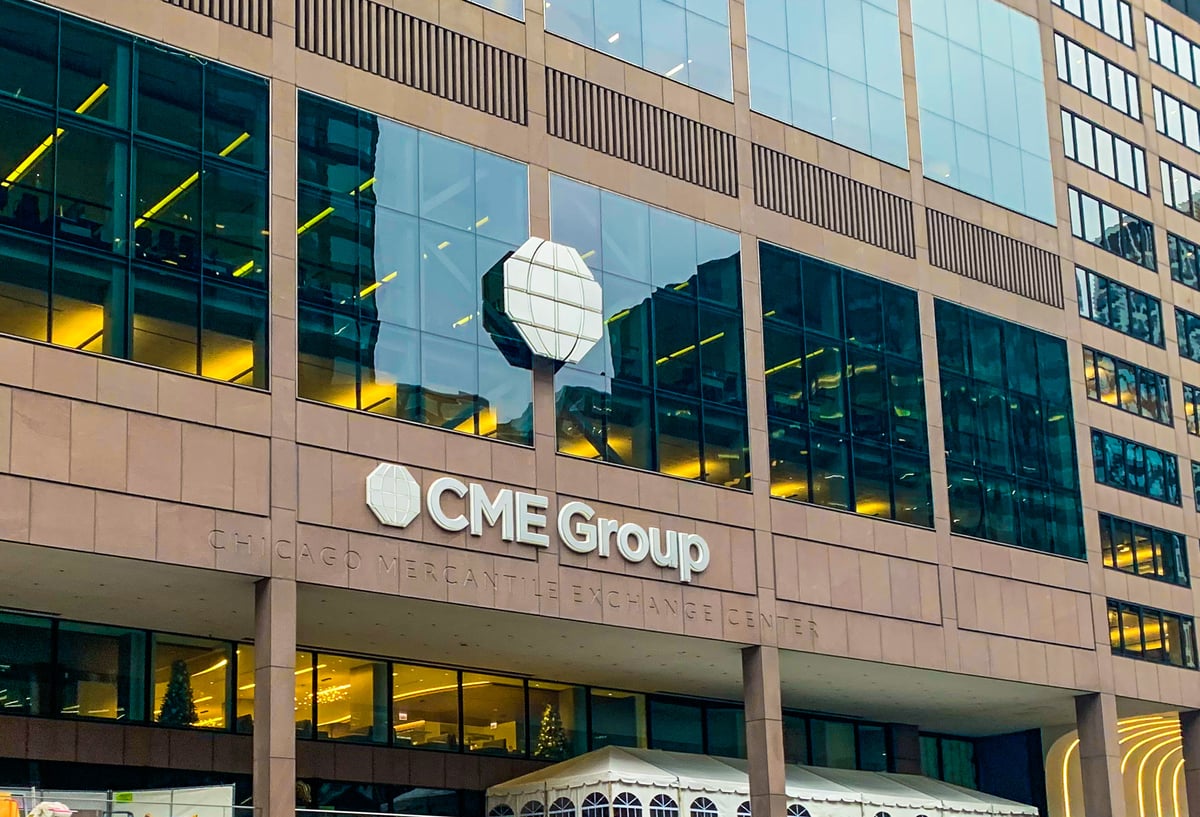
CME Group has officially expanded its crypto derivatives lineup by launching regulated options on Solana and XRP futures. The new products, approved by the CFTC, went live on October 13, 2025, on CME’s US platform. These additions aim to meet growing demand for regulated digital asset exposure from institutional market participants.
CME Group introduced Solana options in standard and micro sizes to accommodate various trading strategies. These options are physically settled into existing SOL futures, ensuring seamless transition and execution. Traders can now choose expiries on a daily, monthly, or quarterly basis.
The launch follows months of preparation, with CME first announcing the plan back in September 2025. With regulatory approval in place, the exchange proceeded with immediate deployment. Solana’s inclusion signals increased confidence in high-speed blockchain platforms within regulated environments.
Earlier this year, CME added Solana futures to its crypto offering and reported strong performance metrics. Since March, over 540,000 Solana futures contracts traded, totaling $22.3 billion in volume. This growing activity likely influenced the move to add option contracts for SOL exposure.
Alongside Solana, CME Group also rolled out options on XRP futures, further broadening its altcoin derivatives lineup. The new XRP options mirror the Solana structure with both large and micro sizes available. Settlement is physical, and contracts integrate directly with CME’s existing XRP futures.
CME’s XRP futures first launched in May 2025 and have since gained notable traction across the market. Over 370,000 XRP contracts changed hands, with a notional value exceeding $16.2 billion. Strong institutional participation led to record volumes in August, reinforcing interest in regulated XRP exposure.
These new products provide traders with additional tools to manage market risk while ensuring compliance with US derivatives regulations. CME continues to emphasize flexibility and transparency by offering customizable expiry schedules. The move also reinforces CME’s commitment to expanding beyond Bitcoin and Ethereum.
CME Group now lists options for Bitcoin, Ethereum, Solana, and XRP, covering both legacy and emerging digital assets. With this latest launch, CME deepens its footprint in the fast-growing institutional crypto segment. The exchange highlights its ability to respond quickly once regulatory clearance is obtained.
By offering physically settled contracts, CME avoids cash-based discrepancies and aligns futures with underlying assets. This setup ensures a seamless trading experience for both professional firms and individual participants. The launch underscores how major institutions continue to expand their exposure to blockchain technologies.
CME’s product suite reflects market interest in diversification beyond Bitcoin and Ethereum. Through regulated derivatives, the platform facilitates responsible engagement with digital assets across various blockchain use cases. The exchange expects continued growth in demand for compliant crypto hedging instruments.
Yasmin is a crypto content analyst and writer with over 2 years of experience. She has a strong understanding of the crypto market and blockchain technologies. As an avid trader who stays updated on the latest trends and news, Yasmin delivers insightful and informative content.
TLDR Tether’s CEO, Paolo Ardoino, emphasized the stability during the recent market crash, contrasting it…

Never Miss Another Opportunity.
Get hand selected news & info from our Crypto Experts so you can make educated, informed decisions that directly affect your crypto profits!
Type above and press Enter to search. Press Esc to cancel.
BC Game Crypto: 100% Bonus & 400 Free Casino Spins, Claim Here!
Stocks claw back more than half of Friday's rout after Trump softens China tone, Dow rises 650 points: Live updates – CNBC
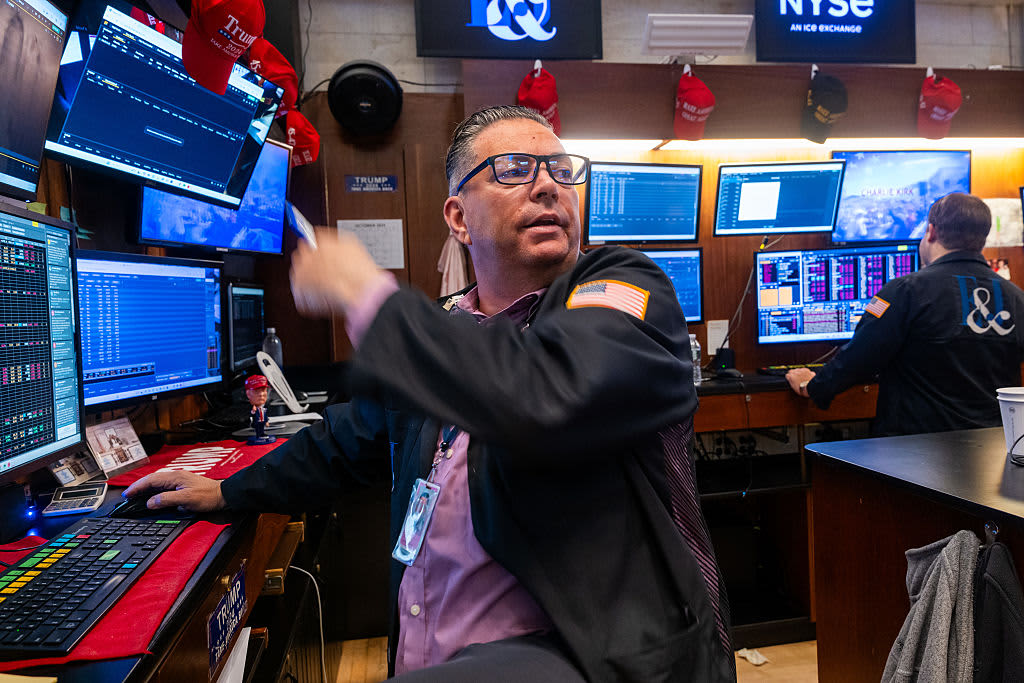
- Stocks claw back more than half of Friday’s rout after Trump softens China tone, Dow rises 650 points: Live updates CNBC
- Stock market today: Dow, S&P 500, Nasdaq stage comeback as Trump tempers tariff talk toward China Yahoo Finance
- Stocks rebound from Friday plunge after Trump softens tone on China tariffs CBS News
- Dow gains 600 points after US-China trade showdown hits the pause button CNN
- Asia Markets Fall After Trump Threatens New Tariffs on China The New York Times
Israel's Netanyahu won't attend Egypt summit on ending Gaza war – Reuters

- Israel’s Netanyahu won’t attend Egypt summit on ending Gaza war Reuters
- LIVE: After Israel-Hamas prisoner swap, world leaders sign Gaza deal Al Jazeera
- Trump, in Egypt, highlights collective effort to end war in Gaza Politico
- Trump and Egypt’s President Set To Host Sharm el-Sheikh ‘Peace Summit’ The New York Times
- Live updates: Donald Trump addresses Israel’s Knessett; Hamas releases living hostages The Hill
A preview of the 2024 WNBA season – The GIST

The W’s (current) 12 teams are equally divided into two conferences — the Eastern Conference and the Western Conference. Each squad will play 40 regular-season games, beginning tonight and running through September 19th.
Outside of the regularly scheduled programming, the in-season Commissioner’s Cup enters its fourth year, this time with a new format. Each team will play a total of five games, one against each of their in-conference rivals, from June 1st to 13th, with each game counting towards their regular season record as well.
Finally, the W will take an international break from July 21st to August 14th, allowing players to compete for their respective countries at the Paris Olympics. Oui love to see it.
Fresh off a record-setting Women’s March Madness, the interest in women’s hoops has never been higher, a testament to the power of investing time, funding, energy, and most of all, attention, in the women’s game.
👶 This year’s supercharged rookie class: The pressure’s on for the group, which includes the Indiana Fever’s Caitlin Clark (Iowa), the Chicago Sky’s Angel Reese (LSU) and the LA Spark’s Cameron Brink (Stanford), to perform at the pro level.
👏 The Caitlin Clark effect continues: Nearly every single Indiana Fever game will be televised nationally this year, up from just one in 2023, a testament to the all-time NCAA leading scorer’s generational talent and tractor beam appeal.
👋 WNBA legend Candace Parker retires: After 16 years, three championships, and two MVP awards, Parker announced her retirement in April. But Parker’s staying busy: She’s already been named the President of Adidas Women’s Basketball. A slam dunk.
✈️ Full-time charter flight program: The W, who had charter flights only for last year’s playoffs, is now investing $25M per year so that its players can fly privately between games all season long, enhancing their comfort and safety. Can’t come soon enough.
⬆️ League expansion: The WNBA will expand to 13 teams next season, with plans to reach 16 teams (!!!) by 2028. Up first? A Golden State W franchise debuting in 2025, with a Toronto team in the works for 2026, providing more opportunities for women hoopers to stay in North America.
💰 Collective bargaining agreement (CBA) negotiations: The WNBA Players’ Association (WNBPA — the longest running union in women’s sports) set a new standard for player-first CBAs in 2020, but at the end of this season, the players can opt out and kickstart renegotiation talks.
🃏 Las Vegas Aces: It’s three-peat or bust for the Aces, who return a strong veteran core led by two-time champ A’ja Wilson and 2022 Finals MVP Chelsea Gray. The real question this season? If Wilson will win the regular season MVP, an accolade she lost to the NY Liberty’s Breanna Stewart in 2023. Watch this space.
🌪️ Seattle Storm: Following a furious offseason, the Storm have an elite trio running the show: last season’s league-leading scorer Jewell Loyd, 2016 MVP Nneka Ogwumike (pronounced NEH-kuh oh-GWOO-mih-kay), and six-time All-Star Skylar Diggins-Smith, who returns to the league following a testy maternity leave.
🗽 NY Liberty: Touted as the superteam to rival the Aces last year, the Liberty came up just short, losing in the WNBA Finals. But, like the Aces, all of the Libs superstars — including 2021 MVP Jonquel Jones — stayed put, intent on bringing the Big Apple its first WNBA championship.
☀️ Connecticut Sun: Triple-double queen Alyssa Thomas can go full Thanos, but this season, she won’t have to — superstar Brionna Jones is back at training camp after tearing her Achilles last June. Needless to say, the Sun’s chances have never looked brighter.
☄️ Phoenix Mercury: Hold those tears, but after 20 years in the league, this might be 10-time All-Star Diana Taurasi’s last W season. If that’s the case, the Mercury want to send the GOAT out with a bang. Phoenix snatched up Kahleah Copper and Natasha Cloud in the offseason, stacking a lineup that already included Brittney Griner.
🥵 Indiana Fever: To temper expectations, the Fever finished near the bottom of the table in 2023, but now they boast both Clark and reigning Rookie of the Year Aliyah Boston, one of the best paint players in the game. With Clark dishing and Boston finishing, can the Fever reach the playoffs for the first time since 2016?
☁️ Chicago Sky: New leadership, new game plan, very different roster — this certainly isn’t the 2021 champion Sky, but Chicago is focused on new beginnings, especially for the rookies.
🦄 Dallas Wings: After leading the Wings to their best season since 2008, 2023’s Most Improved Player Satou Sabally isn’t expected to return to the W until after the Olympic break while she recovers from shoulder surgery, a development that seriously hampers the Wings’ momentum.
🐈 Minnesota Lynx: For the still-evolving Lynx to make another postseason run, they’ll need more than just magic from supermom Napheesa Collier — they’ll need to improve their defense. Will Alanna Smith be the defensive spark they’ve been missing after a breakout season with the Sky? Time will tell.
✨ LA Sparks: Since Ogwumike left for Seattle, there’s an opening for a new franchise star (or two) in LA. Enter rookies Rickea Jackson and Cameron Brink, the heart of the Sparks’ rebuild. They have plenty to learn from vets like Dearica Hamby, but will still be expected to make immediate contributions.
😴 Atlanta Dream: The new-look Dream will fight to make their second playoff appearance since 2018 this season, but it’ll take some serious chemistry building between the squad’s stalwarts and the new additions, like 2012 MVP Tina Charles and 2019 champ Aerial Powers.
🪄 Washington Mystics: With longtime star Elena Delle Donne sitting out the season and defensive icon Cloud moving to the Phoenix Mercury, the ’Stics are in a bit of a rebuild mode, making this the perfect time for rookie Aaliyah Edwards to make her mark and become the rebounding presence Washington needs.
The fun begins with a four-game slate tonight, starting off with the Liberty hosting the Mystics at 7 p.m. ET.
Sign up for The GIST and receive the latest sports news straight to your inbox three times a week.
Pi Coin Price Could Rebound by 13% as 3 Bullish Signals Emerge – beincrypto.com

Written by
Ananda Banerjee
Edited by
Harsh Notariya
Pi Coin price has been trapped in a steady downtrend for weeks, making lower lows almost every few days. Even in the last 24 hours, it slipped another 3.3%, keeping traders cautious as it hovered near $0.22.
But this familiar slide might soon be challenged. Several technical and on-chain indicators now suggest that PI could finally attempt a short-term recovery — one that could lift the price by at least 13%. And for Pi, that “13” might just be the turning point that changes its short-term luck.
The first signs of change come from the Money Flow Index (MFI) and Wyckoff Volume, both of which measure buying and selling pressure in different ways.
The MFI, which combines price and volume to gauge capital flow strength, has formed a bullish divergence between September 30 and October 9. While Pi Coin’s price made a lower low, the MFI made a higher low — a classic signal that selling pressure is weakening even as prices dip.
Want more token insights like this? Sign up for Editor Harsh Notariya’s Daily Crypto Newsletter here.
The Wyckoff Volume Chart, which categorizes buyer and seller dominance by color, adds context. In this system, red bars show heavy selling, yellow signals sellers gaining control, blue reflects buyers slowly gaining strength, and green shows buyers in full control.
Currently, PI’s chart shows yellow bars shrinking, meaning seller strength is fading. The last time this pattern appeared in early September, blue bars surfaced soon after — and PI climbed about 10%.
This combination of fading sell pressure on both indicators hints that momentum could be shifting toward buyers, though confirmation still depends on price action.
The Relative Strength Index (RSI) — a momentum gauge that measures whether assets are overbought or oversold — is also showing a hidden bullish divergence. This pattern forms when the price makes a higher low while the RSI makes a lower low. And that suggests that underlying momentum is beginning to rebuild even though broader sentiment remains weak.
In short, selling pressure is still present but losing conviction, with each dip attracting slightly stronger buying interest. That subtle shift can often lay the groundwork for a short-term rebound rather than a continuation of the decline.
If the price holds above $0.22 (key level), the Pi Coin price could rally toward $0.25. That would complete the 13% recovery projected by these divergences or bullish sightings. A daily close above that mark would also mean a full reclaim of its immediate resistance zone.
That would reinforce the short-term structure and move the price further away from its recent all-time lows. Even $0.28 could be possible then, if the right trigger surfaces.
However, if the Pi Coin price breaks below $0.22 with a daily candle close, that would likely invalidate the rebound setup. That would again put sellers in charge and might drag PI to even $0.18 or lower.
For now, Pi Coin’s 13% rebound isn’t about chasing a rally. It’s about whether the market can finally pause its relentless descent. If buyers can turn this short window into support, 13 might not be such an unlucky number after all.
Daily Crypto Insights
Insights, news and analysis of the crypto market straight to your inbox
Disclaimer
In line with the Trust Project guidelines, this price analysis article is for informational purposes only and should not be considered financial or investment advice. BeInCrypto is committed to accurate, unbiased reporting, but market conditions are subject to change without notice. Always conduct your own research and consult with a professional before making any financial decisions. Please note that our Terms and Conditions, Privacy Policy, and Disclaimers have been updated.
From calling Bitcoin a scam for years, to buying some at 70 – DataDrivenInvestor

Sign in
Sign in
empowerment through data, knowledge, and expertise. Join DDI community at https://join.datadriveninvestor.com
—
Listen
Share
Let me start with something I never imagined I’d write: at 70 years old, with four decades in finance behind me, I own Bitcoin.
Years ago, if you’d told me I’d be writing about cryptocurrency ownership, I would have laughed. Bitcoin was for tech bros, speculators, and people who didn’t understand real investing. I’d spent my entire career building wealth through stocks and bonds. Why would I need some digital currency that nobody could explain without using ten acronyms?
But here’s the thing about being in this business for 40 years: you learn to recognize when you’re wrong. And I was wrong about Bitcoin.
My Bitcoin journey started where most skepticism begins: with my grandson. Last Christmas, he tried explaining cryptocurrency to me over dinner. I nodded politely while thinking about tulip bulbs and dot com bubbles.
But something nagged at me afterward. In my four decades, I’d witnessed the rise of personal computers, the internet, smartphones, and countless innovations that seemed impossible until they weren’t. I remembered dismissing email in the early 90s.
So I started reading. Not the breathless crypto blogs, but research from institutions I respected. What I found surprised me. This wasn’t just speculative fever anymore. Real money, managed by real professionals, was taking Bitcoin seriously.
The turning point came when I saw who was buying Bitcoin. JPMorgan, the same bank that called Bitcoin a fraud in 2017, now offers crypto services to clients. Goldman Sachs, Morgan Stanley, and Bank of America all have crypto trading desks.
MicroStrategy put Bitcoin on their corporate balance sheet. Tesla also bought Bitcoin, though later they sold most of their holdings. El Salvador made it legal tender. When central banks start studying digital currencies and countries begin adopting them, it’s hard to dismiss this as just a fad.
The data started looking less like a bubble and more like early adoption of a new asset class. I’ve seen this pattern before with emerging markets, and other investments that seemed risky until they became mainstream.
The regulatory risk still concerns me. China banned Bitcoin, India threatens restrictions, and unlike gold, Bitcoin can’t be completely hidden from governments that control networks and banking. But that’s exactly why institutional adoption matters. When JPMorgan and BlackRock have billions invested, when pension funds hold Bitcoin ETFs, outright bans become much more complicated.
For years, I couldn’t understand what Bitcoin actually was. The most common explanation I heard was “digital gold,” and I’ll admit there are some similarities. Both are scarce, can’t be debased by governments, and don’t depend on any company’s performance.
But here’s where I part ways with the digital gold crowd: Bitcoin behaves nothing like the gold.
The biggest difference hit me during the March 2020 crash. Gold held steady while everything else fell apart. Bitcoin? It crashed right alongside stocks, dropping 50% in weeks. That’s the opposite of what you want from a safe haven.
Gold rarely moves more than 2% in a day. Bitcoin can swing 20% before lunch. At 70, I don’t need that excitement from my “insurance” holdings. So while Bitcoin shares some characteristics with gold, calling it digital gold is misleading. Understanding this difference is why I keep my Bitcoin allocation small and treat it as speculation, not portfolio insurance.
Here’s a fact that surprised me: Bitcoin is now one of the world’s top 10 most valuable assets by market capitalization. It’s worth more than most major corporations and sits alongside companies like Apple, Microsoft, and Google.
The launch of Bitcoin ETFs was another milestone. Suddenly, I could buy Bitcoin exposure through my regular brokerage account, just like buying an S&P 500 fund. No crypto exchanges, no digital wallets, no private keys to lose.
The BlackRock and Fidelity Bitcoin ETFs have attracted billions in assets within months of launching. That’s not day traders; that’s pension funds, endowments, and financial advisors adding Bitcoin exposure to traditional portfolios.
Let me be clear: I’m not betting the farm on Bitcoin. At 70, my risk tolerance isn’t what it was at 40. But complete avoidance of an emerging asset class seemed like a different kind of risk.
I allocated 3% of my portfolio to Bitcoin through an ETF. That’s enough to participate if it continues growing, but not enough to derail my retirement if it goes to zero.
Why 3%? It’s small enough that I can sleep at night if it crashes, but large enough to matter if Bitcoin continues gaining adoption. I have no intention to check the price daily, nor will I try to time the market. I plan to hold it for years until I’m satisfied with the returns.
My peers have legitimate concerns about Bitcoin. The volatility is real. Bitcoin can drop 20% in a day and 50% in a month. But I’ve owned emerging market stocks, small cap growth companies, and plenty of other volatile assets over the years. Volatility isn’t risk if you’re properly positioned.
The energy consumption concerns are valid too, though Bitcoin mining increasingly uses renewable energy.
I’ve seen a lot of new asset classes emerge during my career. Foreign stocks were exotic in the 1980s. REITs were niche until they weren’t. Technology stocks were dismissed as overvalued until they became the market’s driving force.
The pattern is usually the same: initial skepticism, growing institutional adoption, mainstream acceptance, and eventual integration into standard portfolios. Bitcoin seems to be following a similar path.
I remember when international diversification was controversial. “Why would you invest in foreign companies when American companies are perfectly good?” Because diversification reduces risk and creates opportunities.
Bitcoin might be the international diversification of the 2020s. Not essential, but potentially valuable for portfolio construction.
Bitcoin is just one small piece of a well diversified portfolio. The foundation of my wealth remains traditional investments: stocks and bonds. These core holdings fund my retirement and provide stability. In my guide, Investing the Bogle way: A simple guide for the long‑term investor, I outline how to build that foundation using index funds and systematic rebalancing. Bitcoin can fit into this framework as a small alternative allocation, but only after you have the basics right:
msfinance1955.gumroad.com
Years ago, I thought Bitcoin was for speculators and tech enthusiasts. Today, I own some. Not because I’ve become a crypto evangelist, but because the evidence changed my mind.
Institutional adoption, regulatory clarity, and the development of traditional investment vehicles have made Bitcoin accessible to conservative investors like me. It’s no longer just for people willing to navigate crypto exchanges.
Will I buy more? Probably not. Will I sell? Not unless something fundamental changes. For now, my small Bitcoin allocation serves as a speculative position and a way to participate in a potentially transformative technology.
At 70, I’m still learning. The day you stop adapting to new information is the day you stop being an effective investor. Bitcoin taught me that lesson again, even at my age.
The future belongs to those who can balance skepticism with open mindedness. I may be 70, but I’m not done learning about markets, money, and the changing world of investing.
Disclaimer: For informational purposes only. Consult a qualified financial professional for personalized advice.
—
—
empowerment through data, knowledge, and expertise. Join DDI community at https://join.datadriveninvestor.com
Retired. Writing about finance and investing for divulgation and enjoyment.
Help
Status
About
Careers
Press
Blog
Privacy
Rules
Terms
Text to speech
Best Cryptos to Buy Today: BullZilla Joins XRP and Polkadot on the “Must Buy” List with 4.37% Surge Incoming – CoinCentral

XRP and Polkadot continue to be strong contenders with their solid fundamentals and growth potential. XRP has been bouncing back from its recent drop and is targeting $2.72, while Polkadot is pushing forward with its superchain upgrade to improve cross-chain communication. As crypto investors search for the best cryptos to buy today, keeping an eye on these altcoins is very crucial.
However, BullZilla ($BZIL), a meme coin currently in its presale phase, stands out as one of the most promising early-stage investments in the market. Backed by its deflationary tokenomics, transparent burn mechanism, and rapidly growing community, BullZilla is capturing strong investor interest. With early participants already witnessing impressive returns, analysts believe this project could deliver massive ROI potential in 2025, making it a standout among new crypto presales.
BullZilla ($BZIL) is rapidly becoming one of the best cryptos to buy today. Currently in its presale phase, BullZilla has already raised over $880K and has 2900+ token holders. BullZilla offers a unique presale model with dynamic pricing, which allows early investors to secure $BZIL tokens at a lower price before the value increases as the presale progresses.
The current presale price is set at $0.0001524, and $BZIL tokens will continue to increase in value as the presale moves through different stages. The combination of scarcity, dynamic pricing, and a strong community makes BullZilla a highly attractive investment for 2025. If the presale continues to gain momentum, BullZilla could see exponential growth in the coming months.
As the BullZilla presale progresses, the value of $BZIL is expected to rise, rewarding early investors with significant returns. With the presale already raising over $880K, the momentum is building, and BullZilla is on track to become one of best crypto presales now.
The Roar Burn Mechanism is one of the key features that sets BullZilla ($BZIL) apart from other crypto projects. Every time BullZilla reaches a new milestone, a portion of $BZIL tokens is burned on the blockchain. This decreases the total supply of tokens, increasing the scarcity and, in turn, the value of the remaining $BZIL tokens. As a result, BullZilla is set to become more valuable over time, creating a deflationary environment that benefits holders.
In addition to the Roar Burn Mechanism, BullZilla offers staking rewards of up to 70% APY. This rewards long-term holders by providing passive income from staking $BZIL tokens. The staking program also reduces the circulating supply, further supporting the value proposition of BullZilla.
Getting involved in the BullZilla presale is straightforward. Here’s how you can buy $BZIL tokens:
Let’s consider a $8000 investment in the BullZilla presale at the current price of $0.0001524:
Tokens Purchased: 52,475,000 tokens
As the presale progresses and the price increases, your $8000 investment could see substantial value growth. With BullZilla’s high ROI potential, this investment could turn into significant returns once the presale concludes and the token is listed on exchanges.
XRP had a challenging start in October, plummeting over 20% after being rejected at the upper trendline of its falling wedge pattern on October 5, reaching a low of $1.25. However, it made a strong recovery, gaining 6.78%, and was trading around $2.57 by Monday. If this positive momentum continues, XRP could extend its rally towards the $2.72 resistance level.
While XRP’s Relative Strength Index (RSI) shows fading bearish momentum, the MACD suggests that caution is still warranted, as there could be some volatility in the near term. However, breaking through $2.72 could signal a bullish breakout, opening the door for further gains. If XRP consolidates and holds above this resistance, it could drive the price higher, making XRP one of the best cryptos to buy today for 2025.
Polkadot (DOT) has been making impressive strides despite recent market volatility. It dropped sharply from $7 to around $3 during the recent market sell-off, but the project’s development has not slowed down. Polkadot is continuing its mission to build a superchain by integrating its core functions, assets, staking, bridges, and smart contracts into a unified system called Polkadot Hub.
This upgrade aims to enhance cross-chain communication and reduce fragmentation, creating a more efficient environment for developers. After successful testing on Kusama, the Polkadot superchain upgrade is being rolled out to the leading network. This strategic upgrade is expected to significantly boost Polkadot’s value proposition in the growing blockchain ecosystem. Despite the market’s drop, Polkadot’s future looks bright, making it one of the best cryptos to buy today for investors seeking long-term growth in 2025.
While XRP is aiming for $2.72 resistance and Polkadot continues to advance with its superchain upgrade, BullZilla ($BZIL) presents one of the best cryptos to buy today. With its innovative presale model, Roar Burn Mechanism, and staking rewards, BullZilla offers high ROI potential for investors looking to maximize returns in 2025.
The BullZilla presale is gaining momentum, and now is the time to secure $BZIL tokens before the price rises. With a dynamic pricing structure and a strong community, BullZilla is poised for massive growth, making it one of the top crypto investments this month.
BZIL Official Website
Join BZIL Telegram Channel
Follow BZIL on X (Formerly Twitter)
BullZilla is a meme coin with innovative features like the Roar Burn Mechanism, staking rewards, and a referral system designed for long-term growth.
You can buy $BZIL tokens by setting up a Web3 wallet, purchasing ETH, and swapping it for $BZIL on the presale portal.
The Roar Burn Mechanism reduces the total supply of $BZIL tokens every time the project reaches a new milestone, increasing the value of remaining tokens.
By staking $BZIL tokens, you can earn up to 70% APY, rewarding long-term holders.
With its high ROI potential, strong community growth, and innovative tokenomics, BullZilla offers a rewarding investment opportunity in 2025.
Disclaimer: This media platform provides the content of this article on an “as-is” basis, without any warranties or representations of any kind, express or implied. We assume no responsibility for any inaccuracies, errors, or omissions. We do not assume any responsibility or liability for the accuracy, content, images, videos, licenses, completeness, legality, or reliability of the information presented herein. Any concerns, complaints, or copyright issues related to this article should be directed to the content provider mentioned above.
TLDR 66% of crypto investors plan to increase their holdings in the coming months. Nigeria…
Never Miss Another Opportunity.
Get hand selected news & info from our Crypto Experts so you can make educated, informed decisions that directly affect your crypto profits!
Type above and press Enter to search. Press Esc to cancel.
BC Game Crypto: 100% Bonus & 400 Free Casino Spins, Claim Here!
Pi Network News: After Falling to $0.15, Can Upcoming Events Save Pi Coin? – TradingView

The Pi Network continues to struggle in 2025 as its price trends downward. Pi coin is now trading near $0.2157, only weeks after hitting an all-time low of $0.1585 on October 11. At this level, the token sits dangerously close to zero, raising questions about whether upcoming events can reverse its decline.
Can New Developments Help Pi Recover?
According to Pi News, the network now hosts over 210 decentralized applications (DApps), with more than 23,000 projects preparing for launch through Pi Studio on the mainnet. This growing developer activity shows that interest in building within the Pi ecosystem remains strong. If sustained, it could eventually support the token’s recovery.
Two events may also influence the Pi price in the coming months: the Pi Hackathon and the protocol upgrade to version 23.
Is the Pi Price Increase Guaranteed?
While these developments show continued progress, they do not guarantee a price recovery. On October 1, Pi Network added decentralized exchange (DEX) and automated market maker (AMM) functions to its testnet, allowing users to experiment with token swaps and liquidity pools. Despite these advances, Pi still recorded two new lows within the same month.
For now, the network’s fundamentals appear to be improving, but the market has yet to respond. Whether these catalysts can prevent Pi from sliding closer to zero remains to be seen.
FAQs
Potential recovery depends on new developments like its 210+ DApps and the v23 protocol upgrade successfully driving user adoption and network utility.
Key developments include a Hackathon running until Oct 15, over 23,000 projects in Pi Studio, and a planned v23 upgrade to improve speed and scalability.
The Pi Network ecosystem now hosts over 210 decentralized applications (DApps), indicating continued developer interest despite its price challenges.
Select market data provided by ICE Data Services. Select reference data provided by FactSet. Copyright © 2025 FactSet Research Systems Inc.Copyright © 2025, American Bankers Association. CUSIP Database provided by FactSet Research Systems Inc. All rights reserved. SEC fillings and other documents provided by Quartr.© 2025 TradingView, Inc.