US president is due to arrive in Israel shortly after the expected release of 20 living Israeli hostages by Hamas. Follow the latest developments Benjamin Netanyahu has acknowledged controversy over his handling of the Gaza ceasefire and hostage release deal but called for their imminent release to be a moment of unity. “This is an emotional evening, an evening of tears, an evening of joy, because tomorrow our children will return to our borders,” the Israeli prime minister said on Sunday. “Tomorrow is the beginning of a new path – a path of rebuilding, a path of healing, and, I hope, a path of united hearts,” he said in a televised address. He also warned that “the campaign is not over,” adding: There are still very great security challenges ahead of us. The Israeli government says it expects all living hostages held in Gaza to be freed on Monday morning and that it is preparing for the release of about 2,000 Palestinian detainees in the ceasefire deal’s crucial next phase, reports William Christou in Jerusalem. “We are expecting all 20 of our living hostages to be released together at one time to the Red Cross and transported among six to eight vehicles,” Israeli government spokesperson Shosh Bedrosian said. Hostages would be driven to a military base to see their families or to hospitals if medical care was needed. The remains of deceased hostages were expected to be sent to the national Institute of Forensic Medicine for identification. An unnamed Hamas official told Al Jazeera that living hostages had been gathered in Gaza and the militant group would meet the Red Cross on Sunday night to agree the logistics of their release. See our full report here: The mediating nations for the ceasefire deal on Gaza are to sign a document guaranteeing the agreement at Monday’s summit in Egypt, a diplomatic source has told the Agence France-Presse news agency. “The signatories will be the guarantors – [the] US, Egypt, Qatar and likely Turkey,” the diplomat briefed on the signing ceremony said on condition of anonymity to discuss the sensitive arrangements. The Egyptian foreign ministry said earlier that a document ending the war in Gaza was expected to be signed during the gathering hosted by the US and Egypt. World leaders are gathering in the Egyptian resort of Sharm El-Sheikh for a “peace summit” aimed at finalising a permanent truce in Gaza. Donald Trump will co-chair the summit with Egyptian president Abdel-Fattah el-Sissi after the US presidenttravels to Israel on Monday to address its parliament, the Knesset. Mahmoud Abbas, the Palestinian Authority president, would also attend the summit, an Axios reporter said on Sunday, citing a senior Palestinian official. Iran confirmed it had been invited by Egypt but said it would not attend. Foreign minister Abbas Araghchiposted on X: While favoring diplomatic engagement, neither President Pezeshkian nor I can engage with counterparts who have attacked the Iranian People and continue to threaten and sanction us. Thousands of Palestinians have continued to travel north towards the ruins of Gaza City amid the ceasefire as aid agencies worked to rush in more desperately needed aid to the territory. UN officials said real progress was being made on Sunday – the third day of the truce holding – with the aid being allowed into Gaza A spokesperson for the UN’s Office for the Coordination of Humanitarian Affairs, Eri Kaneko, said supplies of cooking gas had entered Gaza for the first time since March, the Associated Press reported. Other aid moving through included flour, fruit and meat. Donald Trump is en route to the Middle East after telling reporters the “war is over” and that he expects the ceasefire between Israel and Hamas to hold. The US president will meet families of the hostages in Israel before flying to Egypt for a “peace summit”. It will be an eventful day. In Israel, families of the 20 remaining living hostages are preparing to welcome them home. Later on Monday, Israel will release about 2,000 Palestinian prisoners. After that, the remains of some of the hostages who have died in Gaza are expected to be repatriated. Follow us for all the latest news. In other developments: Israel expects all 20 living hostages to be released by Hamas on Monday at the same time. Shosh Bedrosian, a spokesperson for Benjamin Netanyahu, said: “Israel is prepared and is ready to immediately receive all of our hostages. The release of our hostages will begin early Monday morning.” Hamas is insisting seven Palestinian leaders should be freed in the hostage-prisoner swap, sources close to negotiators told Agence France-Presse. Leaders from more than 20 countries will attend a Gaza “peace summit” in Egypt’s Red Sea resort city Sharm el-Sheikh. The summit will finalise the agreement aimed at ending Israel’s war on Gaza. Trump departed late on Sunday to Jerusalem to speak at the Knesset – the Israeli parliament – roughly at the same time as the hostage-detainee swap is expected to happen, as well as meeting families of the hostages. He told reporters that “the war is over” in Gaza as he boarded Air Force One. After the hostages were freed, Israel was ready to release about 2,000 Palestinian detaineesand receive the 28 hostages believed to be dead. US vice-president JD Vance told Fox News: “The reality is, some of the hostages we may never get back.” At least 67,806 Palestinian people have been killed and 170,066 others injured in Israeli attacks on Gaza since 7 October 2023, the Gaza health ministry said in a statement today. Most of the people killed have been civilians, many of whom were women and children. Aid agencies said that, in line with the terms in the ceasefire agreement, they were preparing to “flood” Gaza with food and other essential supplies. Dozens of aid trucks entered Gaza on Sunday amid hope for a surge in humanitarian relief. Ukrainian president Volodymyr Zelenskyy said he hoped for a similar agreement to the Israel-Hamas ceasefire to put an end to the ongoing war between his own country and Russia. Thousands of Palestinians have continued to travel north towards the devastated Gaza City – the focus of Israeli attacks over the past two months – hopeful the ceasefire will bring an end to the war.
Jakarta, Pintu News – Over the past few years, Pi Network has become one of the most talked about cryptocurrency projects. Unlike other crypto projects such as Bitcoin or Ethereum that require expensive devices to mine, Pi offers the concept of mobile mining that can be done directly from a cell phone. This innovation allows millions of people around the world to participate without technological barriers. Now, after a long trial period on a closed network(testnet), Pi Network is officially transitioning to an open mainnet. This move marks a new phase for the Pi ecosystem, opening up real transaction opportunities and bringing Pi Coin closer to real-world adoption. Pi Network was born from the idea of making the crypto world more inclusive and accessible to anyone. By adopting the Stellar Consensus Protocol (SCP), Pi’s mining process is much more energy efficient than Bitcoin’s Proof of Work system. This allows users to mine with just an app on their phone without the need for specialized devices. The ultimate vision is to build a decentralized digital economy where Pi Coin (PI) can be used for everyday transactions, applications, and digital services. The development team hopes Pi can become a bridge between ordinary users and the crypto world, expanding global adoption without technical barriers. After several delays, Pi Network is finally scheduled to launch an open mainnet on February 20, 2025 at 15:00 WIB (08:00 UTC). This event is an important milestone as users can now transfer Pi outside of the internal ecosystem and start trading it on supported crypto exchanges. With an open mainnet, Pi Coin will be further integrated with the global crypto market. Users can use their coins to purchase goods, services, as well as conduct cross-platform transactions on the Pi marketplace. This is a big step towards recognizing Pi as a digital asset with real utility. Read also: Top 3 Altcoins in October 2025 To participate in the open network, users are required to complete the Know Your Customer (KYC) process. Pi Network extended the deadline to February 28, 2025 to allow more users to complete their identity verification. As of early this year, more than 10 million accounts have reportedly successfully migrated to the mainnet. Users who have not completed KYC will face restrictions, such as not being able to transfer Pi to external wallets or trade on crypto exchanges. In addition, unverified Pi risks not being recognized when the system fully transitions to an open network. KYC completion is therefore an important step for all Pi miners to maintain their assets. The mainnet launch also paves the way for Pi Coin (PI) to be listed on various major crypto exchanges. Some well-known platforms such as HTX (Huobi), Gate.io, and Bitget have announced plans to list Pi Coin on February 20, 2025. Meanwhile, Binance is still considering through a community vote mechanism based on high user interest. However, the listing process remains dependent on regulatory compliance, Pi Network’s internal policies, as well as the technical readiness of each exchange. As more exchanges open up trading access to Pi, the exposure and liquidity of the coin is expected to increase significantly in the near future. Read also: Crypto Market is Red in Color, Why Market Crash Today (11/10/25)? The success of Pi Coin depends not only on the price, but also on the ecosystem and real-world adoption rates. The development team is currently expanding the network of dApps(decentralized applications) within the Pi ecosystem. To date, there are more than 20 active mainnet applications that allow users to pay for goods and services using Pi. In addition, Pi Network also encourages collaboration with local businesses and developers so that Pi can be used in various digital services. The more businesses that accept Pi as a means of payment, the greater the demand and intrinsic value of this cryptocurrency. With the launch of the mainnet, ecosystem expansion, and increasing global exchange support, Pi Network is now on the verge of a major transformation. Its original vision of bringing crypto into the hands of millions of ordinary users is starting to materialize. While many challenges remain, such as KYC settlement and fair market pricing, this move marks a new chapter for Pi Coin on the road to mass adoption in the cryptocurrency world. That’s the latest information about crypto. Follow us on Google News to get the latest crypto news about crypto projects and blockchain technology. Also, learn crypto from scratch with complete discussion through Pintu Academy and stay up-to-date with the latest crypto market such as bitcoin price today, xrp coin price today, dogecoin and other crypto asset prices through Pintu Market. Enjoy an easy and secure crypto trading experience by downloading Pintu crypto app via Google Play Store or App Store now. Also, get a web trading experience with various advanced trading tools such as pro charting, various types of order types, and portfolio tracker only at Pintu Pro. *Disclaimer This content aims to enrich readers’ information. Pintu collects this information from various relevant sources and is not influenced by outside parties. Note that an asset’s past performance does not determine its projected future performance. Crypto trading activities have high risk and volatility, always do your own research and use cold cash before investing. All activities of buying and selling bitcoin and other crypto asset investments are the responsibility of the reader. Reference:
SWIFT powers most of the world’s bank transfers through its messaging network, while Ripple uses XRP to make cross-border payments faster and cheaper.
Beyond payments, XRP is also used for remittances and is being explored for tokenized loyalty and DeFi applications, with institutions like SBI Holdings testing integrations.
SWIFT is developing a blockchain-based ledger for real-time payments, interoperable with major networks and supporting tokenized assets.
SWIFT still faces challenges like outdated systems, regulatory hurdles, institutional inertia and competition from Ripple’s expanding network.
Cross-border payments move trillions of dollars each year, and two names dominate: the long-established SWIFT (Society for Worldwide Interbank Financial Telecommunication) and Ripple, a newer player built around blockchain technology. SWIFT runs a massive global network but remains slow, while Ripple uses its XRP XRPUSD token for near-instant settlements. Over time, Ripple has built its technology and reputation as a faster, more efficient alternative to SWIFT’s older, costlier system.
But SWIFT is no longer playing defense. It is developing a shared ledger with Consensys, aiming to compete directly with Ripple. This article looks at how SWIFT’s system works, its blockchain plans and the challenges it still needs to overcome.
SWIFT powers most of the world’s bank transfers through its messaging network, while Ripple uses XRP to make cross-border payments faster and cheaper. Beyond payments, XRP is also used for remittances and is being explored for tokenized loyalty and DeFi applications, with institutions like SBI Holdings testing integrations. SWIFT is developing a blockchain-based ledger for real-time payments, interoperable with major networks and supporting tokenized assets. SWIFT still faces challenges like outdated systems, regulatory hurdles, institutional inertia and competition from Ripple’s expanding network. Cross-border payments move trillions of dollars each year, and two names dominate: the long-established SWIFT (Society for Worldwide Interbank Financial Telecommunication) and Ripple, a newer player built around blockchain technology. SWIFT runs a massive global network but remains slow, while Ripple uses its XRP XRPUSD token for near-instant settlements. Over time, Ripple has built its technology and reputation as a faster, more efficient alternative to SWIFT’s older, costlier system. But SWIFT is no longer playing defense. It is developing a shared ledger with Consensys, aiming to compete directly with Ripple. This article looks at how SWIFT’s system works, its blockchain plans and the challenges it still needs to overcome. Understanding SWIFT: The messaging system behind international money transfers SWIFT sits at the core of global banking communication. It doesn’t move funds itself but provides a secure, standardized messaging network that lets banks and payment providers exchange instructions for cross-border transactions. When a customer sends money overseas, their bank uses the SWIFT network to send a secure payment message to the recipient’s bank. This message includes details such as account numbers, amounts and reference codes. Each bank has a unique SWIFT/Bank Identifier Code (BIC) that ensures the message reaches the right destination. SWIFT serves as a trusted intermediary for global finance, offering encrypted, authenticated and reliable messaging across 200+ countries. By standardizing communication, it reduces errors, accelerates settlements and supports compliance. It has been the backbone of international money transfers for decades. Did you know? SWIFT was founded in 1973 in Belgium by 239 banks from 15 countries to replace the slow, error-prone Telex system with faster and more secure financial communication. XRP’s diverse impact: Shortening payments, powering loyalty and enabling DeFi International payments via XRP can reduce or eliminate pre-funding, accelerate settlement and cut costs. SBI Remit in Japan uses XRP for remittances to the Philippines, Vietnam and Indonesia. Similarly, Pyypl has integrated XRP via Ripple’s On-Demand Liquidity (ODL) for remittances between parts of Africa and Asia, targeting unbanked users. Beyond payments, XRP is being integrated into travel and loyalty services. For example, Webus/Wetour plans to use XRP (backed by a proposed $300-million reserve) to support blockchain-based vouchers and loyalty points for Air China’s PhoenixMiles members. These members would, in the future, be able to use XRP for overseas services like airport transfers and premium rides. Institutions now increasingly view XRP as a key operational and treasury asset. SBI Holdings, for instance, not only invests in Ripple but also integrates XRP in its subsidiaries (SBI Remit, SBI VC Trade) and maintains substantial XRP reserves.
Next video in Anthony Beauvillier finishes Alex Ovechkin’s feed with a tip-in shot to the top of the net to kick off scoring for the Capitals in the 2nd period
WSH@NYR: Beauvillier tips it in to kick off scoring in the 2nd WSH@NYR: Lindgren makes impressive save on Zibanejad Check out all of the goals scored on Saturday VGK@SEA: McCann puts home rebound for overtime winner, 400th NHL point ANA@SJS: Carlsson lifts the Ducks to an overtime victory UTA@NSH: Guenther gets crafty to win game in overtime CBJ@MIN: Marchenko notches his fourth NHL hat trick PHI@CAR: Jarvis tees off on the pass by Aho for OT winner WSH@NYI: Schaefer jabs in PPG for the first tally of his career Mic Drop: Matthew Schaefer’s NHL debut with Islanders DAL@COL: Robertson, Rantanen score in shootout against Avalanche MTL@CHI: Guhle rips in go-ahead goal with 15 seconds left VAN@EDM: Philp starts the scoring with his first career goal CBJ@MIN: Buium wires the puck upstairs on the power play for his first career goal DAL@COL: Brindley flicks in first career goal from the top of the crease UTA@NSH: Martin earns first NHL point on Forsberg’s goal VAN@EDM: Mangiapane cashes in on the turnover, scoring in 500th NHL game TOR@DET: Kane puts the Red Wings on top with a quick one-timer in front MTL@CHI: Bedard ties it with redirection PPG NYR@PIT: Zibanejad and Carrick combine for SHG and 1-0 lead MTL@CHI: Rinzel goes bardown for first NHL goal NYR@PIT: Kindel buries wicked wrister for first career goal OTT@FLA: Marchand opens scoring with stellar breakaway goal TOR@DET: Raymond finds the back of the net on power play for his 100th career goal NYR@PIT: Fox scores his second goal of the game WSH@NYI: Protas recovers the puck in the slot and buries it UTA@NSH: Cooley, Guenther link up on odd-man rush MTL@CHI: Caufield bats in PPG for opening tally
The third-largest stablecoin reportedly lost its dollar peg briefly amid a wider market downturn.
Complete the form to unlock this article and enjoy unlimited free access to all PYMNTS content — no additional logins required.
yesSubscribe to our daily newsletter, PYMNTS Today. By completing this form, you agree to receive marketing communications from PYMNTS and to the sharing of your information with our sponsor, if applicable, in accordance with our Privacy Policy and Terms and Conditions.
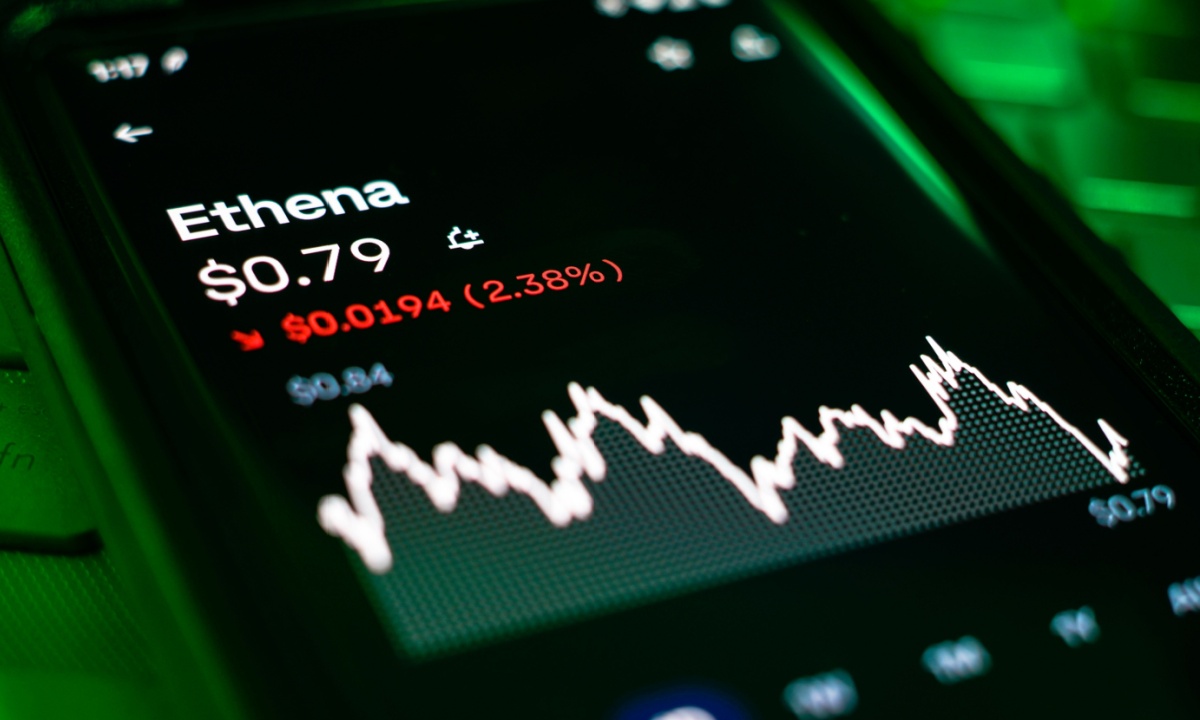
USDe, a “synthetic dollar” from cryptocurrency project Ethena, fell to 65 cents against the U.S. dollar on Binance’s exchange, Bloomberg News reported Saturday (Oct. 11). The coin is designed to maintain a price near to that of the dollar, and regained that status following an initial sell-off, the report added. “Our team is currently conducting a thorough review of the impacted users, the details surrounding these liquidations, and the appropriate compensation measures,” Binance wrote in a blog post about USDe and two other tokens that lost their pegs. This came as the price of crypto tumbled following President Donald Trump’s announcements of a new 100% tariff on China, wiping out more than $19 billion in crypto investments and leading to more than 1.6 million traders liquidated. China has called the new tariffs hypocritical and defended its limits on exports of rare earth elements and equipment, but fell short of placing new tariffs of its own on American products. Trump on Sunday (Oct. 12) seemed to downplay the dispute on his Truth Social platform. Advertisement: Scroll to Continue With a market value of $14 billion, USDe is the third-largest stablecoin after Tether and Circle. However, the Bloomberg report noted that its price fluctuations, while short-lived, were enough to trigger concerns among investors. Ethena Labs wrote in a post on X that the coin remains over-collateralized. “Even a brief stablecoin depeg can shake the market,” said Rachael Lucas, analyst at BTC Markets. “Traders rely on them for liquidity, lending and collateral, so any loss of confidence can trigger liquidations and spill into wider crypto volatility.” In other stablecoin news, PYMNTS wrote last week about the way the emerging goal of these tokens seems to be “to make ‘crypto’ disappear as a standalone concept.” “Just as few people today think about TCP/IP when they send an email, few will think about stablecoins when they make an instant international payment,” that report said. “The technology will recede into the background, embedded in the pipes of everyday finance.” An example of that embedding, the report added, can be seen in the news that Coinbase and Mastercard are in advanced negotiations to acquire BVNK, a FinTech offering enterprise-grade stablecoin payments infrastructure. “Acquiring BVNK gives the buyer not just software but connectivity to banks, payment networks, and enterprise clients already using BVNK’s rails,” PYMNTS wrote. “BVNK claims to process over $20 billion annually and supports clients including Worldpay, Flywire, and dLocal.” Ethena Stablecoin’s Dollar Peg Slips Briefly Amid Crypto Upheaval Car Industry Feels ‘Distress’ as Suppliers Face Tariffs Meta Taps Thinking Machines Co-Founder to Boost AI Expertise SEC Relaxes Rules for IPO Prep Amid Government Shutdown We’re always on the lookout for opportunities to partner with innovators and disruptors.