Posted on Leave a comment

Abu Dhabi Imposes Penalties for Cryptocurrency Mining on Farms – CoinCentral

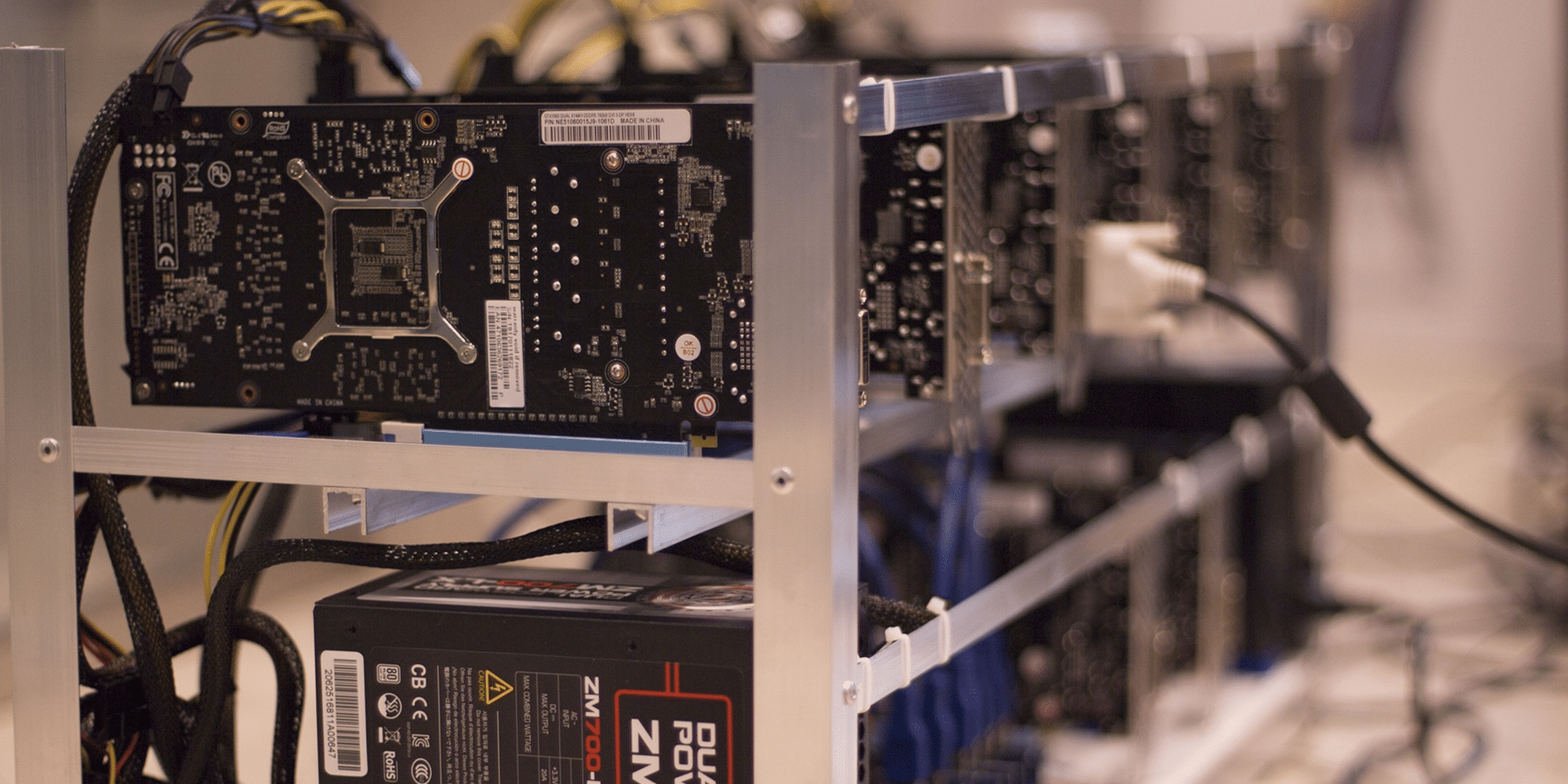
Abu Dhabi’s Agriculture and Food Safety Authority (ADAFSA) has reasserted its ban on cryptocurrency mining on farms within the emirate, signaling the government’s concern over energy usage and the proper allocation of agricultural land. The move comes after farms were discovered repurposing farmland and electricity for crypto mining operations, which violate the intended use of agricultural land.
ADAFSA stressed that such activities, which use up significant energy resources, are not permitted under existing agricultural laws. The authority outlined penalties for those caught mining, including a fine of 100,000 dirhams (around $27,000). In addition to financial penalties, violators will face disconnections from municipal services, the confiscation of mining equipment, and the suspension of access to agricultural support programs.
The ban comes amid increasing concerns over the energy consumption of cryptocurrency mining. As the crypto mining industry has expanded globally, regulators have raised alarms over its impact on local power grids. Abu Dhabi’s regulatory move aligns with similar actions taken by other countries in response to the rising energy demand associated with mining digital assets.
Cryptocurrency mining, particularly Bitcoin mining, relies heavily on vast amounts of electricity, often sourced from non-renewable energy sources.
Critics argue that this exacerbates environmental issues, contributing to higher carbon emissions and increasing energy strain. In contrast, some researchers point to innovative solutions, such as using excess energy from industrial operations for mining, which could mitigate some of the environmental effects.
Farms found to be involved in cryptocurrency mining will face significant consequences. The 100,000 dirham fine, which is doubled for repeat offenders, aims to deter future violations. Additionally, mining activities will lead to the disconnection of power supplies to these farms, which could cripple their ability to function as agricultural businesses.
The confiscation of mining hardware and the suspension of access to government agricultural programs will likely leave farms struggling to recover.
The aim of these measures is to ensure that farmland is used for its intended purpose: cultivating crops and raising livestock. By enforcing strict penalties and focusing on sustainability, ADAFSA hopes to preserve agricultural land for food production, which is vital to the region’s food security.
Abu Dhabi’s move to ban cryptocurrency mining on farms follows a global trend in which governments are becoming more vigilant about the environmental impact of digital asset mining. In December 2024, Russia imposed a ban on mining in several regions due to the high energy consumption associated with crypto mining. The US has also seen increased scrutiny from lawmakers, with some proposals aiming to regulate mining activities to reduce their carbon footprint.
While some critics argue that cryptocurrency mining is harmful to the environment, others advocate for more sustainable mining practices. For example, research has shown that mining operations can use excess energy from sources like landfill gas-to-energy projects to reduce environmental impact. Proponents of these approaches suggest that mining could become more eco-friendly and less reliant on traditional power grids if such solutions are scaled.
The UAE has been actively working to diversify its economy and reduce its dependence on non-renewable energy sources. As part of this effort, the government has focused on ensuring that energy resources are used in ways that support long-term sustainability and economic development.
The ban on cryptocurrency mining on farms aligns with these broader environmental and economic goals, aiming to protect farmland while promoting responsible energy consumption.
By addressing the growing energy demands of the crypto industry and placing limits on its expansion into agricultural areas, Abu Dhabi is taking steps to ensure that its agricultural resources are preserved for future generations. This regulatory framework also highlights the challenges that governments face as they try to balance innovation with sustainability in a rapidly evolving digital economy.
Kelvin Munene is a crypto and finance journalist with over 5 years of experience in market analysis and expert commentary. He holds a Bachelor’s degree in Journalism and Actuarial Science from Mount Kenya University and is known for meticulous research in cryptocurrency, blockchain, and financial markets. His work has been featured in top publications including Coingape, Cryptobasic, MetaNews, Coinedition, and Analytics Insight. Kelvin specializes in uncovering emerging crypto trends and delivering data-driven analyses to help readers make informed decisions. Outside of work, he enjoys chess, traveling, and exploring new adventures.
TLDR Ripple mints 1.8 million RLUSD tokens on XRP Ledger, nearing $800 million market cap.…


Never Miss Another Opportunity.
Get hand selected news & info from our Crypto Experts so you can make educated, informed decisions that directly affect your crypto profits!
Type above and press Enter to search. Press Esc to cancel.
BC Game Crypto: 100% Bonus & 400 Free Casino Spins, Claim Here!


source

Posted on Leave a comment

Montana State Lottery announces $150K Powerball win in Missoula – Nonstop Local News Montana

Cloudy with rain developing after midnight. Low 49F. Winds light and variable. Chance of rain 100%..
Cloudy with rain developing after midnight. Low 49F. Winds light and variable. Chance of rain 100%.
Updated: October 2, 2025 @ 6:19 pm

NonStop Local Digital Journalist
MISSOULA, Mont. – The Montana State Lottery revealed that a lucky individual in Missoula has won $150,000 in the Powerball game.
The announcement was made on the Montana State Lottery’s Facebook page.
The winning ticket was bought at the Town Pump on Brooks Street in Missoula.
Residents are encouraged to check their Powerball tickets, as they might just be the winner.
 
STEVENSVILLE, Mont. – An 18-year-old in Stevensville is facing charges after they drove their car into two powerlines and crashed into someone…
NonStop Local Digital Journalist
{{description}}
Email notifications are only sent once a day, and only if there are new matching items.
Currently in Missoula
Success! An email has been sent to with a link to confirm list signup.
Error! There was an error processing your request.
Tap into Non-Stop News from Montana Right Now! From the Big Story to the 3 Things to Know – we have the moment’s essential headlines.
Local news headlines from NonStop Local in Great Falls and Helena – delivered to your email inbox every weekday.
Local news headlines from NonStop Local Bozeman and Butte – delivered to your email inbox every weekday.
Local news headlines from NonStop Local in Missoula and Kalispell – delivered to your email inbox every weekday.
Get the latest headlines on local sports! News from UM, MSU, High School sports and more.
Your browser is out of date and potentially vulnerable to security risks.
We recommend switching to one of the following browsers:
Get up-to-the-minute news sent straight to your device.

source

Posted on Leave a comment

Can Pi Network Price Hit $10? – CryptoRank

Coins
Top 100 Coins
Trending Cryptos
Performance
Recently Listed
Gainers
All Categories
All Time High
Blockchains
Global Market Data
Ecosystems
Fundraising
Funding Rounds
Funds
Analytics Dashboard
IDO/ICO
IDO/ICO
IDO Launchpad ROI
Launchpads
CEX Launchpad ROI
Launchpool
Analytics Dashboard
Node Sale
Exchanges
CEX
CEX Transparency
CEX Listing Performance
DEX
Exchange Tokens
ETH Bridge
Token Unlocks
Token Unlocks
Analytics
VC Pressure
Products
Research
Rewards
Maps
Drop Hunting
Alerts
Converter
Widgets
Market Data API
Futures and Options
Affiliate Program
Watchlist
Portfolio
The post Can Pi Network Price Hit $10? appeared first on Coinpedia Fintech News
The Pi Network (PI) is once again under pressure as its price slips dangerously close to fresh lows. At the time of writing, PI is trading at $0.34, just above its all-time low of $0.33. If the token breaks below the critical $0.344 support, it could fall further to $0.322, setting a new record low.
While Bitcoin (BTC) holds steady above $110,000, Pi has decoupled from the broader crypto market. Data shows its correlation with Bitcoin has dropped to just 0.12, leaving the token detached from the stability seen in other assets.
This performance has reignited a pressing question in the community: Can Pi Network ever reach $10?
For Pi to even consider a path toward $10, few things must be achieved:

According to CoinCodex data, Pi Network would need to rally 2,780% to hit $10. Their algorithm says this is highly unlikely, projecting a maximum price of $9.80 by 2050.
For now, Pi’s silence on development and lack of progress weigh heavily on its future. Without transparency from the Pi Core Team (PCT) and stronger commitments to pioneers, developers, and investors, hopes of a sustainable rally remain dim.
Hence, unless Pi delivers real utility, major exchange support, and an open market, the dream of Pi hitting $10 may remain just that, a dream.
Read More
The post Can Pi Network Price Hit $10? appeared first on Coinpedia Fintech News
The Pi Network (PI) is once again under pressure as its price slips dangerously close to fresh lows. At the time of writing, PI is trading at $0.34, just above its all-time low of $0.33. If the token breaks below the critical $0.344 support, it could fall further to $0.322, setting a new record low.
While Bitcoin (BTC) holds steady above $110,000, Pi has decoupled from the broader crypto market. Data shows its correlation with Bitcoin has dropped to just 0.12, leaving the token detached from the stability seen in other assets.
This performance has reignited a pressing question in the community: Can Pi Network ever reach $10?
For Pi to even consider a path toward $10, few things must be achieved:

According to CoinCodex data, Pi Network would need to rally 2,780% to hit $10. Their algorithm says this is highly unlikely, projecting a maximum price of $9.80 by 2050.
For now, Pi’s silence on development and lack of progress weigh heavily on its future. Without transparency from the Pi Core Team (PCT) and stronger commitments to pioneers, developers, and investors, hopes of a sustainable rally remain dim.
Hence, unless Pi delivers real utility, major exchange support, and an open market, the dream of Pi hitting $10 may remain just that, a dream.
Read More

source

Posted on Leave a comment

Video Premiere: Hex Code – ‘Babylon Lottery’ – New Noise Magazine

Long Beach’s darkwave punk outfit Hex Code were born out of the pandemic by the kindred spirits Mary Animaux (vocalist) and Veronica Cruz (organ and guitar) and are rounded out by the rhythm section of Redd (Bellhaunts) on drums and Lily Stretz (Meow Twins) on bass. They’re launching their new LP True Crime Spree September 13 on Recess Records.
Today, they’re debuting their latest music video “Babylon Lottery,” a darkly-tinged goth punk anthem with dizzying guitars and a frenetic vocal performance, making for an exciting and energetic tune. The video is packed full of dark and occult imagery, but in a way that’s more fun than terrifying, reminding us of the joy in venturing to the dark side of things.
“After living for so many years in a state of emergency, it feels refreshing to play loud, upset music with humans who have been on earth long enough to have really perfected the kind of dark sense of humor you need to cope with all the gross and bewildering things our rapidly approaching mortality makes us face everyday,” explains Animaux. “Sophie made the entire video process rad because they laughed at our ridiculous jokes.  If you are old enough to remember REM’s ‘Everybody Hurts’ video, then you are ready for Hex Code’s ‘Babylon Lottery’ video … which we could have named ‘Everybody Dies.’ Damn, what a missed opportunity. ”
Check out the video below.

True Crime Spree is out September 13 on Recess Records. Follow Hex Code on Instagram for future updates.
Photo courtesy of Hex Code
Subscribe to receive physical monthly issues in the mail!
This website uses cookies to ensure you get the best experience on our website.
 Learn more

source

Posted on Leave a comment

Kazakhstan's Crypto Renaissance: Binance, KZTx, and the Future of Global Crypto Business Banking – OneSafe

Kazakhstan is stepping into the spotlight of the cryptocurrency scene with its recent partnership with Binance, the launch of KZTx stablecoin, and the incorporation of BNB into its state reserves. This bold initiative not only strengthens the nation’s digital economy but also sets a benchmark for global crypto business banking. In this post, we’ll delve into how these developments are reshaping Kazakhstan’s financial landscape and what they might signify for the worldwide crypto community.
Kazakhstan’s collaboration with Binance is a significant chapter in its quest to establish itself as a frontrunner in the digital economy. By securing official licensing for Binance and debuting the KZTx stablecoin, Kazakhstan is laying the groundwork for a more structured and regulated cryptocurrency ecosystem. This move not only simplifies national transactions but also aligns with global crypto business banking standards.
Binance’s newly acquired license in Kazakhstan allows for a broader operational reach, underscoring the country’s determination to weave blockchain technology into its economic fabric. This partnership signals a transition towards a more welcoming environment for crypto-friendly business bank operations, where startups can harness the perks of a regulated crypto payment platform. The collaboration is anticipated to draw foreign investments and spur tech advancements, positioning Kazakhstan as a regional digital finance hub.
The KZTx stablecoin is tailored for smooth transactions within Kazakhstan’s economy, specifically for regulatory fees and national payments. This stablecoin is a significant stride towards embracing crypto payroll solutions, enabling businesses to create invoices in stablecoin and optimize their financial workflows. As more firms consider stablecoin salaries, Kazakhstan’s initiative may offer a blueprint for other nations dealing with inflationary pressures and currency instability.
In the wake of Kazakhstan’s crypto initiatives announcement, Binance Coin (BNB) saw a notable rise in market cap, approaching $151.71 billion. This increase reflects growing institutional interest and confidence in Kazakhstan’s digital economy’s stability. The inclusion of BNB in state reserves not only boosts its value but also highlights the potential for stablecoin payments to transform business transactions within the crypto sector.
Kazakhstan’s proactive stance on cryptocurrency regulation and integration carries significant implications for global crypto business banking. By crafting a transparent legal framework and promoting compliance, Kazakhstan sets a powerful precedent for other nations considering stablecoin and digital asset adoption. This could potentially lead to a B2B crypto payment platform that supports instant stablecoin payments, improving the efficacy of cross-border transactions and fostering financial inclusion.
Kazakhstan’s partnership with Binance and the introduction of the KZTx stablecoin herald a transformative era in the global cryptocurrency landscape. As the country embraces a regulated framework for digital assets, it is poised to take the lead in crypto business integration. The insights gained from Kazakhstan’s initiatives can offer guidance to other nations navigating the intricacies of stablecoin adoption, balancing innovation with financial stability and compliance. The outlook for crypto in Kazakhstan and beyond appears promising, with the potential to redefine how businesses interact with digital currencies.

Get started with Web3 Busineses effortlessly. OneSafe brings together your crypto and banking needs in one simple, powerful platform.
Kazakhstan's crypto initiatives with Binance and KZTx stablecoin reshape the digital economy, impacting global crypto business banking and compliance.
Lido DAO experiences a significant market cap increase driven by institutional interest in Ethereum and new ETF offerings, reshaping the cryptocurrency landscape.
Discover key lessons from Aster and SHIB's volatility, the importance of security in crypto projects, and how stablecoin salaries can combat inflation.
Begin your journey with OneSafe today. Quick, effortless, and secure, our streamlined process ensures your account is set up and ready to go, hassle-free

source

Posted on Leave a comment

Trump ‘Determined’ the U.S. Is Now in a War With Drug Cartels, Congress Is Told – The New York Times

  1. Trump ‘Determined’ the U.S. Is Now in a War With Drug Cartels, Congress Is Told  The New York Times
  2. Trump has determined U.S. is in armed conflict with cartels, administration tells Congress  NBC News
  3. US is engaged in formal ‘armed conflict’ with ‘terrorist’ drug cartels, Trump says  ABC News – Breaking News, Latest News and Videos
  4. Trump administration tells Congress the U.S. is in “armed conflict” with drug cartels after Venezuela boat strikes  CBS News
  5. Trump admin tells Congress it determined US engaged in formal ‘armed conflict’ with ‘terrorist’ drug cartels  Fox News

source

Posted on Leave a comment

XRPI vs XRPR: XRP ETFs Diverge as XRPI Holds $18.66 and XRPR Nears $25.99 High Amid SEC Decision – TradingNEWS

The arrival of regulated XRP exchange-traded funds has shifted liquidity and institutional focus toward Ripple’s token at a critical time for crypto markets. Two of the most actively watched products are the XRP ETF (NASDAQ:XRPI) and the REX-Osprey XRP ETF (CBOE:XRPR). Both ETFs have begun trading in the $18–$25 range, with XRPI closing at $18.66 on October 2 and XRPR finishing at $25.47 before slipping slightly in after-hours trade to $25.02. These launches come just as XRP-USD trades around $3.04, holding near multi-year highs and benefiting from ETF speculation, whale accumulation, and shifting SEC policy.
The XRP ETF (XRPI) is structured with primary exposure to XRP futures contracts listed on CFTC-regulated exchanges, backed by collateral instruments such as Treasuries and money market funds. XRPI currently manages $163.23 million in net assets, charges a 0.94% expense ratio, and allocates nearly 38.4% of its assets to cash-equivalents through First American Government Obligations Fund (FGXXX).
XRPI’s trading activity shows volumes averaging 693,820 shares daily, though October 2 saw 648,325 shares exchanged within a price range of $17.76 to $18.77. Its 52-week range stretches from $12.69 to $23.53, highlighting volatility but also clear upside potential if XRP-USD breaks through key resistance. Performance data remains flat year-to-date, but that’s more a function of its recent May 2025 launch date than investor reluctance. The lack of long-term return data understates its positioning as institutions increasingly rotate into digital asset ETFs.
The REX-Osprey XRP ETF (XRPR) offers a more direct linkage to XRP spot pricing. XRPR launched on September 18 at $25.83, quickly declining to $24.23 before rebounding strongly to close October 2 at $25.47, up 4.17% on the session. After-hours activity trimmed gains slightly to $25.02, but XRPR’s trading range of $24.35 to $25.61 highlights strong demand within its first weeks of trading. Its 52-week high of $25.99 is already within reach, while downside support sits at $22.31, based on early exchange data.
XRPR is trading around 306,000 shares daily, lighter than XRPI but still notable for a fund that has been listed only weeks. Market makers are quoting tight spreads with bids at $25.01 x 800 and asks at $25.21 x 800, confirming active institutional flow. While fund-level data on assets under management and NAV has not yet been published, demand has been stronger than other early crypto ETF debuts, underscoring Ripple’s brand recognition in the U.S. market.
On-chain data adds another layer to the ETF narrative. Over the past two weeks, wallets holding 10–100 million XRP tokens added 340 million XRP, worth nearly $1 billion at current prices, raising their collective balances near 8 billion tokens. At the same time, XRP futures open interest surged back to $7.83 billion, up from a monthly low of $7.35 billion, suggesting growing conviction in XRP derivatives as ETF speculation intensifies.
Institutional investors appear to be preparing for the SEC’s October 18 decision window, when spot XRP ETF filings from firms such as Franklin Templeton, WisdomTree, and Grayscale are expected to face regulatory rulings. Market analysts project $5–8 billion in inflows in the first year if approval is granted, a figure that would dwarf current XRPI and XRPR flows combined.
XRP-USD has been trading just under $3.05, consolidating after clearing the $2.80 resistance zone in late September. Technical supports lie at the 50-day EMA ($2.92), 100-day EMA ($2.84), and the 200-day EMA ($2.62), while resistance levels at $3.18, $3.33, and $3.50 are being closely monitored. A break above $3.18 would confirm bullish continuation, with medium-term targets extending toward the 2021 high of $3.66.
Momentum indicators remain favorable. The RSI at 54 suggests XRP is not yet overbought, leaving room for further appreciation, while the MACD crossover triggered last week has sustained a buy signal. ETF buying pressure layered onto whale accumulation could accelerate the push past resistance zones.
Regulatory shifts have rapidly improved the approval odds for spot XRP ETFs. Bloomberg ETF desk analysts, including Eric Balchunas, now assign 100% probability of approval for XRP, Solana, and Litecoin ETFs under the SEC’s new generic listing framework. The SEC’s decision to remove reliance on 19b-4 filings has accelerated timelines, and XRPR’s approval in just 75 days (versus the usual 240-day window) underscores the changed environment.
This backdrop not only improves XRPI and XRPR’s long-term prospects but also signals that additional entrants from large managers could quickly follow. If funds from BlackRock, Fidelity, or Invesco file for spot XRP ETFs, institutional flows could accelerate well beyond the current $163M in XRPI assets and XRPR’s modest early inflows.
When comparing XRPI and XRPR to other crypto-linked ETFs, Bitcoin ETFs such as BlackRock’s IBIT ($90.7B AUM) and Ethereum ETFs around $28B AUM are still far larger. But XRP’s niche positioning gives it a unique trajectory. XRPI is structured more conservatively around futures, offering liquidity and regulatory simplicity, while XRPR provides purer spot exposure at the cost of volatility.
Together, XRPI and XRPR are now the first U.S. avenues for mainstream investors to gain Ripple exposure without the operational risk of direct token custody. With XRP-USD holding near $3.00, and total crypto market cap above $4.17 trillion, the timing of these ETFs provides an institutional bridge into a rapidly expanding market segment.
Enter your email to receive our newsletter

source