
Posted on — Leave a comment

ACL Festival 2025 guide: Rules, tips and road closures – KUT

It’s that time of year again when Zilker Park transforms into an international music venue featuring dozens of artists. Here’s a guide on how to prepare for the Austin City Limits Festival.
Allowed items: Empty reusable water bottles, baby strollers, hand sanitizer and sunscreen bottles under 3.4 ounces, some chairs, blankets, cameras, portable battery packs and some totems with flags.
Bag policy: Any bag 6″ x 9″ or smaller with no more than one pocket will be allowed past security. Larger bags must be clear and no bigger than 12″ x 6″ x 12″. See the festival’s bag policy for more information.
Prohibited items: Aerosol containers, coolers, most wheeled objects and shade structures, outside food and beverages, hammocks, glass containers. Professional video or photo equipment is not allowed without permission. This includes selfie sticks, detachable zoom lenses, tripods and professional audio equipment.
See a full list of allowed and prohibited items on the ACL website.
Sunburn, dehydration and dust: To protect yourself from the heat and sun, bring a refillable water bottle to keep hydrated. Also bring sunscreen and electrolytes.
With high numbers of attendees and grassy terrain, ACL air can become dusty and make it difficult to breathe. Pack masks, inhalers or scarves to wrap around your mouth to filter the air.
Medication and aid: If you require medications, bring only a day’s dosage and pack it in a pharmacy-labeled container. Also consider bringing first-aid such as bandaids and Narcan. A team from This Must be the Place, a group that helps in overdoses, will be wearing yellow vests and ready to help around the park.
Emergency contacts: Add emergency contact information when registering your wristband. For ease of access in stressful situations, also list emergency information like contacts, medication and allergies on your phone’s lock screen.
See the ACL Festival website for more health and safety tips.
Transportation: This year’s festival offers ADA parking, pick-up and drop-off locations, and a shuttle service. Find locations here.
Entrances and facilities: Staff and signs will guide festivalgoers to entrance lanes designed for accessibility. Find access centers on the ACL Fest map for questions, requests, charging mobility devices, braille programming, assisted listening devices and more.
Wristbands and viewing access: Those needing mobility accommodations or who are hard of hearing/deaf can access special spots where interpreters can be seen. Those eligible are allowed one guest to accompany them in these zones. Free access tickets are available at the access center.
Mobility accommodations: Wheelchairs and three- or four-wheeled scooters are permitted only for those who need mobility assistance. Bring all required cords and items to charge devices. Zilker Park will have accessible portable toilets on site, which can be located on the map.
Service animals: Service animals are permitted on festival grounds, but pets are not.
For more detailed information, see the website’s ADA and Accessibility page.

Many roads around Zilker Park will be closed during October’s first two weekends. Road closures around the park include Stratford Drive, Barton Springs Road, Azie Morton Road. Several roads like Walter Seaholm Road will be accessible only to shuttles. See the City of Austin’s map on upcoming road closures for more detailed routes to avoid.
With road closures, here are some ways to move to and from the festival other than walking:
Rideshare: There are three pick-up and drop-off locations — Wallingwood Drive, Lee Barton Drive and one along Stephen F Austin Drive next to the Austin High Tennis Center.
Bus and shuttle: The MetroRapid Route 803 offers the most efficient route to Zilker Park. If you don’t live close to that line, see CapMetro’s other routes on the website. The agency also has recommended transportation methods for this year’s festival.
Starting at 11:30 a.m., the festival offers a shuttle service from Walter Seaholm and Electric Drive, with drop off near the Barton Springs West festival entrance.
Scooters and bikes: Lime scooter drop-off locations include Azie Morton Road, Veterans Park Drive, Toomey Road and Barton Springs Road. If riding your own bike, park across the Mopac Pedestrian Bridge on Stratford Drive, or on Azie Morton near the Umlauf Sculpture Garden.
See the ACL Festival website for a transportation map.


source

Posted on — Leave a comment

Parole revoked for Eddie Tipton, the Iowa man convicted of rigging lottery – The Des Moines Register

A man serving a 25-year prison sentence for rigging computers to win lottery jackpots has had his parole revoked after he got into trouble in prison just before his scheduled release.
Eddie Tipton was approved for release by the Iowa Board of Parole on Jan. 20 because of good behavior. He had served nearly five years of his 25-year sentence. The board reversed its decision and rescinded his parole on March 10.
“He incurred a major discipline or major report within the institution after we granted the parole but before he was physically released,” said Iowa Board of Parole Chairman Andrew Boettger.
The Iowa Department of Corrections notified the board of the incident, the board reviewed it and “based on the nature of the discipline decided to rescind the parole grant,” Boettger said.
Boettger declined to specify what Tipton did before his release to deserve disciplinary action. A spokesman for Department of Corrections referred questions to Boettger. The prison system spokesman also denied a request to talk with Tipton at the state medium security prison for men in Clarinda.
Tipton had worked for an organization in Urbandale, Iowa, that provided random number drawing computers to several states with lotteries. Investigators said he installed code on lottery computers that allowed him to predict the winning numbers on specific days. He, his brother Tommy Tipton of Texas, and others played the numbers he predicted and claimed winnings.
Eddie Tipton pleaded guilty in 2017 to ongoing criminal conduct and was ordered to repay $2.2 million in ill-gotten winnings from lotteries in Colorado, Wisconsin, Kansas and Oklahoma. Court documents indicate he still owes most of the money. He shared some of the restitution obligation with his brother, who collected some of the winnings.
An Iowa jury also convicted Eddie Tipton of attempting to take $16.5 million from a rigged Iowa Lottery game in December 2010, but the Iowa Supreme Court in 2017 overruled the decision, saying the state took too long to prosecute him.
Tipton, like all non-violent offenders with no mandatory minimum sentence, will come up for review again in a year and corrections officials could recommend him for parole again before that, Boettger said.
In Iowa, non-violent offenders with no mandatory minimum sentence are eligible for parole immediately. Typically the prison system evaluates when they’re ready for consideration and makes a recommendation to the parole board, which does its own evaluation and determines whether the person is ready to transition to work release or parole and “has been rehabilitated and is ready to live a law-abiding life,” Boettger said.
Parole board documents indicate Tipton would have been allowed to move to Texas, where he has family including his brother.
At his 2017 Iowa sentencing hearing, Tipton told the judge he wrote software containing code that allowed him to predict winning numbers on certain dates. He gave those numbers to others who won lottery prizes and shared the winnings with him.
It’s not clear what happened to the money Tipton and his associates won between 2005 and 2011. Out of the seven known winning tickets that netted more than $2.2 million, Eddie Tipton claimed to have ended up with only $351,000.
Tipton, 59, has filed a lawsuit in state court claiming he was placed under duress to plead guilty. He also alleges that Iowa officials charged him for restitution in states for which it has no jurisdiction, and he says he can’t pay. A trial is set for Aug. 17.

source

Posted on — Leave a comment

Tips for Subtly but Effectively Being Part of the Background Onstage – Dance Magazine

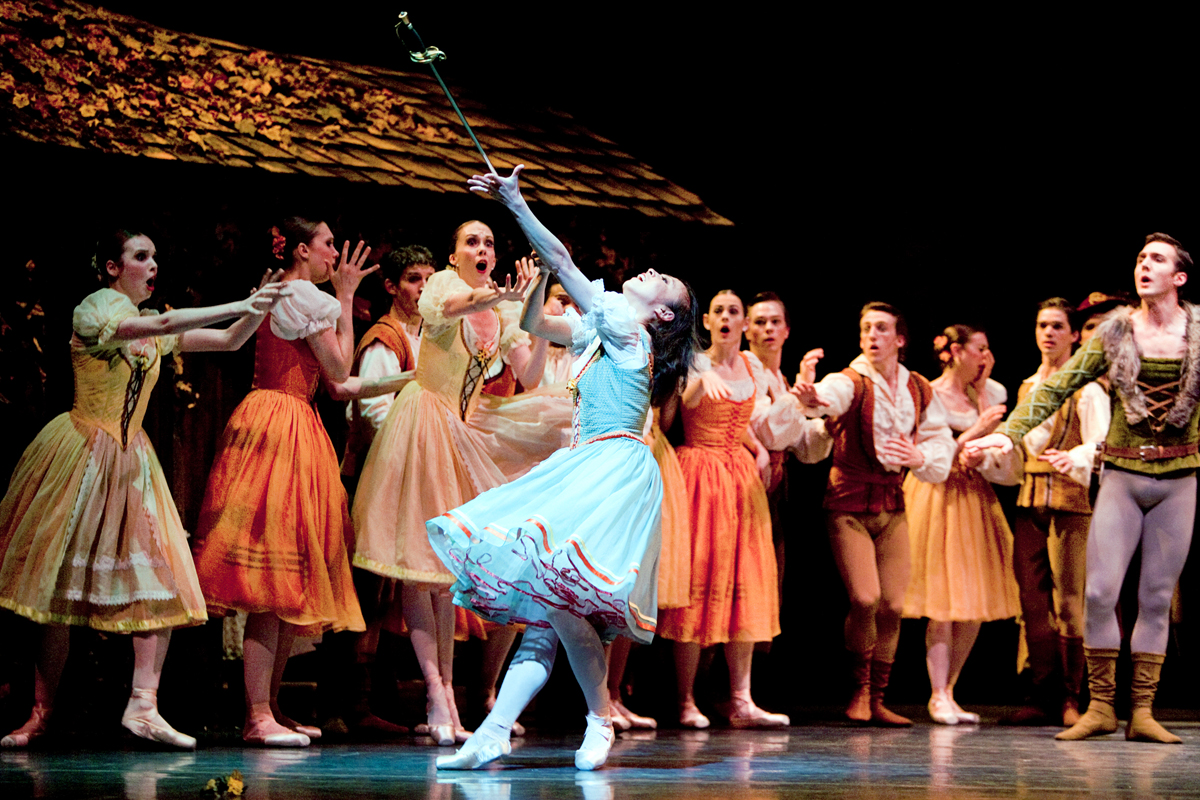
When your role is to be part of the background—less center stage, more scenery—it can sometimes feel like what you do onstage doesn’t matter all that much. But it’s actually an essential role: These dancers can set the tone, help move the story forward, and give the audience something rich and layered to look at. “Learning how to blend in, how to listen and respond, how to shape the space around you, embody the energy of the group—all of that’s equally as important as standing out,” says Kiyon Ross, associate artistic director of Pacific Northwest Ballet. Mastering these skills can help dancers learn how to build a character and interact with other performers authentically onstage, he adds, so that whether or not you’re in the spotlight, you can give the richest performance possible.
Alberto Blanco, a faculty member at Sarasota Ballet School, suggests thinking about being engaged emotionally but restrained energetically when you’re part of the background. “You can be giving 100 percent to the character, but not overshadowing anybody,” Blanco says. Then, once you are dancing center stage again, you can dial your energy back up to 100 percent.
Exactly how big you move, however, depends on what’s happening in the plot. “If someone falls down or there’s this big reveal moment, then maybe those reactions want to be larger and more expressive,” Ross says. “But if it’s a more intimate moment, your movements are a little smaller so as not to detract from what we want the focus to be.”
There are even moments where relative stillness is called for. “For example, in Giselle’s mad scene, there is very minimal movement in the background, as it’s a somber scene where the focus is meant to be fully placed on her,” says Boston Ballet II dancer Natalia Cardona. Yet the dancers never completely stop moving: “For the most part, even dramatic scenes like this are meant to come off as natural and human, so we are never completely frozen,” she says.
Don’t get so caught up in your own internal storyline that you forget where you are onstage. Blanco finds younger dancers in particular sometimes lack spatial awareness. “Kids don’t realize that they’re perhaps in a clump or hiding somebody else,” he says. He suggests practicing using your peripheral vision to fill the floor space in class so that it’s second nature once you’re performing.
You have the power to direct the focus of the audience with where your eyes are looking, so be strategic about it. “Is this a moment where you should be looking at the principal couple that are dancing?” Ross asks. Or, if it’s just a general scene-setting crowd moment, consider looking more directly at other background dancers.
Cardona says her relationship to the audience shifts when she’s in the background. “Although I never lose my link with the audience, I focus more on interacting with other dancers and my surroundings when I’m in the background,” she says. “And I make more of an effort to connect with the audience when it’s time to dance center stage.”
Even when you are one of many villagers in the back of the stage, defining who your character is and how they fit into the scene will help you respond more authentically to the main action taking place. “Sometimes I even tell dancers to put a name to their character and to find a task, like doing business with another villager,” says Blanco. “That helps them be more natural in their reactions.”
One of the benefits of being part of the background is that, often, many of your movement choices are left up to you. Embrace the opportunity to improvise. “To keep it alive and keep it interesting, try different things each time you’re onstage so that it remains fresh for you,” Ross suggests.
Musical theater choreographer Stephanie Klemons says she uses background dancers to emotionally amplify particular moments for the audience. But how? She makes sure that any choreography she gives performers in these moments matches whatever the characters are singing about. “If a lyric is meant to cut and drive forward, you’ll see the movement is very linear and everyone’s hitting the same arm, versus more sinewy, sensual vocals where you’ll have people that are moving softly, freestyle,” Klemons says.
She’s also careful to distinguish between more realistic and more stylized moments­. For instance, if background performers are meant to be patrons in a nightclub milling around like real people, she keeps all movement natural and humanistic, rather than using more abstract choreography. And, importantly, she makes sure dancers know which of those two things they’re doing when.
Meet the Editors
Events Calendar
Advertise
Dance Magazine Awards
Contact Us
Terms of Use/Privacy Policy
Dance Spirit
Pointe
Dance Teacher
The Dance Edit
Join our mailing list to receive the latest news and updates from our team.


Sign up for any or all of these newsletters

source

Posted on — Leave a comment

Police Accidentally Shot and Killed a Victim During Manchester Terrorist Attack – The New York Times

  1. Police Accidentally Shot and Killed a Victim During Manchester Terrorist Attack  The New York Times
  2. One of the victims who died in Manchester attack likely shot by officers, police say  CNN
  3. Manchester synagogue attack victim possibly killed by officer’s gunshot, police say  CBS News
  4. Man kills 2 in car ramming and stabbing attack at English synagogue on Jewish holy day  Yahoo
  5. One victim in Yom Kippur synagogue attack in England was shot dead by police  The Washington Post

source