Posted on — Leave a comment

Massive fire erupts at Chevron refinery in El Segundo, sending plumes across South Bay – Los Angeles Times

This is read by an automated voice. Please report any issues or inconsistencies here.
An explosion and fire rocked a refinery in El Segundo on Thursday night, sending up massive flames that could be seen for miles.
The city of El Segundo said that there was a fire at the Chevron refinery but that there was no public threat or evacuation orders. Shelter-in-place orders were in effect for portions of north Manhattan Beach until 2 a.m.
Videos taken when the explosion occurred around 9:30 p.m. showed a massive fireball erupt amid a loud, extended roar. But over the next hour, the blaze died down considerably and the skies largely cleared while bright, strong flames continued to burn near the southern portion of Chevron’s plant.
Shortly before 10:30 p.m., Los Angeles County Supervisor Holly Mitchell told KCAL-TV that the fire had been largely contained. She said there were no immediate reports of injury and “no cause for alarm for the surrounding area.” She noted that officials would be monitoring air quality conditions and advised residents in the immediate area to remain indoors if possible.
El Segundo Mayor Chris Pimentel told KCAL that the fire never extended beyond the refinery grounds and that all personnel had been accounted for. The cause of the fire remained unclear, he added.
The plumes of smoke were visible in the El Segundo and South Bay areas, and fire personnel were on scene shooting streams of water at the fire. The refinery has its own fire department and other regional agencies assisted in the response.
In north Redondo Beach, smoke billowed across the orange sky.
Julian Reese, 13, said he and his dad felt a major blast and then ran outside, seeing flames fill the sky.
At Aviation Park, just a few miles from the Chevron plant, Mark Rogers was playing in his weekly adult soccer league when the apparent explosion took place.
“I thought we got nuked or something,” said Rogers, 34. The referee ended up canceling their game minutes after it started due to the heavy smoke.
Keith Mohr, 53, lives just south of the refinery in Manhattan Beach. After he felt the blast, he told his wife to grab their dogs and head to the car. They returned home once officials said there was no public safety threat.
“This was 300-foot flames,” said Mohr, noting that he’s lived by the refinery for more than two decades and had never seen anything like the inferno. “I didn’t know if a plane crashed or there was an earthquake or both.”
Traffic was diverted away from the scene while road closures were put in place along Rosecrans Avenue from Vista Del Mar to Pacific Coast Highway and along Pacific Coast Highway from Rosecrans Avenue to El Segundo Boulevard.
Los Angeles Mayor Karen Bass and Gov. Gavin Newsom were both briefed on the incident Thursday night. Bass said there was no known impact to Los Angeles International Airport in a statement on X. The governor’s office said it was coordinating with local and state agencies to protect the surrounding community and ensure public safety, according to a statement on X.
Refinery fires are part of life in the South Bay, which is home to several major oil production facilities.
In 2022, it took firefighters two hours to put out a fire at the El Segundo facility. In 2020, a fire at the Marathon Petroleum refinery in Carson sent flames at least 100 feet into the air and sparked hours of concern. But the fire was eventually put under control and it did little major damage to refinery operations.
This is a developing story and will be updated.
The most important California stories and recommendations in your inbox every morning.
By continuing, you agree to our Terms of Service and our Privacy Policy.
Follow Us
Clara Harter is a breaking news reporter at the Los Angeles Times. Previously, she covered politics and education for the L.A. Daily News. She majored in political science and Middle Eastern studies at Columbia University.
Follow Us
Grace Toohey is a reporter at the Los Angeles Times covering breaking news for the Fast Break Desk. Before joining the newsroom in 2022, she covered criminal justice issues at the Orlando Sentinel and the Advocate in Baton Rouge. Toohey is a Maryland native and proud Terp.
California
World & Nation
California
California
California’s home insurance crisis worsened after recent fires. With soaring rates and companies leaving due to wildfire risk, many residents wonder: Can they still get insured? Host Kate Cagle investigates how we got here and what comes next.
James Sexton, ostracized after reporting misconduct, fed FBI information on the Sheriff’s Department’s scheme to hide Anthony Brown. Indicted, Sexton fought, but was found guilty. His testimony fueled a widening obstruction scandal.
A $30,000 Labubu heist! Reporter Nathan Solis joins Madison to talk about the wild details of this high-stakes story. You’ll be hooked, Labubu fan or not.
California
California
California
California
Subscribe for unlimited access
Site Map
Follow Us
MORE FROM THE L.A. TIMES

source

Posted on — Leave a comment

Pi Coin Price Prediction: Which Is The Best Crypto To Buy Now Under $1 – TechFinancials

Get the latest technology news from TechFinancials News about FinTech, Tech, Business, Telecoms and Connected Life.


The world of cryptocurrency is filled with projects trying to prove themselves. Right now, Pi Coin and Remittix (RTX) are two names people are discussing when searching for the best crypto to buy under $1. While Pi Coin has had a tough few months, Remittix has been breaking records. This mix of contrasting fortunes makes the debate around Pi coin price prediction even more interesting.
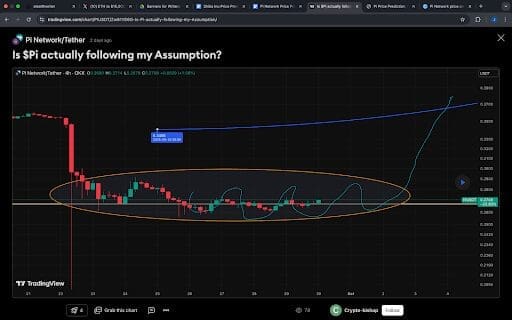
Pi Coin is currently trading around $0.266. This decline followed the announcement that Pi Network had launched a decentralized exchange and automated market maker on its testnet. While that sounds like a step forward, investors weren’t convinced.
The project also plans to unlock 139 million tokens this month alone, and this supply pressure keeps pushing prices down. Technical analysis shows that Pi has already broken support at $0.3300, and analysts now believe a drop toward the $0.20 mark is possible. If Pi Coin can reclaim $0.30, it could target $0.326 or even $0.39. But a drop below $0.245 risks more drops to $0.230. 

source: Crypto-bishop on TradingView

Remittix might just be the top crypto under $1, and it has already raised more than $27 million and sold 674 million tokens at $0.1130 each. Early exchange listings are confirmed on BitMart and LBank, with another major CEX reveal just around the corner.
The Remittix Wallet is already live in Beta Testing, with community members testing its features. Their feedback has shaped a second update, which is already being rolled out. Alongside this, the project recently passed a security audit by CertiK, giving investors a solid sense of confidence.
The project is also rewarding its early community, giving users 15% of every referred purchase directly in USDT.  To top it all off, development of the Remittix Web App is almost complete. The app will include crypto-to-fiat functionality and is scheduled for beta release by mid-Q4.


Pi Coin price prediction remains highly uncertain due to weak governance. On the other hand, Remittix is building strong foundations and focusing on solving real-world problems. For those looking at the best crypto to buy now under $1, Remittix is the best choice.
Discover the future of PayFi with Remittix by checking out their project here:
Website: https://remittix.io/
Socials: https://linktr.ee/remittix
$250K Giveaway: https://gleam.io/competitions/nz84L-250000-remittix-giveaway


The XRP market is experiencing renewed excitement. The latest data shows that XRP has officially…
Get the latest tech news from TechFinancials about telecoms, fintech and connected life.


TechFinancials delivers in-depth analysis of tech, digital revolution, fintech, e-commerce, digital banking and breaking tech news.
Type above and press Enter to search. Press Esc to cancel.

source

Posted on — Leave a comment

Sheetz, Pa. Lottery launch ‘Free Gas for a Year’ contest: Here’s how to enter – PennLive.com

Okay, no one won last night’s Mega Million drawing, so maybe you’ll be tempted to test your luck here. Especially if you’re feeling financial pain at the gas pump.
Sheetz and the Pennsylvania Lottery have teamed up to offer a unique opportunity to give one lucky customer free gas for a year.
All 299 Sheetz locations in Pennsylvania are participating in the “Free Gas for a Year” contest, which runs until Sept. 30, according to a press release from the convenience store franchise. The winner will get a $5,000 Sheetz gift card (which, ostensibly, would be spent on gas).
There are two ways to enter the contest.
To enter, buy at least one $10 Match 6 lottery ticket. Once purchased, each customer will receive a play ticket, as well as a trailing ticket that will include a QR code.
Customers will then have to scan the QR code on their phone, which will take them to the MySheetz app. Next, enter the promo code on their trailing ticket to automatically be entered to win the grand prize of free gas for a year.
But remember, you can only enter the drawing once. While there can only be one winner for grand prize, though, every participant will have a free coffee or soda item loaded onto their MySheetz account.
The grand prize winner will be announced in October. Good luck!
If you purchase a product or register for an account through a link on our site, we may receive compensation. By using this site, you consent to our User Agreement and agree that your clicks, interactions, and personal information may be collected, recorded, and/or stored by us and social media and other third-party partners in accordance with our Privacy Policy.
Use of and/or registration on any portion of this site constitutes acceptance of our User Agreement, (updated 8/1/2024) and acknowledgement of our Privacy Policy, and Your Privacy Choices and Rights (updated 10/1/2025).
© 2025 Advance Local Media LLC. All rights reserved (About Us).
The material on this site may not be reproduced, distributed, transmitted, cached or otherwise used, except with the prior written permission of Advance Local.
Community Rules apply to all content you upload or otherwise submit to this site.
YouTube's privacy policy is available here and YouTube's terms of service is available here.
Ad Choices iconAd Choices

source

Posted on — Leave a comment

Kerala Lottery Result Today (OUT) 03-10-2025 Live: Suvarna Keralam SK-21 Lottery Lucky draw results- Check Friday Winning Ticket Numbers; OUT – Times Now

Latest
Entertainment
India
Sports
Business
World
Lifestyle
Tech
Zoom Watchlist
Viral
Cryptonow
Kerala Lottery Result Suvarna Keralam SK-21 Results Live: The first winner of today’s lottery game- Suvarna Keralam SK-21 lottery- will take home Rs 1 crore as a cash prize. The Kerala lottery is one of the most trusted games in the country.
Updated Oct 3, 2025, 16:00 IST
news
viral
Related News
Aarshdeep Singh Shares Hilarious Garba Dance Video In Connection With Asia Cup’s THIS Viral Moment
Foreign Couple Buys Dahi Puckha From Kolkata Street Vendor– Only To Throw It Away Untasted; Video
Nagaland Lottery Sambad Result Today 1 PM Live (03-10-2025) Dear MEGHNA Friday; Rs 1 Crore First Prize
Nagaland Lottery Sambad Result Today 1 PM Live (02-10-2025) Dear MAHANDI Thursday; Rs 1 Crore First Prize
‘Feels Like Solving Puzzle Every time He Speaks’: Internet Reacts To Rahul Gandhi’s Take On ‘Electric Motor’
Follow us :
© 2025 Bennett, Coleman & Company Limited

source

Posted on — Leave a comment

XRP Price Could Rally As Multiple Bullish Signs Emerge – BeInCrypto

Written by
Ananda Banerjee
Edited by
Ann Maria Shibu
XRP price has shown solid gains recently, rising about 10% over the past week and nearly 7% in the past month. Since September 26, it has edged higher to around $3.02 at press time. But despite the move up, the coin has not managed a breakout rally.
A bearish channel that began in early August has capped every attempt higher. Now, billions in whale inflows combined with short-term accumulation could finally test the limits of this bearish stretch.
Large investors — whales holding between 100 million and 1 billion XRP — have added significantly to their balances in recent days. Their holdings grew from 8.95 billion coins on September 30 to 9.46 billion on October 3. That’s an increase of 510 million XRP, worth about $1.54 billion at current XRP prices.
Even after slight profit-taking from the October 2 peak of 9.49 billion, these wallets remain near record highs, showing strong conviction.
At the same time, smaller but active groups of traders are also accumulating. XRP’s HODL waves, which track how long coins are held before moving, show sharp increases in shorter-term cohorts. The one-month to three-month group rose from holding 10% of supply in early September to 11.83% by October 2.
Even more striking, the 24-hour cohort spiked from just 0.12% on September 2 to 1.74% a month later.
Want more token insights like this? Sign up for Editor Harsh Notariya’s Daily Crypto Newsletter here.
These additions are not part of the $1.54 billion whale tally, but they underline a broader trend: both whales and short-term holders are building positions at the same time. Together, they add meaningful buying pressure as XRP approaches a crucial level on the chart.
Despite the accumulation, the XRP price has been locked inside a descending channel since early August. Each rally attempt has failed at the channel’s upper boundary, including one on October 2 that could not hold.
This explains why the XRP price, even with weekly and monthly gains, has remained stuck under bearish pressure for nearly two months.
Now, the inflows are pressing at a critical moment. For the first time since September 20, the bull-bear power indicator shows bulls taking the lead, with the last two sessions favoring buyers. This tool compares price to a moving average to show which side — bulls or bears — has momentum.
Price is hovering just below $3.10, the key resistance line. A close above both the upper trendline and $3.10 would end the channel’s grip. That wouldn’t make XRP instantly bullish, but it would remove the bearish structure that has capped rallies since August.
If bulls succeed, the next upside targets lie at $3.18 and $3.35. On the downside, failure to hold $3.00 risks a slide toward $2.94 and $2.78.
At this point, the XRP price reflects a clash of signals. The structure remains bearish, but whales have injected $1.5 billion, and short-term wallets are piling in. If $3.10 breaks, the bearish stretch could finally give way.
Daily Crypto Insights
Insights, news and analysis of the crypto market straight to your inbox
Disclaimer
In line with the Trust Project guidelines, this price analysis article is for informational purposes only and should not be considered financial or investment advice. BeInCrypto is committed to accurate, unbiased reporting, but market conditions are subject to change without notice. Always conduct your own research and consult with a professional before making any financial decisions. Please note that our Terms and Conditions, Privacy Policy, and Disclaimers have been updated.

source

Posted on — Leave a comment

XRP May Surpass Bitcoin by 2030 Says Business Expert Cameron Scrubs – CoinCentral

Cameron Scrubs, the founder of Tradeship University, recently made a bold prediction about XRP’s future. Scrubs believes that by the end of the decade, XRP will surpass both Bitcoin and Ethereum. XRP could become the world’s leading cryptocurrency by market capitalization.
Currently, XRP accounts for approximately 4.4% of the global cryptocurrency market. Bitcoin, however, holds a dominant share of nearly 60%. For XRP to surpass Bitcoin and Ethereum, it would need to increase its market share significantly.
The market gap between XRP and Bitcoin remains substantial. Bitcoin’s market capitalization exceeds $2.36 trillion, while XRP stands at just $177 billion. To match Bitcoin’s value, XRP would need to appreciate over thirteen times its current price, reaching approximately $39 per coin.
Despite the optimistic forecast, achieving this shift by 2030 may prove challenging. Bitcoin’s dominance is expected to continue, with many analysts predicting its price could reach up to $1 million by the end of the decade. If Bitcoin reaches this level, its market cap could exceed $20 trillion, creating an even greater gap between the two assets.
XRP Will Be #1 in terms of Market Cap by 2030
I’m leaving it all on the table. Bitcoin and Ethereum will be second to XRP.
— Cameron Scrubs (@imcameronscrubs) October 1, 2025

To match such growth, XRP would need to surpass $335 per coin. Many XRP supporters, however, view this target as unlikely to be achieved within the next five years. Still, some industry figures, including Coach JV, share Scrubs’ optimistic outlook for XRP’s future growth.
Despite skepticism surrounding XRP’s potential to dethrone Bitcoin, several factors could contribute to its growth. Financial institutions and payment providers are already exploring XRP for cross-border transactions. XRP’s transaction speeds, which average just seven seconds, make it a compelling option for global payments.
In addition, developments such as Ripple’s potential initial public offering (IPO) and the possibility of XRP-backed exchange-traded funds (ETFs) could spark increased institutional interest. These moves could elevate XRP’s standing in the cryptocurrency market.
Even if XRP does not become the number-one cryptocurrency, these factors could help it secure a larger market share. The rise of XRP in the coming years will likely depend on widespread adoption, institutional involvement, and the future of cross-border payments.
Maxwell is a crypto-economic analyst and blockchain enthusiast, passionate about helping people understand the potential of decentralized technology. His goal is to spread knowledge about this revolutionary technology and its implications for economic freedom and social good.
TLDR Near Foundation is developing AI-powered digital twins to represent DAO members in governance voting.…


Never Miss Another Opportunity.
Get hand selected news & info from our Crypto Experts so you can make educated, informed decisions that directly affect your crypto profits!
Type above and press Enter to search. Press Esc to cancel.
BC Game Crypto: 100% Bonus & 400 Free Casino Spins, Claim Here!

source

Posted on — Leave a comment

Teachable Moments: Back to school tips and best practices for homework – South Carolina Public Radio

TRANSCRIPT:
For South Carolina Public Radio, I’m Dr. Rénard Harris from the College of Charleston. This is Teachable Moments, a minute of education for students and parents. 
School’s back in session, and families across the country are trying to navigate routines and homework responsibilities with intention. While it’s not always welcome, homework is a chance for kids to build confidence and take ownership, especially when parents offer encouragement instead of answers.
Try the “10-minute rule” if a task feels overwhelming, set a timer for just 10 minutes. Often, getting started is the hardest part and momentum builds from there.
And it’s worth remembering that homework isn’t a punishment, it’s practice. It’s how students strengthen their skills and grow, one assignment at a time.
For the College of Charleston, I’m Dr. Rénard Harris.

source

Posted on — Leave a comment

Pi Network in 2025: What It Is, How Mining Works, Is It Legit? – Coin Bureau

“Mining crypto on your phone” sounds too good to be true when you’re used to images of humming warehouses and power-hungry rigs. Pi Network proposes something very different: a mobile-first approach that swaps constant computation for lightweight participation and social trust. The result is a project with a very large user base and an onboarding experience closer to tapping a daily app reminder than running specialized hardware.
Why do people care? Zero (or near-zero) hardware costs, a simple daily check-in that keeps newcomers engaged, and the long-standing hope that today’s activity will translate into real-world liquidity tomorrow.
Pi exited its enclosed phase and moved to Open Network on Feb. 20, 2025. Trading now exists on select exchanges, but availability is not universal, and pricing remains volatile as order books deepen and regional compliance rules evolve. In short, there’s genuine progress, alongside risks that readers should weigh carefully as they decide whether and how to participate.
Pi Network is a mobile-first blockchain project that aims to make cryptocurrency participation as simple as tapping a button on your phone.
Instead of relying on energy-intensive mining hardware, Pi emphasizes low-energy engagement and social trust to bring newcomers into crypto. In practical terms, users “mine” PI through periodic check-ins in the app to use PI coin across an ecosystem of apps and services as the network matures. See the Pi Whitepaper and Roadmap for the project’s mission and phased rollout.
Note: Availability of features and participation requirements (e.g., KYC) can vary by region; always consult official Pi Network materials for your locale.
Before diving into features, it helps to separate Pi Network’s two moving parts: how individuals earn PI on their phones and how the network itself reaches agreement.
The earning side is intentionally simple: periodic check-ins that maintain your eligibility to receive emissions. Under the hood, however, Pi relies on a consensus model that uses trusted connections between participants rather than energy-hungry hardware. Understanding this split, everyday “mining” habits versus the consensus engine, makes the rest of the mechanics much easier to follow.
At its core, Pi’s “mining” is a lightweight participation routine: you open the app and start a 24-hour session by tapping once, then return after the session ends to tap again and keep earning. The process ties your emission to your account status and to the strength of your “security circle” (trusted contacts). For complete beginners, think of it like checking in daily to maintain a streak; miss the window, and the streak pauses until you return.
Official materials describe the cadence and common pitfalls (for example, signing out before a session ends can forfeit that session’s earnings) in the Community Wiki and Support portal (referenced above).
For a plain-English walkthrough of the flow, don't miss our beginner's guide to mining PI.
Quick reference:
Note: Program parameters and eligibility may vary by region and account status; always confirm details in official Pi materials for your locale.
As we mentioned, Pi adapts the Stellar Consensus Protocol (SCP), a Federated Byzantine Agreement model that reaches agreement through overlapping “quorum slices” of trusted participants rather than through energy-intensive competition. In simple terms, instead of proving work with machines, nodes prove agreement by aligning with enough peers they trust; as overlapping trust relationships spread across the network, a global decision emerges.
In Pi’s design, peer trust sets and security circles feed into this process to prioritize real users over bots or farms, hence the project’s emphasis on account verification and social trust. Mainnet participation is linked to identity checks. Pi has explained its approach and rationale in its KYC FAQs and KYC program update, as discussed. As with any identity-based system, there are ongoing discussions about data handling and local requirements; Pi provides general safety guidance in its Account Safety resource.
Regional note: KYC availability, documentation needs, and processing times can differ by country and over time.
The Pi ecosystem has two layers to consider: the PI Coin currency itself and the apps and services where it’s meant to be used. On one side are issuance and exchange listings that shape price discovery and liquidity. On the other are marketplaces and pilot integrations that test day-to-day utility. Keeping both in view helps explain why progress can appear uneven across regions and platforms.
Pi Network’s native asset is the Pi Coin, or PI, designed for use within the project’s app ecosystem and, increasingly, on external venues as connectivity has expanded. Distribution has emphasized community participation from the outset, with ongoing emissions linked to user activity and network rules described in the Token Model (Community Wiki).
Following the transition to an open environment, PI began appearing on selected centralized exchanges; for example, OKX’s listing notice and Gate.io’s announcement set out timelines for PI/USDT spot markets in February 2025. Liquidity and pricing are still developing, and market conditions can vary significantly across venues and over time.
Read our beginner's guide on how to buy PI coin. Also check out our top picks for the best Pi Coin wallets.
Callout: Pricing can be volatile, and exchange availability may differ by region and platform. Always review local access rules, verification requirements, and fees before attempting to trade.
Beyond exchange trading, Pi’s goal is a network of apps where PI is useful for everyday transactions. New and updated apps have been highlighted through periodic ecosystem posts, such as the Mainnet Ecosystem Interface update, which added community-built applications for Pioneers to explore. Access typically flows through the Pi Browser and the platform’s developer stack; developers can onboard via the Pi Apps Platform and deploy to users who sign in with their Pi credentials.
Partnerships to date are mostly pilot-stage and focused on testing specific use cases rather than large-scale integrations. The broader plan is to expand utility and external connectivity following the open-network transition, aligning app development with payments, identity, and other on-chain interactions.
For readers new to exchange mechanics and liquidity, our very own overview of order-book depth and market quality in this primer offers helpful context when evaluating early trading conditions for PI.
Debate around Pi Network generally falls into three areas: how it grew, how long it took to reach exchange trading, and what the project asks of participants.
The growth model leans on referrals and community-driven activity; the path to broad, real-world liquidity has been gradual; and participation increasingly relies on identity checks, which raises regional and privacy considerations. For a beginner, it helps to evaluate signals rather than headlines: what has officially launched, what safeguards exist, and where trading actually happens.
Pi’s referral-influenced growth has drawn comparisons to multi-level marketing mechanics in the public discourse. Without labeling Pi as an MLM, it’s useful to understand how regulators evaluate such programs; the U.S. Federal Trade Commission provides plain-language guidance on multi-level marketing and related consumer resources.
Separately, the long period before broad exchange connectivity invited skepticism about whether PI would ever trade widely. Identity verification has also become central to mainnet participation, which means data handling and regional documentation requirements matter; Pi points users to its Support & Policy hub for items like the Privacy Policy and safety resources.
The project has publicly communicated its transition out of the enclosed phase and into an open environment (see the official announcement archive for the February 2025 rollout timeline). KYC processes continue to expand, including the introduction of Fast Track KYC in September 2025 to onboard participants more quickly. On trading, multiple centralized venues now list PI, though liquidity and market quality still vary by platform and jurisdiction. As always, access depends on where you live and which compliance rules apply.
We have a lot more detail on KYC/AML to help you understand it better.
Pros
Cons
Pi’s design combines a social, phone-based earning flow with a consensus engine that seeks agreement through webs of trust rather than raw computing power. Let's see how that engine works, how rewards are determined, and what safeguards the project highlights for the open-network environment.
As noted, Pi builds on the Stellar Consensus Protocol (SCP). In practice, groups of nodes accept updates when enough of their trusted sets also accept them, allowing the decision to propagate network-wide. For background on this approach, see Stellar’s “Proof and Code” introduction and the fundamentals overview that contrasts proof-of-agreement with proof-of-work. In Pi’s context, the trust links originate from participant relationships and app-level signals, aligning with the project’s goal of broad, low-energy participation.
SCP vs. PoW (why mobile works): Because agreement hinges on trust quorums, not hashpower, phones aren’t solving puzzles. This keeps energy use low and helps explain why Pi frames participation as lightweight check-ins rather than continuous computation.
Pi’s earning flow ties a base rate to actions that indicate real participation, then layers multipliers from features like security circles, referrals, app engagement, and optional lockups. The project describes this merit-based approach in its “How do I mine more Pi coins?” FAQ and details security-circle bonuses in a dedicated Security Circles FAQ. Lockups, which are voluntarily committing balances for a period, are positioned as rate boosters in on-chain lockup updates and subsequent reminders. The network has also referenced periodic base rate adjustments, so any published figures should be cited with an “as of” date from official materials.
Objective: Incentivize verified, consistent activity and discourage spammy or automated behavior.
Pi links mainnet participation to identity checks and business verification, describing these requirements in the Open Network launch note and the KYB guidance. The idea is to prioritize real users and accountable service providers while limiting Sybil risks (many fake identities), fake circles, and device farms, which are threats that social-trust checks and KYC/KYB are meant to reduce. The project has also outlined migration and tokenomics safeguards for the open phase in a Mainnet migrations & tokenomics update.
Pi’s open-network transition in early 2025 enabled external connectivity, which is why you’ll now see PI quoted on multiple exchanges. To make sense of today’s market, it helps to separate three moving parts: where PI is listed, what the token’s supply looks like, and how much real liquidity sits in order books. The highlights below focus on official disclosures and widely used market trackers.
Open Network has been live since February 20, 2025. PI trading is available on several centralized exchanges, where common pairs include PI/USDT, and reported volumes vary between venues. For a consolidated view of live pairs, venues, and reported turnover, consult CoinGecko’s PI markets list.
Price context: Through much of 2025, PI has traded in roughly the $0.26–$0.30 range with sharp moves around major milestones. Data aggregators show an all-time high on Feb. 26, 2025; see CoinCodex’s PI page for the latest timestamps and figures, especially considering frequent fluctuations.
Reference table:
Note: All 24h volumes were extracted from Coingecko on Oct. 2, 2025.
Figures auto-update via CoinGecko; always verify on your chosen exchange before trading.
Pi states a maximum supply of 100 billion PI, with the majority allocated to community mining rewards and the remainder to the foundation, liquidity, and the Core Team. The project explains that these buckets track the pace of migrated mining rewards so proportions stay constant as the effective supply grows; revert to the official Mainnet migrations & tokenomics update for details.
Public discussion continues around supply policy and burns; coverage from reputable outlets has highlighted the design and the debates without changing the official allocations.
Reference table (tokenomics overview):
Reported 24h volumes fluctuate with listings, market cycles, and regional demand. Spreads and depth can vary meaningfully between venues, where some books are thin, which can increase slippage.
A practical way to assess conditions is to review top-of-book spreads and order-book depth on the same CoinGecko markets list referenced above, then compare across two or three exchanges before trading.
As Pi’s open-network era matures, converting PI into fiat (or other crypto) depends on two parallel tracks: exchange coverage and on-platform spending. Exchange listings determine where PI can be traded for currencies like USDT or USD, while ecosystem commerce allows members to spend PI directly with participating merchants. Availability on both tracks varies by region and can change as compliance requirements evolve.
A growing, but still selective, group of centralized exchanges lists PI, with access, pairs, and payment rails differing by jurisdiction. For an aggregated snapshot of active pairs and reported volumes, consult the markets section on the main price aggregators mentioned earlier.
Inside the ecosystem, Pi continues to promote real-world spending through community events and app interfaces, for example, PiFest 2024 encouraged local merchant acceptance, and Open Network PiFest guidelines outline in-store payment flows using Mainnet wallets. Pi also maintains a KYB list to identify verified businesses allowed to hold Mainnet wallets, reinforcing a focus on accountable counterparties.
Check out our step-by-step guide on how to sell PI coin. We also have a guide on the best PI coin exchanges.
Liquidity should improve as three factors develop: broader exchange coverage, deeper order books, and clearer compliance pathways for individuals and businesses. On the ecosystem side, the team highlights continued onboarding of apps and merchants during the open-network period; see 100 Days of Open Network for the project’s own description of KYB-enabled integrations) and ongoing hackathon and incubator initiatives that aim to expand practical use cases. If these efforts lead to more places to spend PI and more venues to trade it, market depth and conversion options should become more robust over time.
Pi’s appeal comes from a low barrier to entry and a design that favors everyday participation over specialized hardware. At the same time, its path to broad liquidity and its identity requirements introduce trade-offs that beginners should weigh carefully.
Read: Is Pi Network Legit?
Risk table
Pi reframes “mining” as participation rather than computation. By letting people earn from their phones instead of specialized rigs, the project lowers technical and financial barriers; for newcomers, it feels closer to maintaining a daily streak than running a server farm. This kind of accessible onboarding can widen the top of the crypto funnel, especially in regions where power, hardware, or capital make traditional mining impractical.
Compared with legacy proof-of-work and newer proof-of-stake systems, Pi’s approach leans on trust quorums (outlined earlier) instead of hash power or bonded stake.
The outlook depends on execution. If exchange access broadens, order-book depth improves, and compliance pathways remain clear for individuals and businesses, Pi could serve as a large, mobile-first on-ramp to blockchain apps. Without those ingredients, user interest may not translate into durable liquidity or everyday utility.
Overview
Checklist:
Example (hypothetical):
Allocate $100 for a test trade on one listed exchange. Note the quoted price, the fee you paid, the realized slippage from quote to fill, and the withdrawal fee/time for moving funds off the platform. Use the results to decide whether depth and costs are acceptable before scaling up.
Pi Network set out to make crypto participation as simple as tapping a phone, and it now operates in an open-network environment with a growing footprint across exchanges and ecosystem apps. For beginners, the key idea is that Pi replaces energy-heavy mining with a trust-based model: users maintain activity through periodic check-ins while the network’s consensus is driven by social connections and verified participation. That combination explains both Pi’s scale and the scrutiny it attracts.
From a practical standpoint, conversion to real money still depends on where PI is listed, the quality of each order book, and your local compliance requirements. Token supply is large and issuance continues over time, so market depth and utility will matter more than headlines. If exchange coverage broadens, merchants and apps adopt PI, and verification pathways remain clear, the experience could feel more like using a mainstream digital wallet than a niche crypto project.
For readers deciding what to do next, keep it simple: verify local access, compare venues, start small, and secure your accounts and devices. Approach Pi as an evolving platform, as it is useful to learn from today, and worth re-checking as the ecosystem and liquidity mature.
Pi is active and in its Open Network phase (since Feb 20, 2025). Trading exists on select exchanges, but liquidity is uneven and access varies by region.
There are no guarantees or timelines. Monitor official Pi announcements and each exchange’s disclosures for any future listing decisions.
Only where PI is listed and supported for your country and payment rails. Check local availability, verification requirements, and withdrawal options before attempting to trade.
Pi uses an SCP-style model with trust circles and identity checks. Security depends on honest participation, app/device hygiene, and the quality of the network’s verified users.
Mobile-first onboarding, consensus via trust quorums rather than hashpower or bonded stake, and a very large community focused on low-friction participation.
It’s contingent on real utility (apps and merchants), broader and deeper liquidity, and clear compliance pathways. Revisit these signals periodically to reassess.
I have over 15 years of experience writing for organizations across multiple industries, with a diverse portfolio that includes articles, blogs, website content, scripts, and slogans.
At The Coin Bureau, I specialize in crypto-focused content, covering exchanges, wallets, trading strategies, security practices, and emerging trends in blockchain. My work ranges from in-depth platform reviews and beginner-friendly guides to advanced analyses of trading bots, DeFi, and regulatory developments.
Beyond crypto, I also write fiction in my spare time and look forward to publishing my first collection of short stories.
Disclaimer: These are the writer’s opinions and should not be considered investment advice. Readers should do their own research.

This site contains affiliate links to products/services. We may receive a commission for purchases made through these links.

source

Posted on — Leave a comment

Kerala Lottery Result Today (OUT) 03-10-2025 Live: Suvarna Keralam SK-21 Lottery Lucky draw results- Check Friday Winning Ticket Numbers – Times Now

Latest
Entertainment
India
Sports
Business
World
Lifestyle
Tech
Zoom Watchlist
Viral
Cryptonow
Kerala Lottery Result Suvarna Keralam SK-21 Results Live: The first winner of today’s lottery game- Suvarna Keralam SK-21 lottery- will take home Rs 1 crore as a cash prize. The Kerala lottery is one of the most trusted games in the country.
Updated Oct 3, 2025, 15:29 IST
news
viral
Related News
Foreign Couple Buys Dahi Puckha From Kolkata Street Vendor– Only To Throw It Away Untasted; Video
Nagaland Lottery Sambad Result Today 1 PM Live (03-10-2025) Dear MEGHNA Friday; Rs 1 Crore First Prize
Nagaland Lottery Sambad Result Today 1 PM Live (02-10-2025) Dear MAHANDI Thursday; Rs 1 Crore First Prize
‘Feels Like Solving Puzzle Every time He Speaks’: Internet Reacts To Rahul Gandhi’s Take On ‘Electric Motor’
Philippines’ 6.9 Magnitude Earthquake Disrupts Beauty Pageant! Spine-Chilling Video Shows Horrifying Chaos
Follow us :
© 2025 Bennett, Coleman & Company Limited

source