Posted on Leave a comment

Authenticated videos show huge fire at Russian oil refinery – bbc.com

We've verified video from Salavat in Russia showing a large plume of smoke coming from an oil refinery following a reported Ukrainian drone attack
Our specialists are also investigating an apparent attack near a former market, which is now a rubbish dump, in Gaza City that local reports say has killed at least 17 people
And we're seeing dramatic videos from Hong Kong and mainland China showing the impact of Super Typhoon Ragasa
BBC Verify uses open-source intelligence, satellite imagery, fact-checking and data analysis to help report complex stories
This feed is where we post our work throughout the day
Get in touch with us by following this link
Edited by Rob Corp
Peter Mwai
BBC Verify senior journalist

New satellite imagery shows the devastation caused by a drone strike on worshippers at a mosque in the besieged Sudanese city of El-Fasher in North Darfur.
Reports say at least 75 people were killed in the attack on 19 September, although this figure hasn’t been idependently verified.
The latest satellite image by Maxar was captured on Monday – and comparing it with one from 18 September the full extent of the destruction is laid bare.
The attack appears to have hit directly in the centre of the mosque, levelling most of the main structure. The image also shows the debris, seen as white spots, scattered across the mosque’s grounds and the surrounding area.
Researchers from Yale University say the destruction is consistent “with an air-delivered munition” and the fact that most of the debris spray was towards the north-west indicates the explosive was fired at the building from the south.
The Sudanese army has accused the paramilitary Rapid Support Forces (RSF) of being behind the attack. The RSF, which has laid siege to the city for the past 15 months, is yet to respond to the accusation.
Yi Ma and Adam Durbin
BBC Verify

Super Typhoon Ragasa has reached Hong Kong, Macau, and southern China after taking at least 15 lives in Taiwan yesterday. The Hong Kong Observatory issued its highest level storm warning in the early hours of the morning local time.
People in Hong Kong have been recording the impact of the strongest typhoon of the year so far and sharing their footage online. We’re working to check they are not from previous tropical storms as we do see old footage being passed off as new during breaking news stories.
Several verified clips filmed from a residential highrise in the Heng Fa Chuen area of the city show high waves crashing onto the footpath. We were able to geolocate it by matching the building structures and footpath track seen in the video with Google Maps’ Street View ground-level coverage.
Another CCTV video from inside a restaurant shows water smashing in a door before it surges inside, tossing furniture around the room and dragging some outside as the flood recedes. The video matches customer photos posted online of the furniture and decor of the restaurant.
We’ve also seen footage of people in Macau using buckets and their hands to try and catch fish swept into flooded streets.
As Super Typhoon Ragasa continues to head westward towards Jiangyang City in mainland China intense wind and heavy rainfall is still forecast for Hong Kong until 20:00 local time (13:00 BST).
We are continuing to monitor and verify footage of the storm – and will bring you any updates of what we see.
Tom Edgington
BBC Verify senior journalist

The new Work and Pensions Secretary, Pat McFadden, has been speaking to broadcasters this morning where he outlined plans to double the number of youth hubs, external which are aimed at getting more young people into work or training. During an interview with Sky News McFadden acknowledged that UK youth unemployment was “too high”.
According to the latest official figures, external, 621,000 young people aged 16-to-24 were unemployed in May to July. This was 3,000 more than the previous year.
Although the absolute number has increased, the youth unemployment rate has fallen slightly: it’s currently at 13.8% which is down from 14.3% the year before. However, this is still much higher than the unemployment rate for everyone over 16, external, which stands at 4.7%.
Youth unemployment peaked at 22.5% in 2011 following the 2008 financial crisis, according to the House of Commons Library, external.
Paul Brown
BBC Verify senior journalist

We’re looking into footage said to show the aftermath of a strike on a building near a former market in the centre of Gaza City.
In the graphic video, people can be seen digging through rubble with their hands to recover a body and body parts. The footage, posted on Instagram this morning, includes shots of some buildings which are identifiable on satellite imagery to confirm the location.
Palestinian social media channels, citing hospital officials, report a death toll of 17 from the attack. The market, one of the oldest in Gaza City, was largely dismantled shortly after the war began. It is now little more than a large rubbish dump, with some encampments for displaced people nearby.
Last month, press photographers captured Palestinians sifting through the rubbish in search of food. In one of these pictures a minaret of a nearby mosque can be seen, which is also visible in this morning’s footage.
The Israeli military has been approached for comment.
A press photograph captured people searching the dump for food – the minaret is also visible in footage we verified today
Thomas Copeland
BBC Verify Live journalist

The BBC Verify team in Washington DC were listening to President Donald Trump’s speech at the United Nations General Assembly yesterday.
It was a wide-ranging address – here’s three things he said that they fact-checked.
Has Trump really ‘ended seven unendable wars’?
The president listed “wars” he claims to have ended as being between: Israel and Iran, Pakistan and India, Rwanda and the Democratic Republic of Congo (DRC), Thailand and Cambodia, Armenia and Azerbaijan, Egypt and Ethiopia and Serbia and Kosovo.
A number of these “wars” lasted just days and it is unclear whether some of the peace deals will hold.
While Trump claimed “talks mediated by the United States” ended a four-day conflict between India and Pakistan, the government in New Delhi has played down the role of the US.
In June, the US hit nuclear sites in Iran – a move seen as ending 12 days of hostilities with Israel, but experts say there has been no permanent peace agreement.

'Sharia law' in London
The Mayor of London featured in the speech with Trump calling Sadiq Khan “a terrible mayor – terrible, terrible mayor. Now they want to go to Sharia law."
False claims like this one have circulated for years on social media and a spokesperson for Khan told the BBC: "We are not going to dignify his appalling and bigoted comments with a response."
Sharia law is an Islamic legal system and Sharia councils do exist in the UK – there were an estimated 85 across the UK in 2009, according to one think tank. Most of their work deals with marriage and financial arbitration between Muslims but the UK government has been clear, external that their rulings are "not legally binding".
Has illegal immigration into the US totally stopped?
“In fact they’re not even coming anymore because they know they can’t get through,” Trump went on to say about illegal immigrants.
Since he took office, figures from US Customs and Border Protection do show a significant fall in apprehensions of illegal migrants – but not to zero. Total monthly apprehensions dropped from 28,728 in January 2025 to 5,456 in August, external.
Trump also claimed that under the previous Biden administration “millions of people were pouring in. Twenty-five million altogether”. Border crossings did reach record levels under President Joe Biden but Trump’s figures are exaggerated.
The Department of Homeland Security estimates there were 11 million “border encounters” during Biden’s time in office.
Fact-checks by Joshua Cheetham, Nick Beake and Rupert Carey
Sherie Ryder and Paul Brown
BBC Verify

This screengrab from a street in the city shows a dense cloud of smoke coming from the Gazprom refinery
This morning we’ve been assessing newly emerged footage showing a fire at an oil refinery in the city of Salavat in Bashkortostan, Russia – about 1,200km (750 miles) south-east of Moscow.
In one clip we see a huge thick billowing cloud of black smoke in the distance. By looking at the surrounding buildings in the footage we can see where they are on publicly available satellite mapping from Google and its Russian equivalent Yandex to confirm the location.
Another clip, showing smoke rising in the distance, was filmed from a building near a main roundabout off Ulitsa Pervomayskaya Street. We carried out reverse image searches of several screengrabs to ensure the footage we are seeing isn’t old.
Bashkortostan regional governor Radiy Khabirov posted on Telegram this morning that the Gazprom Neftekhim refinery had been hit by Ukrainian drones.
It’s not the first time the site has been targeted as less than a week ago, on 18 September, there was a massive explosion there following two drone strikes. No casualties were reported.
Rob Corp
BBC Verify Live editor

Hello – welcome to today’s live page where we show how the team works to verify video and check facts on the day’s news stories.
This morning we’re working on verifying footage apparently showing a major fire at a petrochemical facility in Salavat in Russia. The governor for the Bashkortostan region has posted on Telegram that the site was attacked by Ukrainian drones. So far we’ve checked and geolocated two videos that show a huge plume of thick, black smoke coming from the facility.
As the Israeli military continues its offensive in Gaza City, we’re seeing footage apparently showing the aftermath of a strike near a former market. Unverified reports say at least 17 people were killed at the site which is now a rubbish dump. We’ll bring you more about what we’ve found and have asked the Israel Defense Forces for comment.
Away from conflict coverage, Super Typhoon Ragasa has hit Hong Kong and the southern coast of mainland China after sweeping across Taiwan, where 14 people were killed – we’re gathering and checking videos showing the immense force of the storm.
And if you missed it last night – BBC Verify’s US team listened to President Donald Trump’s speech to the UN General Assembly. We’ll bring you three things he said that they fact-checked.
Copyright © 2025 BBC. The BBC is not responsible for the content of external sites. Read about our approach to external linking.


source

Posted on Leave a comment

UK’s First Bitcoin Treasury Company B HODL Buys 100 BTC – Coinspeaker

© 2025 Coinspeaker LTD. ALL RIGHTS RESERVED.
UK-listed B HODL has acquired 100 Bitcoin, placing it alongside Smarter Web and Satsuma in the region.
B HODL Plc., a UK-listed Bitcoin BTC $112 980 24h volatility: 0.0% Market cap: $2.25 T Vol. 24h: $47.77 B treasury company, has announced its purchase of 100 BTC. 
The purchase marks the start of the company’s Bitcoin treasury strategy, totaling $11.3 million with each BTC acquired at an average price of $113,227.
On September 24, B HODL kicked off its Bitcoin treasury strategy by acquiring 100 BTC at an average purchase price of £83,872, equivalent to $113,227. Altogether, the entire holdings were valued at £8.4 million or $11.3 million. 
This acquisition is no small feat, as B HODL now has a position among the top 100 public Bitcoin treasury companies.
According to data from Bitcoin Treasuries, the company ranks 98 out of 100. This is a lofty achievement for a company that is just starting out in its Bitcoin acquisition journey. 
Top UK-based firms like Smarter Web and Satsuma already have significantly larger Bitcoin holdings.
For example, Smarter Web holds as much as 2,525 BTC, worth $284.4 million, and ranks 29th globally but first in the UK. It is followed by Satsuma, which held up to 1,125.85 BTC as of August 6. The London-based AI infrastructure company had accepted 1,097.29 BTC from investors as part of funding. 
At the time, Phoenix Digital Assets held down the third position with 247 BTC. Judging by these numbers, B HODL still has a long way to go if it plans to compete with its counterparts. Most of these companies are copying Michael Saylor’s Strategy Bitcoin playbook.
“The company remains focused on the disciplined acquisition of bitcoin to build a long-term strategic reserve that also powers B HODL’s Lightning Network operations,” B HODL stated.
Strategy is a long way from any of its competitors in terms of Bitcoin holdings. The business intelligence and software firm, which kick-started its Bitcoin acquisition and accumulation journey back in August 2020, holds the largest corporate Bitcoin stash.
It recently purchased 850 BTC, taking its entire holdings to 639,835 BTC. These total holdings are currently worth approximately $72 billion. 
Bitcoin is currently trading at $112,730.03, with a 0.24% dip within the last 24 hours, a major shift that show injected capital is helping to hold the coin.
Disclaimer: Coinspeaker is committed to providing unbiased and transparent reporting. This article aims to deliver accurate and timely information but should not be taken as financial or investment advice. Since market conditions can change rapidly, we encourage you to verify information on your own and consult with a professional before making any decisions based on this content.
Benjamin Godfrey is a blockchain enthusiast and journalist who relishes writing about the real life applications of blockchain technology and innovations to drive general acceptance and worldwide integration of the emerging technology. His desire to educate people about cryptocurrencies inspires his contributions to renowned blockchain media and sites.
Godfrey Benjamin on X
September 24th, 2025
Copyright © 2025 Coinspeaker LTD. All rights reserved.
Reproduction in whole or in part in any form or medium without express written permission of Coinspeaker LTD is prohibited.

source

Posted on Leave a comment

Who benefits most from new global superpower deal to revamp Bitcoin market within 6 months? – CryptoSlate

New task force seeks unified crypto standards, opening cross-border liquidity in months.
Cover art/illustration via CryptoSlate. Image includes combined content which may include AI-generated content.
Two financial superpowers have agreed to a groundbreaking deal that will rewrite Bitcoin and crypto market investments over the next six months.
A UK and United States task force with a 180-day deadline aims to align Bitcoin and crypto product listings, custody, and disclosures across the two markets.
The initiative, announced during the state visit and co-chaired by finance ministries with regulators involved, is framed to remove cross-border frictions in capital markets and digital assets, with recommendations expected around March 2026.
The scope includes cooperation on wholesale digital markets and a timetable to report within six months. This timing coincides with a fresh U.S. exchange framework that lets NYSE, Nasdaq, and Cboe list spot commodity and crypto exchange-traded products under generic criteria, shortening market to about 75 days and opening a product pipeline beyond Bitcoin and Ethereum.
The U.S. generic listing standard sets repeatable eligibility, surveillance sharing, and disclosure patterns. The task force can map those patterns into a cross-listing pathway for London that recognizes outcomes rather than duplicating the process.
The U.S. rule change reduces the interval between filing and the first trade to a fixed window, which has been one of the primary gating items for new single-asset and basket products.
If London accepts the U.S. package as equivalent for secondary listings, exchanges can carry over diligence and market surveillance agreements, then scale local documentation to UK rules.
UK capital-raising reforms that raise thresholds for follow-on offerings and streamline prospectuses provide the other half of the plumbing due to shorter documentation windows and a new public offers platform that will be phased in through 2026.
A market structure test case already exists in London.
The London Stock Exchange permits professional-only crypto exchange-traded notes, launched in 2024, and by mid-2025 hosted 17 lines from eight issuers, with a Europe-wide turnover base built during 2024.
This venue can import price discovery from the United States once a matching product trades on a U.S. exchange under the generic standard. The U.S. spot bitcoin ETF experience shows how spreads respond when multiple market makers compete and depth consolidates.
Cboe analysis of post-launch trading shows a compression in national best bid and offer spreads in the early sessions, moving into low basis point territory as assets and quoting interest scale. Those mechanics translate to London if order flow and hedging inventory are portable across venues and if settlement and custody risks are standardized.
The U.S. Office of the Comptroller of the Currency has affirmed that national banks may offer crypto asset custody, with the prior non-objection step no longer required when banks implement controls consistent with earlier interpretive letters.
The UK has consulted on crypto custody and sterling stablecoin regimes, with the FCA and the Bank of England coordinating. A joint FAQ that clarifies sub-custody and segregation standards would allow bank-affiliated providers to appoint cross-border agents and bring triparty settlement, reconciliations, and attestation cycles into the ETP workflow.
According to OCC guidance and UK consultation papers, that structure reduces concentration in single provider models and lowers operational drag for issuance, creation, and redemption.
The practical output of a six-month playbook is a short stack of documents that firms can use immediately.
One is a recognition note that connects the SEC generic listing criteria and surveillance sharing to UK listing requirements for secondary lines. Another is a custody sub-delegation FAQ that describes wallet operations, cold and hot key segregation, and assurance reporting across jurisdictions.
A third is a model disclosure annex covering forks, airdrops, staking treatment where applicable, valuation agents, and corporate actions.
Together, these items cut time to list for a UK secondary line toward the U.S. 75-day mark, where the originating product already meets generic criteria, while avoiding a second round of first-principles review.
Over the next two quarters, a base case assumes those soft law tools rather than wholesale statute changes.
In that case, U.S. venues continue to expand the roster under the generic rule, with single asset trackers such as Solana and XRP likely among early candidates.
London can then mirror top U.S. lines, add multi-asset baskets, and rely on arbitrage to connect quotes.
Under that setup, London Bitcoin and crypto ETN average daily volume increases in the mid double-digit range from present levels, and quoted spreads compress by roughly one-fifth to one-half compared with the summer baseline, drawing on the depth and maker competition seen in the United States and on the larger European turnover that built through 2024.
The issuance mix shifts as U.S. brands pursue secondary lines and as existing European issuers extend families to keep index coherence across venues.
If regulators publish a template that treats a defined U.S. crypto ETP disclosure pack as outcomes equivalent for UK purposes, the number of London lines could rise into the high teens or low thirties within the window, with bank market makers onboarding once custody sub-delegation is explicit.
In that case, custody fees move lower for large mandates as bank providers bring balance sheet and control frameworks, and creation or redemption cutoffs move earlier in the session.
The bear case limits output to principle-only statements, which preserves current frictions, keeps London count near present levels, and leaves the most widespread improvement to organic maker competition.
Capital raising sits alongside listings and custody. The UK reform track raises follow-on thresholds, trims prospectus periods, and introduces a platform model for public offers.
That design can be paired with U.S. shelf mechanics so Bitcoin, crypto infrastructure, and fintech issuers can run parallel books rather than sequence markets. A precedent exists in North American cross-border offerings that use mutual recognition of disclosure, documented in U.S. and Canadian materials for the multijurisdictional disclosure system.
Applying that pattern to digital asset ETP documentation and operating company raises would reduce duplicative drafting and enable simultaneous marketing windows without creating a separate bespoke carve-out.
First, watch for a dual listing fast path in the interim report around day 90 that outlines how exchanges can port surveillance and eligibility packages.
Second, look for custody sub-delegation language referencing both OCC letters and UK custody consultation outcomes, with explicit wallet control and attestation mapping.
Third, track a model disclosure annex that issuers can staple to both U.S. and UK filings.
Fourth, connect UK capital raising thresholds to U.S. shelf capacity in a way that lets issuers synchronize calendars.
The final metrics to monitor are LSE line count, average spreads, and daily volumes, collateralized by maker rosters and custody provider names.
Flows and positioning can move earlier than formal recommendations, so the pipeline may adjust before the 180-day mark. CoinShares shows sustained inflows into digital asset funds through late summer, with the United States in the lead, which supports inventory for creations once new tickers are listed.
If U.S. exchanges continue to open new spot lines under the generic rule and if London recognizes that diligence, the transfer of price discovery will show up in London quotes within the quarter through standard cross-venue arbitrage channels.
The primary risk to the timeline is supervisory bandwidth rather than a need for new law, since most of the required actions involve recognition notes, FAQs, and shared templates rather than statutory rewrites.
The task force described the six-month window as a target for recommendations, and the calendar now runs.
Also known as “Akiba,” Liam Wright is a reporter, podcast producer, and Editor-in-Chief at CryptoSlate. He believes that decentralized technology has the potential to make widespread positive change.
CryptoSlate is a comprehensive and contextualized source for crypto news, insights, and data. Focusing on Bitcoin, macro, DeFi and AI.

Catch the latest in crypto by following us on X. Stay informed on the go.
CryptoSlate’s latest market report compares Bitcoin and DeFi to some of the most established benchmarks in traditional finance.
Disclaimer: Our writers’ opinions are solely their own and do not reflect the opinion of CryptoSlate. None of the information you read on CryptoSlate should be taken as investment advice, nor does CryptoSlate endorse any project that may be mentioned or linked to in this article. Buying and trading cryptocurrencies should be considered a high-risk activity. Please do your own due diligence before taking any action related to content within this article. Finally, CryptoSlate takes no responsibility should you lose money trading cryptocurrencies.
Celebrating eight years of innovation, TRON pledges resilience and advances as a financial inclusion powerhouse.
Bitcoin, a decentralized currency that defies the sway of central banks or administrators, transacts electronically, circumventing intermediaries via a peer-to-peer network.
Get the latest crypto news, insights and market analysis straight to your inbox.
We respect your privacy and will never share your email address.
Please add [email protected] to your email whitelist. You may unsubscribe at any time.
Disclaimer: By using this website, you agree to our Terms and Conditions and Privacy Policy. CryptoSlate has no affiliation or relationship with any coin, business, project unless explicitly stated otherwise. CryptoSlate is only an informational website that provides news about coins, blockchain companies, blockchain products and blockchain events. None of the information you read on CryptoSlate should be taken as investment advice. Buying and trading cryptocurrencies should be considered a high-risk activity. Please do your own diligence before making any investment decisions. CryptoSlate is not accountable, directly or indirectly, for any damage or loss incurred, alleged or otherwise, in connection to the use or reliance of any content you read on the site.
© 2025 CryptoSlate. All rights reserved. Terms & Conditions | Privacy Policy
Please add [email protected] to your email whitelist.
Stay connected 👇

source

Posted on Leave a comment

Genevieve Nnaji Responds to Man Who Said She’s Growing Old – gistlover.com


Veteran Nollywood actress Genevieve Nnaji recently responded to a fan’s remark about her aging, offering a candid and philosophical perspective on the natural process of growing older.
The actress had shared a photo of herself on X (formerly Twitter), posing in front of an artistic nature-themed background. While many admired her beauty, one fan commented, “You really cannot cheat nature. My fine wine is finally growing old,”
Rather than taking offense, Genevieve acknowledged the reality of aging with a thought-provoking response. She replied, “It gets worse bro. I’ll get so old I’ll die🤷🏾‍♀️. 😊if I’m lucky”,
Her comment sparked mixed reactions, with many fans praising her maturity and wisdom in embracing the inevitable. Others commended her graceful aging, describing her as timeless.
Genevieve Nnaji remains one of Nollywood’s most respected and admired actresses, known not just for her talent but also for her elegance and wisdom.
In other news, Ghana has initiated an investigation into the death of Nigerian boxer Segun Olanrewaju, who collapsed during a bout against Ghanaian Jon Mbanugu at Fight Night 15 in Accra on March 29.
Olanrewaju, a former West African and national light-heavyweight champion with a 24-fight record, collapsed in the third round and was later pronounced dead at Korle Bu Teaching Hospital.
Ghana’s Sports Minister, Kofi Adams, confirmed that a committee would be set up for a thorough and transparent probe.
The investigation comes amid allegations by the Nigerian Boxing Board of Control’s Secretary-General, Remi Aboderin, that the fight did not follow proper regulations, raising broader concerns over fighter safety in professional boxing.
“It is only through an investigation that we can determine if all the necessary fight protocols were followed, including ringside safety measures and the presence of paramedics,” Adams said. “We need to institute a committee to look into what happened, and I assure everyone that nothing will be covered up.”

Copyright © 2025 Gistlover Media. All Rights Reserved

source

Posted on Leave a comment

Uterine Fibroids: Causes, Symptoms & Treatment – Cleveland Clinic

Uterine fibroids are a common type of noncancerous tumor that can grow in and on your uterus. Not all fibroids cause symptoms, but when they do, symptoms can include heavy menstrual bleeding, back pain, frequent urination and pain during sex. Small fibroids often don’t need treatment, but larger fibroids can be treated with medications or surgery.
Advertisement
Cleveland Clinic is a non-profit academic medical center. Advertising on our site helps support our mission. We do not endorse non-Cleveland Clinic products or services. Policy
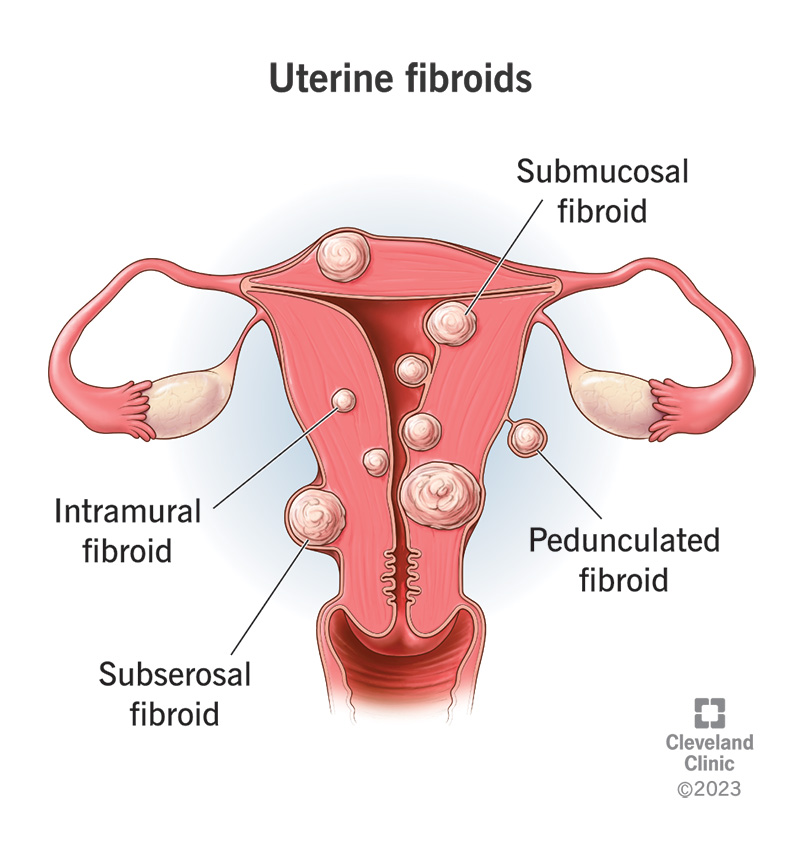
Uterine fibroids (also called leiomyomas) are growths made of muscle and tissue that form in or on the wall of your uterus. These growths are usually not cancerous (benign) and are the most common noncancerous tumor in females.
Advertisement
Cleveland Clinic is a non-profit academic medical center. Advertising on our site helps support our mission. We do not endorse non-Cleveland Clinic products or services. Policy
Uterine fibroids can cause a variety of symptoms like pain and heavy, irregular vaginal bleeding. Sometimes, a person has no symptoms and is unaware they have fibroids. Treatment for fibroids typically depends on your symptoms.
Fibroids can grow as a single nodule (one growth) or in a cluster. Clusters of fibroids can range in size from 1 millimeter to more than 20 centimeters (8 inches) in diameter or even larger. For comparison, fibroids can be as small as a seed or get as large as a watermelon. These growths can develop within the wall of your uterus, inside the main cavity of your uterus or on the outer surface of your uterus.
There are different types of uterine fibroids depending on where they’re located and how they attach. Specific types of uterine fibroids include:
Advertisement
Fibroids are a very common type of growth. Approximately 40% to 80% of people with a uterus have fibroids. They occur most often in people between 30 and 50 years old. People who haven’t had their first period (menstruation) yet typically don’t have fibroids. They’re also less common in people who’ve entered menopause.
Most small fibroids don’t cause any symptoms and don’t require treatment other than regular observation by your healthcare provider. Larger fibroids can cause you to experience a variety of symptoms, including:
The symptoms of uterine fibroids usually stabilize or go away after you’ve gone through menopause because hormone levels decline within your body.
There are a variety of feelings you might experience if you have fibroids. If you have small fibroids, you may feel nothing at all and not even notice they’re there. For larger fibroids, however, you can experience discomfort and pain. Fibroids can cause you to feel back pain, stabbing pains in your abdomen and even pain during sex.
Fibroids are typically rounded growths that look like smooth bumps. In some cases, they can be attached with a thin stem, giving them a mushroom-like appearance.
The exact cause is unknown, but healthcare providers believe the hormones estrogen and progesterone play a role. Most fibroids happen in people of reproductive age. Studies show that fibroids tend to grow when hormone levels are higher (like during pregnancy) and shrink when hormone levels are low (like during the transition to menopause).
There are several risk factors that can play a role in your chances of developing fibroids. These can include:
Most uterine fibroids don’t cause serious complications. However, the most common complications of fibroids are:
Anemia is a condition that happens when your body doesn’t have enough healthy red blood cells to carry oxygen to your organs. Anemia can happen to people who have frequent or extremely heavy periods. Fibroids can cause your periods to be very heavy or for you to even bleed between periods. Talk to your healthcare provider if you’re experiencing symptoms of anemia while you have fibroids.
Advertisement
In many cases, a healthcare provider discovers uterine fibroids during a pelvic exam. Quite often, heavy bleeding and other related symptoms may alert your provider to consider fibroids as a part of the diagnosis. There are several tests that can be done to confirm fibroids and determine their size and location. These tests can include:
Advertisement
Treatment for uterine fibroids can vary depending on the size, number and location of the fibroids, as well as what symptoms they’re causing. If you aren’t experiencing any symptoms from your fibroids, you may not need treatment. Small fibroids can often be left alone. Some people never experience any symptoms or have any problems associated with fibroids. In these cases, your provider may recommend monitoring your fibroids with pelvic exams or ultrasounds.
If you’re experiencing symptoms from your fibroids — including anemia from excess bleeding, moderate to severe pain or urinary tract and bowel problems — you’ll need treatment to help. Your treatment plan will depend on a few factors, including:
The best treatment option for you will also depend on your plans for pregnancy in the future. Talk to your healthcare provider about your fertility goals when discussing treatment options. Treatment options for uterine fibroids can include:
Advertisement
It’s important to talk to your healthcare provider about any medication you take. Always consult your provider before starting a new medication to discuss any possible complications.
There are several factors to consider when talking about the different types of surgery for fibroid removal. Not only can the size, location and number of fibroids influence the type of surgery, but your wishes for future pregnancies can also be an important factor when developing a treatment plan. Some surgical options preserve your uterus and allow you to become pregnant in the future, while other options can either damage or remove your uterus.
Myomectomy is a procedure that allows your provider to remove the fibroids. There are several types of myomectomy. The type of procedure that may work best for you will depend on where your fibroids are located, how big they are and how many you have. The types of myomectomy procedures to remove fibroids can include:
If you aren’t planning future pregnancies, there are additional options your healthcare provider may recommend. These options can be very effective, but they typically prevent future pregnancies. These can include:
There can be risks to any treatment. Medications can have side effects and some may not be a good fit for you. Talk to your healthcare provider about all medications you may be taking for other medical conditions and your complete medical history before starting a new medication. If you experience side effects after starting a new medication, call your provider to discuss your options.
There are also risks involved in surgical treatment of fibroids. Any surgery places you at risk of infection and bleeding, and includes risks associated with anesthesia. An additional risk of fibroid removal surgery can involve future pregnancies. Some surgical options can prevent future pregnancies. Myomectomy is a procedure that only removes the fibroids, allowing for future pregnancies. However, people who’ve had a myomectomy may need to deliver future babies via C-section.
There isn’t a definitive size of a fibroid that would automatically mean it needs to be removed. Your healthcare provider will determine if surgery is necessary based on your symptoms. For example, fibroids the size of a small marble may still cause excessive bleeding depending on their location. Your healthcare provider can discuss symptoms that might require surgical intervention.
If you don’t have symptoms, treatment for fibroids may not be necessary. If you have large fibroids or your symptoms are causing you pain and discomfort, getting treatment may be the best option. Only you and your provider can decide the best course of treatment or if treatment is necessary.
Yes, you can get pregnant if you have uterine fibroids. If you already know you have fibroids when you get pregnant, your healthcare provider will work with you to develop a monitoring plan for the fibroids. During pregnancy, your body releases elevated levels of hormones. These hormones support the pregnancy. However, they can also cause your fibroids to get bigger. Large fibroids can cause the following problems during pregnancy:
Fibroids can actually shrink or grow over time. They can change size suddenly or steadily over a long period of time. This can happen for a variety of reasons, but in most cases, this change in fibroid size is linked to the amount of hormones in your body. When you have high levels of hormones in your body, fibroids can get bigger. This can happen at specific times in your life, like during pregnancy. Fibroids can also shrink when your hormone levels drop. This is common after menopause. Often, your symptoms can also get better after menopause.
Fibroids can shrink in some people after menopause. This happens because of a decrease in hormones. When the fibroids shrink, your symptoms may go away. Small fibroids may not need treatment if they aren’t causing any symptoms.
Feeling tired isn’t a common symptom of uterine fibroids. However, it’s a common symptom of anemia, which can occur when you lose too much blood. Talk to a healthcare provider if you feel excessively tired so they can determine the cause.
Yes, it’s possible that large uterine fibroids can cause your stomach to bloat or appear larger.
In general, you can’t prevent fibroids. You can reduce your risk by maintaining a healthy body weight and getting regular pelvic exams. If you have small fibroids, develop a plan with your healthcare provider to monitor them.
Contact your healthcare provider if you have symptoms of uterine fibroids, such as:
Because these symptoms are common symptoms of other gynecological conditions, discussing them with a healthcare provider is important.
It’s extremely rare for a fibroid to go through changes that transform it into a cancerous (malignant) tumor. In fact, 1 out of 350 people with fibroids will develop cancer. There’s no test that’s 100% predictive in detecting rare fibroid-related cancers. However, people who have rapid growth of uterine fibroids or fibroids that grow after menopause should be evaluated immediately.
Uterine fibroids are a common condition that many people experience during their lives. In some cases, fibroids are small and don’t cause any symptoms at all. Other times, fibroids can cause challenging symptoms like pain and heavy vaginal bleeding. Talk to your healthcare provider if you experience any kind of discomfort or pain. Fibroids are treatable.
Uterine fibroids can disrupt your life. At Cleveland Clinic, our experts help create a treatment plan that works for you and fits into your busy life.
Last reviewed on 07/05/2023.
Learn more about the Health Library and our editorial process.

source

Posted on Leave a comment

Man arrested in connection with cyber-attack on airports – bbc.com

A person has been arrested in connection with a cyber-attack which has caused days of disruption at several European airports including Heathrow.
The National Crime Agency (NCA) said a man in his forties was arrested in West Sussex "as part of an investigation into a cyber incident impacting Collins Aerospace".
There have been hundreds of flight delays after Collins Aerospace baggage and check-in software used by several airlines failed, with some boarding passengers using pen and paper.
"Although this arrest is a positive step, the investigation into this incident is in its early stages and remains ongoing," said Paul Foster, head of the NCA's national cyber crime unit.
The man was arrested on Tuesday evening on suspicion of Computer Misuse Act offences and has been released on bail.
The BBC has seen an internal memo sent to airport staff at Heathrow about the difficulties software provider Collins Aerospace is having bringing their check-in software back online.
The US company appears to be rebuilding the system again after trying to relaunch it on Monday.
BBC News has contacted Collins Aerospace for comment.
The US firm has not put a timeline on when it will be ready and is urging ground handlers and airlines to plan for at least another week of using manual workarounds.
At Heathrow, extra staff have been deployed in terminals to help passengers and check-in operators but flights are still experiencing delays.
On Monday, the EU's cyber-security agency said ransomware had been deployed in the attack.
Ransomware is often used to seriously disrupt victims' systems and a ransom is demanded in cryptocurrency to reverse the damage.
These types of attacks are an issue for organisations around the country, with organised cyber-crime gangs earning hundreds of millions of pounds from ransoms every year.
The attack against US software maker Collins Aerospace was discovered on Friday night and resulted in disruption across many European airports, including in Brussels, Dublin and Berlin.
Flights were cancelled and delayed throughout the weekend, with some airports still experiencing effects of the delays into this week.
"The vast majority of flights at Heathrow are operating as normal, but we encourage passengers to check the status of their flight before travelling to the airport," Heathrow Airport said in a statement on its website.
Berlin Airport said on Wednesday morning "check-in and boarding are still largely manual", which would result in "longer processing times, delays, and cancellations by airlines".
While Brussels Airport advised passengers to check in online before arriving at the airport.
Cyber-attacks in the aviation sector have increased by 600% over the past year, according to a report by French aerospace company Thales.
Sign up for our Tech Decoded newsletter to follow the world's top tech stories and trends. Outside the UK? Sign up here.
A former engineer speaks to the BBC as the car maker extends its shutdown following a cyber attack.
Investigators say the scheme could have shut down the cellular network in New York City.
Parents of a worker from Solihull say he has just moved house as the firm extends a production pause.
The 13-year-old boy was questioned by security officials on landing and sent back to Kabul on the same flight.
Matt Thomas says the decision would bring greater connectivity for the island.
Copyright 2025 BBC. All rights reserved. The BBC is not responsible for the content of external sites. Read about our approach to external linking.

 

source

Posted on Leave a comment

After mechanical challenges, UN says Trump's team to blame for nonworking escalator and teleprompter – ABC News – Breaking News, Latest News and Videos

President Donald Trump used an inoperable escalator and a defective teleprompter at the United Nations to paint the global body as dysfunctional
UNITED NATIONS — President Donald Trump broke from his prepared remarks at the United Nations on Tuesday to bemoan an inoperable escalator and a defective teleprompter, using the incidents to portray the global body as dysfunctional.
“All I got from the United Nations was an escalator that on the way up stopped right in the middle,” he mused, chopping the air with his hand.
But it turns out the cause was closer to Trump.
Stephane Dujarric, the U.N. spokesman, said a videographer from the U.S. delegation who ran ahead of him triggered the stop mechanism at the top of the escalator.
“The safety mechanism is designed to prevent people or objects accidentally being caught and stuck in or pulled into the gearing,” Dujarric said in a statement. “The videographer may have inadvertently triggered the safety function.”
As he began his speech, Trump also noted that the teleprompter wasn't working. He joked that whoever was running the teleprompter “is in big trouble.”
A U.N. official speaking on condition of anonymity because of the sensitivity of the issue contributed that one to his side as well, saying the White House was operating the teleprompter for the president.
Regardless of the cause, it's not unusual for escalators at the UN to stop working, as staff and visitors know quite well.
In recent months, U.N. offices in New York and Geneva have intermittently turned off elevators and escalators as part of steps to save money because of a “liquidity crisis” at the world body.
That’s due in part to delays in funding from the United States, which is the top donor of the world body.
24/7 coverage of breaking news and live events

source

Posted on Leave a comment

Why Was XRP’s ETF Debut So Disappointing? Traders Waited So Long for the Price Pop That Never Came – TipRanks

XRP’s long-awaited ETF launch fizzled into a selloff, wiping out $11 billion in value as whales and institutions dumped into record trading volumes.
XRP (XRP-USD) collapsed on one of its heaviest trading days of the year, plunging from $2.87 to $2.77 as the REX-Osprey ETF (XRPR) made its U.S. debut. Instead of sparking a breakout rally, institutions and whales used the launch to unload positions.

The sell-the-news cascade erased more than $11 billion in market value. Prices closed at $2.83, leaving XRP locked in a bearish downtrend channel rather than breaking higher.
The debut was historic in one respect. The REX-Osprey fund recorded $37.7 million in first-day trading volume, making it the largest ETF launch of 2025. But instead of excitement, the record volume was dominated by dumping, not buying.
On-chain data showed whale wallets moved more than $812 million worth of XRP during the session. At the same time, crypto derivatives saw $1.7 billion in liquidations, with nearly 90% coming from long positions.
The flash crash at 06:00 GMT drove price from $2.87 to $2.77 in minutes on 656 million tokens traded, six times the daily average. Recovery attempts fizzled quickly as resistance at $2.87 hardened into a ceiling.
By the close, XRP was stuck at $2.83, leaving traders to wonder whether the ETF launch turned what was supposed to be a breakout into a breakdown.
The charts look just as rough as the tape. A clear downtrend channel has emerged with lower highs at $2.856 and lower lows at $2.83. Momentum is skewed bearish, and technical analysts warn that failure to hold $2.82 could open the door to $2.75–$2.70 in the near term.
Support at $2.77, tested during the flash crash, is now the critical level to watch. If sellers force another break, traders may face a deeper slide. Resistance remains firmly stacked at $2.87, leaving little room for upside unless new ETF inflows stabilize price action.
XRP’s struggle comes as broader crypto markets shift back toward Bitcoin. BTC dominance surged to 57.7% during the session as capital flowed out of altcoins.
Meanwhile, macro headwinds continue to weigh on sentiment. Inflation cooled to 2.18% in September, raising bets on a 50-basis-point Fed rate cut before year-end. But traders appear to be favoring Bitcoin exposure over riskier altcoins while monetary policy hangs in the balance.
The focus now is whether day-two ETF flows can stem the bleeding or whether the debut will be remembered as a pure sell-the-news event. Whales remain under the microscope after moving nearly a billion dollars in tokens during launch day.
All eyes are also on the $2.77 support floor. If it holds, XRP may consolidate around $2.80 before attempting another move higher. If it cracks, bears will target $2.75 and below.
At the moment, XRP investors are left with a bitter truth. The ETF launch that was supposed to spark fireworks instead delivered one of the token’s ugliest trading days of 2025.
At the time of writing, XRP is sitting at $2.8776.
Disclaimer & DisclosureReport an Issue

source

Posted on Leave a comment

Huntington's disease successfully treated for first time – bbc.com

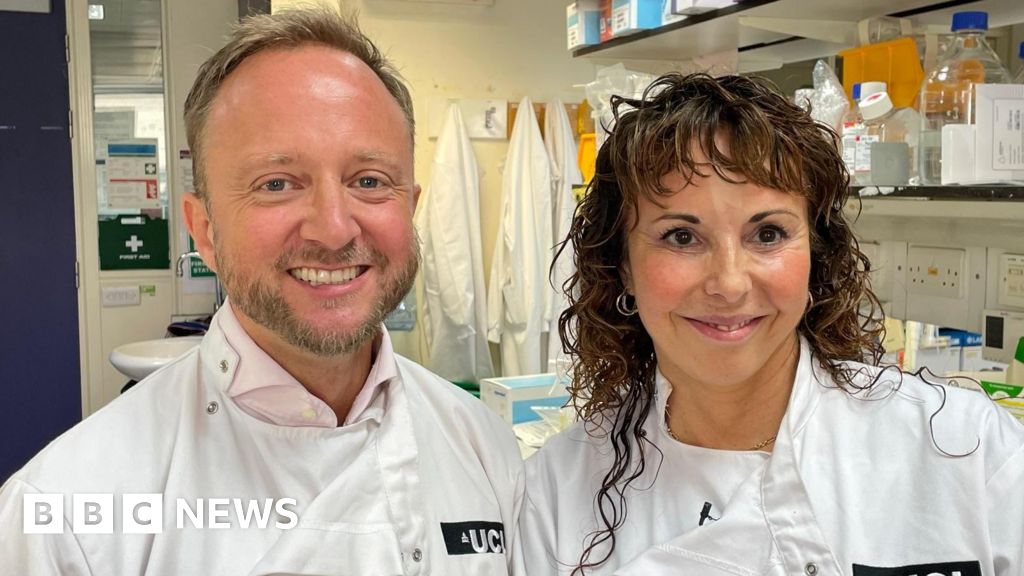
One of the cruellest and most devastating diseases – Huntington's – has been successfully treated for the first time, say doctors.
The disease runs through families, relentlessly kills brain cells and resembles a combination of dementia, Parkinson's and motor neurone disease.
An emotional research team became tearful as they described how data shows the disease was slowed by 75% in patients.
It means the decline you would normally expect in one year would take four years after treatment, giving patients decades of "good quality life", Prof Sarah Tabrizi told BBC News.
The new treatment is a type of gene therapy given during 12 to 18 hours of delicate brain surgery.
The first symptoms of Huntington's disease tend to appear in your 30s or 40s and is normally fatal within two decades – opening the possibility that earlier treatment could prevent symptoms from ever emerging.
Prof Tabrizi, director of the University College London Huntington's Disease Centre, described the results as "spectacular".
"We never in our wildest dreams would have expected a 75% slowing of clinical progression," she said.
None of the patients who have been treated are being identified, but one was medically retired and has returned to work. Others in the trial are still walking despite being expected to need a wheelchair.
Treatment is likely to be very expensive. However, this is a moment of real hope in a disease that hits people in their prime and devastates families.

Huntington's runs through Jack May-Davis' family. He has the faulty gene that causes the disease, as did his dad, Fred, and his grandmother, Joyce.
Jack said it was "really awful and horrible" watching his dad's inexorable decline.
The first symptoms appeared in Fred's late 30s, including changes in behaviour and the way he moved. He eventually needed 24/7 palliative care before he died at the age of 54, in 2016.
Jack is 30, a barrister's clerk, newly engaged to Chloe and has taken part in research at UCL to turn his diagnosis into a positive.
But he'd always known he was destined to share his father's fate, until today.
Now he says the "absolutely incredible" breakthrough has left him "overwhelmed" and able to look to a future that "seems a little bit brighter, it does allow me to think my life could be that much longer".

Huntington's disease is caused by an error in part of our DNA called the huntingtin gene.
If one of your parents has Huntington's disease, there's a 50% chance that you will inherit the altered gene and will eventually develop Huntington's too.
This mutation turns a normal protein needed in the brain – called the huntingtin protein – into a killer of neurons.
The goal of the treatment is to reduce levels of this toxic protein permanently, in a single dose.
The therapy uses cutting edge genetic medicine combining gene therapy and gene silencing technologies.
It starts with a safe virus that has been altered to contain a specially designed sequence of DNA.
This is infused deep into the brain using real-time MRI scanning to guide a microcatheter to two brain regions – the caudate nucleus and the putamen. This takes 12 to 18 hours of neurosurgery.
The virus then acts like a microscopic postman – delivering the new piece of DNA inside brain cells, where it becomes active.
This turns the neurons into a factory for making the therapy to avert their own death.
The cells produce a small fragment of genetic material (called microRNA) that is designed to intercept and disable the instructions (called messenger RNA) being sent from the cells' DNA for building mutant huntingtin.
This results in lower levels of mutant huntingtin in the brain.

Results from the trial – which involved 29 patients – have been released in a statement by the company uniQure, but have not yet been published in full for review by other specialists.
The data showed that three years after surgery there was an average 75% slowing of the disease based on a measure which combines cognition, motor function and the ability to manage in daily life.
The data also shows the treatment is saving brain cells. Levels of neurofilaments in spinal fluid – a clear sign of brain cells dying – should have increased by a third if the disease continued to progress, but was actually lower than at the start of the trial.
"This is the result we've been waiting for," said Prof Ed Wild, consultant neurologist at the National Hospital for Neurology and Neurosurgery at UCLH.
"There was every chance that we would never see a result like this, so to be living in a world where we know this is not only possible, but the actual magnitude of the effect is breathtaking, it's very difficult to fully encapsulate the emotion."
He said he was "a bit teary" thinking about the impact it could have on families.
The treatment was considered safe, although some patients did develop inflammation from the virus that caused headaches and confusion that either resolved or needed steroid treatment.
Prof Wild anticipates the therapy "should last for life" because brain cells are not replaced by the body in the same manner as blood, bone and skin are constantly renewed.
Approximately 75,000 people have Huntington's disease in the UK, US and Europe with hundreds of thousands carrying the mutation meaning they will develop the disease.
UniQure says it will apply for a licence in the US in the first quarter of 2026 with the aim of launching the drug later that year. Conversations with authorities in the UK and Europe will start next year, but the initial focus is on the US.
Dr Walid Abi-Saab, the chief medical officer at uniQure, said he was "incredibly excited" about what the results mean for families, and added that the treatment had "the potential to fundamentally transform" Huntington's disease.
However, the drug will not be available for everyone due to the highly complex surgery and the anticipated cost.
"It will be expensive for sure," says Prof Wild.
There isn't an official price for the drug. Gene therapies are often pricey, but their long-term impact means that can still be affordable. In the UK, the NHS does pay for a £2.6m-per-patient gene therapy for haemophilia B.
Prof Tabrizi says this gene therapy "is the beginning" and will open the gates for therapies that can reach more people.
She paid tribute to the "truly brave" volunteers who took part in the trial, saying she was "overjoyed for the patients and families".
She is already working with a group of young people who know they have the gene, but don't yet have symptoms – known as stage zero Huntington's – and is aiming to do the first prevention trial to see if the disease can be significantly delayed or even stopped completely.
A Guernsey pharmacist says there is "no established link" between the pain medication and autism.
The inquiry into the government's handling of the pandemic has heard from politicians, civil servants, experts and bereaved families.
Timmy Mallett is fronting a mental health campaign, which builds benches for people to sit and talk.
Children aged two and three-years-old can received the flu nasal spray in pharmacies for the first time from October 1.
University of Sheffield researchers find 96% of households which buy the drinks also purchase alcoholic ones.
Copyright 2025 BBC. All rights reserved. The BBC is not responsible for the content of external sites. Read about our approach to external linking.
 

source

Posted on Leave a comment

Price of 1 Pi Network (PI) in Indonesia Today (9/24/25) – Pintu

Jakarta, Pintu News – The price of 1 Pi Network in Indonesia today, September 24, 2025, is recorded stable at around Rp4,692 per coin, reflecting the community’s high enthusiasm for the project.
Pi Network is not only known for its smartphone mining innovations, but also for inspiring new projects such as STRX, which combines mobile mining with the Web3 social network.
In addition, Pi Network’s global influence is expanding with various international community gatherings, including an important agenda in Seoul that strengthens its position in the Asian cryptocurrency landscape.
The chart above shows the price movement of Pi Network (PI) in the daily time frame (1D) based on CoinMarketCap data.
The current price of PI is listed at $0.2814, up 3.43% in the last 24 hours. On the candlestick chart, there was a period of consolidation where the price moved flat with relatively balanced red and green candles. However, towards the morning, there was a significant spike with several long green candles, signaling a fairly strong increase in buying volume.
Trading volume in the last 24 hours reached $65.84 million, although it was down 60.63% compared to the previous day. The market capitalization of PI is now in the range of $2.3 billion with a circulating supply of about 8.19 billion PI out of a maximum total of 100 billion PI.
Technically, the candlestick pattern shows a new buying pressure after a downward phase. However, the price was stuck in the $0.282 area, which could be a short-term resistance level. If successfully broken, PI has the potential to continue its uptrend. Conversely, if selling pressure increases, the price could return to test support in the range of $0.270-$0.275.
Also read: 5 Coin Memes That Have a Bright Future According to ChatGPT
Pi Network (PI) is known as one of the cryptocurrency projects that changed the way people viewed mining. By promoting the concept of mining through smartphones, Pi has proven that mining digital assets does not have to be complicated or require expensive devices. This approach has attracted millions of users who want to be directly involved in the blockchain world without technical barriers.
According to Coinfomania, inspired by this success, STRX was born, a new project that combines mobile mining with the Web3 social network. STRX aims to create a platform where users can mine tokens, interact socially, and earn rewards using just one app. As such, STRX continues the vision of Pi Network but with more features.
Also read: 3 Altcoins that Crypto Whale Collected This Week
Pi Network continues to expand its global reach. On September 22, 2025, co-founders Nicolas Kokkalis and Chengdiao Fan attended a community meeting in Seoul, South Korea. The event was attended by hundreds of Pioneers who discussed the future development of Pi, from mainnet upgrades, protocol upgrades, to the adoption of AI-based onboarding.
The meeting coincided with the start of Korea Blockchain Week, organized by local ambassador Zoe and lead advisor Stephanie Moore. Discussions highlighted improvements to the KYC process, the development of the latest testnet, and the broader vision of Web3. The founders emphasized that Pi is not just a cryptocurrency, but a decentralized ecosystem where users act as both contributors and owners.
That’s the latest information about crypto. Follow us on Google News to get the latest crypto news about crypto projects and blockchain technology. Also, learn crypto from scratch with complete discussion through Pintu Academy and stay up-to-date with the latest crypto market such as bitcoin price today, xrp coin price today, dogecoin and other crypto asset prices through Pintu Market.
Enjoy an easy and secure crypto trading experience by downloading Pintu crypto app via Google Play Store or App Store now. Also, get a web trading experience with various advanced trading tools such as pro charting, various types of order types, and portfolio tracker only at Pintu Pro.
*Disclaimer
This content aims to enrich readers’ information. Pintu collects this information from various relevant sources and is not influenced by outside parties. Note that an asset’s past performance does not determine its projected future performance. Crypto trading activities have high risk and volatility, always do your own research and use cold cash before investing. All activities of buying and selling bitcoin and other crypto asset investments are the responsibility of the reader.
Reference:

source