In Varanasi, one of the holiest cities for Hindus, an old debate is stirring again: should a historical mosque be reconverted into a temple on the grounds that a temple existed on the same site before the mosque was built?
At the heart of Varanasi lies the Gyanvapi mosque, which, according to the historian Audrey Truschke, the sixth Mughal Emperor Aurangzeb built in 1669 CE after bringing down the preexisting Vishwanath temple. It is one of the holiest sites in Hinduism, and is particularly sacred to Shiva.
Upon the recent consecration of the Ram Mandir in Ayodhya, built atop the ruins of a Mughal mosque, Hindu activists are now seeking to restore the site of the Gyanvapi mosque to Hindu worship. A court has recently granted Hindu petitioners the right to worship in the sealed basement of the mosque, which could be a precursor to the conversion of the entire site into a temple.
Political argument
One of the most important questions surrounding the Gyanvapi mosque’s origin is whether Aurangzeb was motivated by religious bigotry, or—as is now fashionable to argue—by political reasons. Because of the high stakes involved, this is not merely an academic question. For if the emperor’s actions were guided by politics rather than religious fervour, then any attempt to build a Hindu temple on its site seems unfair because a political reason could be justified in a way that a religious one could not.
Did Aurangzeb destroy Hindu temples primarily for political reasons?
A classical example of this argument can be found in Truschke’s book, Aurangzeb: The Life and Legacy of India’s Most Controversial King. In it, she writes: “of the tens of thousands of Hindu and Jain temples located within Mughal domains, most, although not all, still stood at the end of Aurangzeb’s reign,” adding that “political events incited Aurangzeb.” Historians Catherine B Asher and Cynthia Talbot write in India Before Europe that, “for example, the…temple in Mathura…was destroyed in reaction to some serious riots in Mathura.”
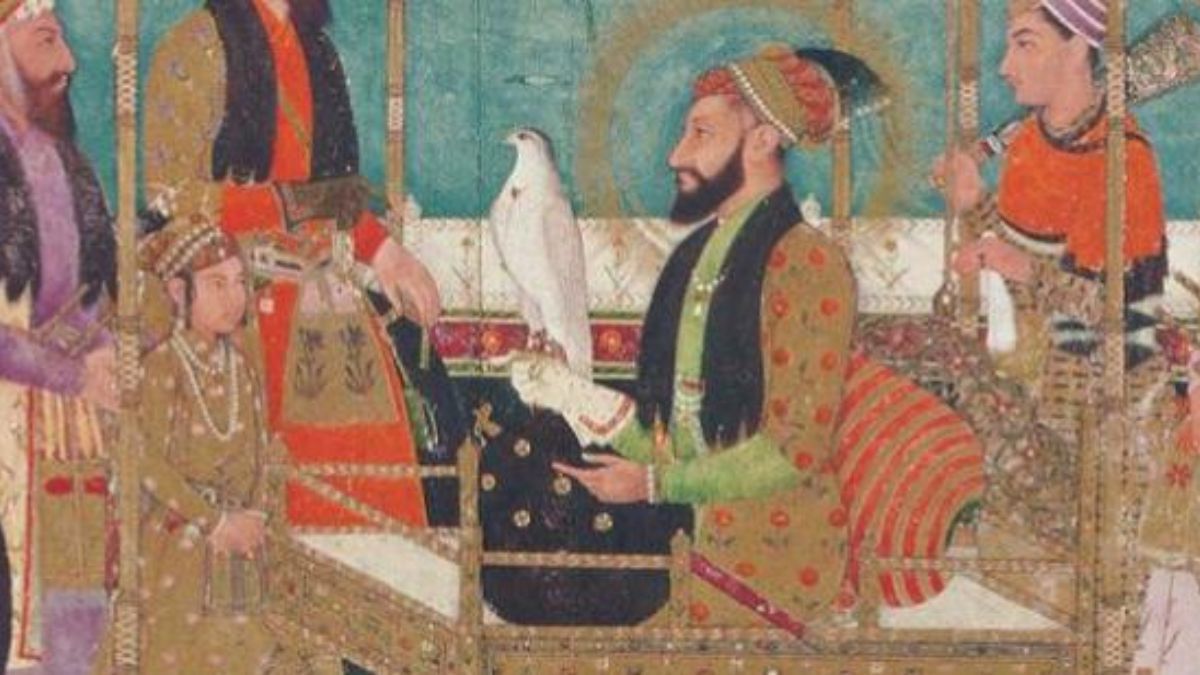
There are several problems with this argument, however. One issue is that it ascribes to Aurangzeb motives that are not even his own,self-professed ones. While there may well have been a political subtext intended to demonstrate the dominance of the Mughal polity and the polity’s religion, Aurangzeb himself is reported in a contemporary text, the Maasir-i-Alamgiri, to have ordered the demolition of the temple in Varanasi due to his eagerness “to establish Islam” and because the “misbelievers used to teach their false books” there. This conforms to the well-known image of Aurangzeb as overly pious to the point of bigotry, a person who did not share the high regard of his ancestor, the Emperor Akbar, for Hinduism and other religions of India.
Therefore, it is quite possible that Aurangzeb used local rebellions and disturbances as a justification to not only make a political point, but a religious one, by tearing down and appropriating some of the holiest sites in Hinduism. After all, the message that was sent by doing so was much stronger than demolishing thousands of small, rural shrines that were not in any way prominent.
Aurganzeb’s actions would have been legitimate within the context of the Hanafi madhhab or tradition of Islamic law, dominant in both the Mughal and Ottoman empires. As the Ottoman Empire expanded into the Christian Balkans, many large churches were converted into mosques. The Ottoman Sultan, Mehmed II, converted the premier Byzantine Church, the Hagia Sophia, into a mosque in 1453 CE, an action which Hanafi doctrine permitted after a conquest. However, the Hanafi doctrine also protects property rights after a peaceful surrender.
Also read: There is a whole ‘Aurangzeb Industry’ taking shape. Let’s discuss it on four counts
Bigotry was evident
Regardless of whether the conquest in Varanasi occurred during the Mughal Empire’s initial expansion or Aurganzeb’s suppression of various local rebellions, the demolition of the Vishwanath temple was intended as both an act of religious triumphalism and a demonstration of political supremacy in an era where these were not different things. In both the Mughal and Ottoman empires, conquered Hindus and Christians continued to practise their religions and maintain their temples and churches. But the appropriation of important sacred spots was a symbol of the new dominant religious and political order of the conquerors and a message to the conquered about their subordinate place in the public sphere.
Aurangzeb ruled the Mughal Empire for almost 50 years. One cannot remain in power that long without having an understanding of realpolitik and a survival instinct. In an empire so large, much of it loosely held by local subordinates and Hindu Rajputs, Aurangzeb could hardly have destroyed every temple, or prevented the construction of new ones, nor could have tried to when he needed the Rajputs for his administration and campaigns in the Deccan.
Hindu scriptures have different lists about which sites are particularly holy to Hindus, but there is general agreement that these include the sapta puri, or seven cities of Mathura, Ayodhya, Dwarka, Haridwar, Kanchipuram, Ujjain, and Varanasi. Other sources also speak of twelve jyotirlingas, or sites holy to Shiva, including Varanasi. Aurangzeb built mosques on top of temples at many of these sites, including Somnath, Mathura, and Varanasi. If his motives were purely political, it hardly seems reasonable to destroy some of the most sacred Hindu sites—instead of less important local sites—over riots or rural rebellions. That these sites were very important to Hindus is evidenced by the fact that newer Hindu temples have since been constructed adjacent to the now-appropriated sites in Mathura and Varanasi.
The very fact that the temples that were targeted included the ones at places like Mathura and Varanasi point to a motive that transcends mere politics and suggests an element of religious fervour. Of course, Aurangzeb’s bigotry was tempered by realpolitik, but that does not negate the bigotry behind his actions. As a powerful ruler, he was able to both temper and express this in different circumstances.
Akhilesh Pillalamarri is an international affairs analyst, journalist, and lawyer. He tweets at @AkhiPill. Views are personal.
(Edited by Prashant)


