
Posted on — Leave a comment

XRP Price: Why Bitwise Thinks This ETF Will Hit $1 Billion Fast – CoinCentral

XRP is gaining attention as asset manager Canary Capital moves forward with plans to launch a spot XRP ETF. The firm submitted an updated S-1 filing that removes the delaying amendment from its application.
🚨SCOOP: @CanaryFunds has filed an updated S-1 for its $XRP spot ETF, removing the “delaying amendment” that stops a registration from going auto-effective and gives the @SECGov control over timing.
This sets Canary’s $XRP ETF up for a launch date of November 13, assuming the… pic.twitter.com/MKvEN23t5P
— Eleanor Terrett (@EleanorTerrett) October 30, 2025

This change allows the registration to go auto-effective. Crypto journalist Eleanor Terrett reports the ETF could launch on November 13 if Nasdaq approves the accompanying 8-A filing.
The timeline depends partly on the U.S. government’s reopening. If the SEC completes its review without objections, the launch could happen sooner. Additional staff comments could push the date back.
SEC Commissioner Paul S. Atkins recently indicated openness to companies using the auto-effective route during the government shutdown. Bloomberg ETF strategist Eric Balchunas noted that XRP filings lacked the same back-and-forth with the SEC that Solana had.
Canary Capital previously launched Solana and HBAR ETFs this week using similar 8-A filings. These filings allow ETFs to become effective within 20 days of application automatically.
The Rex-Osprey XRP ETF launched six weeks ago and recently crossed $100 million in assets. It operates under the ’40 Act structure, classifying it as an investment company rather than a standard commodity trust.
Bitwise Chief Investment Officer Matt Hougan believes an XRP ETF could become a billion-dollar fund within its first few months. He told DL News that XRP’s dedicated investor base could drive large inflows.
“The XRP Army will smash-buy the ETF” –@Matt_Hougan
Says spot xrp ETF will “easily become” a billion-dollar fund w/in first few months.
“Flows will dramatically exceed what people are expecting.”
Agree.
via @elpedrosolimano pic.twitter.com/xH4U58OVml
— Nate Geraci (@NateGeraci) October 29, 2025

Hougan said many people underestimate XRP because the crypto community is bearish on it. He pointed to the XRP Army as a group that loves the asset and could drive flows.
Around 20 XRP ETF applications are pending with the U.S. SEC. Bitcoin and Solana each have 23 filings, while Ethereum has 16 pending applications.
XRP is currently trading in the $2.50 to $2.70 range. Analysts tracking Elliott Wave counts suggest XRP may be in the early phase of Wave 3, which historically triggers major price moves.
[ $XRP ]
This one is for the XRP community, where I see some gurus preaching for the end of the cycle.
Bros, it is hard to see this range as anything less than a long reaccumulation after November's surge. In Elliott wave terms: an ABC with a sharp ending in the C wave. Very… pic.twitter.com/5GnnVTid3i
— Osemka (@Osemka8) October 30, 2025

One recently launched XRP vehicle has pulled in over $115 million in assets. Trading volumes in related futures markets have reached billions.
A firm is planning to raise over $1 billion for a publicly-traded entity focused on XRP accumulation. This type of buying could lock up supply and create scarcity dynamics.
Support near the $2.50 to $2.60 band remains intact. If XRP breaks and holds above $2.67 to $2.70, momentum could accelerate.
Some analysts see divergence between price and momentum indicators. Elevated selling pressure from large holders suggests short-term pullbacks are possible unless volume picks up.
Market watchers are monitoring two key levels. A sustained breakout above $2.70 could open a path to $3 and higher. A breakdown below $2.50 might signal consolidation.
Headlines around ETF approvals and corporate treasury purchases will likely influence XRP’s next moves. Real-world asset activity on the XRP Ledger also remains a focus.
📈 Futures & Crypto Trader 🔍 Sharing charts, strategies, & mindset tips to help you level up 🚨 Not Financial Advice Follow on X @Pro_Trader_Edge
TLDR Solana (SOL) dropped 8% on Thursday, falling below $180 and erasing all year-over-year gains,…


Never Miss Another Opportunity.
Get hand selected news & info from our Crypto Experts so you can make educated, informed decisions that directly affect your crypto profits!
Type above and press Enter to search. Press Esc to cancel.
BC Game Crypto: 100% Bonus & 400 Free Casino Spins, Claim Here!

source

Posted on — Leave a comment

UXLINK Token Migration: A New Era for Crypto Asset Management – OneSafe

So the UXLINK token migration is happening. This is a big deal. The move from Arbitrum to Ethereum isn’t just about switching chains. It’s more than that. It’s an opportunity to rethink how we manage our crypto assets. This migration promises better security and connects UXLINK to a broader decentralized finance ecosystem. We’re going to break down what this means for everyone, especially for small and medium enterprises (SMEs) trying to make sense of the ever-changing crypto landscape.
The UXLINK token migration is essentially the movement of UXLINK tokens from Arbitrum One, which is a layer-2 scaling solution, to the main Ethereum blockchain. This decision was not made lightly. It’s driven by several factors. Enhanced security is one. A broader ecosystem compatibility is another. And let’s not forget the potential for increased liquidity on Ethereum’s mainnet.
Shifting to Ethereum means better access to the vast decentralized finance (DeFi) ecosystem. It aligns UXLINK with the core blockchain that many leading digital assets are built upon. This could have long-term advantages for the project and its community.
Now, let’s talk about Upbit’s role in all this. Their support for the UXLINK token swap is enormous, especially given the regulatory landscape for crypto startups. Upbit is one of South Korea’s largest cryptocurrency exchanges. Their backing gives a certain level of credibility that individual users might struggle to achieve on their own.
Here’s what Upbit’s support means:
For SMEs in Europe, the UXLINK token migration could change how they manage their crypto assets. It probably won’t cause a massive shift in their overall strategies, but there are a few indirect influences.
First, it raises security awareness. The migration shows just how important smart contract security is. European SMEs are likely to be more careful when picking blockchain platforms and tokens for their business.
Then there’s the focus on audited contracts. The move to a new, audited contract on Ethereum sets a clear precedent for recovery after a breach. SMEs may start looking for projects that have undergone thorough security audits and have solid incident response plans.
Finally, the increased reliance on established blockchains. The shift to Ethereum might reinforce the preference for assets on major, secure networks over newer or less proven platforms, especially when it comes to crucial business operations.
Upbit’s involvement in the UXLINK token swap highlights the necessity for regulatory compliance in the crypto space. This incident has prompted South Korean regulators to keep a close eye on exchanges. It encourages crypto startups to adopt more transparent practices and comply with changing regulations. This increased scrutiny is a sign of a move toward a more regulated and secure ecosystem. Startups will need to put compliance first to gain exchange support and user trust.
DAOs can take away important lessons from the UXLINK token swap when it comes to finance management and working with traditional banking systems.
For starters, they need a rapid and transparent response. DAOs must have clear plans and communication strategies to respond quickly to security incidents. They need to coordinate token swaps to restore token integrity and maintain community confidence.
Building relationships with exchanges is also key. Strong ties with exchanges and stakeholders enable a swift operational response and ensures market stability during crises.
Lastly, the need for enhanced security protocols. The UXLINK hack emphasizes the importance of solid security measures, including regular smart contract audits and proactive risk management.
The UXLINK token migration is a strategic pivot for UXLINK. It brings them closer to the Ethereum ecosystem. This move could unlock new opportunities for integration with Ethereum-based DeFi protocols, dApps, and NFT platforms. With major exchange support like Upbit, this shows the crypto market is maturing. Exchanges are now playing a crucial role in facilitating complex blockchain operations for their users.

Get started with Web3 Busineses effortlessly. OneSafe brings together your crypto and banking needs in one simple, powerful platform.
SEC's altcoin ETF decisions could reshape institutional investment strategies, enhancing liquidity and market dynamics in the crypto landscape.
The UXLINK token migration to Ethereum enhances security and accessibility for users, impacting SMEs and crypto startups in Europe.
Bitcoin's potential surge amid gold's decline raises questions. Explore the risks, market dynamics, and strategies for navigating this evolving landscape.
Begin your journey with OneSafe today. Quick, effortless, and secure, our streamlined process ensures your account is set up and ready to go, hassle-free

source

Posted on — Leave a comment

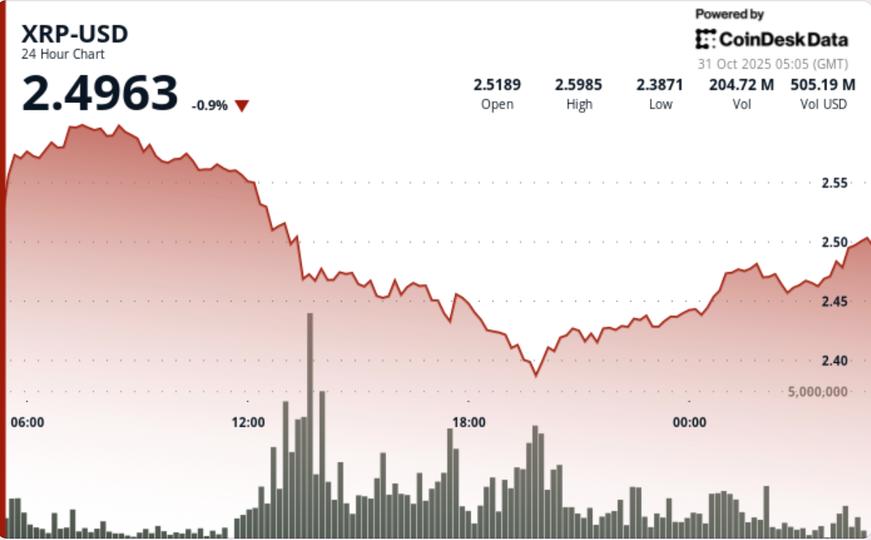
XRP Drops 5% to $2.47 as Bears Break Key Support Level – CoinDesk

XRP broke below the $2.50 support during Tuesday’s session, sliding 5% to $2.47 as institutional selling pressure accelerated across major exchanges. The breakdown confirmed a decisive shift in structure following weeks of tight consolidation, with volume and chart patterns now aligning toward a deeper corrective phase.

More For You
OwlTing: Stablecoin Infrastructure for the Future
Stablecoin payment volumes have grown to $19.4B year-to-date in 2025. OwlTing aims to capture this market by developing payment infrastructure that processes transactions in seconds for fractions of a cent.
More For You
Protect Bitcoin Exposure with Ether Shorts: Research Firm
The relative weakness in ETH is evident from host of factors, including DATs and options.
What to know:

Disclosure & Polices: CoinDesk is an award-winning media outlet that covers the cryptocurrency industry. Its journalists abide by a strict set of editorial policies. CoinDesk has adopted a set of principles aimed at ensuring the integrity, editorial independence and freedom from bias of its publications. CoinDesk is part of Bullish (NYSE:BLSH), an institutionally focused global digital asset platform that provides market infrastructure and information services. Bullish owns and invests in digital asset businesses and digital assets and CoinDesk employees, including journalists, may receive Bullish equity-based compensation.

source

Posted on — Leave a comment

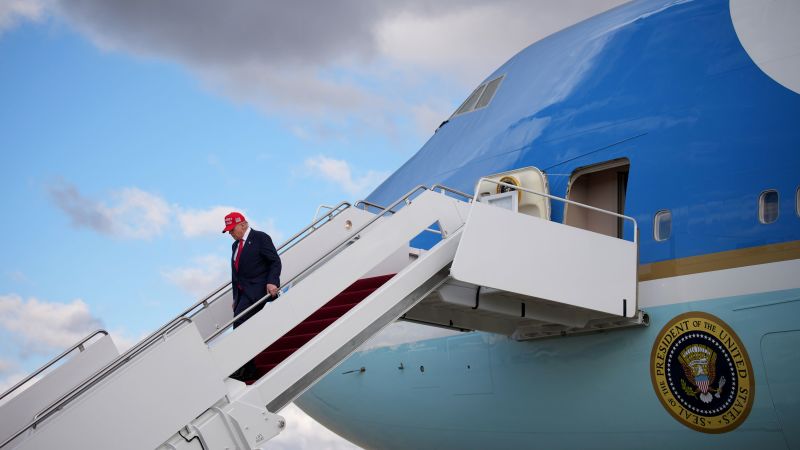
Trump calls for end of Senate filibuster to break funding stalemate – CNN

  1. Trump calls for end of Senate filibuster to break funding stalemate  CNN
  2. Trump says Senate should scrap the filibuster to end the government shutdown  AP News
  3. Trump tells Senate Republicans to use “nuclear option” to end shutdown  Axios
  4. Trump urges GOP to ‘end the shutdown’ by going nuclear on Senate filibuster  Fox News
  5. Trump calls on Republicans to use ‘nuclear option’ and get rid of Senate filibuster  The Hill

source

Posted on — Leave a comment

Strategy Reports $2.8B Profit in Q3 as Bitcoin Treasury Model Grows – CoinCentral

Strategy Inc. (NASDAQ: MSTR) posted a strong third-quarter profit of $2.8 billion for 2025, reversing a $340 million loss last year. This rise in earnings reflects the growth in Bitcoin value, as the company continues using Bitcoin as its main treasury asset. Strategy’s Bitcoin-focused model is now shaping new ways for companies to manage corporate reserves.
Strategy reported a net income of $2.78 billion for the third quarter ending September 30, 2025. This marked a major improvement from the same period last year, when the company reported a net loss of $340.2 million. Diluted earnings per share stood at $8.42, compared to a loss of $1.72 per share a year earlier.
Operating income reached $3.9 billion for the quarter. CEO Michael Saylor shared the numbers in a post on X, stating: “Strategy announces Q3 2025 results & reaffirms 2025 guidance. Q3 results: $3.9B Operating Income, $2.8B Net Income, $8.42 Diluted EPS.”
A major factor behind the earnings boost was the increase in Bitcoin’s price. Strategy’s Bitcoin holdings have grown in value as the cryptocurrency trades around $107,833. The company held 640,808 bitcoins as of October 26, purchased at a total cost of $47.44 billion. This gives an average cost of about $74,032 per bitcoin.
Strategy has adopted a model where Bitcoin serves as its main treasury reserve asset. Instead of holding traditional assets like cash or bonds, the company invests heavily in Bitcoin. As Bitcoin’s value increases, so does the company’s stock price.
This model also allows Strategy to raise capital by issuing shares. The raised funds are often used to buy more Bitcoin, forming a repeating cycle. As a result, Strategy can grow its reserves while supporting its stock performance.
Other companies are now watching Strategy’s approach. The model is gaining attention from firms looking for new ways to manage treasury assets in times of inflation and low interest rates.
New accounting rules have changed how Bitcoin is recorded in financial statements. Previously, companies could only report losses if Bitcoin’s value dropped below its purchase price. Gains could not be recognized unless the Bitcoin was sold.
The new rules now allow Strategy to record gains from Bitcoin price increases. This gives a clearer picture of the company’s real-time financial position. These changes have made the company’s quarterly results more aligned with its actual asset values.
The new system supports Strategy’s focus on Bitcoin without needing to sell assets to show profits. The model relies on holding and valuing Bitcoin over time, rather than frequent trading.
Strategy reaffirmed its full-year forecast for 2025. The company expects $34 billion in operating income and $20 billion in gains from Bitcoin. CEO Michael Saylor stated that the company will not hedge its Bitcoin holdings, showing full commitment to the current model.
Despite strong financials, Strategy’s stock has fallen 12% so far in 2025. This decline comes even though Bitcoin has gained about 14.5% in the same period. Market analysts suggest the fall may be due to concerns about valuation, dilution from stock offerings, or policy risks.
Still, Strategy’s stock rose 4% in after-hours trading following the earnings report. Investors appear to remain interested in the company’s unique model.
Kelvin Munene is a crypto and finance journalist with over 5 years of experience in market analysis and expert commentary. He holds a Bachelor’s degree in Journalism and Actuarial Science from Mount Kenya University and is known for meticulous research in cryptocurrency, blockchain, and financial markets. His work has been featured in top publications including Coingape, Cryptobasic, MetaNews, Coinedition, and Analytics Insight. Kelvin specializes in uncovering emerging crypto trends and delivering data-driven analyses to help readers make informed decisions. Outside of work, he enjoys chess, traveling, and exploring new adventures.
TLDR Western Union filed a trademark for “WUUSD” with the US Patent and Trademark Office…


Never Miss Another Opportunity.
Get hand selected news & info from our Crypto Experts so you can make educated, informed decisions that directly affect your crypto profits!
Type above and press Enter to search. Press Esc to cancel.
BC Game Crypto: 100% Bonus & 400 Free Casino Spins, Claim Here!
source

Posted on — Leave a comment

ESPN, Disney channels blacked out on YouTube TV in contract dispute – Los Angeles Times

This is read by an automated voice. Please report any issues or inconsistencies here.
More than 10 million YouTube TV customers lost access to ESPN, ABC and other Walt Disney Co. channels after contract talks broke down Thursday night in one of the largest television blackouts in recent years.
The Disney blackout was set to begin by 9 p.m. Thursday, interrupting “SportsCenter with Scott Van Pelt” on ESPN and “9-1-1: Nashville” and “Grey’s Anatomy” on ABC.
The two TV giants have been wrangling for weeks over carriage fees for Disney’s channels, including FX, Disney Jr. and National Geographic. YouTube TV — now one of the largest pay-TV services in the U.S. — has balked at Disney’s price demands, fueling the dispute that spilled beyond Thursday’s deadline for a new deal.
Without an agreement, Google-owned YouTube TV no longer had legal rights to distribute Disney’s channels.
“We know this is a frustrating and disappointing outcome for our subscribers,” a YouTube spokesperson said in a statement. “We continue to urge Disney to work with us constructively to reach a fair agreement that restores their networks to YouTube TV.”
Should the outage stretch for “an extended period,” YouTube said it would offer subscribers a $20 credit.
Hollywood Inc.
The ABC and ESPN blackout on DirecTV — affecting nearly 11 million homes — comes during a busy sports calendar with college football, the NFL and the U.S. Open tennis tournament.
The blackout highlights heightened tensions in the television industry.
Programming companies, including Disney, have sought higher fees for their channels to help offset the increased cost of sports programming, including NFL and NBA contracts.
But pay-TV providers such as YouTube have pushed back, attempting to draw a line as customers grow weary of ever-increasing monthly bills.
They don’t want to lose subscribers to a rival service or have them drop their subscriptions. More than 40 million pay-TV customer homes have cut the cord over the last decade, according to industry data.
Disney becomes the latest TV programmer to allege that Google has been throwing its weight around in contract negotiations.
People close to the Burbank entertainment giant accuse YouTube TV of refusing to pay market rates for Disney’s popular channels or accept terms accepted by other pay-TV distributors. Disney has clinched deals with six other pay-TV companies this year, including the nation’s largest channel distributors, Charter Spectrum and Comcast.
“Unfortunately, Google’s YouTube TV has chosen to deny their subscribers the content they value most by refusing to pay fair rates for our channels, including ESPN and ABC,” Disney said in a statement. “Without a new agreement in place, their subscribers will not have access to our programming, which includes the best lineup in live sports – anchored by the NFL, NBA, and college football, with 13 of the top 25 college teams playing this weekend. With a $3 trillion market cap, Google is using its market dominance to eliminate competition and undercut the industry-standard terms we’ve successfully negotiated with every other distributor.”
Hollywood Inc.
Disney’s warnings to consumers come a week before its distribution contract with YouTube TV expires as football and pro basketball get underway.
Since August, Rupert Murdoch’s Fox Corp., Comcast’s NBCUniversal and Spanish-language broadcaster TelevisaUnivision have all complained that YouTube TV was trying to use its clout to squeeze them for concessions now that YouTube TV has become so popular with consumers.
Ultimately, Fox and NBCUniversal negotiated new distribution contracts with Google without having their channels going dark.
Univision wasn’t as fortunate; its channels have been off YouTube TV for nearly a month.
YouTube TV, for its part, has alleged that Disney was the one making unreasonable demands. The San Bruno, Calif.-based platform cited recent agreements it reached with NBCUniversal and Fox..
“Last week Disney used the threat of a blackout on YouTube TV as a negotiating tactic to force deal terms that would raise prices on our customers,” YouTube TV said in a statement. “They’re now following through on that threat. … This decision directly harms our subscribers while benefiting their own live TV products, including Hulu + Live TV and Fubo.”
Both Disney’s Hulu service and Fubo compete with YouTube TV by offering packages of many of the same traditional channels.
YouTube has alleged that Disney is using the blackout to steer disaffected YouTube TV customers to Disney-owned streaming services after the Burbank company lost subscribers who canceled following the late-night comedian Jimmy Kimmel’s brief suspension last month.
Hollywood Inc.
ABC’s late-night host worried that his show was doomed. He declined to say whether this year will be his last on the Disney-owned network.
The two companies’ fraught dealings extend beyond the negotiations.
Last spring, Disney’s former distribution chief, Justin Connolly, abruptly exited to take a similar position at YouTube TV. Connolly had spent two decades at Disney and ESPN and helped devise the company’s distribution strategy. Disney sued to block the move, but a judge allowed Connolly to take his new position — putting him on the opposite side of the negotiation table.
It’s unclear how long the impasse might last.
A separate distribution fee dispute between Disney and DirecTV last year resulted in a 13-day blackout of Disney channels for customers of the El Segundo-based television provider. In 2023, another ugly tussle led to Disney channels being dropped from Charter’s Spectrum service for 10 days.
Hollywood Inc.
YouTube’s rivalry with the major studios is heating up. Disney this week sued the company after it poached an important executive.
News and sports fans might quickly notice the absence of their favorite channels.
They could miss college football on ESPN and ABC as well as a “Monday Night Football” game between the Arizona Cardinals and Dallas Cowboys.
Disney’s ABC stations, including KABC-TV in Los Angeles, and the network’s affiliate stations around the country also will be unavailable on YouTube TV.
That means viewers could miss local newscasts, “Jeopardy,” “Wheel of Fortune,” “Good Morning America” and “Jimmy Kimmel Live.”
YouTube TV launched in April 2017 for $35 a month. The package of channels now costs $82.99.

The Wide Shot brings you news, analysis and insights on everything from streaming wars to production — and what it all means for the future.
By continuing, you agree to our Terms of Service and our Privacy Policy.
Follow Us
Meg James is a senior entertainment industry writer for the Los Angeles Times. She was the lead reporter for The Times’ coverage of the deadly “Rust” shooting on a New Mexico film set in 2021, work recognized by the Pulitzer Prize board as a finalist in breaking news. A member of the Company Town team for two decades, James specializes in covering television, corporate media and investigative projects. She previously wrote for the Miami Herald and the Palm Beach Post. A native of Wyoming, she is a graduate of the University of Colorado and Columbia University.
Entertainment & Arts
California
California
Entertainment & Arts
Business
Business
Business
Business
Subscribe for unlimited access
Site Map
Follow Us
MORE FROM THE L.A. TIMES

source