Posted on Leave a comment

Kay's ex-wife: Saw pills passed on Angels' plane – ESPN

SANTA ANA, Calif. — The ex-wife of former Los Angeles Angels communications employee Eric Kay testified Monday that the organization was aware of his drug abuse multiple times before Kay supplied the drugs that killed Angels pitcher Tyler Skaggs in 2019.
Camela Kay testified in the wrongful death civil suit that she witnessed team employees distributing nonprescription drugs to players, including once on a team plane where she described opioid pills being handed out. Her testimony was repeatedly interrupted with objections by team attorneys.
Camela Kay’s testimony refuted that of the first two witnesses of the trial — Eric Kay’s ex-boss Tim Mead, the former director of communications, and Angels traveling secretary Tom Taylor. Mead and Taylor both testified they were not aware of Kay’s drug use and whether he was providing drugs to players until after Skaggs’ accidental overdose death in a Texas hotel room in 2019.
Eric Kay was convicted in 2022 of giving a fentanyl-laced pill to Skaggs that led to his death. He is serving a 22-year federal prison sentence.
The Skaggs family is seeking $118 million and possible additional damages, claiming the team violated its own rules requiring intervention, including potential dismissal, of any employee known to be abusing drugs. The family asserts that allowing Kay to interact with Skaggs, when both had addiction problems, set the conditions for disaster.
Plaintiff’s attorney Shawn Holley said in her opening statement last week that the Angels put Skaggs “directly in harm’s way” by continuing to employ Eric Kay.
Camela Kay testified that, following an attempted intervention on Oct. 1, 2017, when the couple was still married, Mead and Taylor came to the Kay home. She said Mead returned the next day to check on Kay. During that time, she testified, Mead came out of the Kay bedroom holding “six or seven” baggies of about six white pills each. Camela Kay used her fingers to show the size of the baggies, about 1 inch square.
“I was shocked,” she testified. “I questioned [Mead] and asked where he got those. He said Eric directed him and told him they were in shoeboxes.”
She said Mead then put them on a coffee table in front of where Eric Kay was sitting with Taylor.
In his earlier testimony, Mead said he recalled “very little of that morning” and did not recall asking Kay where drugs were, whether he went into Kay’s bedroom or if he found drugs in baggies there. Angels attorneys said in opening remarks that the team was not responsible for Skaggs’ death and was not aware of Skaggs’ illicit drug use or that Kay had provided drugs to multiple players. The defense also argued that Skaggs had used drugs before his time with the Angels, when he was with the Arizona Diamondbacks.
Angels attorney Todd Theodora said it was Skaggs who “decided to obtain the illicit pills and take the illicit drugs along with the alcohol the night he died.”
Camela Kay testified she continued to have concerns about her ex-husband’s substance abuse and that she shared those concerns with Mead and Taylor.
She also said she never saw improvement in Eric Kay, even after he was sent to outpatient therapy following the failed 2017 intervention. Camela Kay testified — backed by text messages shown in court — that she had multiple conversations with Angels benefits manager Cecilia Schneider to get her husband into an outpatient rehabilitation program in 2017.
She also testified she had been on the Angels’ plane in the past and that she observed conduct on the plane that caused her concern. When asked about the conduct, she said, “I had seen them passing out pills and drinking alcohol excessively.”
Asked plaintiff’s attorney Leah Graham: “When you say observed them, who is the them?”
“Players, clubbies,” Kay replied, indicating she believed she saw Xanax and Percocet being handed out. She later said she was kept away from players on the plane, “but you can see what’s going on behind you” and when she would go to the bathroom.
In 2013, Camela Kay said, both Mead and Taylor were present at the team hotel after Eric Kay had a panic attack at Yankee Stadium in New York. It was there, Camela Kay said, where Eric Kay told her he was taking five Vicodin per day. She testified both Taylor and Mead were there and heard the admission.
Camela Kay’s testimony continues Monday afternoon with more direct examination from Graham, followed by cross-examination from the defense.
source

Posted on Leave a comment

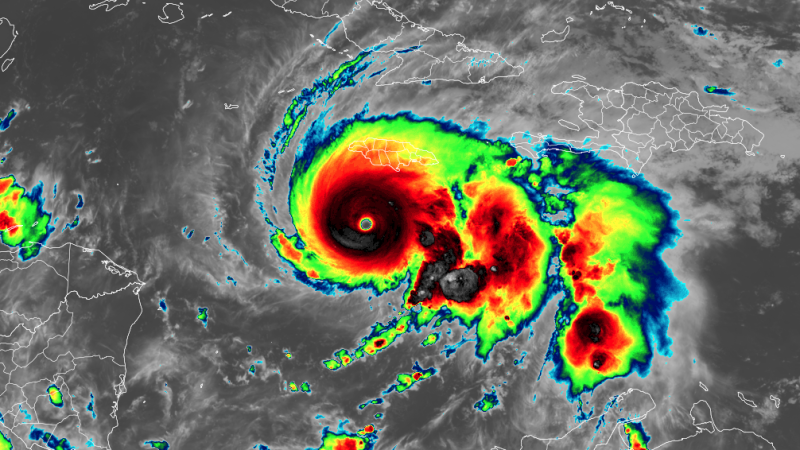
Hurricane Melissa is now the strongest storm on the planet this year – CNN

  1. Hurricane Melissa is now the strongest storm on the planet this year  CNN
  2. A Powerful Storm Nears Jamaica  The New York Times
  3. Carnival, Royal Caribbean reroute cruises to avoid Hurricane Melissa. See the changes.  USA Today
  4. As the Atlantic Ocean warms, climate change is fueling Hurricane Melissa’s ferocity  AP News
  5. Media, Pennsylvania, chef stays in touch with family in Jamaica as Hurricane Melissa approaches  CBS News

source

Posted on Leave a comment

Arizona Lottery Pick 3, Fantasy 5 results for Oct. 26, 2025 – azcentral.com and The Arizona Republic

The Arizona Lottery offers multiple draw games for those aiming to win big. Here’s a look at Sunday, Oct. 26, 2025 results for each game:
8-6-6
Check Pick 3 payouts and previous drawings here.
01-05-06-16-23
Check Fantasy 5 payouts and previous drawings here.
03-06-16-19-27-36
Check Triple Twist payouts and previous drawings here.
Feeling lucky? Explore the latest lottery news and results
Powerball drawings are at 7:59 p.m. Arizona time on Mondays, Wednesdays and Saturdays.
In Arizona, Powerball tickets cost $2 per game, according to the Arizona Lottery.
To play, select five numbers from 1 to 69 for the white balls, then select one number from 1 to 26 for the red Powerball.
You can choose your lucky numbers on a play slip or let the lottery terminal randomly pick your numbers.
To win, match one of the 9 Ways to Win:
There’s a chance to have your winnings increased two, three, four, five and 10 times through the Power Play for an additional $1 per play. Players can multiply non-jackpot wins up to 10 times when the jackpot is $150 million or less.
All Arizona Lottery retailers will redeem prizes up to $100 and may redeem winnings up to $599. For prizes over $599, winners can submit winning tickets through the mail or in person at Arizona Lottery offices. By mail, send a winner claim form, winning lottery ticket and a copy of a government-issued ID to P.O. Box 2913, Phoenix, AZ 85062.
To submit in person, sign the back of your ticket, fill out a winner claim form and deliver the form, along with the ticket and government-issued ID to any of these locations:
Phoenix Arizona Lottery Office: 4740 E. University Drive, Phoenix, AZ 85034, 480-921-4400. Hours: 7:30 a.m. to 5 p.m. Monday through Friday, closed holidays. This office can cash prizes of any amount.
Tucson Arizona Lottery Office: 2955 E. Grant Road, Tucson, AZ 85716, 520-628-5107. Hours: 7:30 a.m. to 5 p.m. Monday through Friday, closed holidays. This office can cash prizes of any amount.
Phoenix Sky Harbor Lottery Office: Terminal 4 Baggage Claim, 3400 E. Sky Harbor Blvd., Phoenix, AZ 85034, 480-921-4424. Hours: 8:30 a.m. to 5 p.m. Monday through Sunday, closed holidays. This office can cash prizes up to $49,999.
Kingman Arizona Lottery Office: Inside Walmart, 3396 Stockton Hill Road, Kingman, AZ 86409, 928-753-8808. Hours: 8 a.m. to 8 p.m. Monday through Friday, 8:30 a.m. to 5 p.m. Saturday and Sunday, closed holidays. This office can cash prizes up to $49,999.
Check previous winning numbers and payouts at https://www.arizonalottery.com/.
Winning lottery numbers are sponsored by Jackpocket, the official digital lottery courier of the USA TODAY Network.
Tickets can be purchased in person at gas stations, convenience stores and grocery stores. Some airport terminals may also sell lottery tickets.
You can also order tickets online through Jackpocket, the official digital lottery courier of the USA TODAY Network, in these U.S. states and territories: Arizona, Arkansas, Colorado, Idaho, Maine, Massachusetts, Minnesota, Montana, Nebraska, New Hampshire, New Jersey, New York, Ohio, Oregon, Puerto Rico, Washington D.C., and West Virginia. The Jackpocket app allows you to pick your lottery game and numbers, place your order, see your ticket and collect your winnings all using your phone or home computer.
Jackpocket is the official digital lottery courier of the USA TODAY Network. Gannett may earn revenue for audience referrals to Jackpocket services. GAMBLING PROBLEM? CALL 1-800-GAMBLER, Call 877-8-HOPENY/text HOPENY (467369) (NY). 18+ (19+ in NE, 21+ in AZ). Physically present where Jackpocket operates. Jackpocket is not affiliated with any State Lottery. Eligibility Restrictions apply. Void where prohibited. Terms: jackpocket.com/tos.
This results page was generated automatically using information from TinBu and a template written and reviewed by an Arizona Republic editor. You can send feedback using this form.

source

Posted on Leave a comment

Pi Network Price Tanks 90% as Whale Stops Buying – ICOBench

Submit ICO
Home » News » Pi Network Price Tanks 90% as Whale Stops Buying
Patrick Johnson is a seasoned crypto journalist and analyst with a sharp eye for emerging trends in blockchain, DeFi, NFTs, and Web3 innovation. With a…
Kai Man Ng is an editor and translator with a strong passion for crypto, blockchain, and Web3 technologies. He specializes in transforming complex technical concepts…
The price of Pi Network (PI) has plummeted more than 90% since its mainnet launch in February, wiping out $18 billion in value and reducing its market capitalization to just $2 billion. Analysts warn the token could fall further, potentially testing the critical support level of $0.10, as a mysterious whale halts its aggressive buying spree.
For months, Pi Network’s price action was strongly influenced by the steady accumulation of one major whale. According to PiScan data, this whale had been buying nearly every day, eventually amassing 383 million PI tokens, valued at over $101 million. This made him the largest private holder of PI, second only to the Pi Foundation, which controls more than 90 billion tokens.
🐋 Who’s the whale behind wallet “GAS…ODM” accumulating $Pi Network tokens? And why?
Over the past 4 months, this wallet — now the 6th-largest Pi holder — has scooped up 350M Pi coins
(≈ $125M USD)
📊 Accumulation pattern:
– Large withdrawals from OKX & Gate io
– Activity… pic.twitter.com/1ITYKEl9EV
— Cobak (@CobakOfficial) August 4, 2025

However, activity has suddenly stopped. The whale’s last major purchase was 10 days ago, when he moved 1.4 million tokens worth $380,100 from OKX to his self-custody wallet.
Analysts point to several possible reasons:
Investor confidence was further shaken when Pi Network co-founder Dr. Fan spoke at TOKEN2049 in Singapore. Many expected details on tokenomics or exchange listings, but the presentation provided no new information, leaving investors disappointed.
Dr. Chengdiao Fan speaks at the Token 2049#Picommunity #PiGCV #PiCoin #PiNetwork #TOKEN2049 #LiveEvent #Blockchain pic.twitter.com/Ll8GbP6mMW
— ONE WORLD DIGITAL CURRENCY (@gfc199) October 1, 2025

Meanwhile, trading volumes have dropped sharply, signaling weakening demand. Combined with the whale’s inactivity, this has accelerated Pi’s decline, with analysts warning of additional downside risks.
 
Virtuals Protocol (VIRTUAL) has jumped by 85% in the past 7 days alone as blockchain-based AI agents seem ready to make a strong comeback. The market appears to have shaken…
Reid Hoffman, co-founder of LinkedIn and a prominent Silicon Valley investor with an estimated net worth of USD 2.5 billion, has revealed that he purchased a CryptoPunk NFT, joining one…
Patrick Johnson is a seasoned crypto journalist and analyst with a sharp eye for emerging trends in blockchain, DeFi, NFTs, and Web3 innovation. With a background in tech writing and years of experience tracking digital assets, Patrick breaks down complex topics into clear, actionable insights for investors, builders, and curious readers alike. His work spans market analysis, crypto regulation, decentralized finance ecosystems, and interviews with founders shaping the next phase of the internet. Patrick’s writing has appeared in leading crypto publications and has earned a reputation for depth, clarity, and a no-hype approach to crypto journalism. When he’s not decoding the latest protocol upgrade or reporting on DAO governance shifts, you’ll find him experimenting with smart contracts or hiking off-grid — because even crypto authors need to unplug sometimes.
Previous post
Solana Price Prediction: Can SOL Reclaim $200 As Momentum Cools?
Next post
XRP Price Prediction: Trader Spots Bullish H&S Pattern – Next Stop $5?
icobench.com is a cryptocurrency data website tracking 18896 cryptocurrencies trading on 402 exchanges.
© 2025 Icobench.com. All rights reserved.
The information provided on this website is for educational and informational purposes only and does not constitute financial, legal, or investment advice. Investing in cryptocurrencies, tokens, or Initial Coin Offerings (ICOs) carries significant risks, including the possible loss of your entire investment. Always conduct your own due diligence and consult with a licensed financial advisor before making investment decisions.

source

Posted on Leave a comment

Mississippi Lottery Mississippi Match 5, Cash 3 results for Oct. 26, 2025 – The Clarion-Ledger

The Mississippi Lottery offers several draw games for those aiming to win big. Here’s a look at Oct. 26, 2025, results for each game:
03-14-16-20-31
Check Mississippi Match 5 payouts and previous drawings here.
Midday: 9-4-2, FB: 5
Evening: 3-3-2, FB: 3
Check Cash 3 payouts and previous drawings here.
Midday: 0-2-4-1, FB: 5
Evening: 5-0-4-3, FB: 3
Check Cash 4 payouts and previous drawings here.
Midday: 09
Evening: 11
Check Cash Pop payouts and previous drawings here.
Feeling lucky? Explore the latest lottery news & results
Story continues below gallery.
Winnings of $599 or less can be claimed at any authorized Mississippi Lottery retailer.
Prizes between $600 and $99,999, may be claimed at the Mississippi Lottery Headquarters or by mail. Mississippi Lottery Winner Claim form, proper identification (ID) and the original ticket must be provided for all claims of $600 or more. If mailing, send required documentation to:
Mississippi Lottery Corporation
P.O. Box 321462
Flowood, MS
39232
If your prize is $100,000 or more, the claim must be made in person at the Mississippi Lottery headquarters. Please bring identification, such as a government-issued photo ID and a Social Security card to verify your identity. Winners of large prizes may also have the option of setting up electronic funds transfer (EFT) for direct deposits into a bank account.
Mississippi Lottery Headquarters
1080 River Oaks Drive, Bldg. B-100
Flowood, MS
39232
Mississippi Lottery prizes must be claimed within 180 days of the drawing date. For detailed instructions and necessary forms, please visit the Mississippi Lottery claim page.
This results page was generated automatically using information from TinBu and a template written and reviewed by a Mississippi editor. You can send feedback using this form.

source

Posted on Leave a comment

How XRP’s Early Developer Forums Laid Foundations for Today’s Crypto Networks – The Daily Illini


The initial developer forums around XRP weren’t glamorous, but they sparked ideas that redefined how cryptocurrency communities build, argue, and adapt. Those text-heavy threads forged a blueprint for collaboration that still echoes across the digital economy.
Before glossy exchanges and influencer livestreams, there were plain text forums with slow replies and passionate debates. The early XRP community didn’t just build software—they built a philosophy of decentralized problem-solving that would become crypto’s default operating system.
If you’ve ever wondered why crypto feels simultaneously chaotic and self-organizing, the answer lies in those old message boards where strangers stayed up typing about code, consensus, and possibility. In that early chatter, XRP found its rhythm: a network learning to walk before the market cared to watch.
The earliest XRP threads were less about hype and more about curiosity. Developers debated whether consensus could replace mining, whether ledgers could close faster than Bitcoin’s ten-minute blocks and how to prevent double-spending without wasting energy.
These exchanges, archived in developer logs and community records, laid the groundwork for the XRP Ledger’s performance-first design.
They weren’t just coding; they were testing trust. Every disagreement became a lesson in transparency. No CEOs handed down orders, just open debates and public code commits. That collective belief, that good ideas can come from anywhere, shaped modern crypto governance long before “decentralized” became a buzzword.
Today, that DNA remains visible. Developer-led proposals, validator discussions and improvement plans reflect those first exchanges rather than repeat them. What started as scattered chats became one of crypto’s most influential collaborative models.
Not many thought those initial debates would control how blockchains develop around the globe. However, the XRP community set the example that later networks, including Polygon, Solana and Avalanche, followed, debating as an open protocol design.
Discussions about ledger synchronization, the volume of transactions and node participation guided XRP’s quest for speed and efficient consensus. Those arguments never took a theoretical stance; they populated a laboratory that experimented with the limits of decentralization, keeping speed constant.
According to statistics from the Binance exchange, XRP currently has a market cap value of around US$121.39 billion and a volume traded in the last 24 hours of around US$3.16 billion. These statistics illustrate how an open-source debate evolved into a global digital infrastructure.
Yet, as markets become brighter and bolder, the collaborative ethos endures. It saw XRP through the thick of forks, code rewrites and outsider criticism, advancement driven by shared conversation, not dictation.
The market that XRP helped shape remains volatile and fast-moving.
As noted by Binance Research, “The total crypto market cap lost more than US $300 billion this week, falling to US $3.7 trillion towards the end of the week. Riskier assets like altcoins fell the most, with Ethereum falling over 13% and Solana by 20%. BNB fell only by ~3% while BTC slipped ~6%.”
Those shifts remind all that markets move faster than even early architects imagined. Yet the foundation built by those early XRP contributors, transparency, technical scrutiny and adaptability, continues to help the network weather each storm.
Amid such turbulence, XRP’s core lesson remains timeless: conversation scales better than command. When markets swing billions overnight, the healthiest protocols are those with communities ready to talk, test and rebuild.
The old XRP boards weren’t just technical spaces but cultural incubators where curiosity met discipline. The people behind those usernames learned that decentralization isn’t a slogan, it’s a process that requires patience, accountability and an openness to being wrong in public.
Every argument about protocol rules doubled as a lesson in social coordination. These weren’t just coders but early network anthropologists experimenting with how trust could exist without hierarchy.
They established a few norms that now guide most of crypto’s serious projects:
That spirit of shared responsibility helped define collaboration in digital ecosystems. Open discussion became a safeguard against centralization, while visible progress nurtured belief in collective problem-solving.
Those lessons became templates for later blockchain frameworks, including today’s systems, like Ethereum’s EIPs (Ethereum Improvement Proposals) and Cardano’s community governance.
Newer DAOs experimenting with self-rule draw their philosophical roots from those early XRP discussions that treated conversation as infrastructure and transparency as the most valid form of leadership.
Scoot around any current crypto GitHub or dev Discord and the family tree is evident. Lurking behind every code commit and merge request lies the same collaborative urge that drove those initial XRP builders. Ideas, shared gratuitously, continue to define the tech everybody uses.
Headlines this morning may fawn over charts and market cap, but the actual DNA of crypto remains set in ink, not pixels. XRP’s parents weren’t coding code but cultivating a spirit that values cooperation, not control.
Their imprint endures in each clear-as-glass proposal and public repository. Innovation starts where it once did: in collaborative curiosity, frank debate and the boldness to build together, as those initial developers once did in threads that significantly altered the world.

source