
Posted on Leave a comment

Bitcoin Adoption is Rewriting Financial Futures – OneSafe

In a world where economic instability has become a constant companion, Bitcoin adoption isn’t just a passing fad; it’s a radical shift that could redefine our understanding of value. With leaders like Michael Saylor and Samson Mow leading the charge, institutions are hoarding Bitcoin, shifting it from the periphery of financial discourse to the very heart of economic strategy. Governments are tuning in, and as they do, the stage is set for a potential upheaval in global finance. Let’s delve into the remarkable ascent of Bitcoin and its implications for the future of digital currency.
Bitcoin’s spectacular journey—recently soaring to a staggering $107,000—has captivated audiences worldwide. This dramatic uptick isn’t driven by mere speculation but rather by significant institutional investments that reframe Bitcoin as a serious monetary asset. Heavyweights like BlackRock have boldly launched Bitcoin ETFs, carving a path for widespread acceptance and firmly establishing Bitcoin as a credible alternative to fiat currencies. Corporations such as MicroStrategy are doubling down, illustrating a fundamental shift in financial strategies that could steer the entire cryptocurrency market toward new directions.
The concept of hyperbitcoinization is no longer just theoretical; it is a growing reality fueled by escalating institutional interest and fierce accumulation. As more influential entities embrace Bitcoin, we inch closer to a radical transformation in global monetary systems. According to Samson Mow, this wave of accumulation poses a direct challenge to traditional finance, offering robust alternatives to fiat systems amidst burgeoning worries about public debt. We are heading toward a future where Bitcoin transcends mere investment; it is poised to become a new standard in the face of monetary chaos.
With Bitcoin’s rising prominence comes a pressing need to address the regulatory environment. Governments around the globe are awakening to Bitcoin’s role as a stabilizing force against volatility, yet navigating this rapidly shifting landscape is fraught with difficulties. Many regulatory frameworks are lagging, creating a challenging path for financial institutions that want to integrate cryptocurrencies into their operations. As companies reassess their treasury practices to include Bitcoin, successfully negotiating these regulatory hurdles is crucial for not only sustaining operational liquidity but also for making the most of this digital gold rush.
Embracing Bitcoin as part of corporate treasury strategy signals a significant evolution in financial management practices. For smaller Web3 startups, in particular, balancing Bitcoin’s potential as a long-term reserve asset with immediate cash flow needs proves complicated. The adoption of Bitcoin is testing traditional financial thinking as these companies tackle new liquidity challenges and reassess their risk management paradigms. New financial management models are emerging, aimed at merging the enduring advantages of Bitcoin with the urgent demands posed by fiat currency liquidity.
The currents of geopolitics are profoundly influencing Bitcoin’s trajectories, enhancing its appeal as an economic safeguard. High-profile events, like the anticipated meeting between Trump and Xi, spotlight Bitcoin’s emerging role as a buffer against economic and political strife. As the global landscape evolves, institutional hunger for digital assets deepens, propelled by the desire to shield investments from market unpredictability. This evolving narrative situates Bitcoin not merely as a monetary tool but as a fortress against the vulnerabilities inherent in traditional economic systems.
Gazing into the horizon, Bitcoin’s evolution is a compelling saga of innovation and resilience. The uptick of institutional purchases and growing government recognition indicates a readiness for Bitcoin to solidify its position within the financial arena. However, as we navigate an intricate regulatory terrain and grapple with liquidity challenges, the narrative surrounding Bitcoin’s adoption remains fluid and dynamic. Institutions are evolving their treasury strategies, ensuring that Bitcoin stands poised to redefine what currency means in the 21st century, and securing its place in our financial futures.
As Michael Saylor stated with clarity, “Bitcoin is no longer a speculative asset—it’s set to become the global monetary standard.” In this rapidly changing world, the luminous potential of Bitcoin shines ever more brightly.

Get started with Crypto effortlessly. OneSafe brings together your crypto and banking needs in one simple, powerful platform.
Discover how crypto payroll is reshaping financial operations for SMEs, promoting financial inclusion, and overcoming traditional payment challenges.
The rise of Bitcoin adoption is reshaping global finance, driven by institutional investments and the growing role of Bitcoin as a reserve asset against economic instability.
Discover essential crypto-native business tools that enhance compliance, streamline operations, and drive efficiency in the evolving digital asset landscape.
Begin your journey with OneSafe today. Quick, effortless, and secure, our streamlined process ensures your account is set up and ready to go, hassle-free

source

Posted on Leave a comment

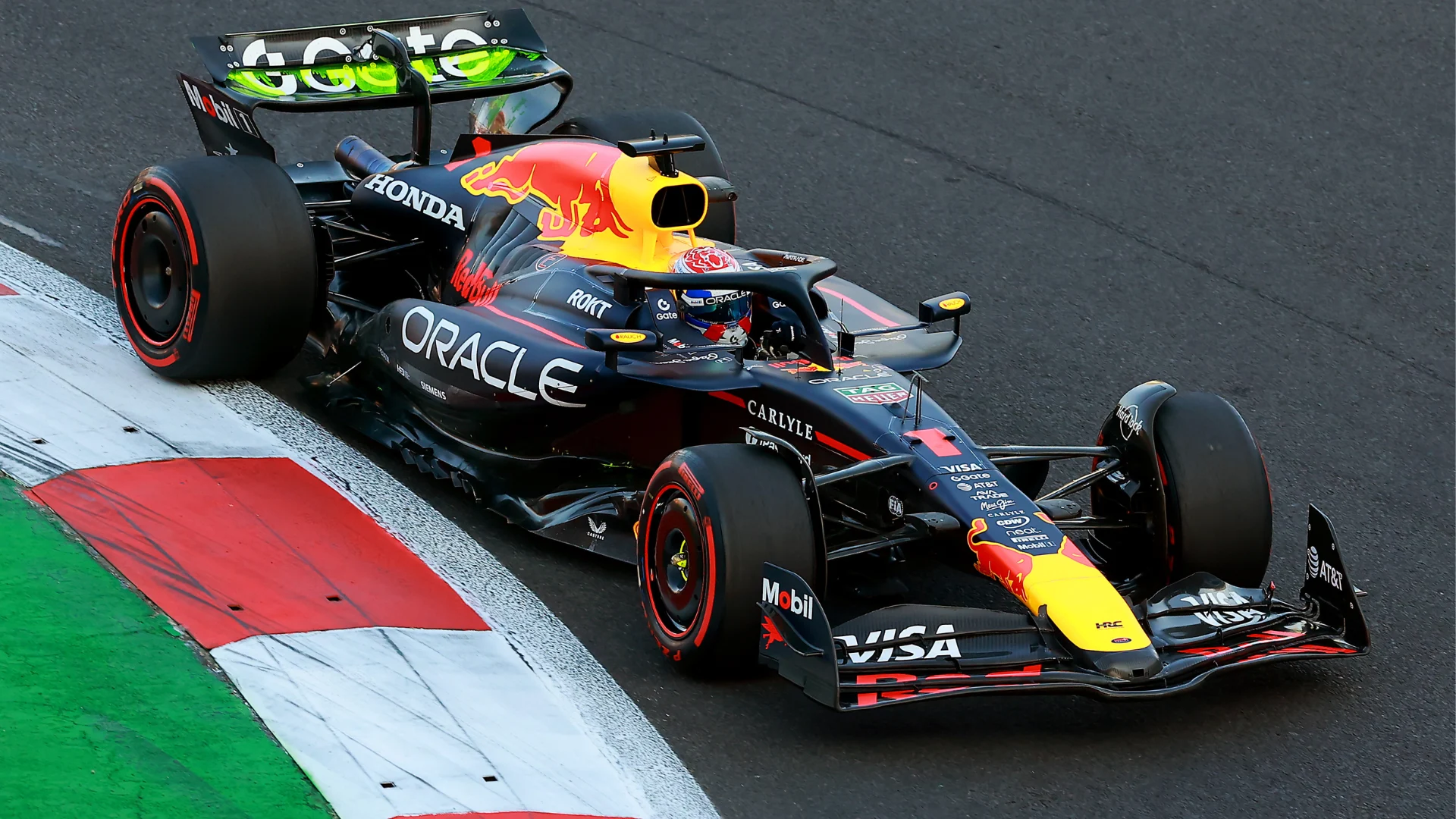
Verstappen leads Leclerc during FP2 in Mexico – Formula 1

Authentics
Store
Tickets
Hospitality
Experiences
Previous
Current
Upcoming
Tech Talk: How the teams are keeping cool in Mexico City
Verstappen has ‘big concerns’ on long run pace – despite topping FP2
Max Verstappen ended Friday on top at the Mexico City Grand Prix, with the Red Bull driver setting the pace during Free Practice 2.
Red Bull driver Max Verstappen set the pace during second practice at the Mexico City Grand Prix, the Dutchman leading the way from the Ferrari of Charles Leclerc and Mercedes’ Kimi Antonelli.
After a total of nine rookies were given an outing during Friday’s first practice hour – which was topped by Leclerc – the drivers that had sat out that session returned to action for FP2, which got underway in warm and dry conditions at 1600 local time.
As all 20 cars peeled out of the pit lane within a few minutes of the green light appearing – the majority sporting medium tyres – there was early trouble for Antonelli when the Mercedes driver reported an issue on his W16, with the initial instruction being to “limp home”. The Italian was able to continue running, before again having to return to the pits as the problem persisted.
Antonelli’s team mate George Russell – who was amongst those to miss FP1 – had a wide moment off track during the opening moments, while Leclerc had set the pace in the first quarter of the session. The Ferrari racer went quickest on a lap of 1m 18.353s, just over three-tenths clear of McLaren's Lando Norris and the other Scuderia car of Lewis Hamilton in second and third respectively.
Following a spell in the garage as the team worked on his car, Antonelli returned to the track to resume his programme. Alex Albon, meanwhile, tapped the wall out of Turn 16 with his Williams as he – and many others in the field – switched to the soft tyre as focus switched to flying laps.
As those flying runs came in, Leclerc looked to have held onto P1 by the halfway point of the session, with many of his rivals struggling to get close – but Verstappen proved to be the one to beat the Monegasque’s time by 0.153s after pumping in an effort of 1m 17.392s.
Practice 2 results
FORMULA 1 GRAN PREMIO DE LA CIUDAD DE MÉXICO 2025
Hamilton had looked on course for a quick time, having matched Verstappen’s lap in the first sectors before losing time later on. Elsewhere, the McLaren pair of Norris and Oscar Piastri were both around eight-tenths adrift in P7 and P8 respectively, the duo having been outpaced by the likes of Russell, Yuki Tsunoda, Fernando Alonso and Carlos Sainz.
Improvements followed as the session progressed, with Antonelli slotting into third on his slightly out-of-sync run plan from his team mate, while Norris moved up to fourth and Hamilton claimed fifth on his second attempt.
Verstappen, meanwhile, appeared satisfied with his soft-shod effort, having returned to the pits and bolted on a set of medium tyres before returning to the track for a race simulation run. In the other Red Bull, Tsunoda asked the team to check the floor of his car after taking quite a bit of kerb.
While the likes of Leclerc joined Verstappen in switching to the C4 medium compound, many remained on the C5 soft for their longer runs. One of these to stay on the latter was Piastri, the Australian sitting down in P12 on the timesheets on a weekend where he will be looking to bounce back from some trickier outings of late.
“I have no grip – it is like driving on ice,” Verstappen radioed in after a slide on the medium tyres, with Russell also reporting struggles with the rears on his Mercedes. For the final minutes of the session, Verstappen returned to the soft rubber while others encountered traffic, with Antonelli voicing frustration after locking up behind Racing Bulls’ Liam Lawson.
As the chequered flag fell – amid a busy end to the session that witnessed a few close run-ins – Verstappen remained on top thanks to his earlier effort of 1m 17.392s, putting the reigning World Champion ahead of Leclerc and Antonelli. Norris was the lead McLaren in fourth, with Hamilton, Russell, Tsunoda, Alonso, Sainz and Lance Stroll completing the top 10.
Lawson followed in P11, with Piastri ending the hour in a more distant P12. Haas’ Esteban Ocon claimed P13 from Racing Bulls’ Isack Hadjar (P14), the Kick Sauber pair of Gabriel Bortoleto (P15) and Nico Hulkenberg (P16) and the Haas of Ollie Bearman (P17), with the Alpines of Franco Colapinto and Pierre Gasly separated by Albon at the rear of the pack.
The drivers and teams will now regroup in the paddock to examine their data as they prepare for Saturday’s running, with FP3 set to begin at 1130 local time before Qualifying follows at 1500.
Next Up
© 2003-2025 Formula One World Championship Limited

source

Posted on Leave a comment

Bitcoin Whales Awaken, Elevating Quantum Security Fears – OneSafe

What happens when dormant Bitcoin wallets roar back to life? The ripple effects are igniting fervent debates within the crypto sphere, compelling stakeholders to confront security vulnerabilities that threaten the foundation of digital currencies.
In a jaw-dropping twist, a Bitcoin wallet, long dormant and holding a staggering 4,000 BTC—equivalent to a formidable $442 million—undefined in sound for 14 years, has reactivated. The recent transfer of 150 BTC from this ‘Satoshi-era’ wallet, worth about $16.6 million, has sent shockwaves through the investment community. This unexpected movement from a relic of Bitcoin’s embryonic phase stirs up crucial inquiries: Why now, and what does it signal for Bitcoin’s security landscape? This examination takes a deep dive into the psyche of long-term Bitcoin holders, the looming threat of quantum computing, and the future of digital asset security.
The revival of such an illustrious wallet transcends mere profit—it’s a telltale sign of a broader wave sweeping the ranks of early Bitcoin holders, affectionately dubbed ‘OGs.’ These long-term stakeholders are increasingly parting ways with their previously untouched treasures. Data reveals that over 240,000 BTC has changed hands among these holders just in the last month, creating palpable sell-side pressure that adds to market tension. The psychological stakes are intriguing, as patterns of profit-taking emerge alongside the specter of further sell-offs.
Yet, as these ancient wallets crack open, a menacing shadow casts itself over the landscape: quantum attacks. Experts in cybersecurity are sounding alarms about the vulnerabilities entwined with early Bitcoin addresses. Particular formats, like Pay-to-Public-Key (P2PK), leave these addresses ripe for exploitation if public keys have been previously unmasked. Nicholas Gregory, a specialist in cryptocurrency protocols, underscores this urgency, explaining that it’s precisely why early holders are moving their assets to safer, unexposed addresses.
Staggeringly, research suggests that nearly 25% of all Bitcoin—an eye-watering 4 to 4.5 million BTC—resides in quantum-vulnerable addresses. As the tech world edges closer to quantum realities, the call for robust security measures grows more imperative.
Despite the unsettling reverberations triggered by these wallet activations, Bitcoin’s market has showcased an impressive degree of resilience. Notably, the transfer of 150 BTC constitutes a mere blip in the ocean of Bitcoin’s daily trading volume, which cruises past $20 billion. Nevertheless, the persistent selling pressure from entrenched holders is establishing formidable resistance levels, keeping Bitcoin oscillating between $108,000 and $111,000. These evolving market dynamics illuminate a compelling truth for investors: navigating the dual imperatives of profit-taking and security is essential in today’s cryptographic landscape.
As the crypto community scrutinizes the implications of these wallet revivals, the impact on market liquidity becomes crystal clear. Historical patterns reveal that such significant transfers can ignite momentary volatility. However, they also pave the way for innovative asset management approaches, particularly for decentralized autonomous organizations (DAOs) and emerging Web3 startups. The aim now is to synergize robust security frameworks with liquidity strategies, creating a proactive defense against the spectral threat of quantum vulnerabilities.
The urgency has caught the attention of financial institutions and fintech innovators, who are scrambling to offer solutions highlighting post-quantum cryptography. The fact that BlackRock has acknowledged quantum threats in its iShares Bitcoin Trust (IBIT) filing is a striking indicator of how institutional players are adapting to these rapidly changing circumstances.
The resurgence of dormant Bitcoin wallets set against the backdrop of rising quantum security fears marks a transformative chapter in the cryptocurrency saga. As long-term holders navigate the dual landscape of profit potential and emerging risks, the market holds its collective breath. The challenge ahead is to strike a meaningful balance between liquidity and fortified security, a necessity for businesses in the crypto and Web3 landscapes. Whether driven by financial gains or security concerns, the actions of these early Bitcoin believers are helping to redefine the roadmap for a $2.3 trillion asset class. The stakes are monumental as we traverse this intricate interplay between innovation and caution in a digital age rife with both opportunity and peril.

Get started with Crypto effortlessly. OneSafe brings together your crypto and banking needs in one simple, powerful platform.
Ripple's acquisition of Hidden Road transforms crypto banking for SMEs in Europe, enhancing access, efficiency, and regulatory trust in digital finance.
The x402 Protocol ushers in a new era of crypto payments with autonomous transactions, AI integration, and stablecoin adoption, driving innovation in digital commerce.
Tether's USA₮ stablecoin launch raises questions about market dynamics, regulatory compliance, and the future of decentralized finance.
Begin your journey with OneSafe today. Quick, effortless, and secure, our streamlined process ensures your account is set up and ready to go, hassle-free

source

Posted on Leave a comment

[VIDEO] Swindle’s Forward-Facing Sonar Tips – Wired2Fish

The product recommendations on our site are independently chosen by our editors. When you click through our links, we may earn a commission.
The “GMAN”, Gerald Swindle, shows how shallow-water anglers can use sonar technology to locate fish and bait around grass and structure. With a few key adjustments, he proves that this high-tech tool isn’t just for chasing offshore schools—it’s a game-changer in water less than ten feet deep.
Many anglers assume forward-facing sonar only works in deep water, but Swindle argues otherwise. When fishing shallow grass or bank transitions, sonar can reveal subtle fish movements, bait clouds, and reaction behavior that would otherwise go unnoticed. Swindle points out that sonar isn’t only for catching fish—it also shows what bass won’t eat and how they react to certain baits. By watching those real-time movements, anglers can adjust retrieves and lure selection instantly, increasing their odds of success.
Swindle emphasizes that the key to sonar success in the shallows comes down to proper tuning. He shortens his range to around 65–75 feet and tweaks sensitivity and color gain depending on light and cover. Too much sensitivity “blows out” the screen, while the right balance clearly shows bait and fish near grass lines. These small changes allow anglers to stay efficient without wasting time or missing subtle details.
Despite the common belief that veteran anglers avoid new technology, Swindle laughs it off—he’s all in on forward-facing sonar. Swindle says anglers of any age can use it effectively once they understand the basics. Whether tracking roaming bait or pinpointing fish movement, Swindle’s shallow-water sonar setup proves that modern tools can blend perfectly with traditional fishing instincts.
Upriver Productions has been specializing in outdoor TV and media creation since 2009. We know more buzz baits than buzzwords and we’d rather be zooming in on elk than attending zoom meetings but we can do both! We’re perfectly happy with our base in the Ozarks of Missouri but we’ve also worked in forty-three states and eight countries. We can make a video about the next great fish catcher on a shoestring or we can deliver a full season of award winning TV to a network with a million dollar budget.
The best online fishing resource to learn and stay current on the latest fishing gear, news, techniques, trends and more. 
Do Not Sell Or Share My Personal Information

source

Posted on Leave a comment

Bitcoin Volume Surge: What It Means for the Cryptocurrency Market – Meyka

Bitcoin’s trading volume has experienced a notable surge, reflecting heightened speculative activity in the cryptocurrency market. As BTCUSD continues to fluctuate, investors are eyeing these changes for potential opportunities. With a current price of $107,586 and a market cap exceeding $2 trillion, the dynamics of Bitcoin are critical to understanding market trends and potential price movements.
Bitcoin’s recent trading volume reached $80.8 billion, significantly higher than its average volume of $63.4 billion. This surge is largely driven by speculative trading, as investors capitalize on market volatility. The increase in volume suggests a growing interest in Bitcoin, coinciding with its price fluctuations. The cryptocurrency reached a day high of $109,188.27, indicating possible upward momentum despite current corrections.
The market’s speculative nature underscores the volatility that investors face, necessitating diligent analysis of market trends and predictors. The surge in volume is a signal of increased participation, which can lead to potential shifts in market sentiment and price action.
The BTCUSD has noted a price change of -2.3% today, emphasizing its volatility. This change aligns with the broader market sentiment, where short-term speculations influence price dynamics. From a broader perspective, Bitcoin has seen a 12.9% increase over the past year, showcasing its resilience and appeal to long-term investors.
Technical indicators reveal a moderate trend with an RSI of 45.63, pointing towards a neutral market position. Investors should also consider volatility indicators such as Bollinger Bands which show a tight range—another sign of potential price swings. View more insights here: https://www.youtube.com/watch?v=cBv6u5UnTcA.
Cryptocurrency market trends continue to evolve, with Bitcoin often leading the charge. The average 50-day price of Bitcoin stands at $114,150.5, illustrating its trend over the shorter term, while the 200-day average at $108,303.45 provides a longer-term outlook. With forecasts showing potential price increases to $131,805.5 monthly and possibly reaching $163,545.74 in five years, optimism around Bitcoin’s future persists.
Investors are encouraged to monitor key indicators such as the MACD and ADX, which currently signal a strong trend direction, suggesting that strategic positioning can benefit from such trends. However, the speculative market requires careful risk management and awareness of potential downturns.
Bitcoin’s volume surge highlights the dynamic nature of the cryptocurrency market and the potential opportunities that arise from market volatility. With its current trends and future forecasts, Bitcoin remains a focal point for investors seeking diversification and growth. However, navigating the speculative environment requires a keen understanding of market indicators and a robust strategy to manage risk. As Bitcoin continues to influence the broader cryptocurrency landscape, staying informed and adaptable is essential for maximizing investment returns.
The recent surge indicates heightened speculative activity and growing investor interest in Bitcoin. This increased volume can lead to significant price movements as more traders engage with the cryptocurrency.
Volatility in Bitcoin prices makes it a risky asset but also presents opportunities for profit. It necessitates that investors carefully analyze market trends and use risk management strategies to protect their investments.
Forecasts suggest a potential increase to $131,805.5 monthly, with long-term predictions anticipating prices of up to $202,934.57 in seven years. This suggests ongoing bullish sentiment but requires careful monitoring of market conditions.
Get instant AI-powered stock research, analysis, and market insights 24/7 from our research platform.
AI analysis and forecasts for mentioned stocks
Subscribe to our newsletter for market insights, AI predictions, and updates on our latest tools delivered to your inbox.
What makes our chatbot and platform famous among traders
Meyka AI analyzes social chatter, news, and alternative data to reveal hidden stock opportunities before mainstream market reports catch up.
Meyka AI delivers machine learning stock forecasts, helping investors anticipate price movements with precision across multiple timeframes.
Meyka AI’s proprietary grading algorithm ranks stocks A+ to F, giving investors unique insights beyond traditional ratings.
Backtest trading strategies with Meyka AI’s chatbot, analyzing historical performance and risk instantly.
Get instant AI-powered earnings summaries for any stock or by specific dates through our intelligent chatbot with real-time data processing.
Join thousands of traders using our advanced AI tools for smarter investment decisions
Meyka is the best Alternative Data platform powered by AI providing research insights for investors
The information provided by Meyka AI PTY LTD is for informational and research purposes only and does not constitute financial, investment, or trading advice. Meyka is a research platform, not a financial advisory service. Investing in financial markets involves risks, and past performance does not guarantee future results. Users should conduct their own due diligence, consult with professional financial advisors, and assess their risk tolerance before making investment decisions. Meyka and its operators are not liable for any financial losses incurred from the use of information on this platform. The data provided is derived from publicly available sources and is believed to be reliable but may not always be accurate or up to date. Users should independently verify information and not rely solely on Meyka for financial decisions. By using Meyka, you acknowledge that it does not provide financial advice or recommendations and agree to seek guidance from a qualified financial professional before making any investment decisions.

source