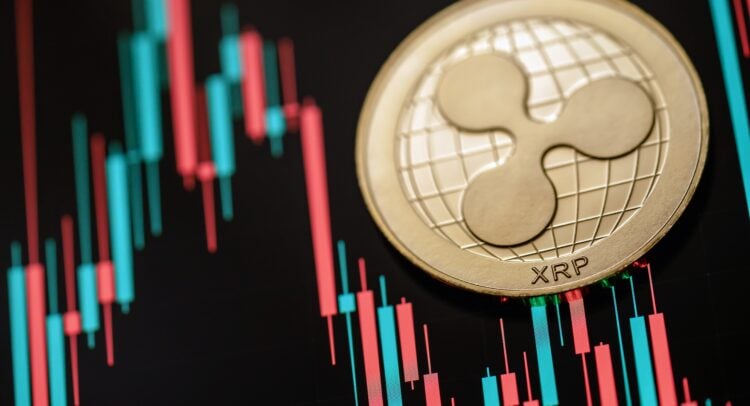
Ripple-backed Evernorth will go public through a merger with Armada Acquisition Corp II. The deal is expected to raise more than $1 billion. The new Nasdaq-listed firm will build the largest public XRP treasury. Ripple’s latest venture is taking its crypto ambitions to Wall Street. Evernorth, a digital asset treasury backed by Ripple, said Monday it will merge with Armada Acquisition Corp II (AACI) and list on the Nasdaq (NDAQ). It is raising more than $1 billion in proceeds.
The company plans to use the funds to purchase XRP (XRP-USD), the fifth-largest cryptocurrency by market value, and to create the largest publicly traded XRP treasury in the world. Evernorth describes itself as a digital asset company designed to accumulate XRP under a regulated, public structure. The listing will allow investors to gain indirect exposure to XRP price movements through traditional equity markets rather than crypto exchanges. Moreover, the company expects the deal to close in early 2026, with shares trading under the proposed ticker XRPN. The deal has drawn heavyweight support from across the crypto and financial sectors. Japanese financial giant SBI Holdings has committed roughly $200 million, while Ripple, Pantera Capital, Kraken, GSR, and Ripple co-founder Chris Larsen are also among the investors. The transaction sponsor, Arrington XRP Capital, will oversee the SPAC merger. Evernorth’s leadership said the goal is to create a transparent, liquid, and compliant vehicle for institutional investors who want exposure to XRP without holding the token directly. Moreover, the firm will use part of its proceeds to provide liquidity and manage yield strategies tied to XRP’s performance. Evernorth’s model is straightforward. It will act as a publicly traded treasury that accumulates and manages XRP on behalf of shareholders. The company’s success will depend heavily on XRP’s price trajectory, making the stock effectively a public market proxy for the cryptocurrency. If XRP prices rise, Evernorth’s holdings increase in value, creating potential for equity upside. If they fall, the company’s valuation will likely mirror this decline. Moreover, analysts see the launch as a test of how far traditional markets are willing to go in blending digital assets with listed corporate structures. The timing of Evernorth’s debut coincides with improving sentiment in crypto regulation and renewed interest in digital asset funds. XRP has gained traction among institutional investors following Ripple’s legal victories and its expanding use in cross-border payments. Evernorth aims to turn this momentum into an investable product that meets public-market standards. Still, the concept carries risk. Concentrating more than a billion dollars into a single token could amplify volatility. Moreover, critics warn that a public treasury model leaves investors exposed to both crypto market swings and corporate governance challenges. Evernorth insists that its regulatory framework and transparent reporting will help mitigate those risks. At the time of writing, XRP is sitting at $2.4599. Disclaimer & DisclosureReport an Issue
Some experts believe Bitcoin and Ethereum may experience a massive rally if the Federal Reserve implements rate cuts on September 17. Despite President Trump pushing for a 50 basis point cut, the wider market is expecting a smaller 25 basis point cut. In addition to BTC and Ethereum, smaller-cap coins as well as financial stocks may also benefit from the bullish wave. Meanwhile, DeepSnitch AI is a new presale project that many traders believe could be the next crypto to explode. Along with $210K raised during the first stage of the presale, investors cite the underlying AI utility as the reason why the project could eventually go 100x. Tom Lee, Fundstrat co-founder, anticipates a massive BTC and ETH rally if the Fed votes positive on a long-awaited rate cut. Lee clarified that digital assets are most likely to experience an influx of liquidity resulting from central bank policies, citing historical data. Lee added that in addition to Bitcoin and ETH, smaller-cap digital assets as well as financial stocks may also benefit from rate cuts. At the time of writing, markets are confident that the committee will introduce a rate cut of 25 basis points, with the possibility of a 50 basis points cut, according to the FedWatch Tool. Analysts are overwhelmingly bullish. According to Joao Wedson, Alphractal CEO, BTC is yet to reach its peak during the ongoing cycle and proposed a target in the $140K area. Other predictions are even more positive, with analysis projecting an optimistic $160K target. Others are more cautious. Ted Pillows pointed out that Bitcoin failed to conquer the $117K area, which represents a massive hurdle on its upward trajectory. Failing to solidify above this area may lead to a correction towards $113K or lower. Since smaller tokens are likely to rally along with BTC and ETH, traders are looking for the best crypto to buy now that may offer a higher upside potential than established crypto assets. Despite being an early-stage presale project, DeepSnitch AI is already generating an astounding amount of hype. With $210K raised at $0.01667 in record time, many traders believe DeepSnitch AI is well-positioned for further success over the next few months. Although the price is certainly attractive, the main focus of this project is its core utility. DeepSnitch AI aims to bridge the gap between regular retail traders and whales and influencers who generally have a disproportionate information edge. To achieve this goal, DeepSnitch AI is developing five specialized AI agents tasked with monitoring and analyzing critical on-chain activities. Each of these agents will cover one area of intelligence, from tracking whale activity, screening tokens, analyzing contract risk, to finding undervalued crypto coins, and providing traders with alpha news. The five agents will be released progressively after the presale, with early investors receiving priority access. The project’s native token, DSNT, offers one of the most affordable entry points into the growing AI market. Yet traders also believe it offers a sizable upside potential. Investing $100 at the current price of $0.01667 could potentially net traders over $6K if DSNT grows to $1 after launch. The price has already grown by 10% in the weeks since the presale went live. As a result, you can feel the FOMO kicking in as investors are entering the DeepSnitch AI presale before the next price increase.
XRP has been turbulent since its launch. However, the sentiment may soon take a bullish turn. The token reached $3.18 on Saturday, before falling back to the $2.95 area. On September 16, XRP traded slightly above the key $3 level, according to CoinMarketCap. According to analysts, if the price turns up, bulls may try flipping the resistance, followed by buyers pushing XRP as high as $3.20. If bulls maintain the momentum, the price will likely rally as high as $3.66. Falling under $3 is bad news, with analysts clarifying the breakout may turn out to be a bull trap that crashes the price to $2.69. All in all, the hype around Fed rate cuts combined with the bullish momentum may help XRP finally restore its $3.84 ATH from 2018. Similar to XRP, ADA is one of the most undervalued cryptocurrencies that has never managed to find its footing. Can this season be different? According to CoinMarketCap, ADA traded at $0.8813 on September 16, approximately 2% up from the day prior. Predictions from early September were overwhelmingly bullish. Yet, ADA failed to confirm the push above $0.95. Analysts believe bulls should aggressively push ADA above $1. By maintaining the momentum, there’s a high chance Cardano could settle in the $1.02 level before surging toward $1.25. However, nothing is set in stone with ADA, meaning that failure to maintain above $1 may eventually lead to a crash under the support line, eventually plunging to as low as $68. If analysts are to be trusted, the bullish wave will hit the entire market, pushing Bitcoin and smaller-cap altcoins to brand new heights. ADA and XRP both have a chance to shake out of their slumps and finally pick up some steam. However, it may also be smart to give new projects some love, as they may very well be the next crypto to explode. DeepSnitch AI is a powerful combo of AI and meme culture. Yet, it could also turn out to be a valuable digital asset with a massive upside, owing to its price of $0.01667. Over $210K was already raised in the first stage. Because the price is set to grow at a steady pace (DSNT has already grown by 10% since the presale started), the coin could go 100x after launch. Those entering the presale at stage one reserve the maximum upside. Buy DSNT on DeepSnitch AI’s official website. Many traders consider DeepSnitch AI as a strong pick, thanks to its AI-powered trading tools and low presale entry price at $0.01667. Tom Lee and other analysts argue that a rate cut will inject liquidity into markets, historically triggering bullish cycles for Bitcoin, Ethereum, and smaller-cap coins. At the price of $0.01667, a $100 investment in DSNT could potentially exceed $6,000 if the token reaches $1 after launch. Disclaimer: This media platform provides the content of this article on an “as-is” basis, without any warranties or representations of any kind, express or implied. We assume no responsibility for any inaccuracies, errors, or omissions. We do not assume any responsibility or liability for the accuracy, content, images, videos, licenses, completeness, legality, or reliability of the information presented herein. Any concerns, complaints, or copyright issues related to this article should be directed to the content provider mentioned above.
TLDR Coinbase, Uniswap, and Ripple push for clear U.S. crypto regulation rules. Crypto CEOs unite…
Never Miss Another Opportunity. Get hand selected news & info from our Crypto Experts so you can make educated, informed decisions that directly affect your crypto profits! Type above and press Enter to search. Press Esc to cancel. BC Game Crypto: 100% Bonus & 400 Free Casino Spins, Claim Here!
Written & Edited by Kamina Bashir Fraudulent listings purporting to offer Pi Coins (PI) for trading on the Stellar (XLM) blockchain have emerged on a decentralized exchange (DEX), prompting warnings from users. The scam surfaced amid rumors suggesting that Pi Network might leverage Stellar as a settlement layer for its upcoming decentralized applications (dApps). Screenshots circulating on X (formerly Twitter) showed an interface from the platform Prashu that included multiple “PI” assets supposedly available for trading. The listings included price and issuer details designed to mimic legitimate tokens, giving the impression of authenticity. However, prominent Pioneers quickly raised the alarm, labeling the listings as fake and urging users not to interact with the platform. “This is a scam – do not buy PI on the Stellar network. For all we know Prashu is in on the scam. The addresses linked to the tokens are clearly fake,” a Pioneer stated. 🚨 PEOPLE ARE ASKING about $Pi Network token on the Stellar $XLM network.
AT THE MOMENT, there is no verified Pi token on #Stellar.
Always DYOR before buying anything. pic.twitter.com/zlcN1CNfdi Notably, Prashu, marketed as a Stellar-based DEX, has been suspended. It’s not the first time that the platform has been involved in such a controversy. In August, a user publicly accused Prashu of theft following a rigged giveaway that lured participants into revealing private keys, resulting in the loss of crypto holdings. “SCAM ALERT!!!! They stole my tokens. Someone organized a giveaway – 1000 XLM to win – you had to make any transaction on Prash. They provided a link to an exchange, and the only “Wallet Connect” option was a private key. You had to like the post, retweet it, and comment “done”. And I did it. The next day, USDC and TKG disappeared from my account,” the user explained. The scam coincides with unverified reports of a Pi-Stellar partnership. One user claimed Pi Network will launch real-world asset trading dApps using Stellar as the settlement layer. The post stated, “Pi Network is expected to launch dApps for RWA trading by early 2026, with XLM as the settlement layer. This is adding 60 million users to the Stellar XLM ecosystem with a single integration. Unlocking instant access to its full DeFi infrastructure. Parallel transactions & smart contracts enable trading of real-world assets.” However, once again, the community was quick to question the credibility of these claims. Many Pioneers pointed out that Pi Network already operates on its own blockchain, so it doesn’t need Stellar. “That doesn’t even make sense. Pi would use it’s own blockchain for settlement,” another user replied. Furthermore, neither Pi Network’s Core Team nor the Stellar Development Foundation has made any official announcements confirming such a collaboration. The absence of official statements further emphasizes that the partnership narrative likely stems from community speculation rather than verified developments. Meanwhile, Pi Network and Stellar have a long-standing and often confusing relationship. Although the Pi Network borrows from Stellar, the blockchains remain separate. Owning XLM provides no privileges in the Pi Network, and actual PI transactions do not interact with Stellar’s ledger. Official documentation clarifies the distinction: Pi Network’s consensus mechanism is adapted from two key technologies: the Stellar Consensus Protocol (SCP) and the Federated Byzantine Agreement (FBA) This enables energy-efficient validation via trust graphs, eschewing proof-of-work’s power demands. The separation was reiterated in Pi Network’s August announcement of its protocol upgrade from version 19 to 23. “Pi Network is preparing an important upgrade: the move from protocol version 19 to version 23. The Pi protocol is adapted from Stellar protocol. This version is a custom Pi protocol built on a base pulling upgrades from Stellar protocol version 23 that enables new layers of functionality and control,” the team stated. The latest fake token incident again highlights how quickly misinformation can spread in crypto communities—especially when rumors of high-profile partnerships gain traction. While Pi Network and Stellar share certain technical roots, they remain separate ecosystems. Thus, users should remain cautious, verify information from trusted sources, and avoid engaging with unverified platforms claiming to list or trade Pi Coins.
Daily Crypto Insights Insights, news and analysis of the crypto market straight to your inbox Disclaimer In adherence to the Trust Project guidelines, BeInCrypto is committed to unbiased, transparent reporting. This news article aims to provide accurate, timely information. However, readers are advised to verify facts independently and consult with a professional before making any decisions based on this content. Please note that our Terms and Conditions, Privacy Policy, and Disclaimers have been updated.
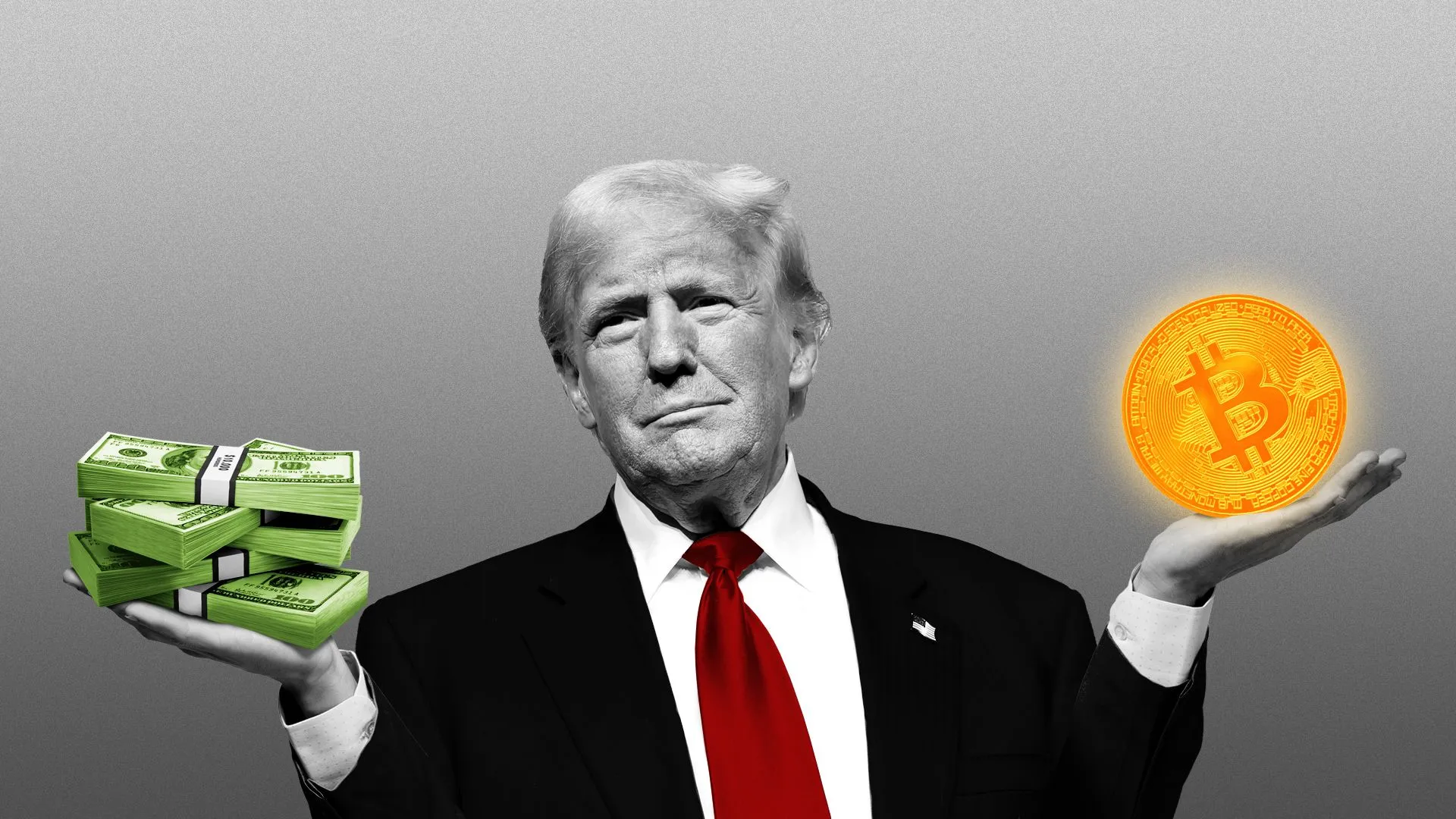
The Trump family’s involvement in cryptocurrency represents an unprecedented fusion of political power and personal financial gain, creating a new form of systemic corruption. Key aspects include: Original title: Teapot Dome. Watergate. They're Nothing Compared to This. Original author: Jacob Silverman (author of Gilded Rage: Elon Musk and the Radicalization of Silicon Valley) Original translation: Kaori, Peggy, BlockBeats Editor's note: In the history of American politics, no president has ever interwoven state power, personal brand and financial speculation into a global experiment like Trump. The combination of money and power is not new, but when this combination takes the form of "tokens," when the image of a head of state is minted as a tradable asset, and when political influence can flow freely on the blockchain, what we are facing is no longer corruption in the traditional sense, but a systemic restructuring. This article documents not a single scandal but a paradigm shift: the president is no longer just a politician, but the largest holder of cryptocurrency in the decentralized economy; diplomatic relations are no longer forged through secret conversations, but connected by wallet addresses. Technology, once seen as a guarantor of transparency and fairness, may now be the new power broker. When cryptocurrency enters the White House, and when the digital shadow of the US dollar becomes entangled with national will, we must rethink a question: In this era of "on-chain sovereignty," do the boundaries of power still exist? The following is the original text. If you were an authoritarian leader trying to influence another head of state, you might gift him a luxuriously appointed Boeing 747; you might spend lavishly at his hotels or invest in the numerous businesses he and his children own; you might even buy his sneakers, NFTs, and other branded merchandise. In President Trump’s case, potential “power brokers” have a richer menu of options. But now, all of this seems redundant. During his campaign, Trump announced his own cryptocurrency initiative, World Liberty Financial, and launched his eponymous "Memecoin" just days before his inauguration. Anyone who purchased World Liberty tokens could indirectly funnel funds into the Trump family business. Through crypto projects controlled by the president, his son, and family friends, the Trump family has amassed a paper fortune worth billions of dollars. World Liberty became a powerful conduit for influence: anyone—you, me, or an Emirati prince—could enrich Trump simply by purchasing the company’s tokens. The key lies in this convenience. For those seeking influence, suitcases filled with cash and Swiss bank accounts have been replaced by crypto tokens that can be quickly transferred between wallets and exchanges. And more sophisticated crypto users—nation-state actors, hacktivist groups, money laundering rings—can obscure their tracks with tools like coin mixers. It is this convenience that makes cryptocurrency the tool of choice for criminal organizations and sanctions evaders. This is unprecedented in American political history. Looking back at scandals in past administrations—the corrupt staff around President Grant, the oil lease bribes in the "Teapot Dove Scandal" during the Harding era, and even Nixon's "Watergate"—none has ever seen anyone conflate personal and government interests on such a scale as Trump, nor has anyone ever reaped such huge personal profits from it as he has. There's nothing innovative here. What's truly novel is that a sitting president is blatantly leveraging his name, image, and social media influence to promote crypto tokens that look like thousands of other products on the market. To MAGA supporters and ordinary speculators, buying these tokens could mean breaking the bank. For a president to lead a political supporter in such a risky investment is inherently reprehensible. But the greater risk is that powerful overseas forces may use this to transfer huge amounts of money to Trump. For any head of state, buying Trump’s tokens or investing in his crypto projects has become a straightforward act of political speculation. This is exactly the perverse incentive created by Trump's "encrypted donation box." Take, for example, two recent multi-billion dollar deals between Sheikh Tahnoon bin Zayed Al Nahyan, one of the most influential figures in the UAE, and Steve Witkoff, Trump’s Middle East envoy. In the first transaction, the state-owned investment fund led by Tahnoun pledged to invest $2 billion worth of USD1 stablecoins (issued by World Liberty Financial) in Binance, the world's largest crypto exchange. (Stablecoins are cryptocurrencies designed to maintain a stable value and serve as a "digital dollar" alternative.) Notably, Binance founder Changpeng Zhao is seeking a pardon from Trump after pleading guilty to money laundering. In the second deal, Witkov brokered an agreement with venture capitalist David Sacks, Trump's appointed "AI and Cryptocurrency Chief," to allow the UAE to purchase hundreds of thousands of high-end AI chips for use in its data centers. These chips are highly sought-after in the global AI race and are subject to strict export controls. Experts worry that the chips could be resold or shared with Chinese companies by the UAE. Although there is no conclusive evidence showing that there was a clear "exchange of interests" in these two transactions, the participants and interest networks are highly overlapping, and the model of mixing public and private is becoming a hallmark of the Trump administration. Tahnoun’s use of the $2 billion USD1 stablecoin is intriguing in itself. If his purpose is just to invest in Binance, he can just transfer the money directly. Choosing World Liberty Financial’s USD1 stablecoin as an “intermediary” is essentially “making blood” for a company that directly benefits Witkov and Trump. Despite the scandal, Trump's crypto activities have mostly taken place in a relatively public environment. Some notorious crypto figures even boasted on social media that they had purchased tens of millions of dollars in WLFI tokens. The most active among them is Chinese crypto entrepreneur Justin Sun, who frequently shows off his large holdings of World Liberty and Trump meme coins on social media, and positions himself as an important supporter of Trump's crypto empire. In February, the U.S. Securities and Exchange Commission (SEC) asked a federal judge to halt its civil fraud lawsuit against Sun, a request the court granted. In May, Sun, one of the top holders of Trump Memecoin, was invited to a dinner at Trump National Golf Club in Virginia, where he received a gold watch from the president. In the past (a few years ago), if the president had such an obvious conflict of interest, Congress would have held hearings and law enforcement agencies would have launched an investigation. But the Supreme Court's recent ruling on "presidential immunity" has almost rendered these oversight measures ineffective. The Justice Department will not prosecute a sitting president. At the start of his new term, Trump fired 18 inspectors general—key figures who could have uncovered and investigated government encryption practices. In February, he ordered the Justice Department to suspend enforcement of the Foreign Corrupt Practices Act (which prohibits bribery of foreign officials) until four months later. At the same time, regulators have shifted their focus away from the cryptocurrency sector, and the Trump administration has helped advance a legislative agenda favored by the crypto industry. The crypto wealth accumulated by Trump and his descendants seems to be continuing to expand during his term. There's no sign of a "ceiling" to stop the continued influx of foreign capital. This opens the door to a level of corruption never before seen in the United States. We must confront its dark potential. Author: 区块律动BlockBeats This article represents the views of PANews columnist and does not represent PANews' position or legal liability. The article and opinions do not constitute investment advice Image source: 区块律动BlockBeats. Please contact the author for removal if there is infringement. An in-depth review of the epic liquidation events of October 11: from the Trump tariff black swan event to high-leverage margin calls, stablecoin depegging, and market maker liquidity depletion. Exclusive interviews with crypto celebrities, sharing unique observations and insights The AI Agen innovation wave is sweeping the world. How will it take root in Web3? Let’s embark on this intelligent journey together Data analysis and visual communication of industry hot spots help users understand the meaning and opportunities behind each data. From joke culture to the trillion-dollar race, Memecoin has become an integral part of the crypto market. In this Memecoin super cycle, how can we seize the opportunity? Bybit suffered a security incident, and funds worth $1.44 billion were withdrawn. A North Korean hacker group was accused of being the perpetrator.