
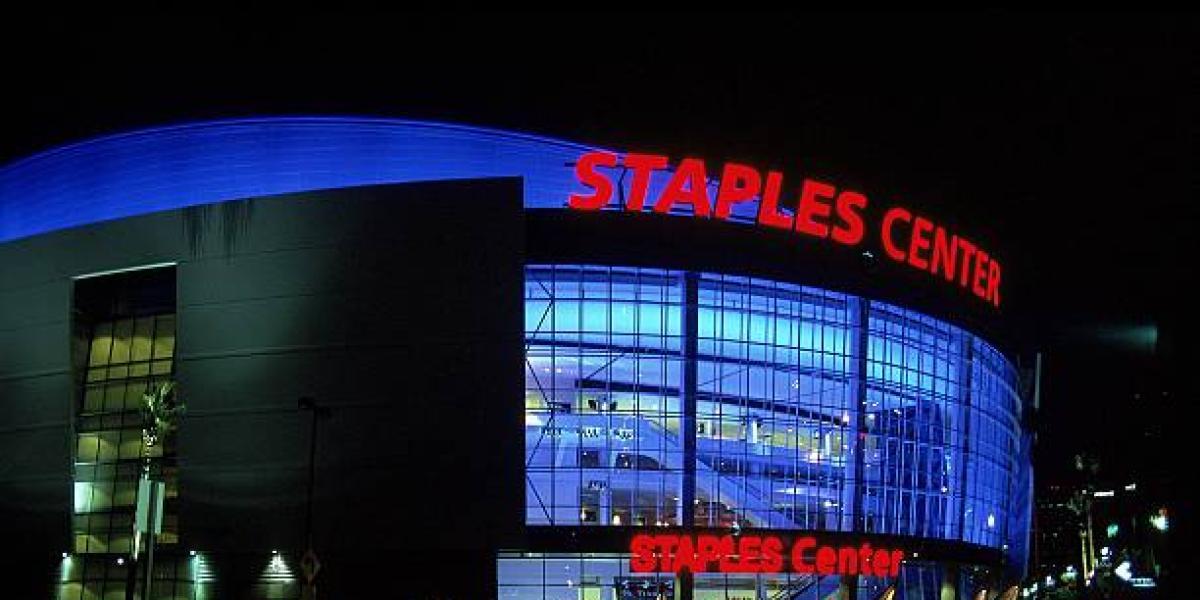
A general view of the exterior of the new Staples Center
PALCO 23
USA
The crypto industry is investing heavily in sports. The leading companies in the sector see the sports ecosystem as the perfect arena to promote their services.
Backed by strong financial positions, many have launched bold sponsorship campaigns with elite football clubs and global competitions such as Formula 1 and the Ultimate Fighting Championship (UFC).
However, the lack of transparency behind some of these entities has prompted regulators to scrutinize these deals closely.
In 2022, Spain’s National Securities Market Commission (CNMV) announced that it would monitor the promotion of crypto assets in sporting events aimed at financing clubs or organizations.
The agency even threatened to introduce new regulations to prevent “crypto asset advertising from endangering the savings of fans and supporters,” though such legislation was never implemented.
The growing influence of cryptocurrencies in sports was perhaps best demonstrated by the landmark naming rights deal involving the Los Angeles Lakers’ iconic arena.
In 2021, Crypto.com paid $700 million for a 20-year naming deal, equivalent to $35 million per season, compared to Staples’ previous $100 million deal for ten years.
That same year, the company expanded its footprint into the UFC, signing a 10-year, $175 million agreement that made it the official cryptocurrency partner of the organization.
The deal included extensive branding during fights and events, and Crypto.com became the first brand to appear on fighters’ uniforms.
The Formula 1 world also joined the trend. In 2021, Crypto.com became the global partner of F1 Sprint races under a five-year deal worth over $100 million, and secured the naming rights for the Miami Grand Prix.
The relationship between crypto and Formula 1 deepened further in 2022, when Bybit became the official sponsor of Red Bull Racing under a $150 million deal.
The Alpine team also entered the space, signing a sponsorship agreement with Binance in 2021.
Soccer has become another key playground for crypto companies. Since 2022, WhiteBIT has served as FC Barcelona’s global cryptocurrency exchange partner under a three-season deal.
Kraken, meanwhile, became Atlético de Madrid’s sleeve sponsor starting from the 2024–2025 season, covering both the men’s and women’s teams.
In Italy, Juventus added WhiteBIT to its kit for the 2024–2025 season, earning around €5 million per year, according to Calcio e Finanza.
The club also went a step further earlier this year by selling a minor stake to Tether, becoming one of the few clubs to do so.
Not all deals have gone smoothly. In 2021, Inter Milan signed a multi-year €85 million sponsorship with DigitalBits, a subsidiary of Zytara Labs.
However, the partnership collapsed in 2023 after non-payment, leading the club to file a lawsuit claiming €30 million in damages.
The crypto footprint in football expanded even further with Crypto.com’s entry into UEFA competitions.
The company signed a three-year partnership (2024–2027) to become the official crypto partner of the UEFA Champions League, including sponsorship rights for the UEFA Super Cup — marking the first time a cryptocurrency brand became an official partner of the competition.
The crypto industry’s strong push into sports began in 2021, just months after the COVID-19 pandemic.
With clubs facing severe losses in matchday revenue during lockdowns, they were forced to seek new sources of income — and cryptocurrency companies, flush with capital and eager for visibility, provided exactly that.
© Mundo Deportivo. All rights reserved.