Posted on Leave a comment

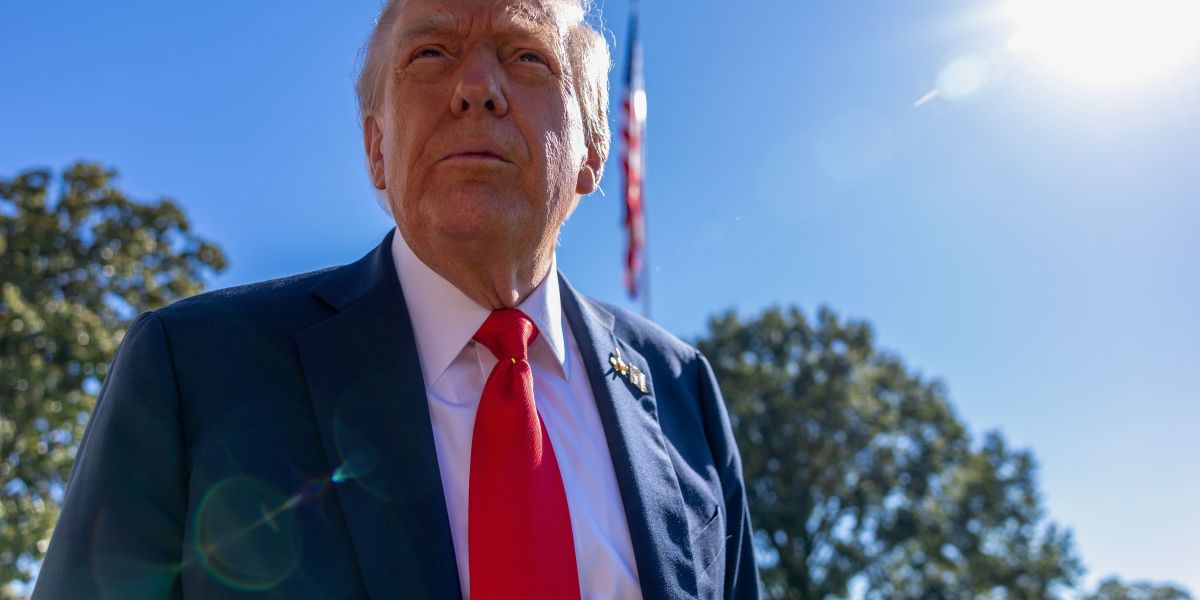
Trump boards US carrier to address troops in Japan with PM Takaichi by his side – BBC

Trump Visits US Naval Base in Japan
BBC News
This video can not be played
US President Donald Trump has signed a rare earths deal with Japan's newly elected prime minister Sanae Takaichi
In a meeting that has been an early test for Takaichi, the two leaders heralded a new "golden age" for the alliance between their countries
Japanese exports to the US will now face 15% tariffs, which was agreed previously but appears to have been finalised on Tuesday
Trump's remarks show he is affording Takaichi a lot of goodwill, our Tokyo correspondent says
Trump also told family members of Japanese citizens abducted by North Korea between 1977 and 1983 that "we will do everything in our power" to return them
After Japan, he flies to South Korea, where he will meet the Chinese leader Xi Jinping
This video can not be played
Watch: Trump meets Japan's newly elected PM Sanae Takaichi
Edited by Yvette Tan in Singapore, with Shaimaa Khalil in Tokyo and Anthony Zurcher, travelling with President Trump
Anthony Zurcher
North America correspondent, travelling with the president

At 15:47, Marine One landed on the USS George Washington, an aircraft carrier currently docked in Japan.
The Navy 7th Fleet Band, dressed in camouflage, played as Trump exited the aircraft and walked down a cordon of carrier crew, nicknamed the "rainbow side boys".
He was accompanied by Prime Minister Takaichi. Multiple naval fighters were arrayed on the deck nearby.
Per the White House, the president was greeted by a series of military commanders and officials.
Marine One, the aircraft carrying Trump, has just landed on the USS George Washington.
We're expecting Trump to disembark imminently.
Anthony Zurcher
North America correspondent, travelling with the president

I'm on a helicopter which is taking us to the USS George Washington, an aircraft carrier docked at Yokosuka Naval Base near Tokyo.
There, Trump is set to deliver a speech to US troops on the USS George Washington.
Takaichi will also be on the carrier, along with senior officials from the US and Japan.
After that, Trump will adjourn to a hotel in Tokyo before meeting business leaders this evening.
File photo of the USS George Washington
Shaimaa Khalil
Tokyo correspondent

Pleasantries have set a positive tone to the meetings so far – but cutting through those, it is worth remembering that Washington can re-impose tariffs or cause other headaches for Japan if it doesn’t deliver on its promises.
Tokyo is ultimately still vulnerable to the whims of the White House. Its auto industry – the backbone of its economy – depends heavily on the US market. Harsher tariffs or tougher rules could hit companies like Toyota and Nissan hard.
But it also has a bargaining chip in rare earth minerals. Japan and the US just signed an agreement to boost supply and production of the compounds, which are in everything from military equipment to car – though Japan will need help and know how when it comes to mining the minerals, much of which is underwater.
Washington is desperate to decrease its reliance on China when it comes to rare earths, which all but monopolies the sector and has restricted exports to the US. And so the cooperation from Japan – and similar agreements with counties like Malaysia and Australia – will give Trump a stronger hand going into his meeting with President Xi on Thursday.
A vow from Takaichi – a defence hawk herself – to bring defence spending to 2% of GDP, possibly within six months, will also help keep the White House onside amid their push for allies to pour more into their militaries.
The motorcade carrying Trump and a pool of reporters is now moving. They'll be driven to helicopters that will then take them to the aircraft carrier.
We'll bring you more updates in a bit – stick with us.
Anthony Zurcher
North America correspondent, travelling with the president

Trump is getting what he wants out of this visit to Japan – praise, Nobel nominations and promises of foreign investment in the US.
While this is the first time he has met with the new Japanese prime minister, he appears to have developed an early rapport. The connection she had to Shinzo Abe, a Trump favourite, helped pave the way.
The pageantry and the venue also seemed tailor-made for the American president. A full military honour guard and band welcomed Trump to the ornate Akasaka Palace, with its vaulted ceilings and gold-encrusted walls not unlike what the president wants in his planned White House ballroom.
For those of you who are just joining us, we're following Trump who is currently in Japan meeting prime minister Sanae Takaichi as part of a diplomatic tour around the region.
Here's what you need to know to get you caught up:

Trump will arrive at the US naval base in Yokosuka later today, before meeting business leaders in Tokyo. We'll continue to bring you the latest as we get them – please stay with us.
The trade agreement signed by the two leaders today promises a "new golden age" for bilateral ties.
What it actually does, though, is reaffirm previous agreements that they signed earlier this year.
This includes the US imposing a 15% tariff on nearly all imports from Japan, including its massive car industry – down from the 25% that Trump had initially threatened.
In exchange, Japan has pledged to invest $550bn in the US and buy more US goods, including in key sectors like cars, planes, agriculture and energy.
US Defence Secretary Pete Hegseth has arrived in Japan, where he was welcomed by his Japanese counterpart Shinjiro Koizumi.
He is scheduled to have a meeting with Koizumi on Wednesday.
As we reported earlier, security issues loom large over the agenda for Trump's trip to Japan. Trump has in the past repeatedly called on Japan to shoulder more of its security burden and increase defence spending.
During the working lunch, Takaichi also presented Trump with a map showing the investments that Japanese companies have made in the US, the White House said in a statement.
In July, Japan agreed to invest $550bn in the US as part of a trade deal to get the US to lower its tariffs on Japan.
Here's what's on the menu for Trump and Takaichi's working lunch:
The choice of serving American rice is notable, as Trump has repeatedly called for Japan to buy more US rice in the past.
The White House added that Trump also "signed the lunch menus for the Prime Minister and the entire Japanese delegation, much to their delight!".
The two leaders were also seen sharing a toast.
Japan's new leader, Sanae Takaichi, aspires to become the country's Margaret Thatcher.
After two failed attempts, the 64-year-old Takaichi achieved her long-held ambition in a historic parliamentary vote on 21 October.
She's a colourful figure on the right of the governing Liberal Democratic Party (LDP), who talks tough on immigration and has some conservative views on women's equality.
A former government minister and TV host, and once a drummer in a heavy metal band, Takaichi will now face the challenge of leading not only a party struggling to regain voter trust after scandals and dealing with the burgeoning far right – but a country tackling a sluggish economy, low birth rates and rising geopolitical tensions.
Read more about her here.
Trump and Takaichi have just posed for a photo with the families of Japanese people who have been abducted by North Korea. The Japanese government says that North Korea kidnapped 17 Japanese citizens in the 1970s and 1980s – though some believe the real figure is much higher.
"I've met the families before and I'm with them all the way, and the US is with them all the way," Trump said.
"We have not done anything. We've been so busy," Trump said. "But we will do everything in our power."
The press pool traveling with President Trump has now moved back to the signing room with the families of Japanese citizens abducted by North Korea.
The issue of the abductions has stood between Tokyo and Pyongyang for decades.
According to the Japanese government, at least 17 citizens were abducted by North Korean agents between 1977 and 1983, although Pyongyang disputes that number.
The abductions are widely believed to have been part of North Korea’s espionage program. The victims were taken to train North Korean spies in Japanese language and culture.
Trump had met the families of the abductees during his first term.
Trump and Takaichi have signed an agreement, external to boost the supply and production of rare earths between the US and Japan.
The two countries agreed to cooperate through the use of policies, trade measures and coordinated investment to support the production of critical minerals.
Washington has been racing to diversify its supply of critical minerals to reduce its reliance on China, which holds a near-monopoly in the processing of critical minerals and has recently imposed export controls on them.
In recent days, the US signed a flurry of deals with Malaysia, Thailand and Australia on rare earths, which are needed for the production of most electronics, electric cars and military equipment.
Japan is known to have an abundant supply of rare earth minerals but much of it is underwater, making it difficult to mine.

Let's bring you a few more details on the "new golden age" deal that the US and Japan have just signed.
The agreement refers to previous deals the long-standing allies inked earlier this year which were about strategic investments and shared national interests.
Today's paperwork says that the two leaders "noted with satisfaction swift and continued efforts by both countries, and confirmed their strong commitment to implementing this GREAT DEAL".
The agreement will help both countries to "strengthen economic security, promote economic growth, and thereby continuously lead to global prosperity".
It also says that Trump and Takaichi have spoken to the relevant ministers and secretaries to "take further steps for a NEW GOLDEN AGE of the ever-growing US-Japan alliance".
Upon signing the documents on the "new golden age" of bilateral ties and cooperation on cirtical minerals, Trump praised Japan as an ally and commended Takaichi, the country's first female prime minister.
Japan, he said, is an "ally at the strongest level" for the US. He went on to describe Takaichi, who was elected last week, as "one of the greatest prime ministers", acknowledging the significance of her victory and calling it "a big deal" for Japan to have a female leader.
Trump and Takaichi have just signed two new deals – one marking a new "golden age" of US-Japan relations and the other about a critical minerals deal.
The two leaders inked the agreements moments ago and have posed with the signed documents.
The first deal is about securing cooperation between the long-standing allies and the critical minerals agreement provides a framework to ensure the supply of rare earths.
Shaimaa Khalil
Tokyo correspondent

So far, one remark stands out. President Trump is affording Ms Takaichi a lot of good will.
"I want to just let you know – any time you have any question, any doubt, anything you want, any favors you need, anything I can do to help Japan, we will be there."
It’s a critical moment for Japan and for its new PM Sanae Takaichi – a defining early test of leadership. In her first face-to-face meeting with President Trump, she described him as a partner in a new golden age and praised his role in Middle East peace.
President Trump praised Japan as "a great ally" and said he’ll be there to help Japan whenever needed. But he’s also pushing hard on trade and security, leaving Tokyo backed into a corner.
Trump wants more US access to Japan’s markets – especially in cars, agriculture, and technology. He’s pressing Japan to buy more American rice and soybeans, and to open its market to US vehicles.
Tokyo, heavily reliant on exports, can’t afford a tariff fight – especially when it comes to its auto industry. But Takaichi also needs to protect domestic industries and doesn’t want to anger crucial interest groups like the powerful farming lobby.
For now, the tone is friendly. But there's real pressure on Tokyo to deliver on agreements with little room to manoeuvre.
Here are some photos from the Akasaka State Guest House, where Trump was received by an honour guard from Japan’s Self-Defense Forces.
Copyright © 2025 BBC. The BBC is not responsible for the content of external sites. Read about our approach to external linking.

source

Posted on Leave a comment

Rapper Eve opens up about getting myomectomy to remove fibroids – standardmedia.co.ke

More and more women are speaking up about challenges they are facing with their reproductive health. Conditions such as fibroids and endometriosis not only result in unusually painful periods but can make it harder to conceive.
During an episode of The Talk, rapper Eve opened up about her own struggle with getting pregnant. 

“For me, I’m 42 now. My husband and I, we’ve been trying and trying and trying and trying,” she said to her cohosts.
Eve married business mogul Maximillion Cooper in 2014 and is stepmother to his four children. 
The actress and songwriter went on to explain that at the beginning of this year she had a procedure done to remove her fibroids. 

“At the beginning of the year, you ladies know…I had a procedure called a myomectomy that gets rid of fibroids,” she revealed. 
The conversation came up after actress Emma Roberts, 29, revealed that she had been freezing her eggs since her late 20s. Roberts, who is pregnant now, has been battling endometriosis and this has impacted her fertility.
During the show, the hosts went on to share stories of women who had gone above and beyond to overcome fertility issues and bear children even when society deemed them too old or thought their situation was irreparable thanks to reproductive health conditions.
“I used to have these horrible periods,” Eve said. “And I’m only saying this to say, there’s a lot of women out there that think, we were told that periods are supposed to be painful. They’re not. 
“Go to your doctor, and if they don’t believe you, go to another doctor.”
Subscribe to our newsletter and stay updated on the latest developments and special offers!

source

Posted on Leave a comment

A New Tech Platform Takes Aim at Crypto’s Self-Destruct Button – Bloomberg

Connecting decision makers to a dynamic network of information, people and ideas, Bloomberg quickly and accurately delivers business and financial information, news and insight around the world
Americas+1 212 318 2000
EMEA+44 20 7330 7500
Asia Pacific+65 6212 1000
Connecting decision makers to a dynamic network of information, people and ideas, Bloomberg quickly and accurately delivers business and financial information, news and insight around the world
Americas+1 212 318 2000
EMEA+44 20 7330 7500
Asia Pacific+65 6212 1000
Dmitry Tokarev, founder of crypto custodian Copper Technologies Ltd., is starting another business to tackle the rising security risks associated with managing your own digital assets.
His new firm, Bron Labs, is a self-custodial platform aimed at giving consumers and professionals the kind of extra security that he says previously only large businesses could afford. Bron raised around $15 million in funding from around 140 friends, family and other individuals earlier this year, Tokarev said in an interview, including firms like LocalGlobe, Fasanara Digital and GSR.

source

Posted on Leave a comment

California Lottery Powerball, Daily 3 Midday winning numbers for Oct. 27, 2025 – The Desert Sun

The California Lottery offers multiple draw games for those aiming to win big. Here’s a look at Oct. 27, 2025, results for each game:
17-39-43-51-66, Powerball: 20, Power Play: 2
Check Powerball payouts and previous drawings here.
Midday: 2-3-3
Evening: 1-8-3
Check Daily 3 payouts and previous drawings here.
1st:1 Gold Rush-2nd:5 California Classic-3rd:9 Winning Spirit, Race Time: 1:43.94
Check Daily Derby payouts and previous drawings here.
01-07-17-26-29
Check Fantasy 5 payouts and previous drawings here.
2-9-2-3
Check Daily 4 payouts and previous drawings here.
Feeling lucky? Explore the latest lottery news & results
This results page was generated automatically using information from TinBu and a template written and reviewed by a Desert Sun producer. You can send feedback using this form.

source

Posted on Leave a comment

Understanding the Role of ISO 20022 in Cryptocurrency Payments – OneSafe

What is ISO 20022 and Why Does It Matter?
ISO 20022 is a messaging standard used across financial institutions for electronic data exchange. It replaces outdated systems like MT messages, offering more detailed data formats. This transition, wrapping up by the end of 2025, aims to unify payment messages for better clarity and consistency.
For cryptocurrencies, ISO 20022 could enhance compatibility with traditional banking systems. This means that cryptocurrencies are better positioned for acceptance within the established financial ecosystem. But it does raise the issue of whether this compromises their decentralized roots.
How is XRP Related to ISO 20022?
XRP, Ripple’s native digital asset, is in a distinct position regarding ISO 20022. While XRP isn’t natively compliant, RippleNet—the payment network that employs XRP—is fully compliant. This compatibility facilitates smoother integration with traditional banks, allowing cross-border payments to be quicker and more efficient.
By fitting XRP into the ISO 20022 framework, Ripple gains an edge, utilizing XRP as a bridge currency for cross-border transactions. This may not only improve liquidity but also enhance XRP’s standing in the rapidly evolving digital asset market. With a growing number of financial institutions adopting ISO 20022, XRP’s compliance could foster greater institutional trust and use.
What Are the Centralization Risks of ISO 20022 Adoption?
ISO 20022 also poses significant risks of centralization in crypto. The very essence of cryptocurrencies is their decentralization and autonomy from established financial institutions, but aligning with such a global standard may threaten their independence.
The integration into a uniform framework could dilute the decentralized essence. There’s a possibility that projects may choose compliance over their original aims, pushing them closer to centralized solutions.
Will Fintech Startups Benefit from ISO 20022?
Fintech startups can effectively utilize ISO 20022 for cross-border payments. This standardized messaging format can accelerate and streamline payment processes, enhancing their compliance with regulatory frameworks. Here’s what they can do:
The easy integration makes it simple for startups to incorporate their systems into existing financial infrastructures, allowing for speedier cross-border transactions without hefty software costs.
With improved reporting and compliance features, fintechs can bolster their risk management strategies, refine customer data analysis, and enhance decision-making.
They will also benefit from reduced operational costs, as automating payment processing through ISO 20022 can mitigate manual errors, increasing efficiency.
Moreover, ISO 20022 compliance opens up broader service offerings, including cross-border freelancer payments, allowing startups to cater to global talent and compete more effectively.
What Lies Ahead for Cross-Border Crypto Payroll Solutions?
ISO 20022 is projected to alter the landscape for cross-border crypto payroll solutions. By merging crypto with conventional financial systems, it promises improved compliance, speed, and interoperability.
Boosting Institutional Adoption: Major payment systems and central banks are on board with ISO 20022 by 2025. Crypto projects aligned with this standard could emerge as credible partners for banks, payment processors, and fintech firms.
Emerging Trends: Digital banking startups and licensed stablecoin providers embracing ISO 20022 are driving acceptance of crypto payroll solutions, enabling companies to allure talent through innovative payment methods.
Both Challenges and Opportunities: The shift presents hurdles, including regulatory intricacies and implementation costs, yet also opportunities for crypto payroll providers to stay competitive with both traditional and non-compliant options.
Demand for Decentralized Payroll Tools: As businesses aim to simplify their payment procedures, the need for decentralized payroll solutions will likely rise. Crypto payroll integration can facilitate faster, transparent, and compliant cross-border payments—an ever-attractive option for international companies.
In conclusion, ISO 20022 is a connection between crypto and traditional finance, ushering in quicker, more transparent, and compliant cross-border payroll payments. As global payment landscapes shift, the acceleration of ISO 20022 adoption will likely integrate cryptocurrencies further into mainstream finance, heightening competition among crypto payroll providers.

Get started with Global transactions effortlessly. OneSafe brings together your crypto and banking needs in one simple, powerful platform.
Discover key indicators for Pepe's price recovery, including market structure, trading volumes, and alternative metrics shaping its future.
ClearBank and Circle's partnership enhances stablecoin adoption in Europe, streamlining cross-border payments and treasury management for businesses.
KR1's LSE listing marks a pivotal moment for crypto, raising compliance standards and offering lessons for fintech startups navigating regulatory landscapes.
Begin your journey with OneSafe today. Quick, effortless, and secure, our streamlined process ensures your account is set up and ready to go, hassle-free

source

Posted on Leave a comment

Get tips to prevent food waste from a 'MasterChef' – WVXU

The act of cooking often involves throwing food away. The peel of a sweet potato, the seed of an avocado, a less-than-fresh lettuce leaf you toss in the trash…
That adds up. Cincinnatians sent more than 25 million pounds of food to the landfill in 2021, where it produced climate-warming methane emissions and didn’t feed anyone, according to the city.
A group of local and national leaders are meeting in Cincinnati Wednesday to discuss solutions at the 2025 Wasted Food Summit.
Keynote speaker Chef Alejandra Schrader talked with WVXU ahead of the event about how to make a difference in the kitchen. She’s a former finalist on the cooking show MasterChef and current food waste activist.
This transcript has been lightly edited for clarity.
Where did your interest in food waste come from?
The topic of food waste is very close to my heart, because it’s deep rooted in my own childhood. I grew up in Caracas, Venezuela, under the care of a single mother, who, despite being a professional and working really hard, had three girls to raise. So food — especially nutritious food — was not always available. In my house, nothing went to waste. If my mama roasted a chicken, she would save the bones and the carcass to make a broth. And definitely no leftovers went unused. That definitely shaped my perspective. Then most recently, as I got to work in kitchens and commercial kitchens, but also understand consumer behaviors around food, I thought, this is an opportunity for me to take action and to help other people understand, what are some of those actions that can make a difference for our planet, for our health, for our pocket.
You wrote a cookbook. It’s called The Low Carbon Cookbook and Action Plan, and it’s just full of that information that you touched on, on how you can reduce food waste and how you can combat climate change through cooking. What do you tell people who are maybe looking to make a change in their own kitchens?
A Venezuelan saying comes to mind, which is, ‘every grain of sand can help build a mountain.’ I like to say that to people, to make them feel empowered that they can make small changes at home. First, shop smart. Try to understand how much really you can consume within that week or two-week period before your food goes bad. But also, once you bring something home, make sure you use it. I’m a big fan of the ‘shop at home’ first slogan. Before you head to the market, open your cabinets, look in the back. ‘Oh, I have a can of black beans. Oh, maybe I should use that this week.’ And then lastly, try to utilize and upcycle. So, what that means is, if you buy a pineapple, when you peel the pineapple, don’t throw the peel away. Make a delicious pineapple tea, like a pineapple skin tea.
I wanted to revisit something you said earlier about shopping from your kitchen. Sometimes I look at the food often tucked in the back of my fridge, and I feel a little bit of pause, like, is this safe to eat? I’m curious, how do you gauge what food you can eat and what you might need to find another use for?
I would say that we need to use our own senses the way our grandparents and great grandparents did to gauge whether the food is still good. It is a big indication when we open that container and we don’t get a pleasant smell. But food lasts longer than what we think or what we have been made to believe.
What is your favorite way to incorporate food waste into your cooking?
In all honesty, my favorite way is the most environmental[ly] friendly way. And I say this because when I utilize something that normally gets thrown away in the trash — let’s just say radish greens or beet greens — I am also making the most of the investment that I’ve made when I purchased that food ingredient. And some people say, ‘Well, I don’t necessarily know how to cook that.’ The easiest way is that you would slice them maybe one inch, like wide ribbons, and you sauté them, just like you would with spinach or even kale with a little garlic, little olive oil. Then you add the beet greens to the pan, a little salt and pepper and serve them on the side of your protein.
Read more:

source