Columbia Gas of Virginia provides carbon monoxide safety tips WRIC ABC 8News
source
Pi Network takes a significant step by announcing its first major investment in intelligent robotics through OpenMind. This merger of blockchain and artificial intelligence has the potential to reshape the landscape of decentralized computing. With 350,000 active nodes, Pi Network ventures into the realm of collaborative AI.
Written by Simon Dumoulin
Translated on October 30, 2025 at 12:17 by Simon Dumoulin
The pilot test between Pi Network and OpenMind demonstrates a concrete use case for the Pi network beyond simple blockchain consensus. Node operators participating in the experiment were able to execute AI workloads on their machines, proving that Pi’s distributed infrastructure can handle intensive computational tasks.
This approach radically transforms the value proposition for node runners. Rather than simply validating transactions, they can now monetize their computing power by contributing to the training or execution of artificial intelligence models. The network currently counts over 350,000 active nodes worldwide, representing a considerable pool of computational resources.
The economic model is significantly enhanced. Node operators earn Pi based on their contribution to the computing power provided for AI workloads. This mechanism resembles GPU mining, but applied to inference and training of intelligent models rather than pure cryptographic hashing.
Pi Network Ventures has made its first investment in @openmind_agi , a company developing an operating system and open-source protocol for robots to think, learn, and work together—like Android for robots. Go to the Pi mining app for more information! pic.twitter.com/IgB7Bx8FCO
The investment in OpenMind positions Pi Network Ventures at the intersection of blockchain, artificial intelligence, and robotics. This technological convergence opens unprecedented perspectives for the ecosystem, which could become a reference infrastructure for decentralized AI applications. OpenMind’s vision of shared intelligence between machines perfectly aligns with Pi Network’s decentralized architecture. It enables robots and intelligent systems to operate securely without centralized control, thereby enhancing system resilience.
This first operation by the Network Ventures sends a strong signal to the crypto market. While many blockchain projects struggle to demonstrate real utility, the Network is building bridges to emerging sectors like AI and robotics, offering a decentralized approach to AI computation and a credible alternative to the centralized model.
For token holders, this evolution represents a diversification of use cases beyond peer-to-peer payments and traditional decentralized applications. It could become the fuel for a global AI computation network, mechanically increasing the demand and utility of the token.
Increasing the intrinsic value of Picoin:
“@PiCoreTeam
Oct 30th – 3:09am
Pi Network Ventures has made its first investment in OpenMind, a company developing an operating system and open-source protocol for robots to think, learn, and work together—like Android for robots. This… https://t.co/3mR7KtUgrq pic.twitter.com/0lOm02DWhi
➡️ Buy Pi Coin easily on Bitget! Enjoy a secure, fast platform suitable for beginners and experienced traders alike. Exclusive bonus available!
Related articles:
Passionate about cryptocurrencies since 2019, I cover the latest news through clear and accessible articles. My goal is to make crypto understandable for everyone, with reliable and well-researched content.
DISCLAIMER
This article is for informational purposes only and should not be considered as investment advice. Trading cryptocurrencies involves risks, and it is important not to invest more than you can afford to lose.
InvestX is not responsible for the quality of the products or services presented on this page and cannot be held liable, directly or indirectly, for any damage or loss caused by the use of any product or service featured in this article. Investments in crypto assets are inherently risky; readers should conduct their own research before taking any action and invest only within their financial means. This article does not constitute investment advice.
Risk Warning : Trading financial instruments and/or cryptocurrencies carries a high level of risk, including the possibility of losing all or part of your investment. It may not be suitable for all investors. Cryptocurrency prices are highly volatile and can be influenced by external factors such as financial, regulatory, or political events. Margin trading increases financial risks.
CFDs (Contracts for Difference) are complex instruments with a high risk of rapid capital loss due to leverage. Between 74% and 89% of retail investor accounts lose money when trading CFDs. You should assess whether you understand how CFDs work and whether you can afford to take the high risk of losing your money.
Before engaging in financial or cryptocurrency trading, you must be fully informed about the associated risks and fees, carefully evaluate your investment objectives, level of experience, and risk tolerance, and seek professional advice if needed. InvestX.fr and the InvestX application may provide general market commentary, which does not constitute investment advice and should not be interpreted as such. Please consult an independent financial advisor for any investment-related questions. InvestX.fr disclaims any liability for errors, misinvestments, inaccuracies, or omissions and does not guarantee the accuracy or completeness of the information, texts, graphics, links, or other materials provided.
Some of the partners featured on this site may not be regulated in your country. It is your responsibility to verify the compliance of these services with local regulations before using them.
© InvestX 2025
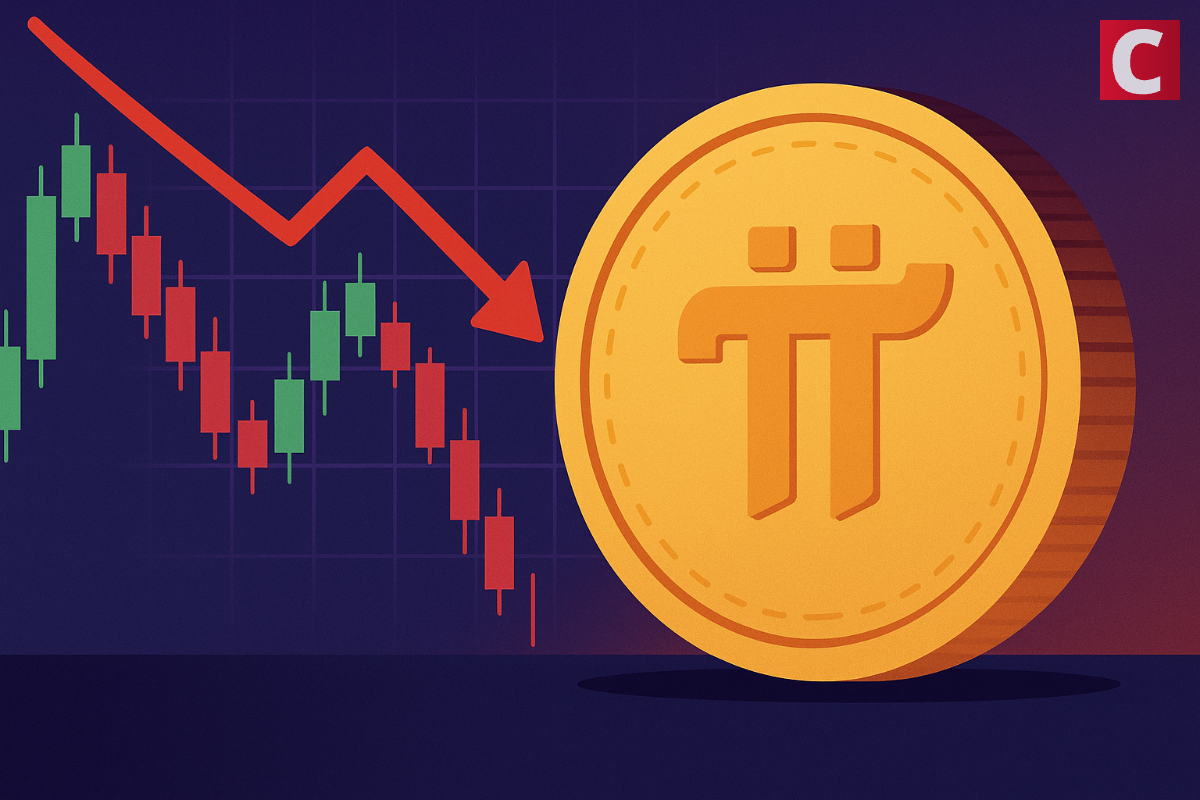
             <span>© 2025 Coinspeaker LTD.</span>                 <span>ALL RIGHTS RESERVED.</span>             <br>Pi Network’s recent 30% rally hit a major resistance at $0.28, with analysts warning the momentum may be fading after an overheated run-up.<br>The Pi Network     <a href="https://www.coinspeaker.com/coins/pi-network/" class="coinlive">         <span class="coinlive__badge">             <span class="coinlive__ticker">PI</span>             <span class="coinlive__price value-fall">$0.24</span>         </span>         <span class="coinlive__dropdown">                        <span class="coinlive__row coinlive__vol24">                 <span>24h volatility:</span>                 <span class="value-fall">13.9%</span>             </span>             <span class="coinlive__row">                 <span>Market cap:</span>                 <span>$2.01 B</span>             </span>             <span class="coinlive__hr"></span>             <span class="coinlive__row">                 <span>Vol. 24h:</span>                 <span>$83.65 M</span>             </span>         </span>     </a>     price rally, with 30% upside on the weekly chart, once again got investors’ attention.<br>However, the major resistance that Pi token faces at $0.28 could spoil the party for the bulls.<!----> <!-- Google adSense --> <!--<script async src="https://pagead2.googlesyndication.com/pagead/js/adsbygoogle.js?client=ca-pub-4826868851612784"      crossorigin="anonymous"></script> <ins class="adsbygoogle"      style="display:block; text-align:center;margin-top:20px;margin-bottom:5px"      data-ad-layout="in-article"      data-ad-format="fluid"      data-ad-client="ca-pub-4826868851612784"      data-ad-slot="2123345046"></ins> <script>
 (adsbygoogle = window.adsbygoogle || []).push({});
–>
However, on-chain indicators point out that the rally seems overheated, and it might be losing steam very soon.
Crypto analyst Marzell noted that Pi coin has staged a strong recovery, climbing 87% from its yearly low to reach $0.2795, its highest level since September.
However, Marzell cautioned that despite growing market excitement, technical indicators suggest the rally could be losing momentum. He shared three reasons for a potential consolidation and a pullback in the short term.
Pi Network’s price action. | Source: TradingView
The first reason is that the Pi Network price action suggests a classic “buy the rumor, sell the news” event. Marzell noted that the Fed rate cut was largely priced in, with probabilities exceeding 97% on Polymarket and CME FedWatch tools.
As a result, many traders accumulated Pi ahead of the announcement. Now that the decision is confirmed, profit-taking could lead to a sharp short-term correction.
The second reason the analyst highlights is the overbought technical indicators. Both the relative strength index (RSI) and stochastic oscillator are reaching elevated levels that suggest overheated momentum.
The third reason, as per Marzell, is that Pi Network price continues to face significant structural headwinds.
https://twitter.com/MarzellCrypto/status/1983548886770647463
This includes 1.27 billion tokens set to unlock over the next 12 months, limited exchange listings, sluggish ecosystem growth, and low real-world utility. He cautioned that unless these fundamentals improve, price rallies may be short-lived.
On the positive side, there are some key developments happening within the Pi ecosystem as of this date. The Pi Network will proceed with the Protocol 23 upgrade on the mainnet by the end of 2024.
Despite recent misinformation, sentiment within the Pi Network community remains positive.
The team has announced significant progress in its KYC (Know Your Customer) verification rollout, a step that will enable millions of users to verify their identities and fully engage with the network once the mainnet launches.
Also, there have been strong rumors that Pi Network has joined the ISO 20022 group, along with other players like Ripple XRP $2.46 24h volatility: 6.5% Market cap: $147.57 B Vol. 24h: $6.00 B and Stellar XLM $0.30 24h volatility: 7.0% Market cap: $9.51 B Vol. 24h: $322.75 M .
The development represents a significant milestone in aligning the Pi ecosystem with global banking systems and international payment standards.
In a recent development, Pi Network Ventures has announced an investment in OpenMind, an artificial intelligence (AI) firm developing an open-source operating system and protocol that enables robots to think, learn, and collaborate.
Disclaimer: Coinspeaker is committed to providing unbiased and transparent reporting. This article aims to deliver accurate and timely information but should not be taken as financial or investment advice. Since market conditions can change rapidly, we encourage you to verify information on your own and consult with a professional before making any decisions based on this content.
Bhushan is a FinTech enthusiast and holds a good flair in understanding financial markets. His interest in economics and finance draw his attention towards the new emerging Blockchain Technology and Cryptocurrency markets. He is continuously in a learning process and keeps himself motivated by sharing his acquired knowledge. In free time he reads thriller fictions novels and sometimes explore his culinary skills.
Bhushan Akolkar on X
October 30th, 2025
October 30th, 2025
October 30th, 2025
October 30th, 2025
This website provides educational content only. Cryptocurrency and investing involve significant risk, never invest more than you can afford to lose, and always do your own research or seek professional advice.
Content is intended for adults only. Gambling laws differ by country; please follow local regulations. By using this site, you agree to our terms.
We may include affiliate links, but these do not affect our ratings or recommendations.
Crypto promotions here are not authorized under the UK Financial Promotions Regime and are not intended for UK consumers.
Copyright © 2025 Coinspeaker LTD. All rights reserved.
Reproduction in whole or in part in any form or medium without express written permission of Coinspeaker LTD is prohibited.

We participate in marketing programs, our editorial content is not influenced by any commissions. To find out more, please visit our Term and Conditions page.
We participate in marketing programs, our editorial content is not influenced by any commissions. To find out more, please visit our Term and Conditions page.
–
The crypto market in October 2025 is heating up fast — and investors worldwide are racing to buy presale crypto before the next wave of AI-driven and multi-chain innovation takes off. After a volatile year of corrections, capital is rotating back into projects that combine early-stage accessibility with long-term real-world use cases.
Presale tokens like Blazpay ($BLAZ) are leading that shift, offering investors a rare chance to secure low-cost entries into ecosystems powered by artificial intelligence, automation, and liquidity intelligence. While established giants like Bitcoin, Solana, and Ethereum continue to dominate in market cap, their exponential growth has plateaued, creating space for next-generation projects redefining DeFi and cross-chain interaction.
As Blazpay’s Phase 2 presale crosses $735K raised and 67% completion, excitement is growing across the market. Investors are not just chasing short-term hype anymore; they’re looking for the best crypto coins to invest in that combine practical AI integration, strong tokenomics, and sustainable multi-chain scalability.
This list dives deep into seven standout projects shaping the market narrative, from legacy powerhouses like Bitcoin and BNB to high-utility presale disruptors like Blazpay, and explains why 2025 might be the most profitable year yet for those who choose to buy presale crypto before the next bull cycle begins.
Blazpay is redefining the narrative of what it means to buy presale crypto in 2025. Designed to merge automation with cross-chain simplicity, Blazpay eliminates the technical friction that has kept mainstream users out of decentralized finance.
Built on the Binance Smart Chain, Blazpay operates through its AI-powered Execution Layer, which automatically manages swaps, staking, and liquidity routing across multiple blockchains — including Ethereum, Polygon, Solana, Tron, and BNB Chain.
Its multi-chain intelligence ensures users always transact through the fastest and most cost-efficient network, while its BlazSDK allows developers to integrate these same automation features directly into their own dApps. This dual-utility system transforms Blazpay into both a retail-friendly DeFi platform and a developer’s toolkit for AI automation.
Sale Progress:
ROI Snapshot:
A $1,000 investment now (133,333 BLAZ)
→ at $0.16 (presale end): ≈ $21,333
→ at $0.50 (listing target): ≈ $66,666 — over 8,000% potential ROI
By uniting AI automation, multi-chain routing, and SDK integration, Blazpay has positioned itself not just as another token but as one of the best crypto presales 2025 for investors seeking real innovation with early-stage returns.
Alt text- Blazpay- best crypto presales buy
Launched at just $0.22 during its ICO, Solana has grown into one of the most powerful blockchain ecosystems in the world. Its Proof-of-History mechanism allows over 50,000 transactions per second, making it the foundation for AI-driven dApps, DeFi bots, and NFT platforms.
Currently trading near $200, Solana’s speed, scalability, and low fees keep it a developer favorite — but its rapid growth means its 900x run from launch has likely peaked. Still, Solana remains one of the best crypto coins to invest in for those seeking long-term stability and institutional relevance.
Its partnership-driven expansion and Layer-2 compatibility hint at a steady climb toward the $300–$400 range in 2025, especially as high-frequency trading and AI-based networks (like Blazpay’s multi-chain integration) increasingly rely on Solana’s infrastructure.
Cardano has spent years proving that slow, research-driven innovation can still lead to lasting impact. Its Hydra and Mithril upgrades have enhanced throughput and reduced block validation time, allowing for smoother dApp performance and smart contract execution.
Launched around $0.02, ADA now trades near $0.60, with analysts projecting a climb toward $1.50–$2.00 as adoption increases. Cardano’s focus on verifiable security and sustainable development makes it a long-term contender among established blockchains.
While not a crypto presale, Cardano’s academic rigor provides a foundational model for new AI-integrated projects like Blazpay that balance security with adaptability.
No list is complete without Bitcoin — the first and most trusted digital asset. Since its early launch price under $1, BTC has evolved into the cornerstone of institutional portfolios. Now trading around $115,000, it remains the asset that stabilizes global crypto liquidity.
However, its growth has plateaued. Forecasts for 2025 put Bitcoin between $145,000–$180,000, meaning it’s unlikely to deliver 100x returns again. Yet its dominance in ETF trading and post-halving scarcity keeps it the foundation on which newer AI and presale projects — like Blazpay — can build sustainable ecosystems.
In short, Bitcoin remains the store of confidence, while presales like Blazpay offer the growth potential.
Alt text-Blazpay- best crypto presales buy
Avalanche entered the scene with a mission to solve the scalability trilemma — and succeeded. Its Subnet Architecture allows enterprises to launch custom blockchains with independent control, perfect for DeFi platforms, banks, and tokenized assets.
Launched under $1, AVAX trades near $35, with analysts expecting it to reach $100–$120 as institutional DeFi adoption surges.
Avalanche’s high performance, energy efficiency, and developer flexibility make it one of the best crypto coins to invest in, particularly for organizations seeking to integrate blockchain into real-world infrastructure.
Its approach mirrors Blazpay’s AI model, where modular scalability and intelligent automation drive efficiency and profitability.
BNB began as a simple exchange discount token in 2017, priced around $0.10, and today, it trades near $550. It has evolved into the heartbeat of the Binance ecosystem, powering trading, staking, NFTs, and the BNB Chain’s dApp network.
As one of the earliest examples of utility-based growth, BNB demonstrates the success potential of tokens backed by strong ecosystems, the very model that Blazpay’s presale follows with its AI-integrated DeFi architecture.
With projections of $1,200–$1,500 by 2026, BNB continues to show that community-driven utility remains the most sustainable driver of value.
Launched in 2023, Sui has rapidly become one of the most innovative Layer-1 networks. With its parallel execution engine, it allows multiple transactions to process simultaneously, reducing congestion and enabling fast, scalable DeFi and gaming apps.
Trading near $2.10, Sui’s developer-first architecture makes it an emerging hub for smart contract innovation. Analysts predict a steady rise toward $5–$7 as ecosystem adoption expands.
Sui’s modular design and speed mirror the multi-chain flexibility of Blazpay, proving that scalability and accessibility can coexist in modern blockchain infrastructure.
Getting into Blazpay’s presale is simple — and the earlier, the better.
Note: Phase 2 is currently 67% complete, with over $735,000 raised. The next price increase will move BLAZ from $0.0075 → $0.0094, marking one of the last early-entry opportunities before the final stage.
From Bitcoin’s institutional dominance to Solana’s technical brilliance and Avalanche’s modular finance, each project on this list has a defined role in the next crypto cycle. But where those giants represent maturity, Blazpay’s presale represents momentum, combining AI execution, multi-chain automation, and developer-ready SDK tools into one revolutionary ecosystem.
With its live presale rapidly approaching sellout status and its utilities redefining the next phase of DeFi, Blazpay stands as the clearest signal that innovation and timing still win in crypto.
For those looking to buy presale crypto before the next market surge, Blazpay isn’t just an option, it’s the blueprint for where decentralized finance is headed.
Alt text-Blazpay- best crypto presales 2025 buy
Website: www.blazpay.com
Twitter: @blazpaylabs
Telegram: t.me/blazpay
Disclaimer: This is a paid post and should not be treated as news/advice. LiveBitcoinNews is not responsible for any loss or damage resulting from the content, products, or services referenced in this press release.
LiveBitcoinNews is a leading online platform dedicated to providing the latest news and insights about Bitcoin and the broader cryptocurrency market. It offers timely updates on market trends, regulatory developments, technological advancements, and expert analyses, catering to both seasoned investors and newcomers in the digital currency space. The site features a variety of content, including articles, guides, interviews, and opinion pieces, making it a comprehensive resource for anyone interested in staying informed about the rapidly evolving world of cryptocurrencies.
Contact us: support@livebitcoinnews.com
© Copyright – Livebitcoinnews.com

The scale of devastation left by Hurricane Melissa is becoming clear after the record-setting storm tore through Jamaica, Haiti and Cuba, leaving at least 34 people dead.
Although downgraded from a category five to a category two storm, Melissa gathered speed as it swept through the Bahamas on Thursday and is expected to make landfall in Bermuda later.
The strongest storm to strike the Caribbean island in modern history, the hurricane sustained winds of 298km/h (185 mph) at its peak – stronger than Hurricane Katrina, which devastated New Orleans in 2005, killing 1,392 people.
The US National Hurricane Centre (NHC) reported sustained winds of 165km/h at 12:00 GMT on Thursday.
It warned of possible coastal flooding as the storm accelerated north-eastward.
Authorities in the Bahamas have since lifted hurricane warnings for the central and southern islands, as well as for the Turks and Caicos.
The country's Minister of State for Disaster Risk Management, Leon Lundy, urged residents to remain vigilant, saying: "Even a weakened hurricane retains the capacity to bring serious devastation."
Nearly 1,500 people were evacuated from vulnerable areas in what officials described as one of the largest operations in Bahamian history.
While flooding has disrupted parts of the archipelago, the ministry of tourism said the majority of the country – including Nassau, Freeport, Eleuthera and the Abacos – remained largely unaffected and open to visitors.
Across the wider Caribbean, Melissa's powerful winds have torn apart homes and buildings, uprooted trees and left tens of thousands without power.
In Cuba, residents of the country's second-largest city Santiago de Cuba worked with machetes to clear streets buried in debris. President Miguel Díaz-Canel said the hurricane had caused "considerable damage" but did not provide a casualty figure.
In Jamaica, the impact was most severe in the southwestern parish of St Elizabeth, where knee-deep mud and washed-out bridges left towns such as Black River cut off. On the road west out of the capital Kingston we saw minimal damage – some structures torn down, trees strewn across roads and gardens.
But once we arrived in central Jamaica we started to see how severely the island had been hit. The town of Mandeville has been, for want of a better word, flattened. A petrol station lost its roof and most of its pumps.
Dana Malcolm of the Jamaica Observer described "very, very slow progress" along roads still blocked by landslides when reaching St Elizabeth. She told the BBC: "I was standing in what used to be main street yesterday and I was knee-deep in mud where the road should have been."
Kabien, who runs a beauty business in the Santa Cruz area of St Elizabeth, said she is staying in her house with the roof blown off and flooding because the public shelter is too dangerous.
She told the BBC on Thursday morning it was "extremely traumatic especially for the kids."
She continued: "We are still at home now. Even though it is flooded and has no roof. We don't have any options. I'm trying to clean up. The shelters aren't safe for my kids. The beddings are too close to random men. There aren't separate areas for kids, men, women and adults."
Communication across Jamaica has been all but severed, with power lines and mobile networks down in much of the southwest. Many families have spent days unable to contact relatives in the hardest-hit parishes.
In Black River, the New York Times reported, the relative of one victim walked 15 miles (24km) to the police station to report their loved one dead.
Desmond McKenzie, the minister of local government, shared the news that "amidst all this, a baby was safely delivered under emergency conditions. So there is… a baby Melissa".
Haiti, already mired in gang violence and humanitarian crisis, suffered at least 25 deaths – 10 of them children – largely due to flooding after days of relentless rain, despite the country avoiding a direct hit.
The storm is also responsible for at least eight deaths in Jamaica and one in the Dominican Republic, officials have said.
The NHC said floodwaters across the Bahamas were expected to subside by Thursday, though conditions in Cuba, Jamaica and Hispaniola would remain hazardous for several days.
Foreign Secretary Yvette Cooper says "many British nationals were there" during the hurrican's devastation.
Sam Johnson, from Bournemouth, last heard from his brother and niece in Jamaica before the hurricane.
The Bailiff of Jersey said he is deeply saddened to learn of the extensive damage in Jamaica.
Londoners with family in Jamaica await updates in the aftermath of the strongest storm to hit the island.
ShelterBox sending teams to help distribute emergency aid in Jamaica.
Copyright 2025 BBC. All rights reserved. The BBC is not responsible for the content of external sites. Read about our approach to external linking.