Posted on Leave a comment

N.Y. Lottery: Powerball second-prize winner claims $1M in one-time lump sum – SILive.com

A company that played the New York Lottery has claimed a $1 million prize for matching the first five numbers in a Powerball drawing, according to lottery officials.
The Sylvan Beach-based AA2002 Limited Liability Company (LLC) matched the numbers on April 22, with a ticket purchased at Wegmans, located at 7952 Brewerton Rd. in Cicero.
The winning numbers were: 12, 16, 33, 39, 52, and Powerball 1.
The LLC opted to receive a single lump-sum payment of $651,000, after required withholdings.
The winning numbers for the Powerball game are drawn from a field of one to 69. The Powerball number is drawn from a separate field of one to 26. In order to win the jackpot, players must match all five white balls in any order and the red Powerball number.
Powerball tickets can be purchased at any New York Lottery retailer for $2, seven days a week. The deadline for purchasing a ticket is 10 p.m. on draw nights.
Drawings are held every Monday, Wednesday and Saturday at 11 p.m., and the New York Lottery urges players to buy tickets early to avoid last-minute lines.
Players can securely check their tickets on the New York Lottery app.
Order your official Powerball tickets online at Jackpot.com and never miss a draw again. Click here to get a free ticket with your first deposit.
A Lottery draw game prize of any amount may be claimed up to one year from the date of the drawing.
The New York Lottery continues to be North America’s largest and most profitable Lottery, contributing $3.8 billion in fiscal year 2023-2024 to benefit public schools in New York State.
New Yorkers struggling with a gambling addiction, or who know someone who is, can find help by calling the State’s toll-free, confidential HOPEline at 1-877-8-HOPENY (1-877-846-7369) or by texting HOPENY (467369).
If you or a loved one has questions or needs to talk to a professional about gambling, call 1-800-GAMBLER or visit 1800gambler.net for more information.
If you purchase a product or register for an account through a link on our site, we may receive compensation. By using this site, you consent to our User Agreement and agree that your clicks, interactions, and personal information may be collected, recorded, and/or stored by us and social media and other third-party partners in accordance with our Privacy Policy.
Use of and/or registration on any portion of this site constitutes acceptance of our User Agreement, (updated 8/1/2024) and acknowledgement of our Privacy Policy, and Your Privacy Choices and Rights (updated 10/1/2025).
© 2025 Advance Local Media LLC. All rights reserved (About Us).
The material on this site may not be reproduced, distributed, transmitted, cached or otherwise used, except with the prior written permission of Advance Local.
Community Rules apply to all content you upload or otherwise submit to this site.
YouTube's privacy policy is available here and YouTube's terms of service is available here.
Ad Choices iconAd Choices

source

Posted on Leave a comment

Mega Millions jackpot enters longest-ever stretch without a winner – Straight Arrow News

Straight Arrow News
No one has won the Mega Millions jackpot for nearly 38 weeks, which sets the longest streak without a winner since the game began in 2002.
Mega Millions started as The Big Game in 1996 and adopted its current name in 2002 and is available in 45 states, Washington, D.C. and the Virgin Islands.
Significant changes have occurred including a cross-sell expansion in 2010 that allowed states to sell both Mega Millions and Powerball tickets.
After nearly 38 weeks and a jackpot of $843 million, no one has won the Mega Millions lottery. Friday will mark the longest losing streak since the game began in 2002.
The previous record of 37 weeks was set in January 2021 after a player in Michigan hit the lucky numbers and won the $1.05 billion jackpot. The current jackpot is the eighth largest in the history of the game.
Download the SAN app today to stay up-to-date with Unbiased. Straight Facts™.
Point phone camera here
Despite no one hitting the jackpot, lottery officials said more than a dozen people have won smaller prizes totalling more than $274 million. 
A person has a one in 290,472,336 chance to win the Mega Millions jackpot, meaning they’re 300 times more likely to be struck by lightning.
The lottery began as The Big Game in 1996, then changed its name to Mega Millions in 2002. 
Forty-five states, Washington, D.C. and the Virgin Islands participate in the game. Alabama, Alaska, Hawaii, Nevada, and Utah are the only states to not offer the game. 
The game has undergone several changes since its release. The most significant change was in 2010, after Mega Millions and Powerball, another lottery, agreed to a cross-sell expansion. This allowed states to sell both Mega Millions and Powerball tickets. In the past, states had to choose which one they could sell. 
Lottery officials said the change led to more revenue, larger jackpots and more coverage since more people from around the country could play. 
The current game format began in April, with games costing $5 each. Before April, games cost $2 each, following a format change in 2017. While many were upset with the price increase, lottery officials said the size of jackpots has increased because of the higher ticket prices.
Learn more about our emails. Unsubscribe Anytime.
Daily Newsletter
Officials draw the Mega Millions numbers every Tuesday and Friday night at 11 p.m. ET. The drawings are held in Atlanta at the studios of WSB-TV, the local ABC affiliate. The Georgia Lottery supervises the program.
The next drawing is on Friday at 11 p.m. ET.
According to media bias experts at AllSides
Awarded a perfect reliability rating from NewsGuard
The ongoing Mega Millions streak highlights the changing dynamics of national lotteries, the impact of game modifications, and the public interest generated by growing jackpots and accessibility.
The record-setting streak without a winner draws widespread public attention and influences player behavior and perceptions about odds.
Recent updates to ticket prices and cross-selling agreements have altered the game's structure, impacting jackpot sizes and revenue.
Mega Millions’ wide availability across nearly all states underscores its role as a recurring national event with broad engagement and coverage.
According to media bias experts at AllSides
Awarded a perfect reliability rating from NewsGuard
According to media bias experts at AllSides.
Perfect reliability rating, according to experts at NewsGuard
Finally, unbiased news that lets you see both sides. It’s refreshing to have facts without the spin.”
This app gives me the news without pushing a political agenda, which is rare to find.”
Unbiased news.
Directly to your inbox. Free!
Terms and Conditions
|
Privacy Policy
|
Copyright Policy
|
Cookie Settings
|
Sitemap
©️ 2025 Straight Arrow News
Daily Newsletter
Learn more about our emails. Unsubscribe anytime.
By entering your email, you agree to the Terms and Conditions and acknowledge the Privacy Policy.

source

Posted on Leave a comment

Euromillions £25m jackpot winner announced – and they're British – Daily Express

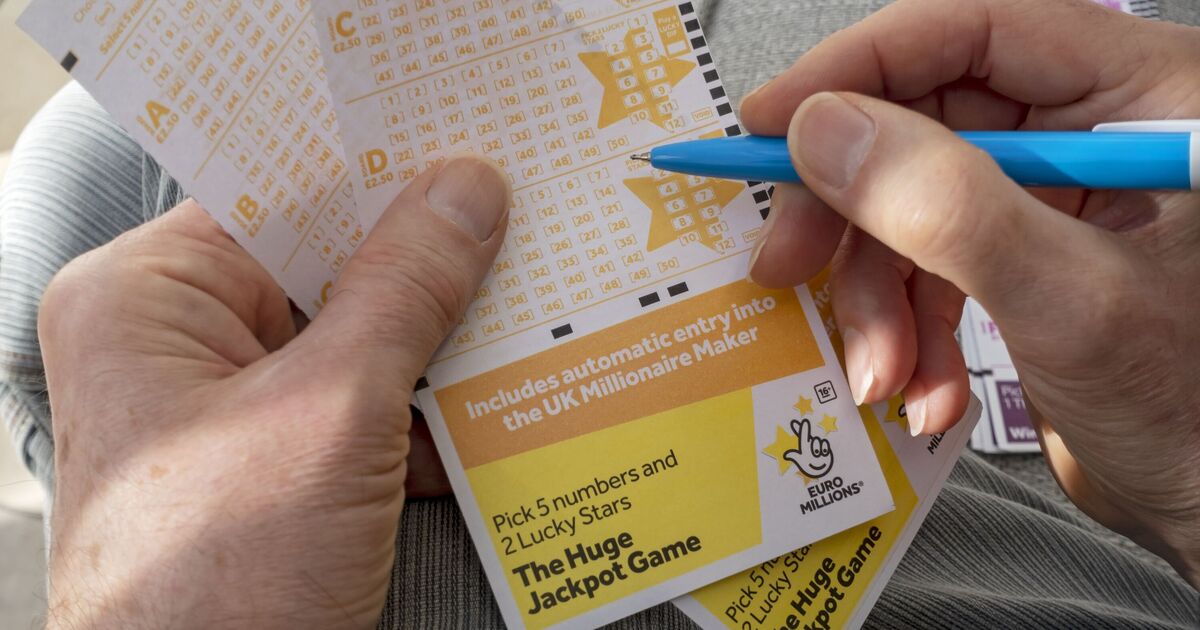
Close up of man filling in EuroMillions Lotto lottery formFor the second Friday in a row, a single UK ticket-holder has won the £25million EuroMillions jackpot, as announced by The National Lottery.
The eye-watering October 10 jackpot’s winning numbers were 06, 07, 17, 20, and 21, and the Lucky Star numbers were 01 and 10.
The winner matched all these numbers, while three individuals were able to match five numbers and one lucky star to win a whopping £40,638.50. Another five people matched just the five numbers and won £8,036.60 each.
Players of the National Lottery are being urged to check their tickets, with two millionaire jackpot prizes from last night still unclaimed.
This October 10 draw made it the second consecutive Friday night that a UK ticket-holder bagged the top prize, and the fourth time this year it went to a UK ticket-holder. Last Friday saw the £26m jackpot won by a single UK ticket-holder, while another player bagged a massive £65m on Valentine’s Day, and a third winner scooped up £83m back in January.
READ MORE: EuroMillions winning numbers and full lottery results for October 10
READ MORE: Winning EuroMillions numbers and full lottery results with Thunderball October 7
The senior winners’ adviser at Allwyn (the operator of The National Lottery), Andy Carter, said: “Wow, it’s been an exciting night for EuroMillions players, as a single UK ticket-holder has landed the amazing £25m jackpot. That’s two UK EuroMillions jackpot wins in the space of a week, after another lucky player scooped the incredible £26M jackpot in last Friday’s draw (October 3).
“Players are now urged to check their tickets and to give us a call if they think they are tonight’s lucky winner.”
Every EuroMillions ticket also bags its purchaser an automatic entry into the UK Millionaire Maker, which guarantees at least one player will pocket an incredible £1million in each and every draw. The UK Millionaire Maker Selection winner last night was TGXG94724.
These results come after the National Lottery’s live stream was interrupted last night due to technical issues. EuroMillions draws are run and held by the French operator of the National Lottery, La Française des Jeux, in Paris.
A ticket for the immensely popular EuroMillions draw which takes place every Tuesday and Friday, costs £2.50. Purchasing a EuroMillions ticket ensures automatic entry into the UK Millionaire Maker draw which creates new UK millionaires each week. The overall jackpot prize can go as high as £167million.
On Saturday, October 4, one ticket-holder scooped the entire £10,633,323 Lotto jackpot by matching all six main numbers: 06, 08, 12, 33, 49, and 59. Since the winning numbers were all purchased in-store, National Lottery players are being urged to carefully check their physical tickets to see if they’re the lucky winner.
The EuroMillions draw has been around for over two decades, with the first draw having taken place on February 7, 2004, by three organisations: The Camelot in the UK, France’s Française des Jeux, and Loterías y Apuestas del Estado in Spain.
In the past, one of the UK’s most massive prizes was up for grabs on December 4, 2020, with a staggering £175million EuroMillions jackpot on the line that would make its recipient even wealthier than Adele.
Some of the other winners of the massive jackpot were Chris and Colin Weir from Largs, Scotland, who bagged a monumental  £161,653,000 in the July 12, 2011, draw.
Gillian and Adrian Bayford from Suffolk’s Haverhill netted a colossal £148,656,000 after winning the August, 10, 2012, EuroMillions draw, while Jane Park went on to become Britain’s youngest lottery winner at just 17 years of age after scooping up a cool £1 million in 2013.
Yet another UK winner, who wished to remain anonymous, won the life altering jackpot of £170,221,000 in the October 8, 2019, draw.
The odds of winning any EuroMillions prize are 1 in 13 while the odds of winning the jackpot are 1 in 139 million.
We use your sign-up to provide content in ways you’ve consented to and to improve our understanding of you. This may include adverts from us and 3rd parties based on our understanding. You can unsubscribe at any time. Read our Privacy Policy
SEARCH
CONNECT WITH US
TODAY’S PAPER
See today’s front and back pages, download the newspaper, order back issues and use the historic Daily Express newspaper archive.
EXPRESS.CO.UK
Daily Express uses notifications to keep you updated

source

Posted on Leave a comment

The symbolism behind India’s ‘Operation Sindoor’ – RNZ

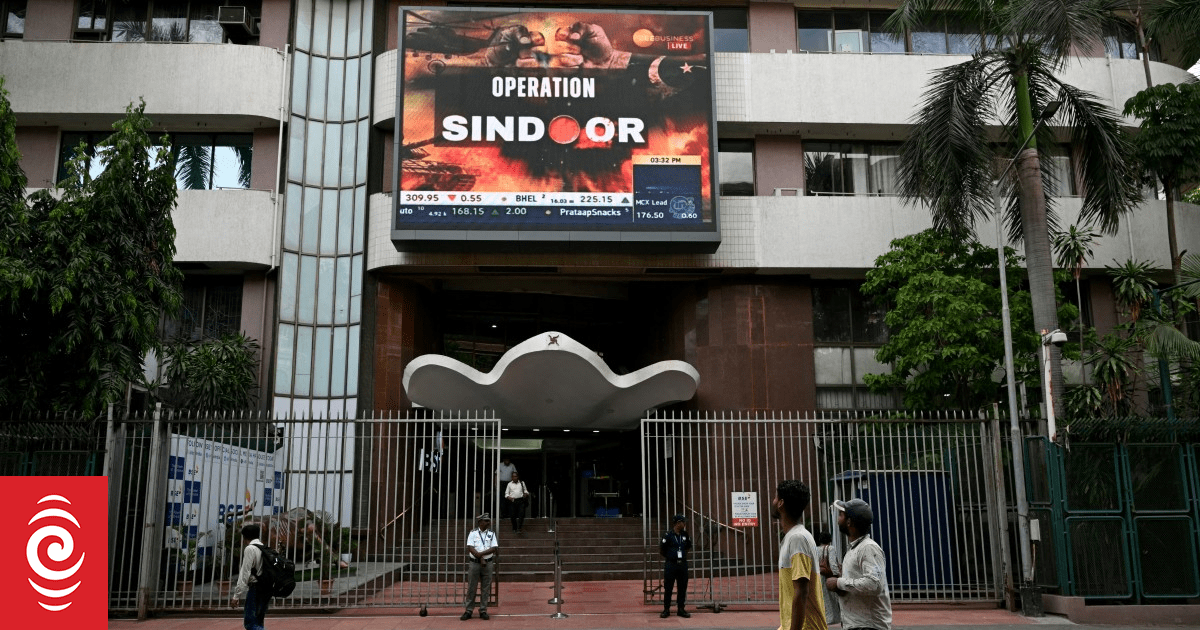
Pedestrians walk past a digital broadcast in Mumbai announcing the start of a military offensive named “Operation Sindoor” on Wednesday. Photo: INDRANIL MUKHERJEE / AFP
India launched missile strikes on nine sites in Pakistan and Pakistan-administered Kashmir early Wednesday morning in a campaign titled “Operation Sindoor”.
Two days of subsequent fighting between the nuclear-armed neighbours have killed nearly four dozen people.
India’s offensive followed a terrorist attack in Indian-administered Kashmir that killed 26 people last month.
India said Pakistan-based Islamist militants were responsible for the attack, but Pakistan has denied involvement.
But what lies behind the name given to the military operation?
Sindoor is the Hindi word for vermilion, a red powder that is a traditional marker of the marital status of Hindu women. It is usually worn in the parting of a woman’s hair.
According to custom, the powder is wiped off and never applied again if a Hindu woman is widowed.
In Hinduism, the red colour of vermilion is a symbol of fertility, love and prosperity. It’s also believed to protect the family.
According to legend, Hindu Goddess Parvati, wife of Lord Shiva, wore vermilion as a symbol of piety and affection towards her husband.
It is believed that Hindu women in the Indian subcontinent have been wearing sindoor for thousands of years, with excavated female figurines from prehistoric times depicting the ritual.
Some ancient Indian texts also reference the application of sindoor.
For a country as large and diverse as India, it is difficult to generalise anything.
The ritual remains widespread in some Hindu communities, while not so much in others.
Some women apply it every day, some only when attending family functions and religious rituals, and some never apply it.
But regardless of how often sindoor is applied, many married Hindu women hold onto an emotional attachment to the application of the powder.
Some are critical of the expectation for married Hindu women to wear Sindoor, claiming it pushes them lower in the social gender hierarchy.
They view sindoor as a symbol of patriarchal control and gender inequality.
While women are expected to wear symbols that indicate marital status, there is no such expectation of married Hindu men.
The name is an apparent reference to the widows left by the Pahalgam terrorist attacks in April that killed 26 men, most of them Hindu.
Some have interpreted the name to be vengeance for the women who were widowed because of the attack.
Taking the symbolism further, the Indian Army announced the military offensive with a grim social media image that depicts spilled vermilion resembling spattered blood.
“Justice is served,” read a message in the social media post that accompanied the image.
Copyright © 2025, Radio New Zealand
IndoNZ is a dedicated initiative producing content for and about the diverse Indian community in New Zealand.
Radio New Zealand is an independent public service multimedia organisation that provides audiences with trusted news and current affairs in accordance with the RNZ Charter. Contact the team by email at indonz@rnz.co.nz
New Zealand’s Indian and Pakistani residents call on the two neighbouring nuclear powers to halt rapidly rising hostilities.
The worst fighting in more than two decades has erupted between the two nuclear-armed enemies.
India, Pakistan and China all claim partial or complete ownership of the region, but how did that become the case?
Analysis – India and Pakistan are getting perilously close to a dangerous military confrontation.
The worst fighting in more than two decades has erupted between the two nuclear-armed enemies.

source

Posted on Leave a comment

Bitcoin Price Forecast – BTC-USD Rebounds to $103,000 – Is the Bull Still Alive? – TradingNEWS

Bitcoin entered November under intense pressure, its price collapsing beneath the psychological $100,000 line for the first time since June before clawing back toward $103,000 by mid-week trading. The drop marked a 20 % correction from the record $126,186 high in early October, officially pushing BTC-USD into a technical bear market. Nearly $1.3 billion in leveraged long positions were liquidated within 24 hours, the heaviest wash-out since April’s post-halving volatility. On-chain metrics from CoinGlass showed open interest down 23 % week-over-week and close to 30 % of circulating supply—around 5.8 million BTC—now held at an unrealized loss, a proportion that has historically defined exhaustion phases rather than cycle tops.
Rising U.S. yields intensified the decline. The 10-year Treasury climbed to 4.15 % and the 2-year to 3.63 %, tightening global liquidity just as digital-asset inflows cooled. Data platform SoSoValue reported $1.3 billion in outflows from spot Bitcoin ETFs since October 29, led by BlackRock’s IBIT, Fidelity’s FBTC, and Grayscale’s GBTC; spot Ether ETFs lost another $500 million. With the Fed reluctant to expand liquidity operations, traders blamed the absence of the “stealth QE” that had supported prior rallies. Correlation between Bitcoin and the NASDAQ-100 surged to 0.86, proving that crypto remains tethered to risk-asset sentiment rather than trading as digital gold.
After the liquidation wave, derivatives funding flipped negative across major exchanges—−0.015 % on average—signaling that shorts now pay to hold positions. CoinGlass heat maps show liquidity bands at $102.5 K, $111.5 K, $116 K, and $117.5 K where large bids have re-appeared. Order-book depth finally turned net-positive, hinting that whales are re-accumulating into panic. Stan Low of Grvt Research called this “the fourth corrective leg of 2025’s bull structure,” projecting that drawdowns exceeding 20 % historically precede rebounds of 40 % plus within 60 days once leverage clears.
The downturn exposed how corporate treasuries handle Bitcoin exposure. Sequans Communications (SEQU.PA) liquidated 1,000 BTC for ≈ $100 million, trimming its debt from $189 million to $94 million and cutting its debt-to-NAV ratio to 39 %. The Paris-based firm still holds 2,200 BTC (≈ $240 million) but its share price has collapsed 80 % YTD, highlighting leverage risk. In contrast, MicroStrategy (NASDAQ:MSTR) added 397 BTC at $114,771 average between Oct 27 – Nov 2, while Marathon Digital Holdings (NASDAQ:MARA) posted a 92 % revenue jump YoY and its first quarterly profit, aided by diversification into AI-data-center services. Marathon’s shares rebounded 3 % after hours though still down 6.7 % intraday, demonstrating that investors reward operational pivoting more than speculative accumulation.
Glassnode data confirmed long-term holders sold ≈ $45 billion BTC since mid-October, reducing LTH supply to 14.1 million coins, the steepest fall in 17 months. Short-term holders absorbed part of that flow, suggesting redistribution rather than abandonment. The 200-week EMA around $97,400 continues to act as structural support; Bitcoin has never closed two consecutive weeks below this line during an ongoing bull phase. The RSI near 41 and the BVOL volatility index up 28 % month-to-date imply the market is oversold yet turbulent, primed for consolidation once selling fatigue completes.
Regulatory noise intensified uncertainty. New EU disclosure standards and Asian capital-flow controls weighed on sentiment, while U.S. policymakers debated fresh crypto-tax measures. The Supreme Court review of Trump-era tariffs added macro tension, feeding into broader risk aversion. Still, adoption data stayed firm: active Bitcoin addresses rose 18 % YTD, and wallet creation in South Asia and Latin America hit record highs. Capital rotation into stablecoins totaled $7.4 billion in two weeks, suggesting sidelined liquidity waiting for clarity rather than mass exit.
The Crypto Fear & Greed Index collapsed from 54 to 38 in 48 hours, marking the sharpest sentiment contraction since the FTX aftershock of 2023. Retail traders retreated: Binance and OKX stablecoin deposits reached $2.8 billion, showing defensive positioning. Former Paxful CEO Ray Youssef described the mood as “classic exhaustion—good news ignored, bad news amplified.” Such sentiment phases historically precede stabilization when liquidity pools rebuild around large-holder bids.
BTC now oscillates between $99,000 support and $106,500 resistance. A decisive close above $111,500 could expose the liquidity cluster at $117,500, while any break below $97,000 risks a slide toward $92,000, the 38.2 % Fibonacci retracement of 2024’s $64 K base. CME futures basis narrowed to +0.9 % annualized, confirming leverage compression. Options implied volatility sits near 63 %, giving long-vol traders attractive skew. Spot-volume turnover increased 41 % week-on-week, indicating capitulation energy shifting to accumulation.
The correction spilled into the entire crypto market. Ethereum (ETH-USD) plunged 13 % to $3,143, Solana (SOL-USD) lost 2.6 %, Cardano (ADA-USD) slipped 0.7 %, and XRP (XRP-USD) eased 1 % to $2.26. Aggregate digital-asset capitalization fell below $2.2 trillion, erasing $400 billion since October. Yet institutional building continued: Ripple secured a new $500 million funding round led by Fortress Investment Group and Citadel Securities, reaffirming confidence in blockchain infrastructure even amid market stress.
Bitcoin’s multi-week slide reflects the intersection of macro tightening, ETF outflows, and cyclical profit-taking rather than structural failure. With nearly one-third of supply underwater and leverage largely flushed, conditions resemble prior mid-cycle resets that paved the way for rebounds once liquidity normalized. The crucial threshold remains the 200-week EMA near $97,400; holding above it keeps the long-term bull intact. Near term, expect a volatile range between $97 K – $111 K, with upside momentum contingent on ETF inflows returning and U.S. yields easing below 4 %.
Based on current data: rating — Buy on weakness / accumulate between $97 K and $101 K; short-term bias neutral to bearish, long-term bullish.
Enter your email to receive our newsletter

source